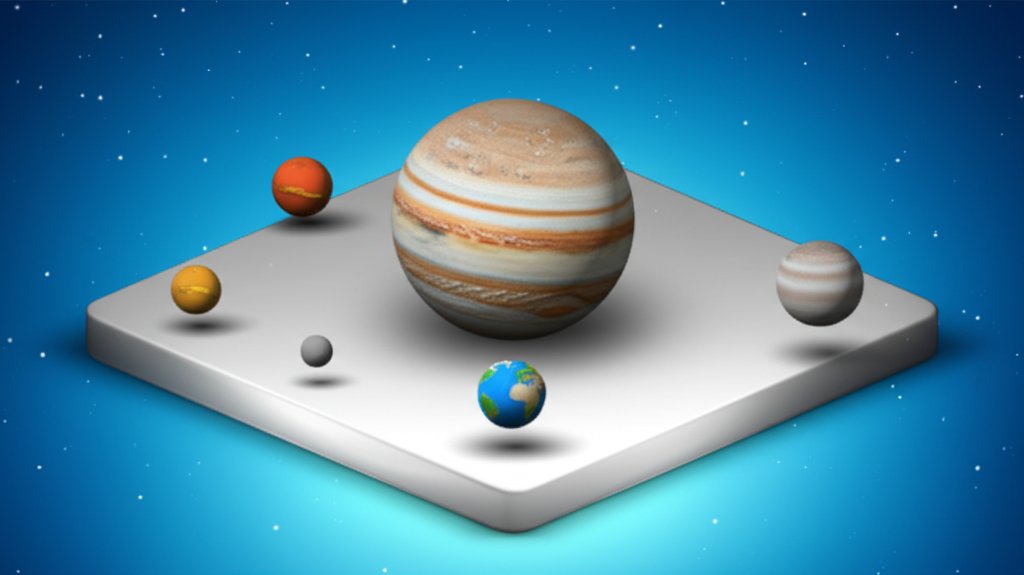
Ever looked up at the night sky and wondered about Jupiter, the bright, steady “star” that dominates the view? It’s not a star, of course, but a massive planet, and understanding Jupiter size and distance is key to appreciating its place in our solar system. Let’s embark on a journey to understand just how big this gas giant really is and how far away it lies.
At a Glance:
- Jupiter is the largest planet in our solar system, more than 11 times the diameter of Earth.
- It orbits the sun at an average distance of 5.2 astronomical units (AU).
- Jupiter is composed primarily of hydrogen and helium, and it lacks a solid surface.
- Its iconic Great Red Spot is a storm larger than Earth that has raged for centuries.
- Jupiter has a powerful magnetic field and a multitude of moons, including the fascinating Galilean moons.
Getting a Sense of Scale: Jupiter’s Immense Size
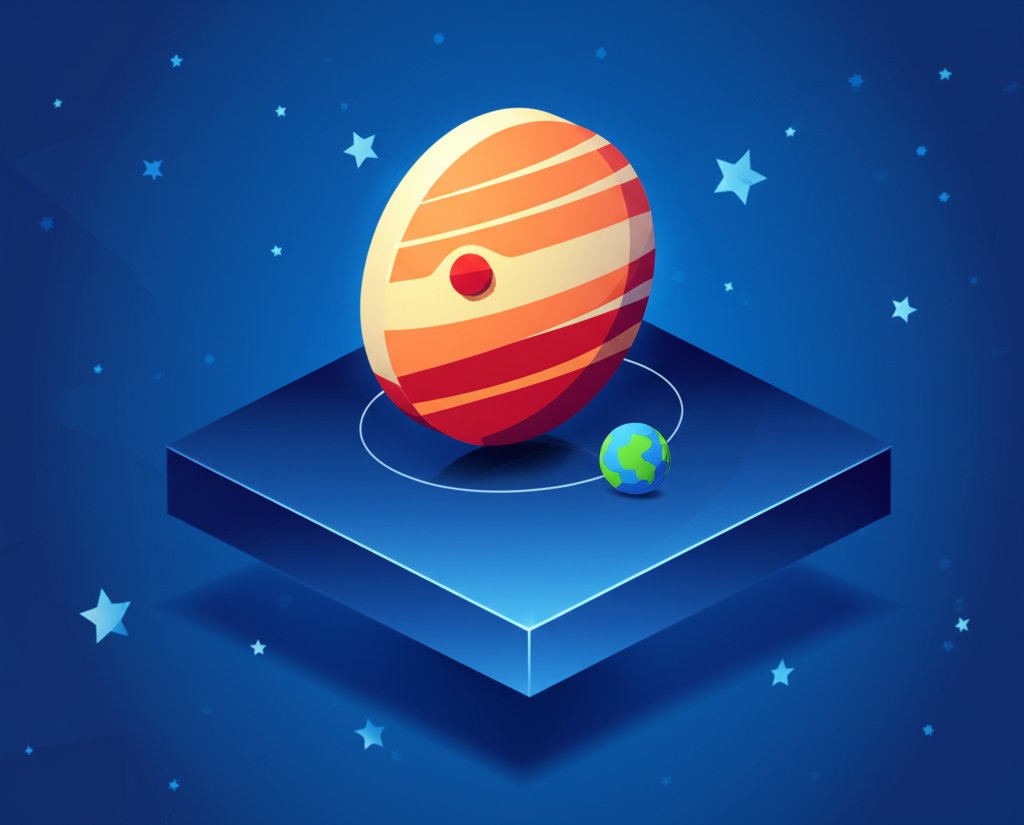
To truly grasp Jupiter’s size, we need to put it into perspective. Forget abstract numbers for a moment. Imagine 11 Earths lined up side-by-side. That’s roughly the diameter of Jupiter. To get even more visual, Jupiter vs. Earth Size is a comparison that helps you visualize this difference.
Jupiter’s radius is approximately 43,441 miles (69,911 kilometers). That’s massive!
- Diameter: Approximately 86,882 miles (139,822 kilometers)
- Mass: About 318 times the mass of Earth. In fact, Jupiter’s mass is more than 2.5 times the mass of all the other planets in our solar system combined!
You might ask yourself, Jupiters Jaw-Dropping Size Explained? It’s so immense that if Earth were the size of a grape, Jupiter would be the size of a basketball!
Why Size Matters
Jupiter’s enormous size significantly influences its behavior and its role within the solar system. Its substantial gravity sculpts the orbits of other celestial bodies, including asteroids, comets, and even other planets. Jupiter’s gravity influences the asteroid belt, preventing planetary formation there.
The Vast Distance: Jupiter’s Orbital Path
Not only is Jupiter big, but it’s also far away. Its distance from the Sun significantly impacts its climate, orbital period, and visibility from Earth.
Measuring the Distance
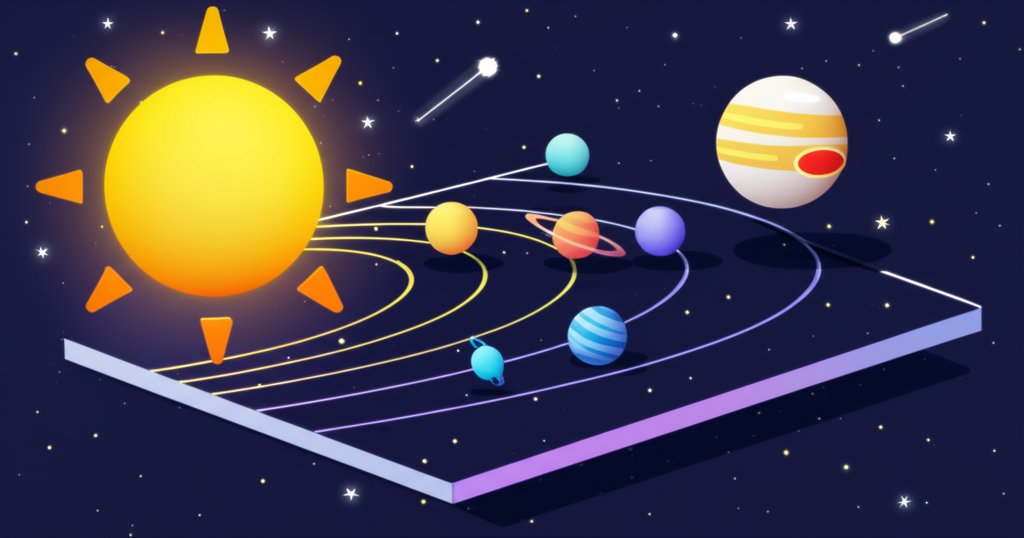
Jupiter orbits the Sun at an average distance of about 5.2 astronomical units (AU). One AU is the average distance between the Earth and the Sun (approximately 93 million miles or 150 million kilometers). So, Jupiters distance in astronomical units is over five times further away from the Sun than we are.
- Average Distance from the Sun: 484 million miles (778 million kilometers).
- Orbital Period: Approximately 11.86 Earth years.
Understanding the Implications
This great distance from the sun means Jupiter receives less sunlight and, subsequently, is much colder than Earth. The average temperature at the top of Jupiter’s clouds is around -234°F (-145°C). Its long orbital period also means that it takes nearly 12 Earth years for Jupiter to complete one orbit around the Sun.
Up Close and Personal: Exploring Jupiter’s Composition and Atmosphere
Jupiter isn’t just a big ball of nothing. It’s a dynamic world with a unique composition and a turbulent atmosphere.
The Gas Giant Composition
Unlike Earth, Jupiter doesn’t have a solid surface. It’s primarily composed of hydrogen (about 76%) and helium (about 24%) by mass. As you descend into Jupiter’s atmosphere, the pressure and temperature increase dramatically. Eventually, the hydrogen is compressed into a metallic state. Scientists believe Jupiter has a core of denser material, possibly rock and metal, but this core is thought to be dilute or “fuzzy,” extending to a significant portion of the planet’s radius.
A World of Storms: Jupiter’s Atmosphere
Jupiter’s atmosphere is characterized by its distinctive cloud bands, or belts and zones. These bands are caused by strong east-west winds, with wind speeds exceeding 150 m/s. The lighter-colored zones are rising regions of cooler air, while the darker belts are descending regions of warmer air.
Of course, the most famous atmospheric feature is the Great Red Spot, a persistent high-pressure storm larger than Earth. This storm has been observed for over 300 years and extends an estimated 300-500 kilometers below the cloud tops.
Jupiter’s Influence: More Than Just a Big Planet
Jupiter’s size and distance influence more than just its own properties. It plays a crucial role in shaping our solar system.
Protecting the Inner Planets
Jupiter’s massive gravity acts as a sort of “cosmic vacuum cleaner,” deflecting or capturing many asteroids and comets that might otherwise threaten the inner planets, including Earth. Some scientists believe that without Jupiter, the rate of impacts on Earth would be significantly higher.
Shaping the Asteroid Belt
Jupiter’s gravitational influence also played a key role in shaping the asteroid belt, preventing the material there from coalescing into a planet. The “Grand Tack” hypothesis even suggests that Jupiter migrated inward toward the Sun and then outward again early in the solar system’s history, scattering the material in the asteroid belt.
Peering Through the Telescope: Observing Jupiter
Jupiter is visible to the naked eye, appearing as a bright, yellowish “star.” However, to truly appreciate its features, you need a telescope. Cost of peering at Jupiter varies based on telescope quality.
What to Look For
With even a small telescope, you can observe Jupiter’s cloud bands and its four largest moons, the Galilean moons: Io, Europa, Ganymede, and Callisto. These moons were discovered by Galileo Galilei in 1610 and are fascinating worlds in their own right. Ganymede is even larger than the planet Mercury!
Larger telescopes allow you to see more detail in Jupiter’s atmosphere, including smaller storms and variations in the cloud bands. You might even catch a glimpse of the Great Red Spot, although its visibility can vary depending on atmospheric conditions and Jupiter’s position in its orbit.
Unveiling Secrets: Spacecraft Missions to Jupiter
Our understanding of Jupiter has been revolutionized by spacecraft missions. These missions have provided close-up images and data that have revealed new insights into Jupiter’s atmosphere, magnetic field, and moons.
Key Missions to Jupiter
- Pioneer 10 & 11: The first spacecraft to fly past Jupiter, providing initial close-up images and measurements of its radiation belts.
- Voyager 1 & 2: Revealed many details about Jupiter’s atmosphere, rings, and the volcanic activity on Io.
- Galileo: The first spacecraft to orbit Jupiter, providing detailed measurements of its atmosphere and magnetic field. Galileo also deployed a probe into Jupiter’s atmosphere, which provided valuable data about its composition, temperature, and winds.
- Cassini & New Horizons: Flew past Jupiter on their way to other destinations, providing valuable data and images.
- Juno: Currently orbiting Jupiter, mapping its gravity and magnetic fields in detail, helping us understand its internal structure.
Future Missions
Exciting missions are planned for the future, including the JUICE (Jupiter Icy Moons Explorer) mission, launched in 2023, which will study Jupiter’s icy moons, and the Europa Clipper mission, launching in 2024, which will explore Europa’s potential for harboring life in its subsurface ocean.
Common Questions About Jupiter
Let’s address some frequently asked questions about the king of planets.
- Could Jupiter become a star? No. Jupiter lacks the necessary mass to sustain nuclear fusion in its core. It would need to be about 80 times its current mass to become a star.
- Does Jupiter have a solid surface? No, Jupiter is a gas giant composed primarily of hydrogen and helium. It doesn’t have a solid surface like Earth.
- How many moons does Jupiter have? As of August 2025, Jupiter has 97 confirmed moons.
Jupiters radius: Kilometers explained is a topic often explored by amateur astronomers.
Taking Your Next Steps in Understanding Jupiter
Understanding Jupiter’s size and distance isn’t just about memorizing numbers. It’s about gaining a deeper appreciation for the scale and complexity of our solar system. Spend some time looking up at the night sky and try to spot Jupiter. Think about its immense size and its vast distance from the Sun. Consider the forces that shape its atmosphere and the role it plays in protecting our planet.
If you have a telescope, use it to observe Jupiter for yourself. Even a small telescope can reveal its cloud bands and its four largest moons. There are also plentiful resources online, including images and data from spacecraft missions, that can help you learn more about this fascinating world.
Whether you’re a seasoned astronomer or just curious about the universe, Jupiter offers endless opportunities for exploration and discovery.
Jupiters Distance From the Sun impacts its temperature and orbital period. The more you learn, the more you’ll appreciate the sheer wonder of our solar system’s largest planet.










