
Few figures in the 21st century have had as profound and, at times, as controversial an impact on global communication as Mark Zuckerberg. This mark zuckerberg biography explores the journey of a Harvard student who revolutionized how we connect, share, and consume information, examining his successes, the controversies that have dogged his path, and his current ambitions for the future.
At a Glance:
- Early Prodigy: Showed an aptitude for computer programming from a young age.
- Facebook’s Genesis: Launched Facebook from his Harvard dorm room in 2004.
- Rapid Growth: Facebook quickly expanded beyond college campuses to become a global phenomenon.
- Controversies Abound: Faced numerous criticisms regarding data privacy, misinformation, and market dominance.
- Meta’s Metaverse Vision: Rebranded Facebook to Meta Platforms, focusing on virtual reality and the metaverse.
- Philanthropic Efforts: Committed billions to charitable causes through the Chan Zuckerberg Initiative.
- Continued Influence: Remains a powerful force in technology, business, and increasingly, politics.
From Zucknet to Harvard: The Early Years
Born on May 14, 1984, in White Plains, New York, Mark Zuckerberg displayed an early fascination with computers. By age 12, he had already created “Zucknet,” a messaging program allowing communication between his father’s dental office and the family home. This early project foreshadowed his later ability to connect people on a massive scale. He honed his skills at Ardsley High School before transferring to Phillips Exeter Academy, where he excelled in programming and other subjects.
Zuckerberg’s passion for coding continued at Harvard University, where he enrolled in 2002. It was here, in the dorm rooms of Harvard, that the seeds of Facebook were sown.
The Facebook Phenomenon: Connecting the World
In February 2004, Zuckerberg, along with fellow Harvard students Eduardo Saverin, Dustin Moskovitz, Chris Hughes, and Andrew McCollum, launched “TheFacebook.” Initially conceived as a social networking site exclusively for Harvard students, it quickly gained popularity. The concept was simple yet powerful: a platform for students to connect, share information, and build communities online.
The site’s growth was explosive. By the end of 2004, TheFacebook had reached one million users. By December 2005, that number had ballooned to 5.5 million. Recognizing the platform’s potential, Zuckerberg dropped out of Harvard in 2004 to dedicate himself fully to Facebook. In 2005, the company, formerly known as “TheFacebook”, made the change to Facebook. It wasn’t long before venture capital firms took notice; Accel Partners invested $12.7 million, fueling further expansion. Despite lucrative buyout offers from Yahoo! and MTV Networks, Zuckerberg held firm, determined to build his vision. Learning more about his leadership style can provide insight into these early decisions; you can do so at Zuckerbergs Leadership: A Closer Look.
Navigating the Storm: Controversies and Legal Battles
Facebook’s rapid ascent was not without its challenges. Early on, Zuckerberg faced accusations of stealing the idea for Facebook from HarvardConnection (later ConnectU). This led to a protracted legal battle that eventually settled for 1.2 million shares and $20 million in cash. Zuckerbergs legal battles unfold demonstrate how these early controversies shaped his approach to business and risk.
However, the controversies didn’t stop there. As Facebook grew into a global behemoth, it faced increasing scrutiny over its handling of user data, the spread of misinformation, and the amplification of hate speech.
The Cambridge Analytica scandal in 2018 proved to be a watershed moment. It was revealed that the data of approximately 87 million Facebook users had been harvested without their consent and used for political advertising. This revelation triggered widespread outrage and led to Zuckerberg’s multiple appearances before Congress to testify about data privacy and misinformation. In 2024, he again testified before the Senate Judiciary Committee regarding child safety on social media, where he apologized to families affected by online abuse—a moment heavy with emotion and accountability. The full weight of Zuckerbergs Contentious History underscores the significant challenges Zuckerberg continues to face.
Furthermore, criticisms have been leveled against Zuckerberg for allegedly dismissing proposals within Meta aimed at improving teenagers’ mental health, raising concerns about the platform’s impact on vulnerable users.
Acquisitions and Expansion: Building a Tech Empire
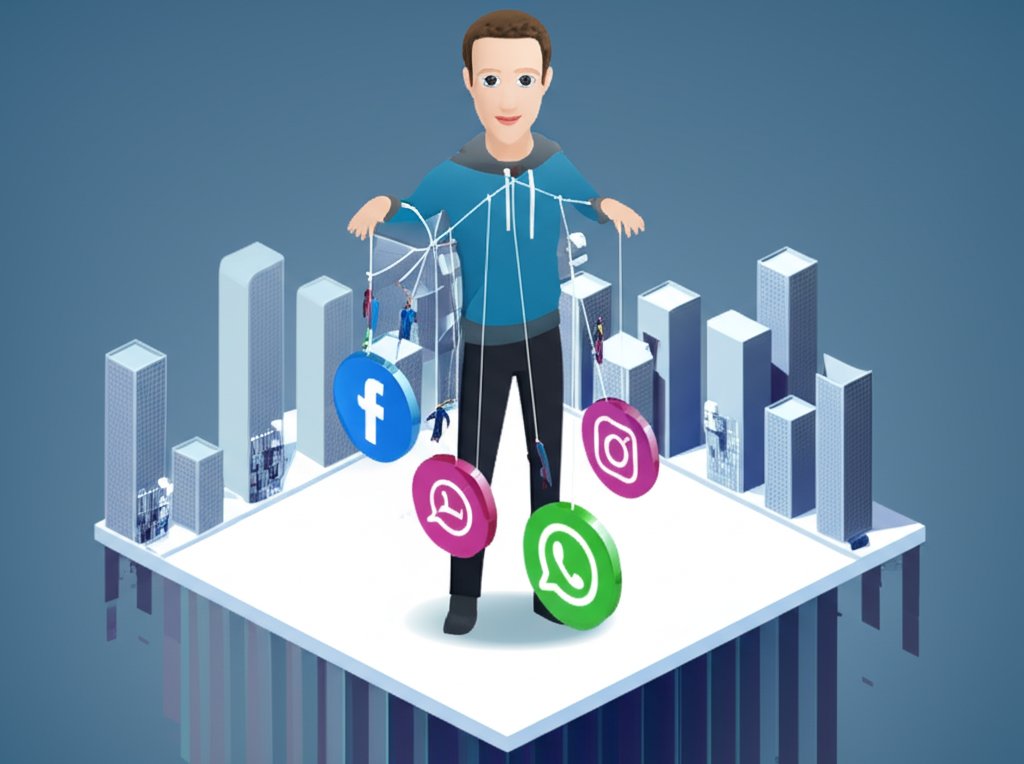
Under Zuckerberg’s leadership, Facebook strategically acquired other companies to expand its reach and consolidate its dominance in the social media landscape. Two key acquisitions stand out:
- Instagram (April 2012): Purchased for $1 billion, this photo-sharing platform has become a major force in visual communication and e-commerce.
- WhatsApp (February 2014): Acquired for $19 billion, this messaging app boasts billions of users worldwide and is a crucial communication tool in many regions.
These acquisitions not only expanded Facebook’s user base but also solidified its position as a central hub for online interaction.
Meta: A Vision for the Future (or Is It?)
In October 2021, Facebook underwent a significant rebranding, changing its name to Meta Platforms. This move signaled a shift in focus towards the “metaverse,” a vision of interconnected virtual 3D spaces where users can interact, work, and play. Meta has invested heavily in virtual reality technologies and is developing platforms like Horizon Worlds to realize this vision.
The company is also exploring other emerging technologies, including generative AI, with Zuckerberg announcing a renewed focus on this area in February 2023. However, not all changes have been met with excitement. In January 2025, Meta announced the end of its independent fact-checking program, opting for a community-driven system, a decision that has raised concerns about the potential for increased misinformation on the platform.
Giving Back: Philanthropy and the Chan Zuckerberg Initiative
Beyond his business ventures, Zuckerberg has committed to philanthropic endeavors. He signed the Giving Pledge, promising to donate at least 50% of his wealth to charitable causes.
In 2010, he donated $100 million to Newark Public Schools, aiming to improve the city’s education system. He subsequently launched the Chan Zuckerberg Initiative (CZI) with his wife, Priscilla Chan. CZI is a philanthropic organization focused on advancing human potential and promoting equal opportunity. Through CZI, Zuckerberg has committed $3 billion to scientific research, aiming to cure, prevent, or manage all diseases by the end of the century. The full scope of Zuckerbergs philanthropic efforts explored shows a deep commitment to positive global impact.
He also donated $25 million to the Gates Foundation’s coronavirus therapeutics accelerator, contributing to the global effort to combat the COVID-19 pandemic.
Personal Life: Family and Values

Zuckerberg met Priscilla Chan while both were students at Harvard. They married in May 2012 and have three daughters: Maxima (born 2015), August (born 2017), and Aurelia (born 2023).
Net Worth and Financial Standing
Zuckerberg became the world’s youngest self-made billionaire in 2008 at the age of 23. As of May 2025, his estimated net worth exceeds $220 billion, placing him among the wealthiest individuals globally, though precise figures can fluctuate with market conditions. It is important to stay abreast of Zuckerbergs Projected Net Worth, 2025 given the dynamic nature of wealth in the tech sector. And considering his wealth, it is no surprise that Zuckerbergs private jet use is substantial.
Political Leanings and Influence
While initially known for supporting progressive causes, Zuckerberg has shown signs of aligning with more conservative policies and politicians in recent years, including Donald Trump. He has also publicly criticized pressure from the Biden administration to censor COVID-19 misinformation on Facebook, highlighting his evolving stance on free speech and platform responsibility.
“The Social Network”: Hollywood’s Take
The 2010 film “The Social Network” offered a dramatized portrayal of Zuckerberg and the origins of Facebook. While commercially successful, Zuckerberg has publicly objected to the film’s narrative, citing inaccuracies in its depiction of events and his motivations.
The Road Ahead: What’s Next for Zuckerberg?
Mark Zuckerberg’s journey from Harvard dorm room coder to global tech titan is a story of ambition, innovation, and constant reinvention. He continues to push the boundaries of technology, navigating complex ethical dilemmas, and shaping the future of how we connect and interact. His focus on the metaverse suggests a belief in immersive digital experiences, but whether this vision will resonate with users remains to be seen. As he steers Meta through an ever-evolving landscape, Zuckerberg’s decisions will undoubtedly have a lasting impact on society for years to come.
Actionable Steps:
- Stay Informed: Follow reputable news sources and fact-checking organizations to stay informed about the latest developments at Meta and the controversies surrounding the company.
- Take Control of Your Data: Review your privacy settings on Facebook and other social media platforms to understand how your data is being used and make adjustments as needed.
- Engage in Constructive Dialogue: Participate in discussions about the ethical implications of social media and technology, advocating for responsible innovation and user protection.










