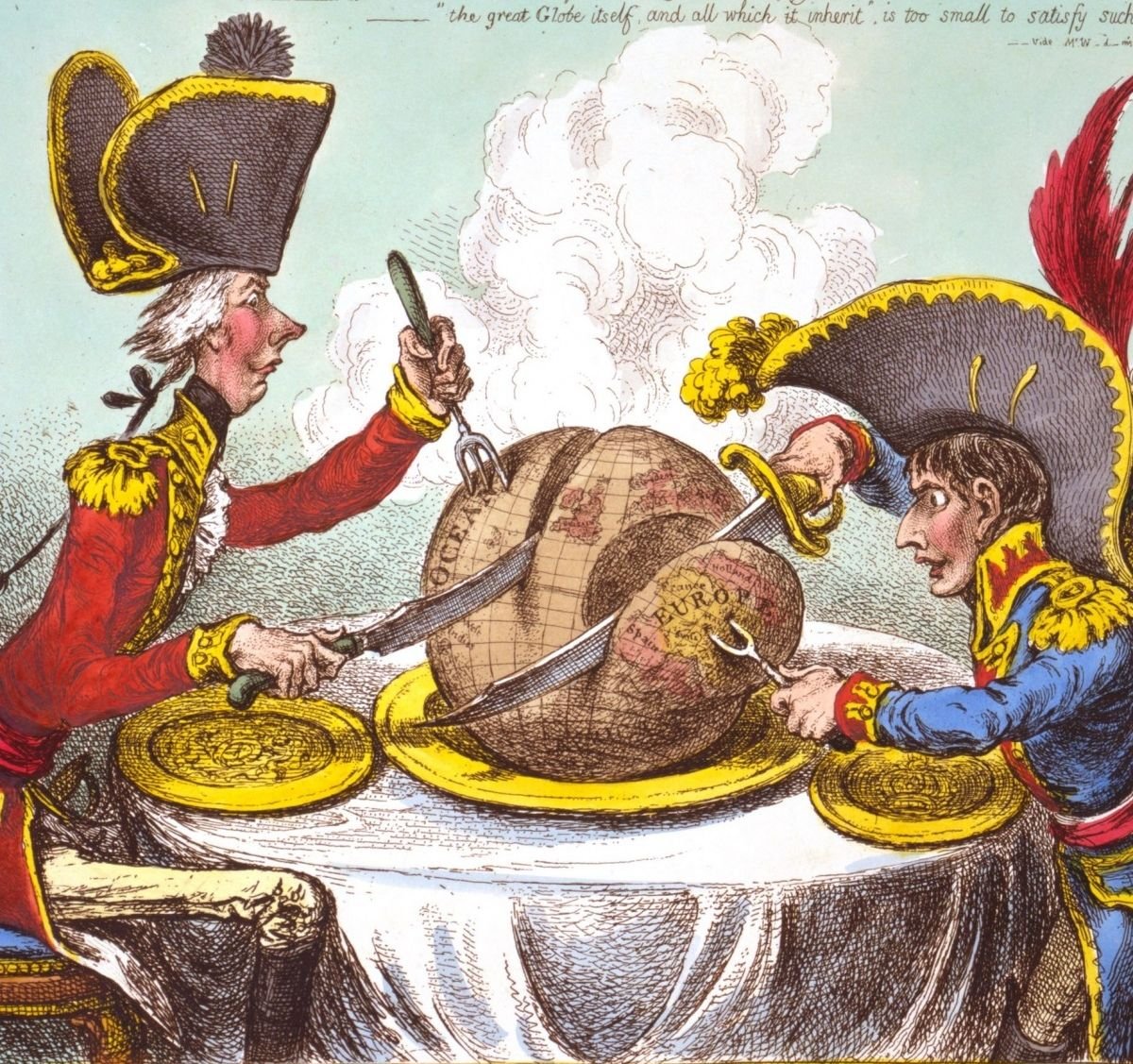
The assassination of Archduke Franz Ferdinand might have lit the fuse, but World War I’s true powder keg was packed decades earlier by intense global competition. At its heart lies a powerful concept: imperialism definition ww1, a dynamic force that reshaped the world map and set the major powers on an inevitable collision course. Understanding this era isn’t just about dates and battles; it’s about grasping the deep-seated rivalries fueled by nations vying for control, resources, and prestige across continents.
At a Glance: Imperialism’s Role in WWI
- Clear Definition: Imperialism is the act of a nation extending its power by acquiring territory or gaining significant political and economic control over other lands for its own benefit.
- 19th-Century Apex: While ancient, European imperialism reached unprecedented heights in the 19th century, driven by industrial needs and national ambition.
- Core Driver of Rivalry: This expansion directly led to fierce competition among European powers for colonies, particularly in Africa and Asia.
- Economic & Strategic Stakes: Colonies provided valuable raw materials, foodstuffs, cheap labor, and strategic ports, making them essential for economic growth and military dominance.
- Catalyst for Crises: Imperialist clashes, like the “Scramble for Africa” and the Moroccan Crises, repeatedly pushed nations to the brink of war, cementing distrust and strengthening military alliances.
Unpacking the ‘Imperialism’ in Imperialism Definition WW1
When we talk about the imperialism definition ww1 context, we’re zeroing in on a particular kind of power projection. Imagine a powerful country leveraging its military, economic, and political might to dominate weaker regions, not just through trade but through outright annexation or by pulling all the strings from afar. This wasn’t merely about setting up trading posts; it was about integrating these territories into the “mother country’s” system, extracting valuable raw materials like rubber, diamonds, or oil, securing markets for manufactured goods, and exploiting cheap labor.
This ideology of domination, intrinsically linked to conquest and exploitation, had existed for centuries. However, the 19th century saw European imperialism explode in scale and intensity, fueled by the Industrial Revolution’s insatiable demand for resources and new markets. This surge in colonial ambition stands as one of the four principal long-term causes of World War I, alongside the rise of militarism, the formation of intricate alliance systems, and fervent nationalism.
The Global Chessboard: Empires on the Eve of War
By 1914, the world was carved up into vast empires, each a testament to a nation’s perceived strength and influence. Picture a global chessboard where the major European powers held most of the pieces.
- Britain: The undisputed champion of empire-building, Britain’s holdings by 1914 spanned a quarter of the globe, encompassing 56 colonies. From the resource-rich plains of India to the strategic waterways of Egypt, and settler dominions like Canada, Australia, and New Zealand, its empire was a source of immense wealth and global power.
- France: Not far behind, France controlled 29 colonies, primarily concentrated in West Africa and Southeast Asia (Indochina). These territories provided vital resources and enhanced France’s global standing.
- Russia: While often thought of differently, Russia’s expansion was also imperialistic, pushing east into Siberia and Central Asia, and west into parts of Eastern Europe, seeking warm-water ports and strategic depth.
- Austria-Hungary: This dual monarchy maintained control over a multi-ethnic empire within Europe itself, constantly grappling with nationalist movements and expanding its influence into the Balkans.
- Germany: A latecomer to unification (1871), Germany rapidly developed its own imperialist ambitions, known as Weltpolitik (world policy). With 10 colonies mainly in Africa—Togoland, Cameroon, German Southwest Africa (Namibia), and German East Africa (Tanganyika)—Germany sought to challenge the established colonial powers, directly clashing with British and French interests.
- Other Players: Smaller European nations like Spain, Portugal, Belgium, Holland, and Italy also held colonial territories, adding layers of complexity to the imperial landscape. Further afield, Japan and the United States were emerging as significant imperial powers in their own right.
This extensive network of colonies wasn’t just about land; it was about power projection, economic lifeline, and national pride. Each empire was a symbol of strength, making any perceived threat to its colonial holdings a direct challenge to national honor.
When Expansion Clashed: The Spark of Colonial Rivalries
The race for colonies wasn’t a peaceful affair; it was a cutthroat competition that repeatedly ignited diplomatic crises and near-wars. The most dramatic example was the “Scramble for Africa.” In 1870, European powers controlled only about 10% of the African continent. By 1914, that figure had skyrocketed to 90%. Nations rushed to claim territories, driven by a mix of motivations:
- Resources: Africa was a treasure trove of raw materials—rubber, diamonds, gold, copper, timber—all essential for industrial growth.
- Strategic Ports: Establishing naval bases and coaling stations across global trade routes was crucial for controlling trade and projecting military power.
- Prestige: Owning colonies was a badge of honor, a sign of a nation’s power and international standing. No major power wanted to be left out of the “civilizing mission.”
- Ideology: Beliefs in racial superiority and the duty to “civilize” non-European peoples often masked the brutal realities of exploitation.
The Berlin Conference of 1884-1885, called by German Chancellor Otto von Bismarck, was an attempt to manage this chaotic scramble. European powers literally drew lines on a map, formalizing their claims and establishing rules for future acquisitions. While it temporarily reduced the immediate risk of war over Africa, it merely formalized the competition and set the stage for future flashpoints, proving that peace was temporary. To dive deeper into the broader context of how these rivalries directly contributed to the global conflict, you can read our main guide: How imperialism caused World War 1.
Friction Points: Imperialist Crises Leading to the Brink
Beyond the general scramble, specific imperialist flashpoints dramatically ratcheted up tensions, making WWI less of an accident and more of an inevitability.
The Lingering Shadow of the Ottoman Empire
Referred to as the ‘sick man of Europe’ since the 1800s, the decline of the Ottoman Empire created a power vacuum, particularly in Eastern Europe and the Middle East, that intensified imperial competition. As the Ottomans lost territory through conflicts like the Crimean Wars (1853-1856), the Russo-Turkish War (1877-1878), and the First Balkans War (1912-1913), other powers saw opportunities:
- Austria-Hungary: Eager to expand its influence into the Balkans, clashing with Serbian nationalism and Russian interests.
- Russia: Sought access to warm-water ports in the Black Sea and Aegean, viewing itself as the protector of Slavic peoples in the Balkans.
- Germany: Pursued its ambitious Berlin-to-Baghdad railway project, aiming to link its empire to the Middle East’s resources, directly challenging British and French influence in the region.
Each move in this complex geopolitical game was viewed with suspicion by rivals, contributing to an atmosphere of deep distrust and strategic one-upmanship.
The Moroccan Crises: Germany Challenges French Dominance
Two significant Moroccan Crises exemplified how imperialist ambitions could push Europe to the precipice of war, specifically heightening the animosity between France and Germany.
- First Moroccan Crisis (Tangier Crisis, 11905-1906): In 1905, German Kaiser Wilhelm II made a provocative visit to Tangier, Morocco. His speech openly challenged France’s growing influence over Morocco, a region France considered its rightful sphere. This wasn’t just about Morocco; it was Germany asserting its right to a say in global affairs (Weltpolitik) and attempting to test the strength of the Anglo-French Entente Cordiale. The ensuing diplomatic crisis was eventually resolved by the Algeciras Conference in 1906, which largely upheld French and Spanish interests but showed Germany’s willingness to rattle the saber.
- Second Moroccan Crisis (Agadir Crisis, 1911): Just five years later, another crisis erupted. When France sent troops to quell a rebellion in Morocco, Germany saw an opportunity to reassert its claims. In a highly provocative move, Germany dispatched the gunboat SMS Panther to the Moroccan port of Agadir. This act was a clear challenge to France and Britain, essentially demanding colonial concessions (perhaps in the French Congo) in exchange for recognizing French dominance in Morocco. The Agadir Crisis pushed France and Germany to the brink of war, with Britain firmly backing France. The outcome, the Franco-German Accord of November 4, 1911, saw France gain full protectorate status over Morocco, while Germany received some territory in the French Congo. While a temporary peace, the crisis solidified the Anglo-French alliance and deeply entrenched British and French suspicion of Germany’s aggressive expansionist foreign policy.
These crises were not isolated incidents; they were dress rehearsals for the larger conflict, each one reinforcing the alliances, deepening the mistrust, and demonstrating the volatile nature of imperial competition.
Beyond Borders: The Economic and Ideological Drivers of Imperialism
Understanding the imperialism definition ww1 is also about grasping the profound economic and ideological forces that propelled it. Economically, colonies were perceived as essential lifelines:
- Raw Materials: Industrialized nations needed a constant, cheap supply of raw materials (cotton, rubber, minerals) to feed their factories.
- New Markets: Colonies offered captive markets for finished goods, ensuring demand and profits.
- Investment Opportunities: Imperial territories provided new places to invest surplus capital, promising higher returns than saturated domestic markets.
- Cheap Labor: Indigenous populations were often exploited as a source of inexpensive labor for mines, plantations, and infrastructure projects.
Ideologically, imperialism was often justified by: - National Prestige: Empires were symbols of national power and greatness. A nation without colonies was seen as a second-rate power.
- Social Darwinism: A twisted application of Darwin’s theories, suggesting that “stronger” nations had a right to dominate “weaker” ones.
- “Civilizing Mission”: The belief that European powers had a moral duty to bring Christianity, education, and “modern civilization” to supposedly backward peoples, often masking brutal exploitation.
These drivers created a self-reinforcing cycle: the more a nation expanded, the more resources it needed, leading to further expansion and increased competition with rivals.
Practical Playbook: Recognizing Imperialism’s WWI Blueprint
When examining the path to WWI, imperialism isn’t just a historical footnote; it’s a critical lens for understanding how global politics operated. Here’s a practical framework:
- Identify the Economic Imperative: Look for nations with rapidly industrializing economies (like Germany) needing new resources and markets. Their foreign policy will inevitably turn outward.
- Track the Land Grab: Observe the pace and direction of colonial expansion (e.g., the “Scramble for Africa”). Who’s claiming what, and where do their claims overlap?
- Note Strategic Chokepoints: Understand why certain territories (like the Suez Canal, the Balkans, or Morocco) were so hotly contested. They controlled vital trade routes or offered military advantages.
- Connect Colonial Disputes to Alliances: See how crises arising from imperialist competition (e.g., the Moroccan Crises) strengthened existing alliances or forged new ones, ultimately creating opposing blocs.
- Recognize the Prestige Factor: Imperial possessions were often more about national pride and geopolitical leverage than immediate economic gain. Losing a colonial dispute was seen as a national humiliation, making compromise difficult.
This framework shows that the decisions made in far-flung colonies had direct, escalating consequences for peace in Europe. Every flag planted overseas was a potential spark for conflict back home.
Quick Answers: Common Questions on Imperialism and WWI
Q: Was imperialism the only cause of World War I?
A: No, absolutely not. Imperialism was one of four major long-term causes, alongside militarism (the arms race), the complex alliance system (Triple Entente vs. Triple Alliance), and fervent nationalism (ethnic groups seeking self-determination, or nations asserting dominance). They all intertwined and exacerbated one another.
Q: How did 19th-century imperialism differ from earlier forms of expansion?
A: The key differences lay in scale, speed, and motivation. Fueled by the Industrial Revolution, 19th-century imperialism saw European powers conquer vast territories at an unprecedented rate, driven by a desperate need for industrial raw materials and new markets, often backed by superior industrial military technology. Earlier expansion was often more focused on trade routes or smaller conquests.
Q: Why were colonies so incredibly important to the European powers leading up to WWI?
A: Colonies were seen as vital for several reasons: they provided essential raw materials for booming industries, offered captive markets for manufactured goods, served as strategic military and naval bases, and were powerful symbols of national prestige and global power. Losing them or failing to acquire new ones was seen as a sign of national decline.
An Unavoidable Collision Course
The imperialism definition ww1 isn’t merely an academic exercise; it’s a blueprint for understanding how unchecked ambition, economic hunger, and nationalistic pride can converge to ignite global catastrophe. The great powers of Europe, locked in a relentless race for colonial dominion, continually stoked the flames of rivalry and suspicion. Each new territory claimed, each diplomatic crisis over a faraway land, tightened the coils of tension around the continent, making the outbreak of World War I in 1914 not an unforeseen accident, but the tragic culmination of decades of imperialist maneuvering. The world stage was set for war not in Sarajevo, but in the distant jungles and deserts where empires clashed.










