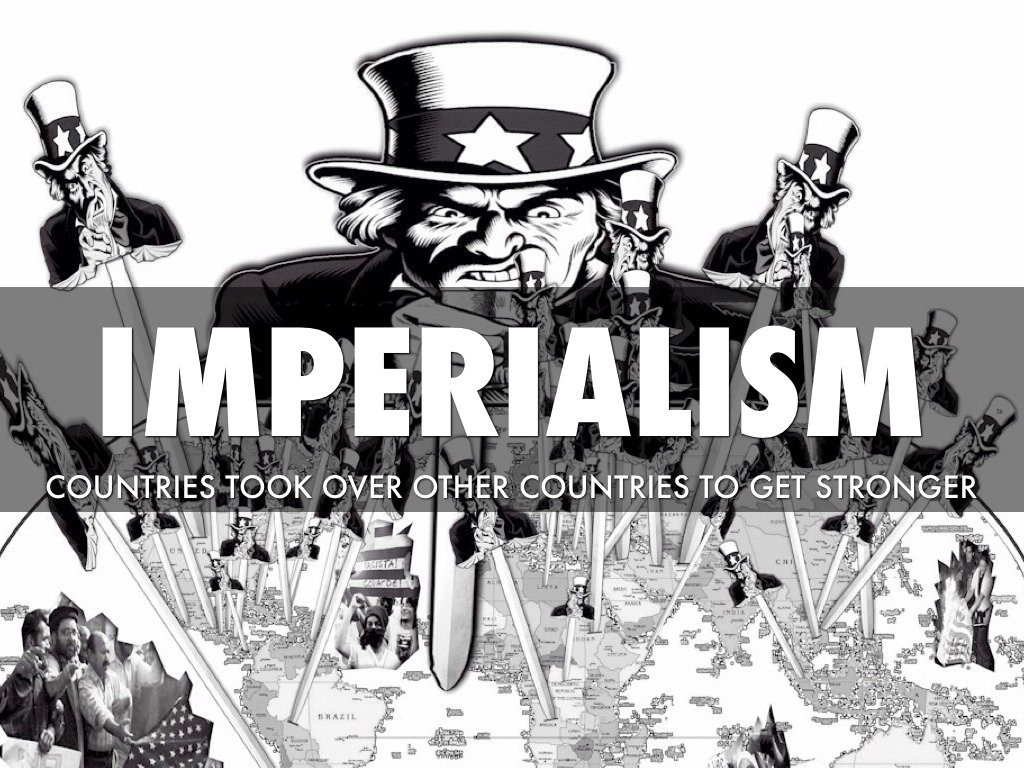
For the bigger picture and full context, make sure you read our main guide on How Imperialism Caused World War 1 By Sparking Colonial Rivalries.
The First World War wasn’t merely an explosion of pent-up tensions; it was the catastrophic culmination of decades of intensifying imperial rivalries that slowly but surely set Europe on a collision course. Understanding how did imperialism contribute to World War 1 requires looking beyond immediate triggers to the deep-seated competition for global dominance, resources, and prestige that defined the era. This wasn’t just about flags and maps; it was about national identity, economic power, and the deeply ingrained belief that an empire’s strength was measured by its overseas possessions.
At a Glance: How Imperialism Fueled War
- Global Land Grab: The “Scramble for Africa” and similar colonial expansions created direct flashpoints and competitive resentment among European powers.
- Economic & Strategic Stakes: Control over resources, trade routes, and strategic territories became vital for national power and economic growth, intensifying competition.
- Prestige & Exclusion: Empires measured their greatness by their colonies, leading to feelings of inadequacy (Germany) and fierce protection of existing territories (Britain, France).
- Direct Confrontations: Crises like those in Morocco and the Balkans demonstrated how quickly colonial or regional imperial ambitions could escalate to the brink of war.
- Catalyst for Militarism: Rivalries spurred an arms race, particularly naval expansion, as nations sought to protect their empires and project power.
- Alliance Systems: The complex web of alliances formed in response to these imperial anxieties, dividing Europe into opposing, war-ready blocs.
The Global Land Grab: Empires Vying for Dominance
Before the guns of August 1914 sounded, the world had been carved up by European powers in an unprecedented display of imperial expansion. This aggressive pursuit of overseas territories, resources, and markets was a defining characteristic of the late 19th and early 20th centuries, and it fundamentally shaped how did imperialism contribute to World War 1.
The most vivid example was the “Scramble for Africa,” particularly after 1880. Driven by industrial demand for raw materials, the allure of new markets, and technological advancements like steamboats and quinine (which combatted malaria), European nations raced to claim vast swathes of the continent. By the outbreak of WWI, nearly all of Africa had fallen under colonial rule, divided among Great Britain, France, Germany, Italy, Belgium, Spain, and Portugal. This wasn’t a peaceful partition; it was a cutthroat competition where empires viewed each other with suspicion and rivalry. Each new acquisition by one power was seen as a threat or a missed opportunity by another.
Consider the stark disparity in colonial holdings by 1914: Great Britain boasted 56 colonies, France 29, while Germany, a rapidly industrializing nation, possessed a mere 10. This immense imbalance fueled a deep sense of resentment and exclusion in Germany. The Germans felt they had arrived late to the imperial feast and were being denied their “place in the sun” by established powers. This simmering frustration directly contributed to a more aggressive German foreign policy, eager to challenge the status quo and assert its right to global influence.
Flashpoints on the Fringes: The Moroccan Crises
The tension generated by these colonial disparities wasn’t abstract; it manifested in concrete diplomatic crises that repeatedly pushed Europe to the brink of war. The Moroccan Crises serve as prime examples of how imperial ambitions could directly ignite international disputes.
The First Moroccan Crisis (1905–1906)
French influence in Morocco was growing, a clear sign of their expanding North African empire. In March 1905, Kaiser Wilhelm II of Germany dramatically challenged this by visiting Tangier, Morocco, declaring his support for Moroccan independence and demanding an international conference on the country’s future. This was a direct provocation to France and an attempt by Germany to assert its own imperial weight.
The crisis escalated Franco-German tensions significantly. Although ultimately resolved by the Algeciras Conference in 1906, which largely reaffirmed French and Spanish influence, it left a bitter taste. Germany felt it had been diplomatically isolated and that the other powers were aligned against its imperial aspirations. It solidified the existing Anglo-French Entente Cordiale into a more robust defensive alignment.
The Second Moroccan Crisis (Agadir Crisis, 1911)
Just a few years later, the Moroccan issue flared up again. In April 1911, France sent troops into Morocco, ostensibly to quell a rebellion, but effectively signaling its intent to establish a full protectorate. Germany, feeling its interests were again being sidelined, responded by dispatching the SMS Panther gunboat to Agadir, a port on Morocco’s Atlantic coast. This “Panther’s Leap” was a bold and aggressive move, interpreted by many as a direct challenge and even a precursor to war.
The world held its breath. For weeks, war seemed a real possibility between France and Germany. The crisis eventually concluded with the Franco-German Accord on November 4, 1911. France gained its protectorate over Morocco, but in exchange, Germany received a slice of territory in the French Congo, effectively acknowledging Germany’s imperial interests in Africa, albeit with a rather meager territorial gain. These crises vividly demonstrated the volatile nature of colonial rivalries and their capacity to precipitate larger conflicts. They also showed that for countries like Germany, even minor colonial gains were considered vital for national pride and status.
The Balkan Crucible: Where Land Empires Collided
While overseas colonies generated significant friction, the clash of contiguous land-based empires in Europe’s “powder keg”—the Balkans—was arguably even more combustible. Here, the imperial ambitions of the Austria-Hungarian, Russian, and Ottoman empires converged, making the region a critical flashpoint for WWI’s origins. For a broader understanding of how these imperial tensions acted as a foundational cause, you might want to delve into how imperialism sparked World War 1.
The Ottoman Empire, once vast, had been steadily losing its grip on the Balkans throughout the 19th century. As it receded, a power vacuum emerged, drawing in its neighbors. Austria-Hungary, a multi-ethnic empire, saw the Balkans as its natural sphere of influence and a vital pathway to the Aegean Sea. Russia, on the other hand, presented itself as the protector of Slavic peoples (Pan-Slavism) and harbored long-standing imperial ambitions for control of the Dardanelles and access to the Mediterranean.
The Annexation of Bosnia-Herzegovina (1908)
A pivotal moment occurred in 1908 when Austria-Hungary formally annexed Bosnia-Herzegovina. These provinces, though administratively under Austro-Hungarian control since 1878, were largely populated by South Slavs, many of whom harbored nationalist aspirations for a “Greater Serbia” that would unite all South Slavs. Serbia, a newly independent nation supported by Russia, was outraged by the annexation, viewing it as a blatant act of Austrian imperialism that thwarted its own expansionist dreams.
This annexation profoundly angered Serbian nationalists and deepened the resentment against Austria-Hungary. It directly set the stage for the most famous act of defiance: the assassination of Archduke Franz Ferdinand on July 28, 1914. The assassin, Gavrilo Princip, a member of the anti-imperialist Young Bosnia group, explicitly protested the Austrian occupation of Bosnia. Austria-Hungary, seeing a chance to definitively crush Serbian nationalism and solidify its imperial control in the region, declared war on Serbia, accusing it of complicity. Russia, in turn, felt compelled to support Serbia, driven by both pan-Slavic solidarity and its own strategic imperial interests in preventing Austrian dominance in the Balkans.
The Ripple Effect: Alliances and Arms Races
The constant jockeying for colonial possessions and regional influence had profound systemic consequences, directly leading to the formation of rival alliance blocs and an escalating arms race. These, in turn, made a large-scale war not only possible but increasingly probable.
European nations, feeling insecure in this hyper-competitive imperial landscape, began to forge intricate alliance systems. These were often defensive in nature, designed to deter aggression, but paradoxically, they also made localized conflicts more likely to spiral into continental wars. For instance, the Triple Entente (France, Britain, Russia) coalesced partly in response to German imperial ambitions and the fear of German dominance, while the Triple Alliance (Germany, Austria-Hungary, Italy) sought to secure their own positions and challenge the status quo. Each nation entered these alliances with its own imperial and strategic interests in mind, believing mutual defense was the best way to protect their existing empires and secure future gains.
Beyond diplomacy, imperial rivalries fueled an accelerating arms race. Nations needed powerful militaries to acquire and protect their empires. This was most evident in the Anglo-German naval arms race between 1898 and 1912. Germany, seeking to challenge Britain’s naval supremacy—essential for projecting global imperial power and protecting its sea lanes—began building a formidable high-seas fleet. Britain, whose global empire depended entirely on its navy, saw this as an existential threat and responded by building even more powerful battleships (Dreadnoughts). This costly and destabilizing competition was a direct consequence of imperial rivalry, heightening tensions and creating an atmosphere where military strength was paramount.
The Imperial Mindset: A Justification for War
Beyond specific territories or resources, imperialism fostered a particular mindset among European elites and publics that made war seem not just possible, but a legitimate and even necessary tool of national policy. This competitive and militaristic outlook was deeply embedded.
Concepts like “Lebensraum” (living space) in Germany, though more famously associated with Hitler, were already circulating before WWI. They encapsulated the idea that a nation needed to expand its territory and influence to thrive, often at the expense of others. This wasn’t merely about economic gain; it was about national destiny, racial superiority, and the “civilizing mission” – the belief that European powers had a duty to bring their culture and governance to “inferior” peoples. This paternalistic, often racist, worldview justified exploitation and conquest, desensitizing nations to the use of force.
When disputes arose, whether over a patch of African land or influence in the Balkans, the default response was often to assert power through military threats, backed by the belief that their nation had a right to expand and dominate. This imperialistic fervor permeated political discourse, education, and popular culture, creating a climate where diplomatic solutions often took a backseat to demonstrations of strength, making the path to war tragically shorter.
Practical Playbook for Analyzing Imperial Triggers
To understand the long-term impacts of imperial competition, we can distill some key patterns and “triggers” that pushed the world towards war:
- Identify Disparities in Power and Ambition:
- Action: Map out colonial holdings and spheres of influence for major powers. Note which nations felt “left out” or believed their current holdings were inadequate for their perceived status (e.g., Germany’s relatively small empire).
- Pitfall: Assuming all empires had the same goals. Some sought raw materials, others strategic naval bases, others simply prestige.
- Example: Germany’s aspiration for a global empire (“Weltpolitik”) clashed directly with Britain’s established naval dominance and vast colonial network.
- Pinpoint Regions of Overlap or Contention:
- Action: Locate areas where multiple imperial interests converged geographically (e.g., Africa, the Balkans, parts of Asia). These are natural flashpoints.
- Pitfall: Overlooking “indirect” imperial competition, like economic dominance or cultural influence, which could be just as potent as direct territorial claims.
- Example: The Balkans, where Austro-Hungarian desires for land expansion met Russian pan-Slavic protectionism and Ottoman decline.
- Trace Escalatory Diplomatic Crises:
- Action: Analyze specific events where imperial claims led to direct confrontations. Look for patterns of ultimatums, military posturing, and brinkmanship.
- Pitfall: Focusing solely on the immediate cause without understanding the underlying imperial grievance that fueled the crisis.
- Example: The Moroccan Crises, where German attempts to challenge French influence in Morocco nearly led to war. Each crisis ratcheted up distrust and made future diplomatic solutions harder.
- Connect Imperialism to Militarization:
- Action: Examine how imperial ambitions drove specific military developments, especially naval build-ups or expansion of colonial armies.
- Pitfall: Seeing militarism as a standalone cause rather than a response to the perceived need to protect and expand empires.
- Example: The Anglo-German naval race, directly driven by Britain’s need to protect its vast empire and Germany’s desire to project global power.
- Identify the “Imperial Mindset”:
- Action: Look for rhetoric and policies that justify expansion, dominance, or perceived national superiority, linking them to an aggressive foreign policy.
- Pitfall: Dismissing ideological justifications as mere propaganda. For many, these beliefs were deeply held and influenced decision-making.
- Example: The concept of “Lebensraum” in Germany, advocating for territorial expansion as a national necessity, contributed to a climate where war for land was seen as legitimate.
Quick Answers: Deciphering Imperialism’s Role in WWI
Was imperialism the only cause of WWI?
No, imperialism was a core long-term cause, but not the only one. It intertwined with other major factors like militarism (the arms race fueled by imperial rivalries), alliance systems (formed out of imperial insecurities), and nationalism (especially in the Balkans, where anti-imperialist sentiments fueled conflict). Imperialism provided the intense competitive mindset and many of the flashpoints, but the combination of all these factors created the conditions for a global war.
How did a lack of colonies for Germany contribute to tensions?
Germany, a powerful and rapidly industrializing nation, felt deeply resentful and excluded by its relatively small number of colonies compared to Great Britain and France. This created a sense of injustice and a desire for “a place in the sun,” leading to a more aggressive foreign policy aimed at challenging the existing imperial order and acquiring new territories. This ambition directly clashed with the interests of established colonial powers, creating significant friction.
Did imperialism only cause conflict outside of Europe?
While much of the direct colonial conflict occurred overseas (e.g., Africa, Asia), the repercussions were acutely felt within Europe. Disputes over colonial territories led to diplomatic crises between European powers (like the Moroccan Crises). Furthermore, land-based imperialism within Europe itself, particularly in the Balkans (Austria-Hungary vs. Russia over Ottoman territories), was a direct and immediate precursor to the war, highlighting that imperialism’s impact wasn’t limited by geography.
How did the end of WWI affect imperialism?
World War I drastically reshaped the global imperial landscape. Four major empires collapsed during or shortly after the war: the Russian, German, Austria-Hungarian, and Ottoman empires. The Treaty of Versailles formally dismantled the German and Austria-Hungarian empires, and the Ottoman Empire dissolved shortly after. While some victorious powers (like Britain and France) expanded their mandates over former German colonies or Ottoman territories, the war ultimately weakened the legitimacy of traditional imperialism and paved the way for future decolonization movements, although these would take decades to fully materialize.
The Lasting Shadow of Imperial Ambition
The path to World War I was paved with the ambitions of empires. From the scramble for distant continents to the clash over strategic European territories, imperialism infused the global stage with an unbearable tension. It created an environment where nations were not just competing, but actively fearing and resenting one another, their prestige and power inextricably linked to their imperial reach. This deep-seated competition for resources, markets, and political influence didn’t just contribute to the war; it fundamentally shaped the context in which it became inevitable.
The story of World War I, therefore, is in many ways the story of empires colliding – empires whose rivalries, fueled by unchecked ambition and a perceived right to dominate, ultimately consumed them and reshaped the world map for generations to come. The lessons from how these imperial contests escalated into global conflict remain profoundly relevant, offering insights into the dangers of unbridled nationalistic and economic competition.










