
Imagine a world without credit cards, home loans, or even readily available personal loans. Hard to fathom, isn’t it? Yet, this was the reality for most of history. Though modern credit may seem complex, the driving force behind it—trust and deferred payment—has been around since the dawn of civilization. Understanding Early Forms of Credit isn’t just a history lesson; it’s a window into how societies functioned and how the seeds of modern consumerism were sown.
At a glance:
- Credit predates money and was essential in early societies.
- Installment plans in the 19th and 20th centuries fueled consumerism in the US.
- Trust, social relationships, and record-keeping were crucial components of early credit.
- Early concerns about overspending and debt mirrored modern anxieties.
- Fintech is the latest chapter, but the core principles of credit remain.
The Dawn of Deferred Payment: Credit Before Currency
Before coins jingled in pockets or numbers flashed on digital screens, credit existed. It was born out of necessity. Barter, while seemingly straightforward, proved inefficient. Imagine trying to trade a cow for a year’s worth of wheat. What if the wheat farmer didn’t need a cow right now? That’s where the fundamental concept of credit – the promise of future repayment – stepped in.
Barter systems suffered from what economists call a “coincidence of wants” – the need for both parties to simultaneously have what the other desires. This limitation led to reciprocal exchange and deferred payment systems. Someone could access goods or services immediately and repay later. Mesopotamias Surprising Credit System offers a deep dive into how these systems first developed.
Think of a community where everyone knows each other. If you needed help harvesting your crops, you could rely on your neighbors, knowing you would reciprocate when they needed assistance. This informal “credit” system relied heavily on trust and social relationships.
Archaeological evidence further supports the existence of early credit. Clay tablets from Mesopotamia and Egypt, dating back thousands of years, record loans of grain, livestock, and other commodities. These weren’t just simple transactions; they were formal acknowledgments of debt and agreements for future repayment.
Key Ingredients: Trust, Community, and Keeping Score
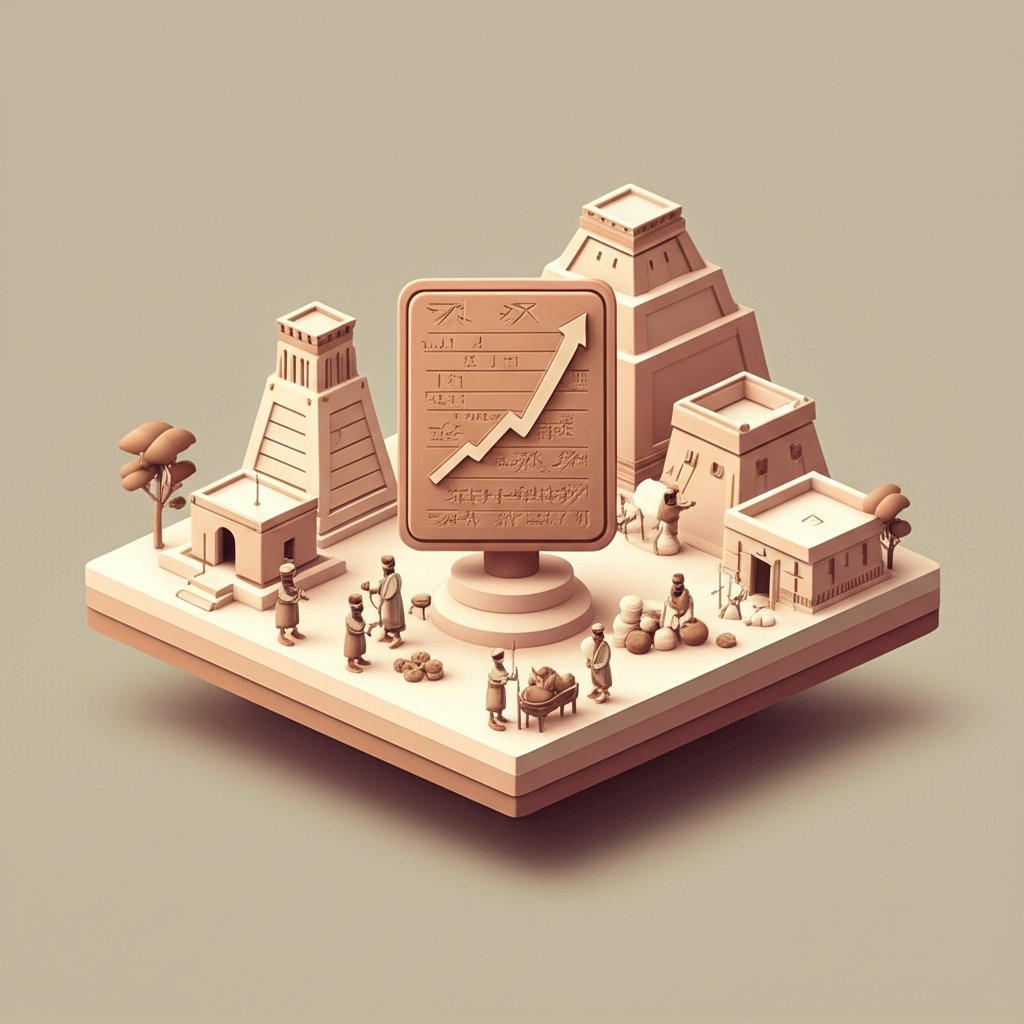
Three core components defined early credit systems:
- Trust: At its heart, credit relies on the lender’s belief in the borrower’s intention and ability to repay.
- Social Relationships: Credit often existed within close-knit communities where reputation mattered. Defaulting on a debt could have severe social consequences.
- Record-Keeping: Whether through notches on a stick, clay tablets, or simple ledgers, a method of tracking debts was essential.
Metal Coins as Credit Receipts sometimes functioned as tokens representing a debt owed.
From Store Credit to Installment Plans: The American Dream on Time
Fast forward to the American frontier. Imagine settling in a new town. You need supplies, but cash is scarce. Enter the general store, offering “store credit” or “book credit.” This was essentially a charge account with the retailer. Trading Posts and Credit fleshes out how vital store credit was to frontier life.
This system allowed settlers to acquire necessities and pay later, often when their crops were harvested or livestock sold. Store owners, acting as lenders, kept track of purchases and payments in a ledger, building relationships with their customers along the way. These relationships were essential to a thriving community.
But the real game-changer came with the rise of industrialization and mass production. Suddenly, goods like sewing machines, furniture, and eventually, automobiles, became available. But they were often too expensive for the average person to purchase outright.
Enter the installment plan.
The Rise of Installment Sales: Fueling the Consumer Revolution
The mid-19th century saw the emergence of installment loans, particularly for sewing machines. The catchy slogan, “Dollar down, dollar a week,” made these essential tools accessible to working-class families, particularly women who sought labor-saving devices. History of Store Credit began long before the industrial revolution, but it was the combination of mass production and installment plans that unleashed consumerism.
Furniture dealers quickly adopted the installment model, but it was the automobile that truly ignited the installment sales revolution in the early 20th century. By 1924, a staggering 75% of automobiles were purchased using installment loans. This wasn’t just about transportation; it was about freedom, status, and the American Dream.
Soon, other big-ticket items followed suit: radios, refrigerators, phonographs, washing machines, vacuum cleaners, even jewelry and clothing were available on credit. By the 1920s, installment debt had become a significant part of the American economy.
Consider these figures from that era:
- Around 80% of phonographs were sold using installment debt.
- 75% of washing machines were financed.
- 65% of vacuum cleaners were purchased on credit.
- Even 25% of jewelry sales relied on installment plans.
A Double-Edged Sword: The Dark Side of Early Credit

However, this explosion of consumer credit wasn’t without its critics. Merchants themselves issued early warnings about the dangers of installment debt and indebtedness. As early as the 1920s, concerns arose about the impact of easy credit on saving habits and individual character.
Wilbur Plummer’s 1927 study, “Social and Economic Consequences of Buying on the Instalment Plan,” provided a comprehensive analysis of this new phenomenon. Plummer examined the origins of installment plans, advertising tactics, user demographics, and the overall impact on society.
Plummer’s study highlighted several key concerns:
- Indiscriminate Purchasing: Salespeople often encouraged customers to buy luxury items they didn’t truly need.
- The “Luxury Habit”: Easy access to goods fostered a culture of spending rather than saving.
- Erosion of Thrift: Concerns arose that installment buying was creating a generation of “spendthrifts” who bought more than they could afford.
These are the same fears that circle around consumer credit today.
Charga-Plate history and bookkeeping represents another way that technology spurred credit.
Modern Echoes: Lessons from the Past
The evolution of credit didn’t stop there. The 20th century saw the rise of credit bureaus, credit scores, and sophisticated lending practices. Today, fintech and technology are transforming credit with AI, Big Data, and blockchain. But the core tenet of credit – trust – remains the same.
The early forms of credit offer valuable lessons for today’s consumers and lenders. Understanding the history of credit helps us:
- Appreciate the Importance of Financial Literacy: Learning to manage debt responsibly is crucial in a world of readily available credit.
- Recognize the Psychological Impact of Credit: Easy access to credit can lead to overspending and debt accumulation.
- Understand the Role of Credit in Economic Growth: Credit can stimulate economic activity, but it also carries risks.
Actionable Steps: Making Informed Credit Decisions
So, how can you apply these lessons to your own financial life?
- Track Your Spending: Knowing where your money goes is the first step to managing your finances.
- Create a Budget: A budget helps you prioritize your spending and avoid overspending.
- Understand Interest Rates and Fees: Before taking on any debt, carefully review the terms and conditions, including interest rates and fees.
- Avoid Impulse Purchases: Resist the temptation to buy things you don’t need, especially on credit.
- Build an Emergency Fund: Having an emergency fund can help you avoid relying on credit when unexpected expenses arise.
- Consider consolidating debt. If you have multiple debts, explore debt consolidation options to simplify your payments and potentially lower your interest rate.
And if you’re considering a store card, Apply for a store card only after carefully considering the pros and cons.
Early forms of credit played a crucial role in shaping societies and fueling economic growth. By understanding its history, we can make more informed decisions about credit and debt in our own lives. The story of credit is a human story, one built on trust, relationships, and the enduring desire to improve our lives.










