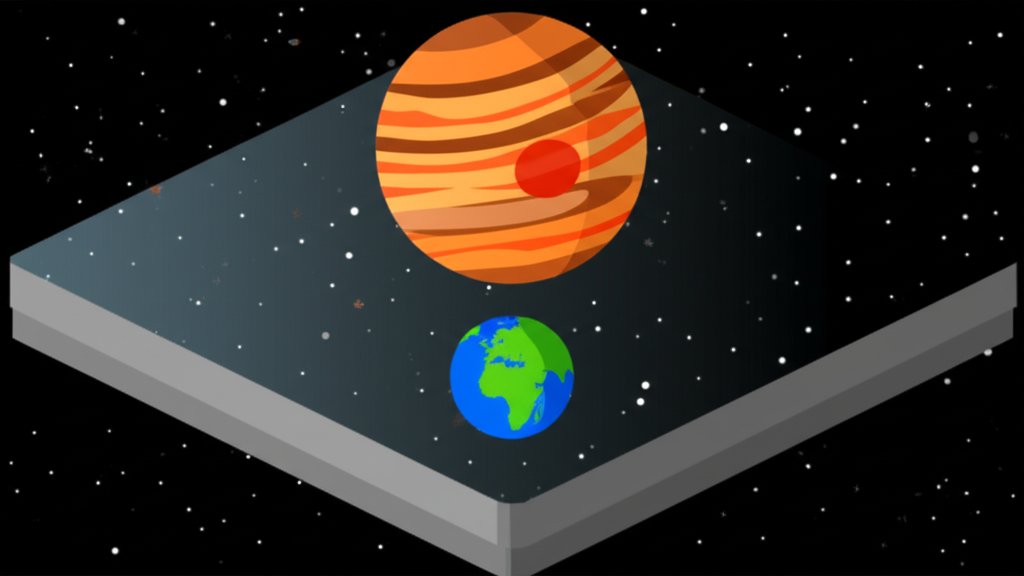
When pondering the sheer scale of our solar system, the question “How big is Jupiter really?” immediately comes to mind. It isn’t just bigger than Earth; it dwarfs our home planet, holding a dominant position as the solar system’s heavyweight champion. Understanding this size difference helps appreciate Jupiter’s influence and unique characteristics.
At a glance:
- Discover just how many Earths could fit inside Jupiter.
- Grasp Jupiter’s mass compared to Earth and the rest of the solar system.
- Appreciate how Jupiter’s size influences its composition and features like the Great Red Spot.
- Learn how to visualize the scale difference between Jupiter and Earth.
- Understand why Jupiter’s size prevents it from becoming a star.
The Raw Numbers: Jupiter’s Immense Scale
Let’s get straight to the numbers to underscore the magnitude of Jupiter’s size:
- Equatorial Diameter: Approximately 142,984 kilometers (88,846 miles). That’s more than 11 times the diameter of Earth.
- Mass: Roughly 318 times the mass of Earth. It’s so massive it’s more than 2.5 times the mass of all the other planets in our solar system combined!
- Volume: If you were to try and fill Jupiter with Earth-sized planets, you could squeeze in about 1,300 of them.
These figures can be hard to conceptualize, but they paint a clear picture: Jupiter is undeniably gigantic.
Visualizing the Difference: A Thought Experiment
Numbers are abstract, so let’s try a few analogies to make Jupiter’s size more tangible:
- Basketball vs. Pea: Imagine Earth as a pea. On that scale, Jupiter would be roughly the size of a basketball. This highlights the dramatic difference in size.
- Stadium Analogy: Think of the Rose Bowl stadium. If Earth were the size of a football, Jupiter would be comparable to the entire stadium.
These comparisons help put the numbers into a relatable perspective.
The Great Red Spot: A Stark Reminder of Jupiter’s Size
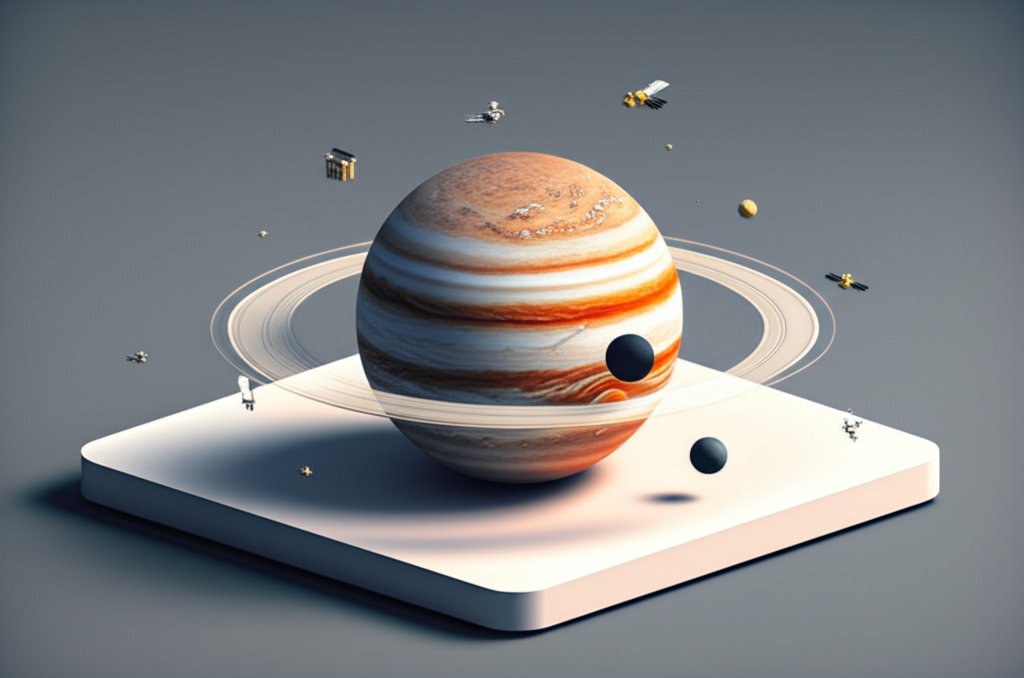
Jupiter’s most famous feature, the Great Red Spot, offers another way to appreciate its size. This persistent storm, which has been raging for at least 190 years (and likely much longer), is itself larger than Earth! This colossal weather system, fueled by Jupiter’s immense size and rapid rotation, serves as a constant reminder of the planet’s scale. It’s currently shrinking, at a rate of about 900 km (580 miles) per year, but still dwarfs our home planet.
Mass Matters: How Jupiter’s Size Influences Its Composition
Jupiter’s enormous size is directly linked to its composition. Its gravity allowed it to accumulate vast quantities of hydrogen and helium during the early formation of the solar system. This resulted in a planet that is primarily gas, lacking a solid surface.
Because of Jupiter’s size, extreme pressures exist deep within its atmosphere. These pressures compress hydrogen into a metallic state. This metallic hydrogen, combined with Jupiter’s rapid rotation, generates a powerful magnetic field, about 20 times stronger than Earth’s. To delve deeper into Jupiter’s defining characteristics, learn about Jupiter’s size and how it influences these phenomena.
Jupiter’s Influence on the Solar System Due to Its Size

Jupiter’s size isn’t just a fun fact; it has significant consequences for the entire solar system:
- Asteroid Belt: Many believe Jupiter’s gravitational influence shaped the asteroid belt, preventing the formation of a planet between Mars and Jupiter.
- Deflecting Comets: Jupiter acts as a cosmic “gatekeeper,” deflecting potentially hazardous comets away from the inner solar system (though it sometimes sends them our way, too!).
- Orbital Stability: Jupiter’s presence contributes to the long-term orbital stability of the terrestrial planets, though it also perturbs the orbits of asteroids and comets.
Practical Playbook: Visualizing and Comparing Planetary Sizes
Here’s a step-by-step way to visualize the relative sizes of planets:
- Find scale models: Search online for scale models of the solar system. Holding physical models can give you a better sense of proportion.
- Use online tools: Websites like NASA’s Eyes on the Solar System allow you to explore planets in 3D and compare their sizes interactively.
- Create your own analogy: Think about everyday objects. If the Sun were the size of a beach ball, how big would Jupiter be? How big would Earth be?
- Visit a planetarium: Experiencing a planetarium show can immerse you in the scale of the solar system and the vastness of space.
Quick Answers: Common Questions About Jupiter’s Size
- Could Jupiter become a star? No. Jupiter is far too small to ignite nuclear fusion in its core, a process required for a star to form. It would need approximately 80 times its current mass.
- Does Jupiter have a solid surface? No, Jupiter is a gas giant. It consists primarily of hydrogen and helium. As you descend into the atmosphere, the pressure and temperature increase dramatically, but there’s no distinct solid surface.
- Is Jupiter’s Great Red Spot shrinking? Yes, the Great Red Spot has been observed to be shrinking over the past century. The reasons for this shrinkage are still being investigated.
- How much stronger is Jupiter’s gravity than Earth’s? Jupiter’s surface gravity is about 2.4 times stronger than Earth’s. This means that if you weighed 100 pounds on Earth, you would weigh about 240 pounds on Jupiter (if you could stand on its gaseous surface!).
Actionable Close: Contextualizing Jupiter’s Size
Understanding “how big is Jupiter really” requires appreciating its monumental scale and its profound impact on the solar system. From acting as a cosmic shield to influencing asteroid belt formation, Jupiter’s size dictates its role. When you consider the vastness of space, grasping these size differences helps us better comprehend our place within the cosmos. So, the next time you gaze at the night sky, remember the gas giant that dwarfs our home planet, a testament to the diversity and wonder of our solar system.










