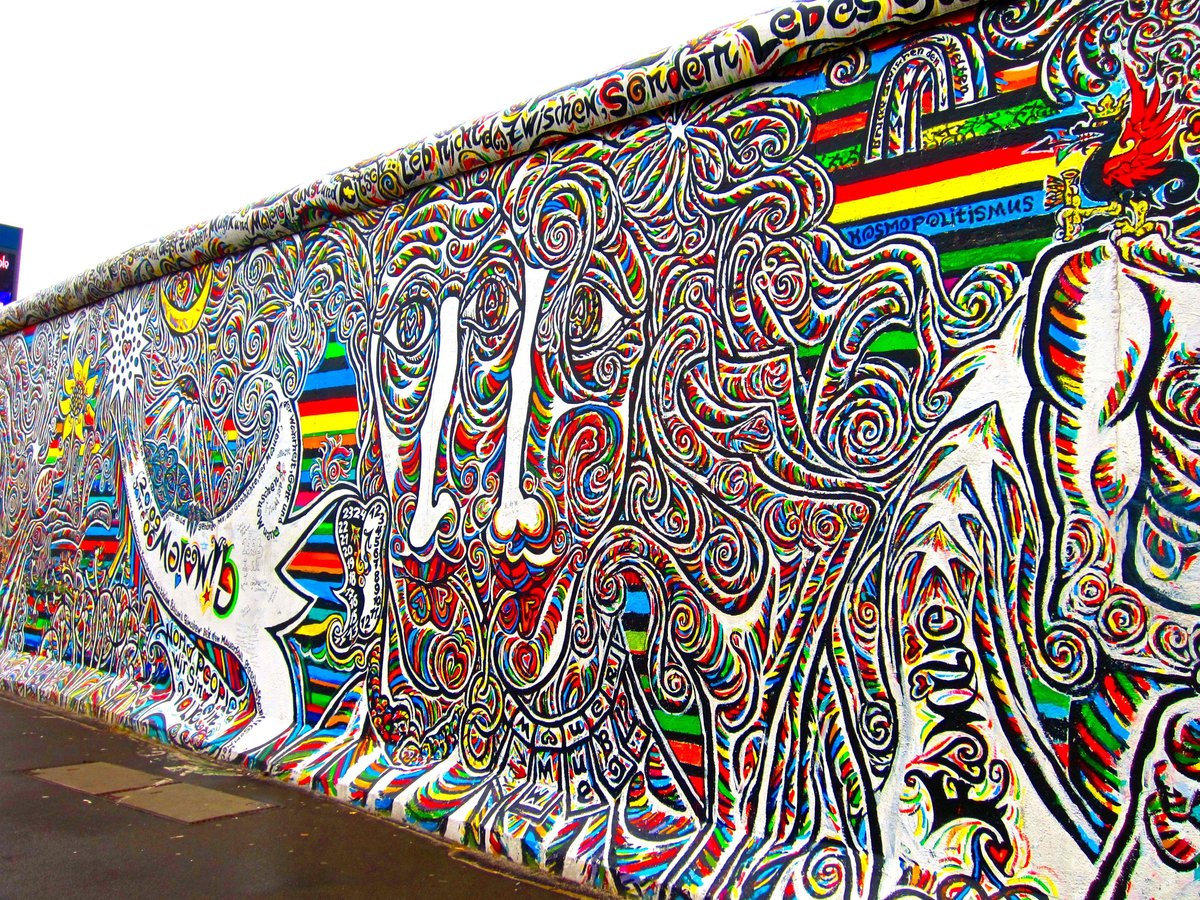
The legacy of the Berlin Wall isn’t just a chapter in history books; it’s etched into the very fabric of Berlin. As you walk through the city today, a “berlin wall site” isn’t always a towering concrete slab. Often, it’s a subtle marker, a preserved watchtower, or an empty space that once held a deadly barrier. These sites collectively reveal Berlin’s profound resilience and the deep scars left by decades of division, urging visitors to look beyond the physical remnants to grasp the human stories beneath.
At a Glance: Deciphering Berlin’s Wall Sites
- Understanding the Wall’s Layers: Learn to identify different types of remnants—from art-laden sections to subtle ground markers.
- Essential Sites: Discover the must-visit locations that offer diverse perspectives on the Wall’s history and impact.
- Strategic Planning: Get actionable advice on how to efficiently visit multiple sites, maximizing your understanding and time.
- Beyond the Concrete: Learn to interpret the emotional and historical significance embedded in each location.
- Avoiding Tourist Traps: Distinguish between authentic historical experiences and overly commercialized areas.
- Self-Guided Exploration: Equip yourself with the knowledge to undertake a meaningful, self-paced tour of Berlin’s divided past.
More Than a Barrier: The Wall’s Enduring Blueprint
From the night of August 12th to 13th, 1961, the Berlin Wall began its 28-year reign as the starkest symbol of the Cold War. It wasn’t merely a concrete fence; it was a sophisticated, brutal system designed to halt the mass migration of East Germans to the West. What West Berliners called the “Wall of Shame,” GDR authorities termed the “Anti-Fascist Protection Rampart.” Its purpose was clear: to stop the brain drain and assert control, physically and ideologically dividing a city and a nation.
This barrier stretched for 155 kilometers (96 miles) around West Berlin, featuring two parallel concrete walls, often 12 feet high, fortified with watch paths, floodlights, alarm systems, anti-vehicle trenches, and the infamous “death strip.” Over 300 watchtowers, 14,000 guards, and 600 dogs enforced this separation. An unknown number of people lost their lives attempting to cross it, making each berlin wall site not just a historical marker, but a monument to human struggle and sacrifice. After its dramatic fall on November 9th, 1989, much of the Wall was dismantled, yet its impact profoundly shaped Berlin’s urban landscape and collective memory.
Deciphering Berlin’s Scars: Understanding the Berlin Wall Site’s Legacy
Today, a “berlin wall site” can manifest in several ways, each offering a unique lens into the past. Recognizing these different forms is key to a comprehensive understanding:
- Preserved Original Sections: These are the most tangible remnants, often thick concrete slabs sometimes still bearing graffiti from the West side. They offer a direct, visceral connection to the physical barrier.
- Memorialized “Death Strip” Areas: The space between the two walls, once a lethal zone of sand, barbed wire, and anti-vehicle obstacles, is now often green space or marked pathways. These areas vividly illustrate the Wall’s military complexity and danger.
- Historical Markers and Information Panels: Throughout the city, especially along the former path of the Wall, bronze strips embedded in the ground and detailed information boards recount specific events, escape attempts, and the Wall’s trajectory. These provide crucial context.
- Reconstructed Elements: In some places, like Checkpoint Charlie, guardhouses or parts of the Wall have been reconstructed for educational purposes. While not original, they serve as powerful visual aids.
- Post-Wall Urban Development: New buildings, infrastructure, and even redesigned public spaces often sit atop or adjacent to the former Wall line, showcasing Berlin’s dramatic transformation and reunification. Understanding these developments requires knowing where the Wall once stood.
These varied manifestations mean that exploring a berlin wall site isn’t a singular experience; it’s a mosaic of fragmented history, personal stories, and urban evolution.
Navigating the Historic Divide: Key Berlin Wall Sites to Experience
To truly grasp the Wall’s impact, focus your visit on a few pivotal locations. Each offers a distinct perspective, from artistic expression to solemn remembrance:
The East Side Gallery: Art and Freedom on the Longest Fragment
Stretching 1.3 kilometers along the Spree River in Friedrichshain-Kreuzberg, the East Side Gallery is the largest remaining portion of the Wall. It features over 100 murals painted directly onto the concrete by artists from around the world immediately after the Wall’s fall.
- What to Look For: Beyond the iconic “My God, Help Me to Survive This Deadly Love” (the “Brotherly Kiss”) or the Trabant breaking through, pay attention to the diverse artistic styles and the messages of hope, freedom, and political commentary. Many murals carry poignant stories of their creation and creators.
- Practical Advice: Start at either end (Ostbahnhof or Warschauer Straße S-Bahn stations). It’s an outdoor gallery, best enjoyed on a clear day. Take your time; rushing diminishes the impact of the individual artworks. Be mindful of vendors and selfie-takers; respectful viewing enhances the experience.
- Snippet: “Seeing the East Side Gallery, you realize the Wall wasn’t just torn down, it was reclaimed with color and defiance. One mural depicting hands reaching for freedom across a void still gives me chills.”
The Berlin Wall Memorial (Bernauer Strasse): A Somber, Authentic Encounter
Located along Bernauer Strasse, this Berlin Wall Memorial is arguably the most comprehensive and authentic berlin wall site for understanding its structure and human cost. It preserves original wall segments, a reconstructed watchtower, and a section of the “death strip.”
- What to Look For: The memorial site itself is an outdoor exhibition. The “Window of Remembrance” commemorates those who died. The Chapel of Reconciliation stands on the former no-man’s-land. The documentation center provides invaluable historical context, survivor testimonies, and a viewing platform overlooking the preserved strip. Crucially, the remaining original Wall segments here are shown with their inner and outer sides, illustrating the full complexity of the barrier.
- Practical Advice: Allocate at least 2-3 hours. Start at the Documentation Center for context, then walk the length of the outdoor memorial. Guided tours offered by the memorial foundation are highly recommended for deep insights. This site is less about spectacle and more about solemn reflection and education.
- Snippet: “At Bernauer Strasse, standing in the ‘death strip’ between the two walls, the sheer brutality of the system becomes terrifyingly real. You can almost feel the silence, broken only by the whispers of history.”
Checkpoint Charlie: The Iconic Border Crossing, Now a Tourist Hub
Once the most famous border crossing between East and West Berlin, Checkpoint Charlie is now a vibrant, albeit commercialized, tourist destination. While a replica guardhouse and actors posing as soldiers offer photo opportunities, the historical significance remains.
- What to Look For: Beyond the replica guardhouse, visit the Wall Museum (Mauermuseum) nearby, which tells fascinating stories of escape attempts. Look for the original “You are leaving the American Sector” sign. Information panels detail its role during the Cold War standoffs.
- Practical Advice: Expect crowds and a commercial atmosphere. Focus on the information panels and the museum for genuine historical learning. Don’t be swayed by expensive souvenirs; instead, seek out the original artifacts and stories within the museum.
- Snippet: “Checkpoint Charlie might feel like a theme park, but if you look past the costumed guards, you see the ghosts of espionage and confrontation. The museum nearby offers harrowing tales of ingenuity and desperation in escaping the GDR.”
Potsdamer Platz: From No-Man’s-Land to Modern Metropolis
Before the Wall, Potsdamer Platz was Europe’s busiest square. After 1961, it became a desolate no-man’s-land bisected by the Wall. Today, it’s a gleaming hub of modern architecture, showcasing Berlin’s dramatic post-reunification transformation.
- What to Look For: Small, scattered fragments of the Wall are preserved here, often with information plaques. The main draw is the contrast: imagine this bustling area as a barren wasteland just over three decades ago. Look for the bronze strip on the ground marking the Wall’s former path.
- Practical Advice: This is less about viewing large wall segments and more about understanding urban transformation. Combine your visit with nearby attractions like the Sony Center or the Kulturforum.
- Snippet: “Potsdamer Platz is a living testament to Berlin’s rebirth. To stand amidst towering glass skyscrapers and realize this entire area was a barren, guarded void only 35 years ago is truly mind-boggling.”
Beyond the Concrete: Interpreting the Layers of History at Each Site
Visiting a berlin wall site is more than just observing concrete; it’s about engaging with the human stories, political ideologies, and stark realities it represented. To truly connect with these layers:
- Read the Plaques: Don’t skip the information panels. They condense years of research into digestible snippets, providing crucial context for what you’re seeing.
- Imagine the “Before and After”: At sites like Potsdamer Platz or Bernauer Strasse, try to visualize the area before the Wall, during its existence, and after its fall. This mental exercise highlights the dramatic transformations.
- Consider the Perspectives: The Wall was seen differently in East and West. At the East Side Gallery, artists express liberation; at Bernauer Strasse, the focus is on oppression. Try to understand these dual narratives.
- Look for the Small Details: A bullet hole in a remaining wall fragment, a faded memorial flower, or a specific escape route marked on the ground can often tell a more personal story than a large exhibition.
- Reflect on the “Why”: Continuously ask yourself why the Wall was built, why it lasted so long, and what its legacy means for global divisions today. This critical thinking elevates your visit beyond mere tourism.
Planning Your Journey Through Divided Berlin: A Site-Specific Itinerary Guide
Effectively exploring Berlin’s Wall sites requires thoughtful planning to connect disparate locations into a coherent narrative. The city’s excellent public transport system (U-Bahn, S-Bahn, tram, bus) is your best friend.
Grouping Sites for Efficiency:
- East & Art Focus: Start with the East Side Gallery (near Ostbahnhof/Warschauer Straße). From there, you can take the S-Bahn or U-Bahn to Alexanderplatz and then a short walk or tram to the DDR Museum for more East German life insights (though not a “berlin wall site” directly, it offers invaluable context).
- Memorial & Escape Focus: Dedicate a significant chunk of time to the Berlin Wall Memorial at Bernauer Strasse. Afterwards, consider walking south towards Rosenthaler Platz/Hackescher Markt, areas that were once close to the border but now vibrant, showcasing the post-Wall revival.
- Iconic & Commercial Focus: Visit Checkpoint Charlie early to beat some of the crowds. From there, it’s a relatively easy walk or short U-Bahn ride to Potsdamer Platz to see the contrast between old division and new development. The Topography of Terror museum, near Checkpoint Charlie, also offers chilling insights into Nazi history, which underpins some of the post-WWII division context.
To effectively piece together this narrative and navigate between the key Berlin Wall sites, a dedicated Berlin Wall map guide becomes an invaluable tool. Such a map not only pinpoints locations but often includes historical annotations, helping you connect the dots of Berlin’s complex past.
Practical Tips for Your Tour:
- Public Transport is Key: A day pass (Tageskarte) for public transport will save you money and hassle. Familiarize yourself with the U-Bahn and S-Bahn lines.
- Wear Comfortable Shoes: You’ll be doing a lot of walking, especially at the East Side Gallery and the Berlin Wall Memorial.
- Go Self-Guided (with Resources): While guided tours offer deep insights, a self-guided approach using a good map and online resources allows for personal reflection and flexibility. Many apps provide audio guides for key sites.
- Consider Timing: Weekday mornings are generally less crowded at major sites. The East Side Gallery is always accessible, but the Memorial’s documentation center has specific opening hours.
- Emotional Preparedness: Some sites, particularly the Memorial, can be deeply moving. Allow yourself time to process the information and emotions.
Avoiding Common Pitfalls: What to Expect and How to Prepare
When exploring a berlin wall site, a few considerations can enhance your experience and avoid disappointment:
- Authenticity vs. Commercialism: Checkpoint Charlie, while iconic, can feel heavily commercialized. Understand that much of what you see is a replica. Prioritize the information panels and museums for historical accuracy.
- Crowds: Popular sites like the East Side Gallery and Checkpoint Charlie attract significant crowds, especially during peak tourist season. Visiting early or late in the day can offer a more peaceful experience.
- The Wall Isn’t Continuous: Don’t expect to walk along a continuous “Wall.” It was largely dismantled. The remaining segments are fragments, memorials, or marked paths. This discontinuous nature is part of the challenge and reward of tracing its route.
- The Emotional Weight: Be prepared for the solemnity and sometimes distressing nature of the history. Sites like the Berlin Wall Memorial are designed to evoke reflection on human suffering and resilience.
- Language Barriers: While most major sites have English information, having a translation app or phrasebook can be helpful for deeper engagement, especially if you venture off the main tourist paths.
Quick Answers: Common Questions About Berlin Wall Sites
Q: Is any of the original Berlin Wall left?
A: Yes, significant portions of the original Berlin Wall remain. The largest continuous section is the East Side Gallery (1.3 km), and a highly preserved, authentic segment including the “death strip” can be found at the Berlin Wall Memorial on Bernauer Strasse. Smaller fragments are scattered throughout the city, often marked with plaques.
Q: How many people died trying to cross the Berlin Wall?
A: The exact number of deaths is difficult to ascertain, with estimates varying. The Berlin Wall Memorial states that at least 140 people died in connection with the Berlin Wall between 1961 and 1989. Other sources, including the Center for Contemporary History Potsdam, put the number of confirmed deaths at 140 or higher, with some researchers suggesting up to 200 or more when including deaths related to escape attempts within East Germany.
Q: What is the best berlin wall site to visit for a first-timer?
A: For a comprehensive understanding, the Berlin Wall Memorial at Bernauer Strasse is generally considered the best starting point. It offers preserved original sections, a reconstructed death strip, a watchtower, and a documentation center, providing both visual and historical depth. The East Side Gallery is excellent for artistic reflection, but Bernauer Strasse offers a more complete historical context of the Wall’s construction and impact.
Q: Is it free to visit the Berlin Wall sites?
A: Most outdoor Berlin Wall sites, such as the East Side Gallery and the open-air exhibitions at the Berlin Wall Memorial, are free to visit. However, entrance fees apply for indoor museums and documentation centers associated with the sites, such as the Documentation Center at the Berlin Wall Memorial or the Mauermuseum (Wall Museum) at Checkpoint Charlie.
Q: Can I take a piece of the Berlin Wall home?
A: It is illegal and disrespectful to take pieces from official, protected Berlin Wall sites. While you might find vendors selling small “authentic” pieces of the Wall, these are often fragments from dismantled sections and are not collected from existing historical sites. It’s best to respect the integrity of the preserved memorials.
From Scars to Stories: Your Actionable Playbook for Exploring Berlin’s Wall Sites
Embarking on a journey through Berlin’s Wall sites is to engage with a profound chapter of 20th-century history. It’s an exploration that offers more than just sightseeing; it’s an opportunity for deep reflection on division, freedom, and human resilience.
Here’s a quick-start guide to make your visit impactful:
- Prioritize Bernauer Strasse: If you can only visit one berlin wall site, make it the Berlin Wall Memorial at Bernauer Strasse. Its authenticity and comprehensive nature provide unparalleled insight.
- Embrace the East Side Gallery: For an artistic and hopeful perspective on the Wall’s aftermath, the East Side Gallery is a must-see. Allow time to simply absorb the art.
- Contextualize Checkpoint Charlie: Approach Checkpoint Charlie with a historical mindset. Focus on the information panels and consider visiting the nearby museum to counteract its commercial atmosphere.
- Visualize Potsdamer Platz: Use Potsdamer Platz to understand Berlin’s dramatic urban transformation from a desolate border zone to a vibrant metropolis.
- Leverage Public Transport: Berlin’s public transport system is excellent. Plan routes to group nearby sites efficiently, making the most of a day pass.
- Read and Reflect: Don’t just look; read the information provided at each site. Take moments to pause and reflect on the stories and the immense historical significance.
Each preserved segment, every solemn memorial, and even the subtle markers along former paths contribute to the powerful narrative of the Berlin Wall. By engaging thoughtfully with these sites, you not only learn about a pivotal historical event but also gain a deeper understanding of the human spirit’s enduring quest for freedom and unity.










