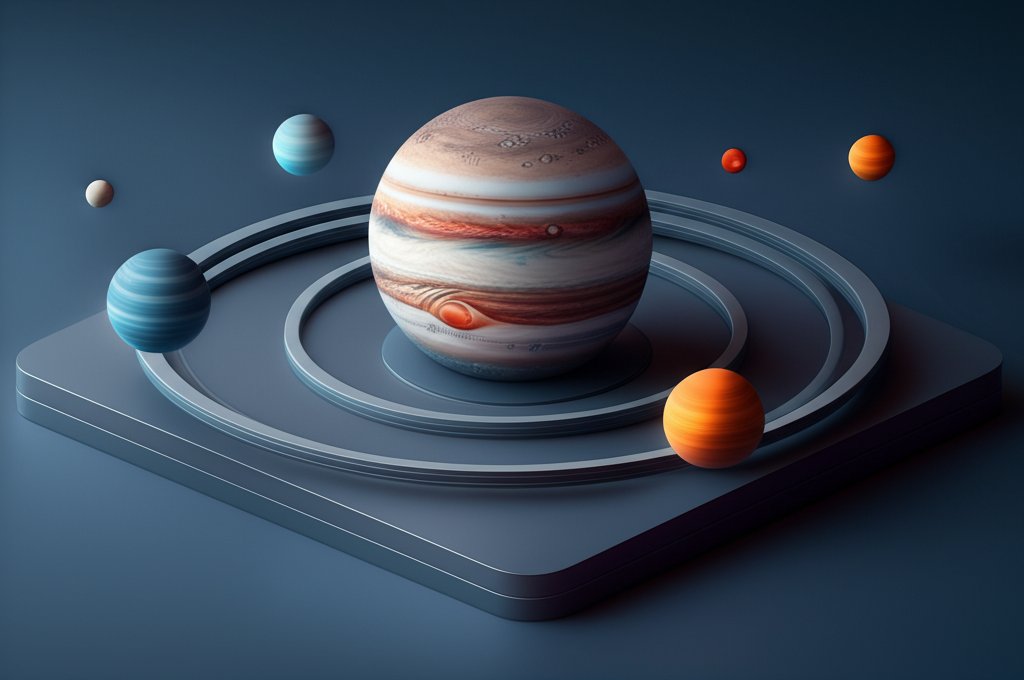
Imagine a solar system in miniature, complete with its own diverse worlds and swirling rings – that’s essentially what you find when you look at Jupiter’s moons and rings. This gas giant doesn’t just dominate our solar system in size; it also boasts a fascinating entourage of celestial bodies that are constantly interacting and evolving. Jupiter, with its 95 confirmed moons and intricate ring system, is a captivating subject of study.
At a glance:
- Jupiter has 95 known moons, ranging from small asteroids to planet-sized Ganymede.
- The four largest moons, the Galilean moons, are Io, Europa, Ganymede, and Callisto.
- Io is the most volcanically active body in the solar system.
- Europa likely harbors a subsurface ocean, making it a prime target in the search for life.
- Jupiter’s rings are made of dust particles, likely from impacts on its inner moons.
- Upcoming missions like Europa Clipper and JUICE will explore Jupiter’s moons in detail.
The Discovery That Changed Astronomy: Jupiter’s Galilean Moons
In 1610, Galileo Galilei pointed his telescope towards Jupiter and made a groundbreaking discovery: four bright objects orbiting the planet. These “Galilean moons” (Io, Europa, Ganymede, and Callisto) shattered the long-held belief that everything revolved around the Earth and revolutionized our understanding of the cosmos. It was a pivotal moment in astronomy, offering the first clear evidence that celestial bodies could orbit something other than our own planet.
Io: A Volcanic Inferno
Io, the innermost of the Galilean moons, is a world of constant volcanic activity. Forget gentle lava flows – we’re talking about hundreds of active volcanoes spewing sulfurous compounds high into the atmosphere. This extreme volcanism is caused by tidal forces from Jupiter and the other moons, which constantly squeeze and stretch Io, generating tremendous heat within its interior. To learn more about this fascinating moon, Ios Fiery Volcanic Activity can provide deeper insights.
Europa: An Ocean World Hiding Beneath the Ice
Europa is one of the most intriguing destinations in our solar system. Its smooth, icy surface hints at a vast ocean of liquid water hidden beneath. The presence of this subsurface ocean, combined with potential sources of energy, makes Europa a prime candidate in the search for extraterrestrial life. NASA’s Europa Clipper mission is set to explore this enigmatic moon in detail, hoping to unravel its secrets. Understanding the potential for life is key Europa: Could Life Exist There.
Ganymede: The Solar System’s Giant Moon
Ganymede isn’t just another moon; it’s the largest moon in the solar system, even bigger than the planet Mercury! What’s even more remarkable is that Ganymede has its own magnetic field, a feature unique among moons in our solar system. Like Europa, Ganymede is believed to have a subsurface ocean, adding to its intrigue. ESA’s JUICE mission is heading to Jupiter to explore Ganymede and its icy neighbors.
Callisto: An Ancient and Cratered World
Callisto, the outermost of the Galilean moons, is a heavily cratered world, bearing the scars of billions of years of impacts. Its ancient surface provides a window into the early solar system. While Callisto is not as volcanically active or geologically dynamic as Io or Europa, it may also harbor a subsurface ocean, making it another fascinating object of study.
Beyond the Galilean Giants: Jupiter’s Other Moons
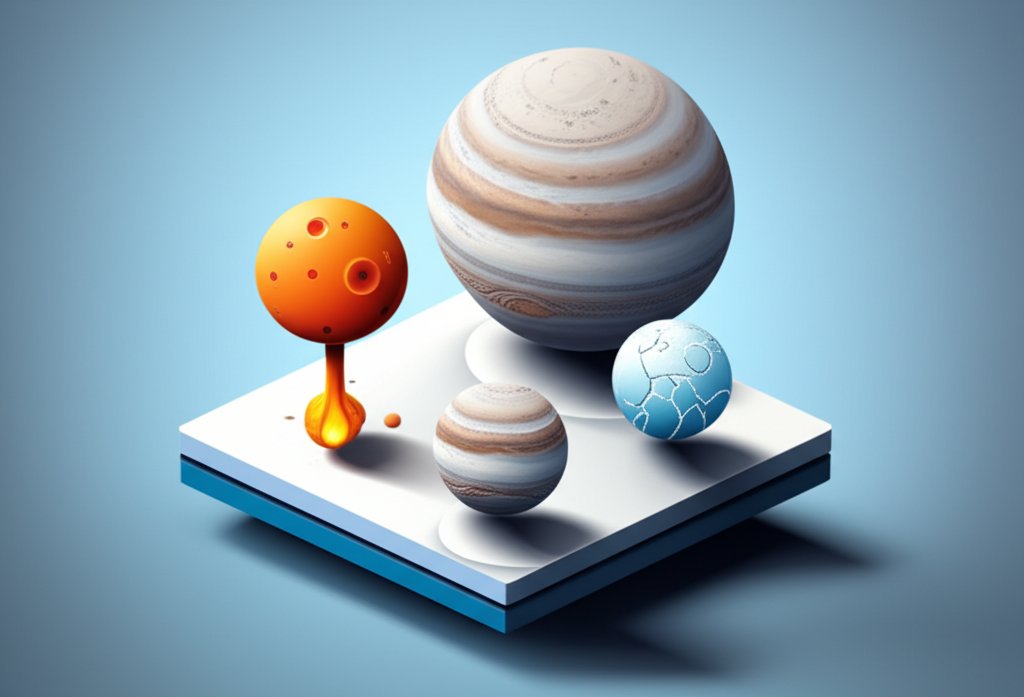
While the Galilean moons often steal the spotlight, Jupiter boasts a vast collection of smaller moons, numbering at least 95 at last count. These moons, often named after mythological figures associated with Jupiter (or Zeus, in Greek mythology), come in all shapes and sizes. Check out, Jupiters Moons: A Complete Count, to get an up to date number.
Inner Moons: The Ring Keepers
Orbiting closest to Jupiter are the inner moons: Amalthea, Thebe, Adrastea, and Metis. These small moons play a crucial role in shaping Jupiter’s ring system. Their surfaces are constantly bombarded by micrometeoroids, which eject dust particles that contribute to the rings’ composition.
Irregular Moons: Families in Space
Many of Jupiter’s outer moons are grouped into families, such as the Himalia, Ananke, and Carme groups. These groups share similar orbital characteristics, suggesting they may have originated from the breakup of larger parent bodies. These families provide valuable insights into the formation and evolution of Jupiter’s moon system.
Jupiter’s Rings: A Delicate Dust System
Discovered by the Voyager 1 spacecraft in 1979, Jupiter’s ring system is far less prominent than Saturn’s iconic rings, but no less fascinating. These rings are primarily composed of dust particles, likely originating from micrometeoroid impacts on Jupiter’s inner moons.
A Ring for Every Region: Structure and Composition
Jupiter’s rings are divided into four main components:
- Halo Ring: The innermost ring, a thick torus of dust extending from about 92,000 to 122,500 kilometers from Jupiter. It has a neutral or bluish color.
- Main Ring: A brighter ring bounded by the orbit of the moon Adrastea, extending from 122,500 to 129,000 kilometers. This ring appears reddish.
- Gossamer Rings: Two faint outer rings named after the moons Amalthea and Thebe, extending to 182,000 and 226,000 kilometers, respectively. Like the Main Ring, they appear reddish.
The composition of the rings is primarily dust, consisting of rock and ice particles. The reddish color of the Main and Gossamer Rings is likely due to the presence of sulfur compounds. The rings are more then just dust in space Jupiters Rings: Composition and Origin.
Shepherding the Dust: Dynamics of Jupiter’s Rings
Jupiter’s gravity and magnetic field play a significant role in shaping the dynamics of its rings. The moons act as “shepherds,” confining the ring material and preventing it from spreading out. The constant bombardment of micrometeoroids replenishes the rings with fresh dust particles, ensuring their continuous existence.
Exploring Jupiter’s System: Past, Present, and Future Missions
Numerous missions have contributed to our understanding of Jupiter’s moons and rings, from the Voyager flybys to the Galileo orbiter. Now, even more advanced missions are in development to delve deeper into the secrets of this fascinating system.
Upcoming Missions: Europa Clipper and JUICE
As previously mentioned, NASA’s Europa Clipper and ESA’s JUICE (Jupiter Icy Moons Explorer) are two highly anticipated missions that will explore Jupiter’s icy moons in unprecedented detail. Europa Clipper will focus on assessing Europa’s habitability, searching for evidence of a subsurface ocean and potential biosignatures. JUICE will explore Ganymede and Callisto, studying their subsurface oceans, magnetic fields, and geological features. These missions offer real insight, Explore Jupiters Moons Further.
Why Jupiter’s System Matters: Understanding Planetary Formation and the Potential for Life
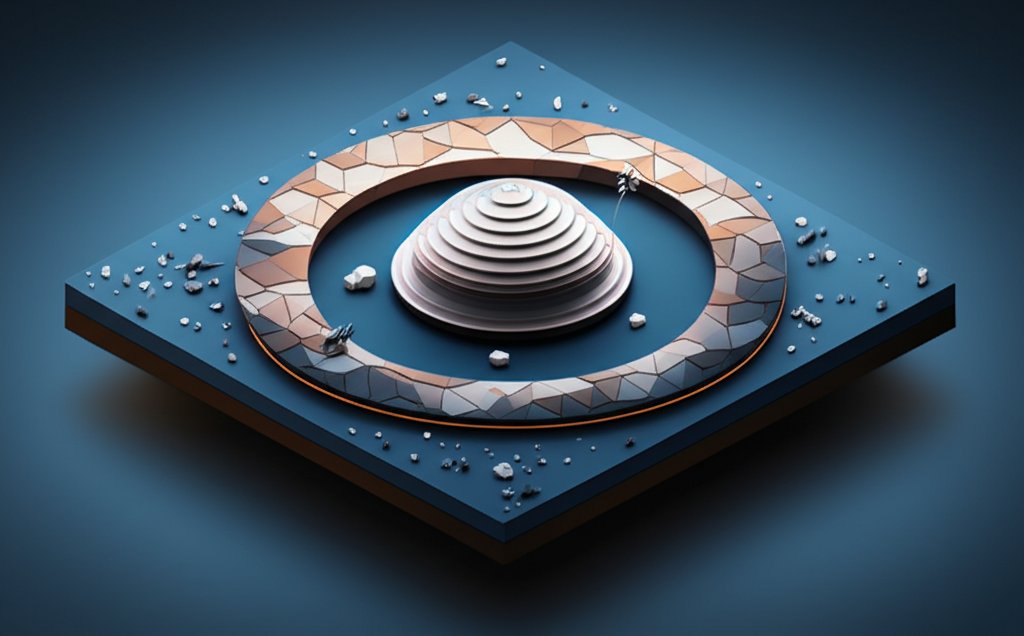
Jupiter’s moon system is more than just a collection of rocks and ice; it’s a miniature solar system that offers invaluable insights into planetary formation, gravitational interactions, and the potential for life beyond Earth. By studying these moons, we can learn more about how planets form, how tidal forces shape celestial bodies, and whether life can exist in environments vastly different from our own.
The Ever-Evolving Celestial Landscape
It’s important to remember that space is consistently dynamic, and our knowledge of Jupiter’s system is constantly evolving. As new data is gathered from ongoing and future missions, our understanding of these distant worlds will continue to grow, revealing even more secrets of Jupiter’s moons and rings. Don’t miss out on new information to, Explore Jupiters fascinating moons.
Viewing Jupiter’s Rings
While seeing Jupiter’s moons is possible with standard binoculars or a telescope, the rings pose a unique challenge. Due to their faintness, observing Jupiter’s rings requires a telescope with high resolution, significant magnification, and a large aperture. For amateur astronomers, this means employing specialized equipment and techniques.
Unanswered Questions and Future Discoveries
Despite all that we’ve learned, many questions about Jupiter’s moons and rings remain unanswered. What is the precise composition of Europa’s ocean? How did Ganymede acquire its magnetic field? What are the origins of Jupiter’s irregular moons? Future missions and continued observations promise to unlock even more secrets of this fascinating system, pushing the boundaries of our knowledge and inspiring future generations of explorers.










