
Untuk gambaran yang lebih besar dan konteks penuh, pastikan Anda membaca panduan utama kami tentang Jupiters Moons and Rings: A Hidden Solar System Unveiled.
markdown
Want to know some mind-blowing facts about Jupiter’s moons? Forget just knowing they exist; we are talking about volcanic worlds, subsurface oceans that might harbor life, along with details that reshape our understanding of planetary systems.
At a glance:
- Discover why Io is the most volcanically active place in our solar system.
- Understand the compelling evidence for a vast ocean on Europa and its potential for life.
- Learn why Ganymede is special, being the largest moon and generating its own magnetic field.
- Explore the surprising details about Callisto’s ancient surface and potential subsurface ocean.
- Grasp the role of Jupiter’s inner and outer moons and their impact on the Jovian system.
The Wild World of Io: A Volcanic Inferno
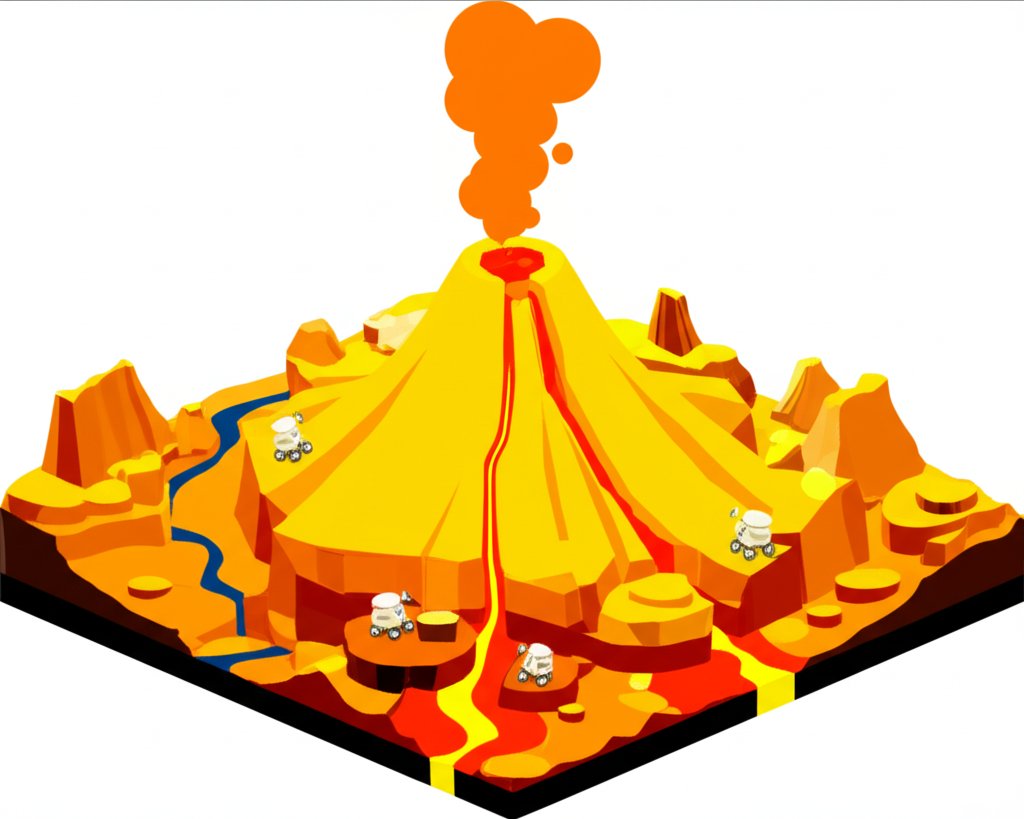
Io is no ordinary moon. It’s a world relentlessly pummeled by tidal forces caused by Jupiter’s immense gravity and the orbital resonances with Europa and Ganymede. These forces generate immense heat within Io, resulting in hundreds of active volcanoes spewing plumes of sulfurous material hundreds of kilometers high. One of the most startling facts about Jupiter’s moons is just how volcanically active Io is. It’s not just a few volcanoes; it’s a landscape constantly reshaped by eruptions. Voyager 1 first revealed this activity in 1979, changing planetary science forever. This discovery reshaped our understanding of how tidal forces can drive geological processes.
- Why is it so volcanic? Tidal heating. Imagine squeezing a rubber ball repeatedly; that’s essentially what’s happening to Io.
- What does it erupt? Primarily sulfur and sulfur dioxide, giving Io its distinctive yellow, orange, and red colors.
- Any impact on Jupiter? Io is a major source of plasma that populates Jupiter’s magnetosphere.
Europa: An Ocean World Hiding Under Ice
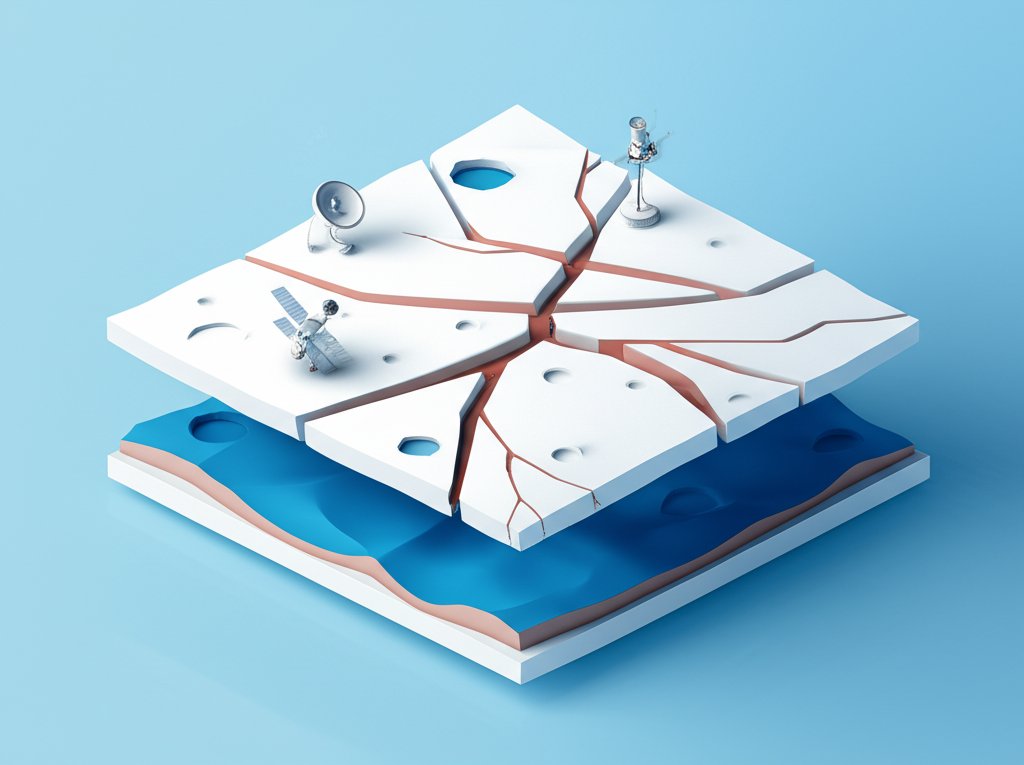
Europa captivates scientists because it is believed to harbor a vast ocean beneath a thick ice shell. Some scientists estimate this ocean contains twice the amount of water as Earth’s oceans. The big question, of course, is whether this ocean could support life. Evidence for this ocean includes:
- Magnetic field data: Galileo measurements indicate an induced magnetic field, suggesting a salty, conductive ocean.
- Surface features: Cracks and ridges on Europa’s surface suggest movement and possible upwelling of water from below.
- Possible plumes: Hubble detected water vapor plumes erupting from Europa’s south pole, hinting at direct access to the subsurface ocean.
The Europa Clipper mission, scheduled to arrive in 2030, will conduct detailed investigations without landing. It will analyze the moon’s magnetic field, image the surface in high resolution, and search for further evidence of plumes. Understanding the composition and dynamics of Europa’s ocean is a top priority in the search for extraterrestrial life. You can Explore Jupiter’s Hidden Solar System to learn more about the context of Europa within the broader Jovian system.
Ganymede: The Giant with its Own Magnetic Field
Ganymede is the largest moon in the solar system, even bigger than the planet Mercury. What sets it apart? It’s the only moon known to generate its own magnetic field. This magnetic field is likely produced by a core of molten iron, similar to Earth’s. Another interesting fact about Jupiters moons is Ganymede is that it has a thin oxygen atmosphere, although it is too thin to be breathable.
- “Club Sandwich” Structure: Scientists believe Ganymede has a layered interior, with oceans sandwiched between layers of ice. This “club sandwich” structure makes it unique among the Galilean moons.
- Surface Features: Ganymede exhibits both heavily cratered dark regions and younger, grooved terrain, indicating past geological activity.
- JUICE Mission: The European Space Agency’s JUICE (Jupiter Icy Moons Explorer) mission, arriving in 2031, will conduct detailed studies of Ganymede, including mapping its surface and probing its subsurface.
Callisto: An Ancient, Icy Time Capsule
Callisto is the outermost of the Galilean moons and is characterized by its ancient, heavily cratered surface. Unlike the other Galilean moons, Callisto shows little evidence of geological activity, suggesting it has remained relatively unchanged for billions of years. Evidence suggests that it may harbor a salty subsurface ocean, which would be located at a depth of around 100-150 kilometers.
- Valhalla Crater: This is one of the largest impact structures in the solar system, with a central region surrounded by concentric rings stretching thousands of kilometers.
- Lack of Geological Activity: Callisto’s ancient surface provides a valuable record of the early solar system.
- Potential Ocean: While less likely to harbor life than Europa, the presence of a subsurface ocean on Callisto is still a topic of scientific interest.
Jupiter’s Inner and Outer Moons: Ring Makers and Captured Wanderers
Beyond the Galilean moons, Jupiter hosts a diverse collection of smaller moons, divided into inner and outer groups.
- Inner Moons (Metis, Adrastea, Amalthea, Thebe): These orbit close to Jupiter and are closely linked to Jupiter’s rings. Material ejected from these moons by meteoroid impacts contributes to the ring system.
- Outer Irregular Moons: These are small, likely captured asteroids or Kuiper Belt objects, with highly eccentric and inclined orbits. They are often grouped into families with similar orbital characteristics, suggesting a common origin.
Understanding the dynamics of these smaller moons provides insights into the formation and evolution of the Jovian system.
Practical Playbook: Unveiling Jupiter’s Moons Yourself
Want to dive deeper into the facts about Jupiter’s moons? Here’s how to get started:
- Explore Online Resources: NASA, ESA, and university websites offer a wealth of information, images, and data about Jupiter’s moons.
- Use Astronomy Software: Programs like Stellarium or Celestia can simulate the positions of Jupiter’s moons and provide detailed information about their properties.
- Follow Space Missions: Stay updated on the Europa Clipper and JUICE missions to get the latest discoveries about Jupiter’s moons.
- Read Scientific Literature: Access research papers and articles in journals like “Nature” and “Science” for in-depth analysis of Jupiter’s moons.
- Join Astronomy Communities: Connect with other astronomy enthusiasts to discuss Jupiter’s moons and share your discoveries.
Quick Answers: Clearing Up Common Questions
Q: Is there life on any of Jupiter’s moons?
A: While there is no definitive proof of life, Europa is considered the most promising candidate due to its subsurface ocean. Future missions will explore its habitability.
Q: Can we visit Jupiter’s moons?
A: While not currently possible for humans, robotic missions have visited and will continue to explore Jupiter’s moons. The challenges are the extreme distances, high radiation environment, and the need for advanced technology to land on icy surfaces.
Q: Are all of Jupiter’s moons tidally locked?
A: Yes, all of Jupiter’s major moons are tidally locked, meaning they always show the same face to Jupiter.
Q: How did Jupiter get so many moons?
A: Jupiter’s strong gravity has captured many asteroids and Kuiper Belt objects over time. The Galilean moons likely formed in orbit around Jupiter from a circumplanetary disk of gas and dust.
Your Next Steps: Exploring the Jovian System
Understanding the facts about Jupiter’s moons reveals a dynamic and complex system with the potential to answer fundamental questions about the origins of life and the evolution of planetary systems. Whether you’re an amateur astronomer or a seasoned scientist, exploring Jupiter’s moons offers a fascinating journey of discovery. Keep exploring, keep questioning, and stay curious about the wonders of our solar system.










