
Ever swiped your credit card and felt a twinge of worry? Chip credit cards, also known as EMV cards, aimed to squash that anxiety. But how do chip credit cards work to enhance security in a world of increasingly sophisticated fraud? They’re not just a cosmetic upgrade; they represent a fundamental shift in how credit card transactions are secured.
At a glance:
- Understand the core technology behind EMV chips and how they differ from magnetic stripes.
- Learn about the dynamic encryption process that makes chip cards significantly harder to counterfeit.
- Explore the various ways chip cards authenticate transactions, from PIN verification to contactless payments.
- Discover the limitations of chip cards and why they aren’t a silver bullet against all fraud.
- Get practical tips for using chip cards safely and securely, both in-store and online.
The Tech Under the Surface: Chips vs. Magnetic Stripes
For decades, credit cards relied on magnetic stripes to store your account information. This simple technology, while convenient, was also incredibly vulnerable. Think of it like writing your password on a sticky note and attaching it to your computer. Anyone with a simple card reader could copy the data on the magnetic stripe and use it to create a counterfeit card.
Chip cards, on the other hand, use a small microchip embedded in the card. This chip contains significantly more security features and processes data in a fundamentally different way. Instead of just storing your card information, the chip generates a unique, one-time code for each transaction. This is the core of what makes them more secure.
Dynamic Data: The Key to Chip Card Security
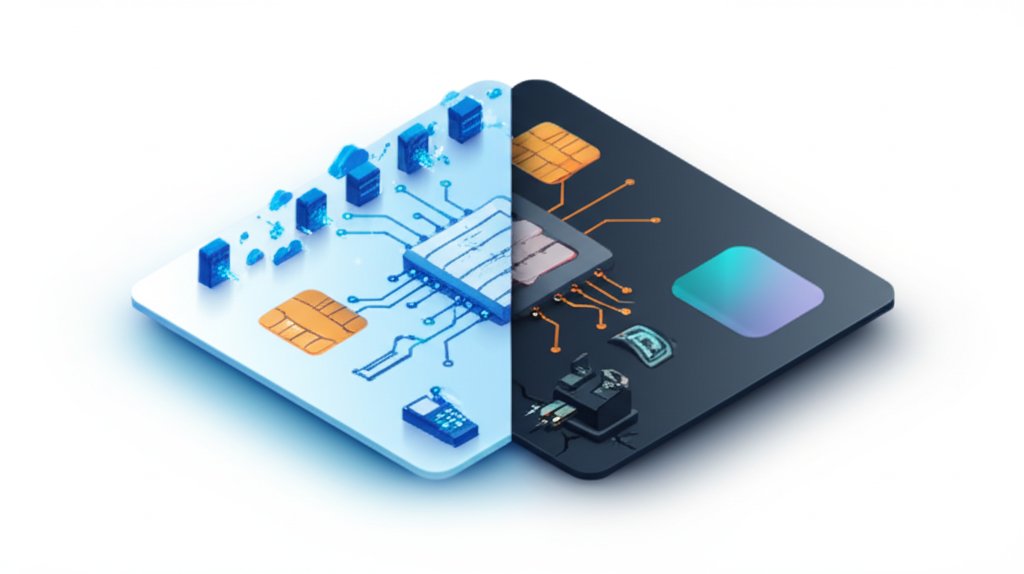
The magnetic stripe holds static data – the same information is read every time you swipe. This makes it relatively easy for criminals to copy the data and create a duplicate card. How do chip credit cards work differently? They use dynamic data.
Each time you use a chip card, the chip generates a unique transaction code. This code is different every single time, making it virtually impossible for fraudsters to clone the card. Even if someone were to intercept the transaction data, they couldn’t use it to create a counterfeit card because the code is only valid for that specific purchase. It’s like using a new password for every website you visit.
Verification Methods: PINs, Signatures, and Contactless
Beyond the chip itself, EMV cards also employ various verification methods to ensure that the person using the card is the rightful owner.
- PIN Verification: In many countries, chip cards require a PIN (Personal Identification Number) to authorize the transaction. This adds an extra layer of security, as the fraudster would need both the physical card and the PIN to make a purchase.
- Signature Verification: While less secure than PINs, signature verification is still used in some regions. The cashier compares the signature on the back of the card to the signature on the receipt.
- Contactless Payments (NFC): Many chip cards also support contactless payments using Near Field Communication (NFC) technology. This allows you to make purchases by simply tapping your card on the payment terminal. While convenient, contactless payments also incorporate encryption and tokenization to protect your card information. For a broader view of these advances, check out Credit Card Tech Explained.
Understanding the Trade-offs: Chip Cards Aren’t a Perfect Solution
While chip cards significantly reduce card present fraud (fraud that occurs when the physical card is used at a point-of-sale terminal), they aren’t a silver bullet. Here’s where they still need support:
- Card-Not-Present (CNP) Fraud: Chip cards primarily target card-present fraud. CNP fraud, which occurs when you make purchases online or over the phone, is still a significant issue. Fraudsters can still use stolen card numbers to make online purchases, even if the physical card has a chip.
- Lost or Stolen Cards: If your chip card is lost or stolen, a thief can still use it to make unauthorized purchases, especially if the card doesn’t require a PIN.
- Skimming: While more difficult than skimming magnetic stripes, it is possible to skim chip card data, especially if the card is used at a compromised ATM or point-of-sale terminal.
Practical Security: Using Chip Cards Smartly

Knowing how chip credit cards work is only half the battle. Here’s how to maximize your security, practically.
- Always Insert Your Card: When possible, always insert your chip card into the terminal instead of swiping it. This ensures that the chip is used for the transaction, providing the added security benefits.
- Protect Your PIN: If your chip card requires a PIN, memorize it and never write it down or share it with anyone. Be careful when entering your PIN at ATMs or point-of-sale terminals, and shield the keypad from view.
- Monitor Your Accounts Regularly: Regularly check your credit card statements for any unauthorized transactions. Report any suspicious activity to your bank or credit card issuer immediately.
- Be Wary of Phishing Scams: Phishing scams are designed to trick you into revealing your personal or financial information. Never click on links in suspicious emails or text messages, and never provide your card number or other sensitive information over the phone unless you initiated the call.
- Use Strong Passwords: Protect your online accounts with strong, unique passwords. Use a password manager to generate and store your passwords securely.
- Enable Two-Factor Authentication (2FA): When available, enable 2FA for your online accounts. This adds an extra layer of security by requiring you to enter a code from your phone or email in addition to your password.
- Keep Your Software Up to Date: Keep your computer, smartphone, and other devices up to date with the latest security patches. This helps protect against malware and other threats that could compromise your card information.
Decision Tree: Chip vs. Swipe
| Scenario | Action | Reason |
| :—————————- | :————— | :——————————————————————— |
| Terminal has a chip reader | Insert the chip | Chip transactions are more secure than swipe transactions. |
| Terminal only has swipe | Swipe the card | Only option available. Monitor statement closely. |
| Online Purchase | Verify the site | Ensure the website is secure (HTTPS) before entering card details. |
| Suspicious Email/Text | Delete it | Do not click links or provide personal information. |
Quick Answers: Common Questions About Chip Cards
- Q: Are chip cards completely fraud-proof?
- A: No. While they significantly reduce card-present fraud, they don’t eliminate it entirely. Card-not-present fraud and lost/stolen card scenarios remain risks.
- Q: Why do some stores still ask for a signature with chip cards?
- A: Some merchants haven’t fully updated their systems or may choose to use signature verification for various reasons, even though it’s less secure than PIN. The liability shift incentivized EMV adoption, but not all merchants prioritize PIN entry.
- Q: What is the “liability shift” related to chip cards?
- A: The liability shift means that if a merchant doesn’t use chip-enabled terminals and a fraudulent transaction occurs with a chip card, the merchant is liable for the loss. This incentivized merchants to upgrade their systems.
- Q: Can my chip card be skimmed?
- A: Yes, though it’s more difficult than skimming magnetic stripes. Be cautious when using your card at unfamiliar ATMs or point-of-sale terminals.
- Q: How do I report a lost or stolen chip card?
- A: Contact your bank or credit card issuer immediately to report the loss or theft. They will cancel your card and issue a new one.
- Q: How secure are contactless “tap to pay” transactions with a chip card?
- A: Contactless transactions utilize encryption and tokenization, which makes them very secure. The card transmits a unique code for each transaction, protecting your actual card details.
A Continuous Arms Race
How credit cards work, and more specifically, how chip credit cards work, boils down to an ongoing effort to stay ahead of fraudsters. EMV chips were a major leap forward, but they’re not the final word. By understanding the technology and taking proactive steps to protect your card information, you can significantly reduce your risk of becoming a victim of credit card fraud. The key is awareness, vigilance, and adapting to the evolving threat landscape.










