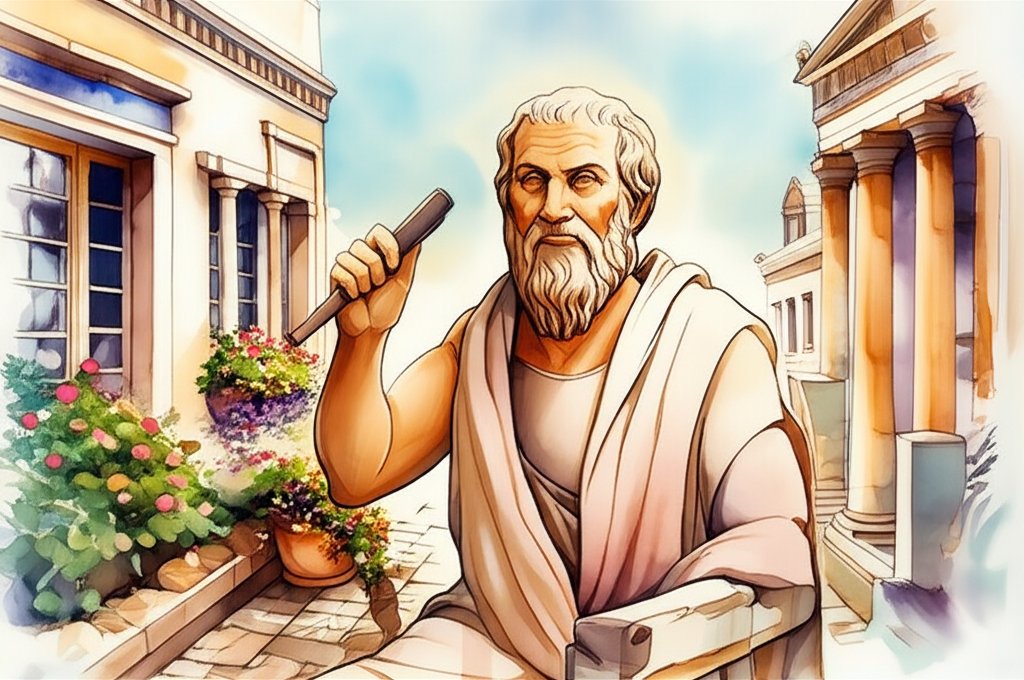
The trial of Socrates, ending with his death in 399 BCE, continues to fascinate us. Central to the charges against him was the accusation of impiety. But was Socrates religious? The answer, like much about this foundational figure of Western thought, is complex and open to interpretation. He challenged conventional thinking, questioned authority, and claimed to be guided by a divine “voice,” leaving a legacy that continues to spark debate.
At a glance:
- Socrates was accused of impiety, or lacking reverence for the gods of Athens.
- He claimed to be guided by a daimonion, a divine inner voice.
- His philosophical method challenged accepted beliefs, including religious ones.
- Interpretations of his religious beliefs range from agnostic to deeply spiritual.
- His emphasis on virtue and self-examination resonated with later religious thinkers.
The Enigma of Socrates: Unraveling the Socratic Problem
Reconstructing the philosophy and beliefs of Socrates is no easy task. “The Socratic problem” refers to the difficulty in discerning the real Socrates from the portrayals of him by his students and contemporaries. Our primary sources – Plato, Xenophon, Aristophanes, and Aristotle – each offer a different perspective, making it difficult to paint a definitive picture. It’s essential to acknowledge these limitations as we explore his religious views.
Athens in the Time of Socrates: A Crucible of Ideas
To understand the charges against Socrates, we need to understand the context of 5th-century BCE Athens. This was a time of intellectual ferment, with new ideas challenging traditional beliefs. Socrates engaged directly with this environment, seeking to “improve” the citizens morally. His relentless questioning of societal norms and powerful figures, including religious authorities, inevitably stirred controversy. He challenged citizens to think critically about everything, including their faith.
The Accusation: Impiety and Corrupting the Youth
Socrates faced formal charges of asebeia, or impiety, and corrupting the youth of Athens. The accusation of impiety centered on two key points: that he didn’t worship the gods of the city and that he introduced new gods. The accusation of corrupting the youth stemmed from his influence on young Athenians, encouraging them to question established traditions and beliefs. His trial and death became a symbol of the conflict between philosophical inquiry and societal expectations.
Socrates’ Defense: A Gift to Athens
In his defense, Socrates argued that his philosophical activities were a “gift” to Athens, benefiting the city by encouraging self-reflection and the pursuit of virtue. He maintained that seeking divine truth was the most beneficial thing one could do. This defense highlights the tension between his philosophical mission and the prevailing religious norms of his time. He believed his work helped to improve the morals of the city’s youth, rather than corrupt them.
The Daimonion: Socrates’ Inner Voice
One of the most intriguing aspects of Socrates’ religious stance is his claim to be guided by a daimonion, which translates roughly to a “divine sign” or “inner voice.” He described it not as a positive guide, but as something that actively deterred him from making mistakes. This daimonion never told him what to do, but rather warned him against specific actions. Socrates Views on Divinity were complex, and the nature of this inner voice has been the subject of much speculation. Was it a genuine spiritual experience, a manifestation of his conscience, or a rhetorical device?
Socrates and the Gods of Athens: Conformist or Critic?
Did Socrates truly reject the gods of Athens, as his accusers claimed? The evidence is mixed. Some accounts suggest he participated in traditional religious practices. Others portray him as skeptical of conventional religious beliefs, seeking a more profound understanding of the divine. He often spoke of “the god” or “the divine,” suggesting a monotheistic tendency, which contrasted sharply with the polytheistic religion of ancient Greece.
Examining Socrates’ Beliefs: More Than Meets the Eye
To grasp Socrates’ religious views, we must consider his core philosophical tenets. He emphasized the importance of self-knowledge, famously stating that “the unexamined life is not worth living.” He believed that wisdom lies in understanding one’s own limitations.
His emphasis on virtue as knowledge aligns with the idea that understanding good leads to ethical action. He believed that wrongdoing stems from ignorance, not malice. Socrates Beliefs on Divinity are intertwined with his ethical philosophy, focusing on the health of the soul and the pursuit of justice, truth, and knowledge.
The Socratic Method: A Tool for Truth-Seeking
The Socratic Method, also known as elenchus, involved inquiry through dialogue and dialectical questioning. He would begin with a definition from an “expert,” then proceed to question that person, revealing contradictions in their beliefs. Through this process, he challenged assumptions, stimulated critical thinking, and illuminated ethical truths. This method itself could be seen as a form of spiritual practice, a way of seeking truth and wisdom through rigorous self-examination.
Socrates’ Legacy: Shaping Western Thought

Socrates’ influence on Western thought is undeniable. His emphasis on self-examination, virtue, and the pursuit of truth resonated with later philosophers and religious thinkers, even those who might otherwise condemn him, as explored in Socrates: An Anti-Christ Figure. His moral framework has parallels with Christian doctrines, particularly the focus on love, ethical conduct, and the immortality of the soul. You could argue that his focus on reason and questioning laid the groundwork for later theological debates.
Was Socrates Agnostic? The Question of Knowledge
Some argue that Socrates’ famous declaration, “I know that I know nothing,” indicates a form of agnosticism. This perspective suggests that he doubted the possibility of attaining certain knowledge, including definitive knowledge about the gods. However, his belief in the daimonion and his pursuit of virtue suggest that he was not entirely devoid of spiritual beliefs.
The Debate on Relationships: Egoistic or Non-Egoistic Views
Socrates’ views on relationships offer another lens through which to understand his broader philosophy. He debated whether relationships were inherently egoistic, driven by self-interest, or whether genuine, non-egoistic love was possible. This debate touches on fundamental questions about human nature and our connection to the divine.
Socrates and the Immortality of the Soul
While not explicitly stated, Socrates’ actions and teachings infer a belief in the immortality of the soul. He believed that the most important thing someone could do was nourish one’s soul. He believed that one’s soul was a person’s truest self; therefore, he welcomed death as a release of his soul from the body. He was unconcerned with what happened to his body; he was concerned only with what happened to his soul.
Contradictions and Inconsistencies: The Human Side of Socrates
It’s important to acknowledge the contradictions and inconsistencies in Socrates’ life and teachings. He proclaimed total ignorance, yet sometimes asserted knowledge. He was known for subtle irony, leaving doubt as to his true intentions. His view that akrasia (acting against one’s knowledge) is impossible seems to contradict common experience. These complexities make him a more human and relatable figure, even as they make it more difficult to pin down his beliefs.
Lessons from Socrates: Applying His Wisdom Today
Regardless of one’s religious beliefs, Socrates offers valuable lessons for contemporary life.
- Embrace Self-Examination: Take time to reflect on your own beliefs, values, and assumptions.
- Question Authority: Don’t blindly accept what you are told; think critically and seek evidence.
- Pursue Virtue: Strive to live a life of integrity, honesty, and compassion.
- Engage in Dialogue: Seek out diverse perspectives and engage in respectful debate.
- Prioritize the Soul: Focus on cultivating your inner self, nurturing your mind, and developing your character.
- Be humble: Recognize what you don’t know, and always be open to learning.
- Engage with others: Cultivate community and use dialogue as a means of knowledge and virtue pursuit.
Ultimately, determining whether Socrates “was religious” depends on how we define religion. If we mean adherence to a specific set of doctrines and rituals, the answer is likely no. However, if we define religion more broadly as a search for meaning, truth, and virtue, then Socrates was profoundly religious. His life serves as a testament to the power of philosophical inquiry and the enduring quest for a more meaningful existence, even if Socrates Beliefs About the Gods seemed unconventional at the time.










