
The question of whether Socrates believed in God isn’t as simple as a yes or no. His religious views were complex, sparking debate even in his own time and continuing to intrigue scholars today. He was accused of impiety, yet spoke of a “divine sign.” So, did Socrates believe in god? Let’s delve into his life, beliefs, and that fateful trial to uncover a clearer picture.
At a glance:
- We’ll unpack the specific charges of impiety against Socrates and what they reveal about Athenian religious expectations.
- You’ll understand the significance of Socrates’s “daimonion” and its impact on his actions and beliefs.
- We’ll explore how Socrates’s concept of virtue and the soul intertwined with his possible religious views.
- You’ll gain insights into the debate surrounding Socrates’s monotheism versus polytheism.
- You’ll learn how to reconcile Socrates’ seemingly contradictory statements about divinity.
Understanding the Charges: Impiety in Ancient Athens
Socrates’ trial wasn’t just a legal proceeding; it was a clash of worldviews. He was accused of asebeia, typically translated as impiety. This meant not respecting the city’s recognized gods, introducing new deities, and generally undermining traditional religious practices. In Athens, religion wasn’t just personal belief; it was intimately tied to civic identity and social order.
Consider this: religious festivals and rituals were public events, integral to the city’s calendar and governance. Refusing to participate or questioning their validity was seen as a direct challenge to Athenian society. Socrates’ constant questioning of accepted norms, including religious ones, made him a target.
- The Expectation: Citizens were expected to publicly acknowledge and participate in the worship of the Olympian gods.
- Socrates’ Challenge: He questioned the anthropomorphic nature of the gods and the morality of some of the myths surrounding them.
Socrates’ defense, as recorded by Plato, hinged on clarifying his actions and beliefs, yet he didn’t entirely disavow his unconventional approach to religion. This ambiguity contributed to his conviction.
The “Daimonion”: Socrates’ Divine Guide
Perhaps the most intriguing aspect of Socrates’ belief system was his daimonion, often described as a “divine sign” or “inner voice.” This wasn’t a god in the traditional sense, but rather an internal force that warned him against certain actions. It never told him what to do, only what not to do.
The daimonion is crucial for understanding did Socrates believe in god. It suggests a belief in something beyond the natural realm, a source of wisdom unavailable through ordinary means. Meletus, one of Socrates’ accusers, pointed to this daimonion as evidence that Socrates was introducing new deities, further fueling the impiety charge.
- Example: Socrates claimed the daimonion prevented him from entering politics, believing it would lead him to act unjustly.
- Significance: This internal guide steered his actions, suggesting a deep commitment to a higher moral code.
Some interpretations suggest the daimonion was simply Socrates’ intuition or conscience, but its consistent presence in his narratives points to a more profound spiritual element. It’s a key piece of the puzzle when considering his religious philosophy.
Virtue, The Soul, and the Divine Connection

Socrates’ ethical philosophy was deeply intertwined with his views on the soul. He believed the primary purpose of life was to care for the soul, which he saw as the seat of consciousness and moral character. Virtue, for Socrates, was knowledge. Understanding what is good would inevitably lead to doing what is good. This understanding, in turn, benefited the soul.
How does this connect to the question of did Socrates believe in god? Socrates believed that a well-ordered soul, achieved through virtuous living, was pleasing to the divine. While he might not have adhered to traditional religious practices, his focus on moral purity and the cultivation of the soul suggests a belief in a cosmic order governed by divine principles.
Socrates’ beliefs and the divine were fundamentally intertwined with his ethical framework. He sought to live in accordance with what he believed to be a higher truth, a pursuit that resonates with many religious traditions.
Monotheist or Polytheist? The Eternal Debate
Was Socrates a monotheist, believing in a single, supreme god, or did he adhere to the polytheistic beliefs of ancient Athens? This is a question that has plagued scholars for centuries. Some argue that his emphasis on reason and his critique of the Olympian gods suggest a leaning towards monotheism. Others maintain that his participation in Athenian religious rituals and his references to “gods” (plural) indicate a polytheistic worldview.
- Argument for Monotheism: Socrates’ focus on universal moral principles and his belief in a single, overarching good aligns with monotheistic ideals.
- Argument for Polytheism: Despite his criticisms, Socrates never explicitly rejected the existence of the traditional Greek gods.
It’s also possible that Socrates held a unique position, acknowledging the cultural significance of the Olympian gods while simultaneously believing in a higher, more abstract divine principle. He might have seen the traditional gods as manifestations or intermediaries of this supreme being.
Reconciling Apparent Contradictions: A Socratic Approach
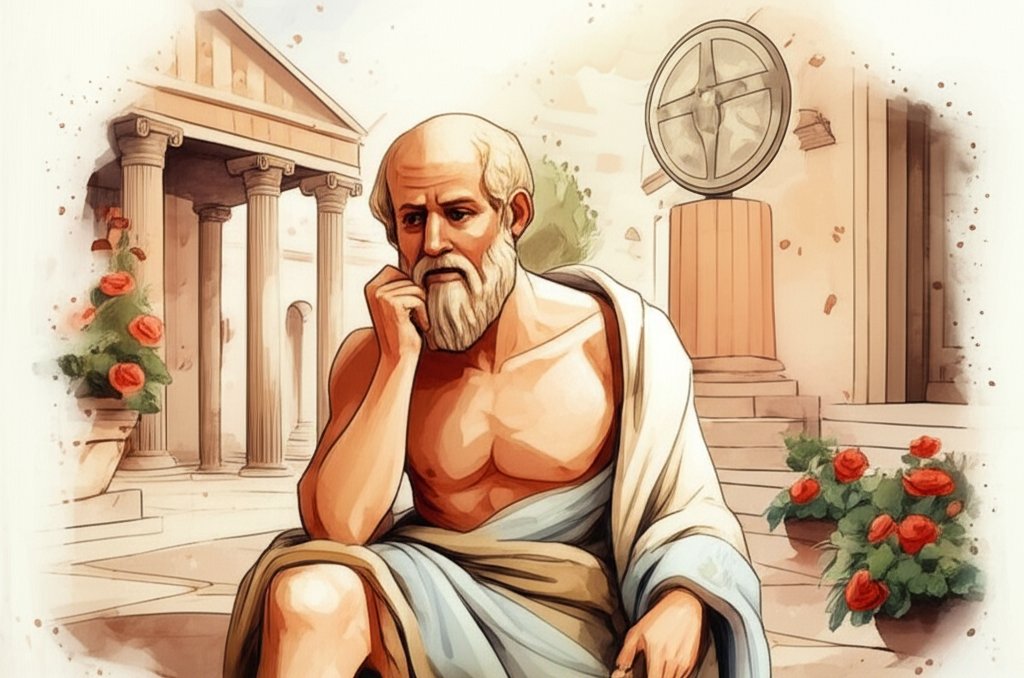
Socrates often appears contradictory. He criticized traditional religious practices, yet participated in them. He spoke of a daimonion, yet denied introducing new gods. How can we reconcile these apparent contradictions? The answer lies in understanding Socrates’ philosophical method.
Socrates was not a dogmatic thinker. He didn’t present fixed doctrines but rather engaged in ongoing inquiry. His goal wasn’t to provide definitive answers but to stimulate critical thinking and encourage self-reflection. Therefore, his seemingly contradictory statements might reflect his commitment to exploring different perspectives and challenging conventional wisdom.
- Example: He might have participated in religious rituals out of respect for Athenian tradition while simultaneously questioning their underlying assumptions.
- Key takeaway: Embracing uncertainty and continuous questioning was central to Socrates’ approach to truth.
Practical Playbook: Applying Socrates’ Religious Inquiry Today
How can we apply Socrates’ approach to religious inquiry in our own lives? Here’s a practical guide:
- Examine your beliefs: Don’t blindly accept what you’ve been told. Question the assumptions underlying your religious or spiritual beliefs.
- Seek understanding through dialogue: Engage in respectful conversations with people who hold different beliefs. Listen actively and be open to new perspectives.
- Focus on ethical conduct: Prioritize living a virtuous life, regardless of your religious affiliation. Strive to act justly and compassionately in all your interactions.
- Cultivate self-awareness: Pay attention to your inner voice or intuition. Reflect on your actions and motivations.
- Embrace uncertainty: Accept that some questions may not have definitive answers. Be comfortable with ambiguity and continue to explore the mysteries of life.
Quick Answers: Common Questions About Socrates and God
Q: Did Socrates explicitly deny the existence of the Greek gods?
A: No, he didn’t. Although he questioned their morality and anthropomorphic representations, he never definitively stated that they didn’t exist.
Q: Was Socrates an atheist?
A: It’s unlikely. His belief in the daimonion and his emphasis on the soul suggest a belief in something beyond the material world. He was accused of atheism but never self-identified as such.
Q: What’s the most accurate interpretation of the daimonion?
A: There’s no single “correct” interpretation. It could have been his intuition, a divine sign, or a metaphor for his conscience. Its precise nature remains a subject of scholarly debate.
Q: How did Socrates’ religious beliefs influence his trial?
A: His unconventional views and his questioning of traditional practices contributed to the accusations of impiety, ultimately leading to his conviction and execution.
Actionable Close: Embrace the Examined Religious Life
The question of did Socrates believe in god is complex, without a simple answer. He challenged conventional wisdom, embraced inquiry, and prioritized ethical conduct. By adopting a Socratic approach to our own beliefs, we can foster greater understanding, promote meaningful dialogue, and cultivate a more virtuous and examined life.










