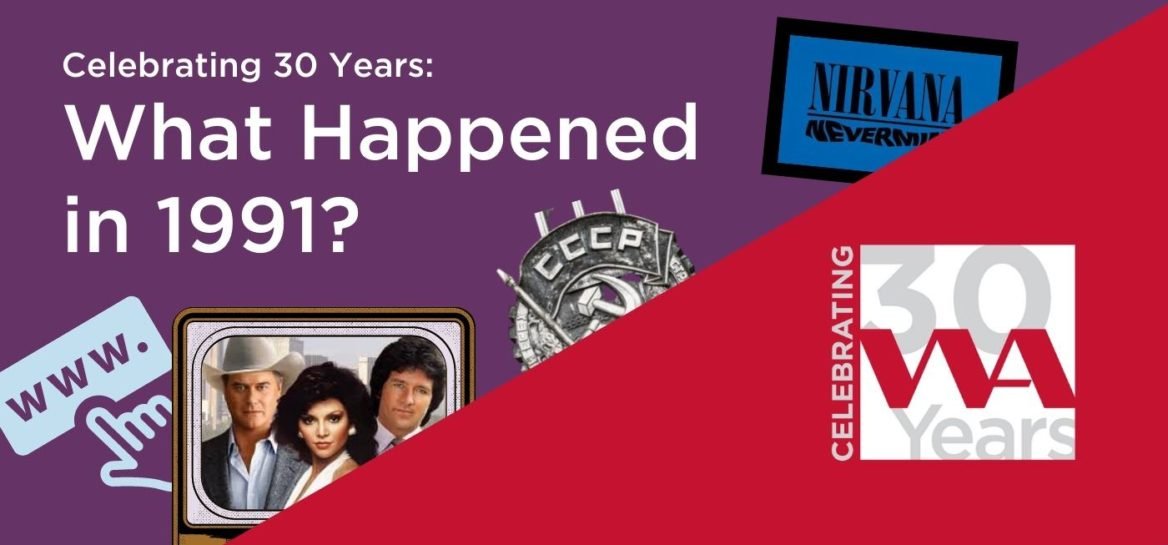
The year 1991 wasn’t just another spin around the sun; it was a foundational tremor that reshaped global politics, technology, and culture, setting in motion many of the defining trends we navigate today. From the fall of empires to the birth of the World Wide Web, the sheer volume of significant “things that happened in 1991” makes it a fascinating pivot point in modern history. Understanding these shifts isn’t just an academic exercise; it offers crucial context for comprehending our current geopolitical landscape, the digital economy, and ongoing social dialogues.
At a Glance: 1991’s Enduring Ripples
- Geopolitical Overhaul: The Gulf War concluded, and the Soviet Union dissolved, dramatically redrawing the world map and signaling new power dynamics.
- Digital Genesis: The first website launched, Linux emerged, Python debuted, and the first GSM call was made, laying critical groundwork for the internet and mobile era.
- Cultural Redefinition: Grunge music broke through, CGI in film made major leaps, and a pivotal social justice event (Rodney King) ignited a national conversation.
- Scientific and Environmental Foresight: Breakthroughs in space (Hubble), genetics (Human Genome Project), and a heightened awareness of climate change and ozone depletion spurred global efforts.
- Economic Realignments: India embarked on major reforms, and the foundation for the Euro was laid, shifting global economic power and cooperation.
The Global Stage Reshaped: From Cold War to New Conflicts
The geopolitical landscape of 1991 underwent a radical transformation, the likes of which hadn’t been seen for decades. The dissolution of a superpower and the emergence of new forms of international conflict fundamentally altered global dynamics.
The Gulf War’s Legacy: A New Era of Intervention
On February 28, 1991, the Gulf War officially ended, concluding Operation Desert Storm which had commenced on January 17. A US-led coalition of 34 nations successfully expelled Iraqi forces from Kuwait, restoring the monarchy. This conflict, lasting roughly six and a half weeks, was notable for its rapid, technologically advanced warfare and the overwhelming coalition force against Iraq.
How it shaped our world: The Gulf War marked a new era of post-Cold War international intervention, demonstrating the capacity for swift, multilateral military action under US leadership. It showcased the power of modern military technology and set precedents for future engagements in the Middle East, while also highlighting the devastating environmental impact of conflict, as seen with Iraq’s setting fire to over 700 oil wells in Kuwait. The war’s aftermath left lasting instability in the region, influencing subsequent events for decades.
The USSR’s Final Bow: Birth of Independent Nations
Perhaps the most monumental geopolitical event of 1991 was the official dissolution of the USSR on December 25. Mikhail Gorbachev resigned, effectively ending the Soviet Union and transferring power to Boris Yeltsin, the first President of the Russian Federation. This cataclysmic event saw eleven republics gain full independence: Uzbekistan, Tajikistan, Kyrgyzstan, Azerbaijan, Ukraine, Moldova, Lithuania, Latvia, Belarus, and Estonia. Lithuania, Latvia, and Estonia had already voted for independence earlier in the year, with Iceland being the first nation to recognize Lithuania’s sovereignty on February 12.
How it shaped our world: The collapse of the Soviet Union ended the Cold War, ushering in a unipolar moment where the United States was the sole global superpower. It unleashed a wave of new nation-states, fostering both democratic aspirations and new regional conflicts, particularly in former Soviet territories. The economic and political transitions in these newly independent states, and in Russia itself, continue to influence international relations, energy markets, and security considerations to this day.
Cracks in Apartheid: South Africa’s Path to Freedom
In June 1991, South Africa made a historic move by repealing the Population Registration Act and other core Apartheid laws, including the Group Areas Act. This built on President F. W. de Klerk’s announcement on February 1 of his intention to dismantle all apartheid legislation. By July, the International Olympic Committee lifted its suspension on South Africa, which had been in place since 1970, signaling the country’s return to the global community.
How it shaped our world: The dismantling of apartheid laws in 1991 was a pivotal step towards a democratic, non-racial South Africa. It served as a powerful testament to the impact of international pressure and internal activism against systemic injustice. This process offered a model for peaceful political transition and reconciliation, influencing human rights movements and nation-building efforts worldwide.
Rising Tensions: The Yugoslav Wars Begin
1991 also saw the tragic beginnings of the Yugoslav Wars, as Slovenia and Croatia declared independence from Yugoslavia. This marked the unraveling of a multi-ethnic federation and initiated a series of brutal conflicts that would plague the Balkans for the rest of the decade.
How it shaped our world: The breakup of Yugoslavia demonstrated the fragility of multi-ethnic states and the dangers of resurgent nationalism in the post-Cold War era. It introduced concepts like “ethnic cleansing” into the global lexicon and posed significant challenges for international diplomacy and humanitarian intervention, influencing the development of international criminal courts and the Responsibility to Protect (R2P) doctrine.
Laying the Digital Foundation: The Internet, Open Source, and Mobile
While geopolitical shifts dominated headlines, a quieter revolution was taking place in laboratories and universities, laying the very bedrock of our hyper-connected digital age.
The World Wide Web Goes Live: Connecting Humanity
On August 6, 1991, Tim Berners-Lee launched the first website at CERN, dedicated to the World Wide Web project. Running on a NeXT computer, this site, info.cern.ch, became publicly available and introduced the world to HTML, URLs, and HTTP – the foundational protocols that power the internet as we know it.
How it shaped our world: This wasn’t just a technological innovation; it was a paradigm shift. The World Wide Web transformed communication, commerce, education, and entertainment. It democratized information access, enabled global collaboration, and created entirely new industries and social structures. Without this moment, our modern reliance on online platforms for work, social interaction, and daily tasks would be unimaginable.
Linux and Python: Fueling the Open-Source Revolution
1991 was a landmark year for software development. Linus Torvalds released the first version of the Linux kernel, a free and open-source operating system that would become the backbone for servers, embedded systems, and Android mobile devices. Concurrently, Guido van Rossum released the first version of the Python programming language on February 20, known for its readability and versatility.
How it shaped our world: Linux ignited the open-source movement, demonstrating that powerful, collaborative software could be built outside traditional corporate structures. This model now underpins countless technologies and fosters a culture of shared innovation. Python, with its simple syntax, has become one of the most popular programming languages for everything from web development to data science and artificial intelligence, making complex computing accessible to a broader audience. These tools empowered a generation of developers and businesses.
The First GSM Call: Echoes of Mobile Dominance
The year 1991 also marked the first Global System for Mobile Communications (GSM) call. This event signaled the dawn of a new era for mobile telephony, moving away from fragmented, analog systems towards a universal digital standard.
How it shaped our world: The adoption of GSM standards made global roaming and interoperability possible, paving the way for the explosive growth of mobile phones and, eventually, smartphones. It laid the technical foundation for billions of people to communicate wirelessly, transforming personal lives, business operations, and societal connectivity. From that first call, the path to our always-on, interconnected mobile world became clear. If you’re looking for more general facts about this transformative period, you can always Dive into 1991’s interesting facts.
Culture and Society: Defining a Decade, Confronting Realities
Beyond grand political and technological shifts, 1991 also saw significant cultural and social moments that resonated deeply and continue to shape our perspectives.
Grunge Takes Hold: The Sound of a New Generation
September 1991 witnessed the release of Nirvana’s “Nevermind,” featuring the iconic “Smells Like Teen Spirit.” This album didn’t just sell over 30 million copies worldwide; it defined the grunge movement and became an anthem for a generation, challenging the polished excesses of 80s rock. Around the same time, Metallica released their self-titled “Black Album” in August, debuting at number 1 and selling over 16 million copies in the USA alone, marking another genre-defining moment. Additionally, the first Lollapalooza festival took place, pioneering the modern multi-act touring festival model.
How it shaped our world: These musical moments represented a cultural shift, moving away from synthesized pop towards a rawer, more introspective sound. Nirvana’s success, in particular, validated alternative music and influenced fashion, attitudes, and the music industry’s approach to artist development for years to come. Lollapalooza created a blueprint for live music experiences that endure today.
CGI Breakthroughs: The Future of Film Special Effects
“Terminator 2: Judgment Day,” the biggest movie of 1991, grossing over $509 million worldwide, pushed the boundaries of visual effects. It was the first film to use natural human motion for a computer-generated character and the first with a partially computer-generated main character (the T-1000).
How it shaped our world: T2’s groundbreaking CGI wasn’t just a spectacle; it proved the immense potential of computer graphics in filmmaking. This film effectively ushered in the era of digital effects, demonstrating that realistic, complex characters and environments could be created entirely within a computer, forever changing how movies are made and what audiences expect from visual storytelling.
The Rodney King Incident: A Catalyst for Social Justice Discourse
In March 1991, Los Angeles police officers severely beat motorist Rodney King, an event famously captured on amateur video. This footage, widely broadcast, shocked the nation and ignited a fierce debate about police brutality, racial injustice, and the power of citizen journalism. The subsequent acquittal of the officers in 1992 led to the devastating Los Angeles riots.
How it shaped our world: The Rodney King incident, amplified by video evidence, became a potent symbol of systemic racism and police misconduct. It brought the issue of accountability for law enforcement to the forefront of national conversation, predating and influencing many of the social justice movements and discussions around race and policing that continue today. It also highlighted the transformative power of amateur video in documenting injustice.
Science and Environment: Expanding Horizons, Facing Challenges
1991 was a year of profound scientific discovery and a growing realization of humanity’s impact on the planet, prompting new research and global cooperation.
Hubble’s Gaze and Exoplanet Discovery: Beyond Our Solar System
The Hubble Space Telescope, launched in 1990, began sending back its first images in 1991, offering unprecedented views of the cosmos. Later in the year, the first exoplanet, orbiting the star 51 Pegasi, was discovered (though formally confirmed and announced in 1995, the initial data began to surface around this time, highlighting a period of intense exoplanet research).
How it shaped our world: Hubble’s stunning images revolutionized astronomy, deepening our understanding of the universe’s scale, age, and evolution. The discovery of exoplanets initiated the quest for other habitable worlds, profoundly changing humanity’s perspective on our place in the cosmos and fueling ongoing missions to search for extraterrestrial life.
The Human Genome Project Advances: Decoding Life
The Human Genome Project, officially launched in 1990, made significant progress in 1991. Researchers identified the gene responsible for cystic fibrosis, a major step forward in understanding and potentially treating genetic diseases.
How it shaped our world: These advancements underscored the immense potential of genetic research. The Human Genome Project itself promised to unlock the fundamental blueprint of human life, opening doors to personalized medicine, gene therapies, and a deeper understanding of human biology and disease. It laid the groundwork for the biotech revolution that continues today.
Climate Concerns and Ozone Holes: A Call for Global Action
In 1991, the ozone hole over the Arctic was discovered, complementing earlier findings over the Antarctic. This scientific discovery intensified concerns about atmospheric pollution. Simultaneously, the United Nations Framework Convention on Climate Change (UNFCCC) was established, and the first Earth Summit was held in Rio de Janeiro, highlighting a growing international consensus on environmental protection. The eruption of Mount Pinatubo in the Philippines also caused a temporary global temperature drop, a dramatic reminder of natural forces impacting climate.
How it shaped our world: These events crystallized global environmental awareness. The ozone hole became a tangible example of human impact on the planet, spurring international cooperation through agreements like the Montreal Protocol. The establishment of the UNFCCC created the primary international platform for negotiating climate action, setting the stage for future climate summits and agreements like the Paris Agreement, which remain critical to addressing climate change today.
Economic Shifts: Redrawing the Global Financial Map
The year 1991 was also a pivotal one for global economics, with major nations undertaking reforms and regional blocs solidifying their financial futures.
India’s Liberalization: A Giant Awakens
In 1991, India launched a series of sweeping economic reforms, moving away from a largely state-controlled economy towards a more market-oriented system. These changes included reducing tariffs, opening up to foreign investment, and privatizing state-owned enterprises.
How it shaped our world: These reforms transformed India’s economy, unleashing its immense potential and setting it on a path to become a major global economic power. The liberalization led to increased growth, a burgeoning middle class, and integration into the global supply chain, demonstrating how strategic policy shifts can dramatically alter a nation’s economic trajectory.
The Maastricht Treaty: Blueprint for the Euro
While formally signed in February 1992, the discussions and foundational agreements for the Maastricht Treaty were heavily underway in 1991. This treaty laid the groundwork for the European Union as we know it today, establishing the path for closer political and economic integration, including the eventual creation of a single currency, the euro.
How it shaped our world: The Maastricht Treaty was a monumental step towards deeper European integration. It created the framework for the euro, which fundamentally altered economic relations within Europe and established a major global currency. This move towards a more unified Europe continues to influence global trade, finance, and political stability, demonstrating the power of supranational cooperation.
Practical Playbook: Recognizing 1991’s Enduring Threads
Looking back at the “things that happened in 1991” isn’t just about nostalgia; it’s about understanding the roots of our current challenges and opportunities. Here’s how these historical threads remain relevant:
- Understanding Geopolitical Flashpoints: Current conflicts and alliances, especially in post-Soviet states or the Middle East, are deeply rooted in the geopolitical realignments of 1991. Recognizing these origins can provide context for foreign policy decisions and international relations.
- Navigating the Digital Landscape: The internet, open source, and mobile technologies born in 1991 are now mature, but their foundational principles of connectivity and collaboration still drive innovation. For businesses, this means embracing open standards and agile development, legacies of Linux and Python.
- Addressing Social Justice: The Rodney King incident underscored the power of visual evidence and the need for accountability. Today’s social justice movements continue to leverage media and public attention to challenge systemic issues, a direct lineage from that pivotal moment.
- Prioritizing Environmental Stewardship: The awareness campaigns and institutional frameworks (like the UNFCCC) established in 1991 are more critical than ever. Businesses and policymakers must integrate climate considerations into their strategies, informed by the early warnings of the ozone hole and Pinatubo’s impact.
- Adapting to Economic Shifts: The economic reforms in India and the integration in Europe show how national and regional economies can dramatically transform. For investors and entrepreneurs, this highlights the importance of understanding emerging markets and supranational economic blocs.
Case Snippet: The Internet’s Gradual Ascent
When CERN put the first website online in August 1991, it wasn’t an overnight sensation. Initial adoption was slow, primarily within academic and scientific communities. It wasn’t until a few years later, with the release of user-friendly web browsers like Mosaic, that the World Wide Web truly began its public explosion. The lesson? Revolutionary ideas often require patience and further innovation to become globally impactful.
Quick Answers: 1991’s Lasting Questions
Q: Did 1991 really kick off the internet era as we know it?
A: Yes, absolutely. While the underlying internet protocols (like TCP/IP) existed before 1991, the launch of the World Wide Web and the first website by Tim Berners-Lee provided the user-friendly interface that made the internet accessible to a broader audience beyond academic and military circles. This was the critical step that transformed a network into a global information platform.
Q: How did the USSR’s dissolution impact global politics long-term?
A: The dissolution of the USSR fundamentally ended the bipolar Cold War world order, leading to a period of US hegemony. It sparked numerous regional conflicts in former Soviet territories, shifted global power balances, and allowed for the expansion of organizations like NATO. The economic and political transitions in these new nations continue to shape international relations, trade, and energy policies today.
Q: Was 1991 truly a pivotal year for environmental awareness?
A: Yes, it solidified global environmental concerns. The discovery of the Arctic ozone hole, along with the formal establishment of the UNFCCC and the first Earth Summit preparations, signaled a growing international consensus on the urgency of climate and environmental issues. These events laid the institutional and scientific groundwork for much of the climate action and policy development we see today.
Charting the Course Forward
The “things that happened in 1991” weren’t just isolated incidents; they were interconnected tremors that continue to ripple through our modern world. From the way we communicate and conduct business to the geopolitical challenges and environmental imperatives we face, the year 1991 cast a long shadow. Understanding this pivotal year isn’t merely an exercise in historical recall, but a crucial lens through which to comprehend the foundations of our present and anticipate the trajectories of our future. Embrace this historical context, and you’ll gain a richer perspective on the forces shaping our current reality.










