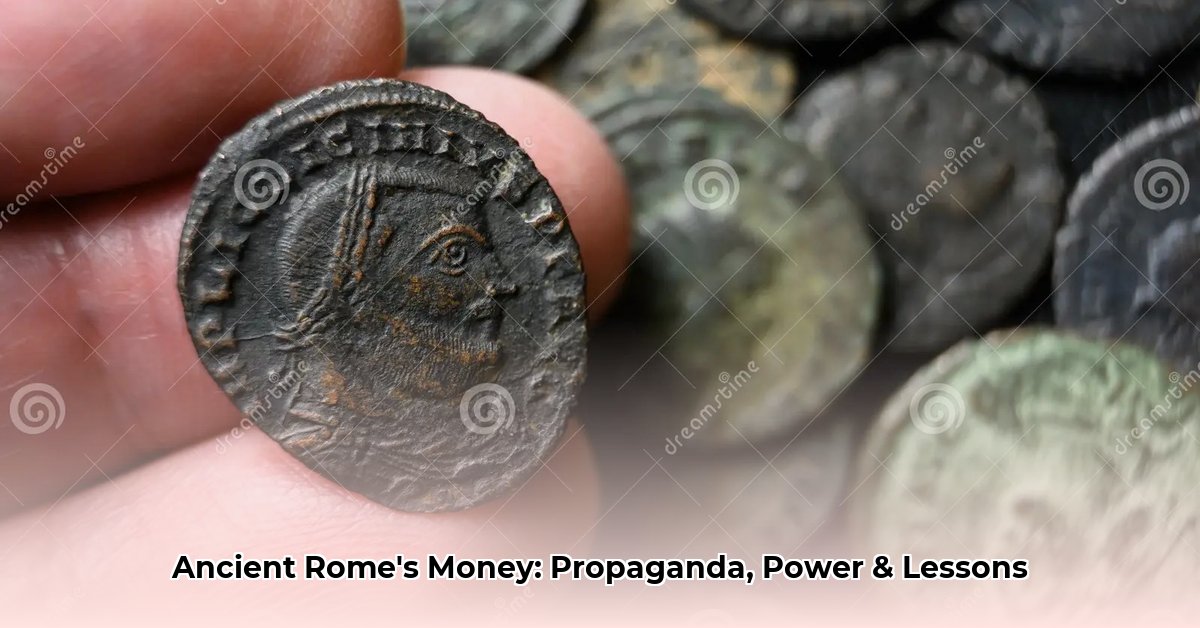
Journey back in time to explore the intricate world of money of ancient Rome. Far more than just a simple medium of exchange, Roman currency was a profound reflection of imperial power, a sophisticated tool for disseminating propaganda, and ultimately, a critical factor in the empire’s economic triumphs and eventual decline. How did the Romans transition from rudimentary bartering to a highly complex and far-reaching system of coinage? And what enduring economic lessons can we glean from their successes, innovations, and missteps that still resonate today? Our comprehensive exploration will uncover these secrets, revealing the lasting legacy of the Roman monetary system.
For further reading, explore ancient Roman coins.
From Barter to Billions: The Evolution of Roman Currency
In the early days of Rome, long before the familiar clink of standardized coins, society relied on rudimentary forms of exchange. This period highlights a crucial and fascinating transition in the Roman monetary system, signaling a move towards a more sophisticated economy.
The Humble Beginnings: Aes Rude, Aes Signatum, and Aes Grave
Imagine a world without standardized money. Early Romans, particularly from the 8th to 4th centuries BC, navigated trade using aes rude, which translates to “rough bronze.” These were irregular, unworked chunks of bronze, often weighing around 320 grams per unit, serving as a primitive proto-currency. Picture people weighing out unwieldy pieces of metal for transactions—a cumbersome system, yet a significant leap from pure bartering of goods like cattle. The very Latin word for money, pecunia, derives from pecus, meaning cattle, underscoring livestock’s central role before widespread coinage.
This evolved into the aes signatum, which were larger, marked bronze ingots, often weighing around 1.5 to 1.6 kilograms (3.3-3.5 pounds). Though still cast and not struck, these rectangular bars bore distinctive markings, indicating a step towards formalization. Following these were the aes grave (heavy bronze), substantial, standardized cast bronze coins that emerged around 300 BCE. Produced in clay molds, these ensured a consistent weight and form for the first true standardized Roman coinage, primarily used in central Italy. Simultaneously, the Romano-Campanian coinage, influenced by Greek minting traditions, consisted of irregularly struck silver and bronze coins, mainly produced in Roman-controlled towns outside Rome itself. This early period showcases the diverse and somewhat uncoordinated beginnings of ancient money systems in the burgeoning Roman state.
The Workhorse of the Economy: The Silver Denarius
A pivotal moment occurred around 211 BCE with the introduction of the denarius, a silver coin that would become the backbone and workhorse of the Roman economy for over five centuries. Valued at 10 bronze asses (hence its name, meaning ‘containing ten’), this small silver coin, initially weighing around 4.5 grams of nearly pure silver, streamlined commerce significantly. The denarius was akin to a modern dollar bill in its ubiquitous circulation and essential role in everyday purchases throughout the vast empire. Its relatively consistent value, at least initially, instilled public confidence and fueled economic growth, showcasing the ingenuity behind Roman silver coinage.
A Glimmer of Gold: The Aureus and Imperial Wealth
The aureus, a gold coin introduced later, represented the pinnacle of Roman prosperity and imperial authority. Primarily used for major transactions, large-scale payments, and international trade, it solidified Rome’s status as a formidable economic power. Initially struck at a standard of 40-42 to the Roman pound, the aureus served as the Roman Empire’s gold standard, a symbol of immense wealth and stability that resonated across its borders. The aureus not only facilitated high-value exchanges but also served as a powerful declaration of Rome’s fiscal strength, epitomizing the grandeur associated with Roman gold coins.
Key Roman Coins and Their Significance
As the Roman monetary system evolved, several key denominations emerged, each serving a distinct purpose within the empire’s vast and dynamic economy. These coins were more than just pieces of metal; they were vital instruments of daily life and imperial policy, reflecting the empire’s shifting needs and fortunes.
Here’s a detailed table summarizing the key Roman coins, providing a snapshot of their material, significance, and likely use:
| Coin | Material | Approximate Weight (initial) | Significance | Likely Use |
|---|---|---|---|---|
| Aes Rude | Bronze | Variable (~320g unit) | Earliest proto-currency, unworked bronze chunks | Small localized purchases, bartering equivalent |
| Aes Grave | Bronze | Variable, based on As (avg. 324g) | First standardized cast bronze coinage; foundational unit | Everyday transactions, small denominations, local trade |
| As | Bronze | ~324g (Republic), reduced later | The foundational unit of the Roman monetary system | Everyday transactions, small purchases, payments |
| Sestertius | Bronze | ~27g (Imperial) | Common coin for daily transactions and moderate payments | Medium-sized purchases, wages, administrative payments |
| Denarius | Silver | ~4.5g (Republic) | The dominant silver coin and backbone of the economy for centuries | Larger transactions, savings, military salaries, state payments |
| Aureus | Gold | ~8g (Imperial) | The gold standard of the Roman Empire, symbol of wealth | Major transactions, international trade, prestige items, investments |
| Antoninianus | Billon (silver/copper) | ~5g (initial) | Doubled denarius, introduced to combat debasement | Mid-to-large transactions during Crisis of 3rd Century, rapidly debased |
| Argenteus | Silver | ~3.4g (Diocletian) | New, purer silver coin under Diocletian’s reforms | Official payments, higher-value transactions |
| Follis | Bronze/Billon | ~10g (Diocletian) | New large bronze coin with silver wash, common under Tetrarchy | Everyday commerce, general circulation after reforms |
| Solidus | Gold | ~4.5g (Constantine) | New, stable gold coin, dominant in late antiquity and Byzantine Empire | Large-scale trade, imperial payments, long-term stability |
Coinage as Propaganda: Power in Every Piece
Roman coins were far more than mere economic instruments; they were sophisticated and pervasive tools for disseminating imperial messages. Leaders shrewdly leveraged their widespread circulation to showcase their images, celebrate military victories, and promote political agendas. Every coin served as a miniature, mobile billboard, effectively broadcasting the emperor’s authority and desired narratives throughout the vast empire.
Did you know these tiny pieces of metal could carry such profound political weight? By imprinting the emperor’s portrait, symbols of military triumph, allegories of divine favor, and even major public works like the Colosseum, coins became tangible representations of imperial power. This pervasive use of Roman coin propaganda ensured that even the most remote citizens were regularly exposed to the central government’s authority and key narratives. Unlike stationary statues, coins moved with the people, bringing the ruler’s image directly to the masses in a way that was unprecedented at the time.
From Julius Caesar’s groundbreaking decision in 44 BC to feature his own living portrait—a revolutionary act for its time—to Emperor Commodus depicting himself as Hercules, coins became deeply personal statements. For instance, during his campaign against Pompey, Caesar issued coins featuring Venus or Aeneas to associate himself with his divine ancestors. Later, emperors like Augustus prominently displayed their “ageless” portraits and accumulating titles. Even usurpers, who ruled for only a short time, made sure their image appeared on coins to legitimize their claim. This strategic use of imagery highlights the incredibly clever and effective form of imperial messaging, reaching every corner of a sprawling civilization and deeply influencing public perception. As the Stoic philosopher Epictetus jokingly remarked: “Whose image does this [sestertius] carry? Trajan’s? Give it to me. Nero’s? Throw it away, it is unacceptable, it is rotten.” This quote strikingly illustrates the moral and political value Romans attached to the images on their coins, reflecting their sentiments towards the depicted rulers.
Debasement and Economic Instability: Rome’s Costly Lesson
The Roman Empire, despite its immense might and sophisticated administration, faced recurring fiscal challenges that often led to a practice known as coin debasement. This involved reducing the amount of precious metal—typically silver or gold—in coins and replacing it with cheaper base metals like copper or lead. The primary motivation was often to finance costly wars, pay an ever-expanding army, or cover excessive public spending when direct taxation proved insufficient or unpopular. But how did this seemingly simple financial maneuver ultimately impact the Roman populace and the very fabric of its economy?
The Slow Poison of Silver Reduction and Hyperinflation
Emperors, starting notably with Nero in 64 AD, gradually began weakening the purity of the denarius, reducing its silver content from nearly pure to 90%, perhaps due to the cost of rebuilding Rome after the Great Fire. This practice accelerated drastically during the turbulent Third Century Crisis (235-284 AD), a period of intense civil wars and barbarian invasions. During this time, the antoninianus (initially introduced by Caracalla in 215 AD as a “double denarius” but containing only 1.5 times the silver) saw its silver content plummet from an initial 50% to as little as 2% or 5%.
This drastic reduction in intrinsic value meant that the same amount of money could buy significantly less, directly eroding the purchasing power of the average Roman citizen. This continuous devaluation of the Roman currency, particularly the denarius and later the antoninianus, offered a quick budgetary fix for immediate military expenditures but spiraled into rampant Roman inflation. For example, the annual pay of a Roman soldier increased from 900 sestertii under Augustus to 2,000 sestertii under Septimius Severus, while the price of grain more than tripled, demonstrating a fall in real wages and significant inflation.
A Crisis of Confidence: Gresham’s Law in Action
As coins lost their intrinsic value, public trust in the currency plummeted. Hoards of older, purer silver coins have been unearthed, clearly indicating that the populace was well aware of the declining value of new money. This profound lack of confidence spurred rampant inflation, causing prices to soar across the empire. It highlights a fundamental economic principle known as Gresham’s Law: “bad money drives out good.” People would hoard older, high precious-metal content coins and pay their taxes or conduct transactions with the debased new coins, further exacerbating the currency’s decline. To combat widespread counterfeiting and assess the true value of circulating coinage, professionals known as Nummularii were vital, though often overwhelmed.
Societal Ripples and the Return to Barter
Inflation does not impact all segments of society equally. While the wealthy might have possessed assets like land or gold to protect themselves, the common soldier or farmer, who relied on daily wages or modest earnings, faced severe hardship. The social unrest caused by escalating prices, coupled with crippling taxes (which the government often demanded in goods or purer coinage as it lost faith in its own currency), widened economic inequality and fueled dissatisfaction. This economic hardship contributed significantly to the social fragmentation and political instability that plagued the empire.
When official currency becomes unreliable, societies often revert to older, more tangible systems of exchange. The Roman economy saw an increased reliance on barter and localized trade, especially in the Western Empire, as the value of its widespread currency plummeted. This shift was a clear indicator of a failing central monetary system and the deep-seated economic instability in Rome.
Reforms and Their Limits: Diocletian and Constantine
Recognizing the severe issues, emperors like Aurelian (who in 274 AD attempted a reform marked by “XXI” on coins, indicating a 20:1 copper-to-silver ratio) and later Diocletian and Constantine attempted sweeping monetary reforms. Diocletian, ruling from 284 to 305 AD, overhauled the system with new denominations like the argenteus (a purer silver coin) and the follis (a large bronze coin often with a silver wash), issued at fixed weights. He also famously issued his “Edict on Maximum Prices” in 301 AD, attempting to control soaring inflation, but these efforts were largely undermined by black markets, widespread noncompliance, and the sheer difficulty of enforcement.
Constantine the Great’s introduction of the solidus in 312 AD, a stable and consistently pure gold coin, did bring a measure of stability, particularly in the Eastern Roman Empire, which would later thrive as the Byzantine Empire for centuries using this very coin. However, even under Constantine, debased silver and copper coins continued to circulate, meaning that while the wealthy could rely on the solidus, the poor were often still left with an inflation-ridden currency, highlighting the persistent challenges of currency devaluation.
While some historians debate whether debasement was the sole cause of Rome’s eventual decline, there is no denying that it profoundly exacerbated existing economic and social challenges, contributing significantly to the weakening of the Empire. The constant need for funds, particularly for military spending, often overshadowed sound long-term economic planning, serving as a cautionary tale of the perils of monetary mismanagement.
The Enduring Echo: Roman Currency’s Legacy
The influence of the money of ancient Rome extends far beyond its historical boundaries, embedding itself in our modern vocabulary and monetary systems. Interestingly, the very word “money” can be traced back to the Roman goddess Juno Moneta, whose temple on the Capitoline Hill housed the Roman mint around 269 BC. This goddess became the personification of money, lending her name to both currency and its place of manufacture.
Moreover, the Roman denarius lends its name to modern currencies like the dinar in various Arab and Balkan countries, highlighting its linguistic staying power. Similarly, the Roman libra, a unit of weight, evolved into the pound in the British monetary system and the peso in numerous Spanish-speaking countries. The convention of round, metallic discs featuring a profiled ruler on the obverse and a symbolic image on the reverse, a standard initiated by the Romans, persists in coinage worldwide. This enduring etymological, conceptual, and stylistic legacy underscores the profound impact of the Roman monetary system on global financial history. What we glean from Rome’s successes and failures—particularly the lessons of maintaining currency integrity, managing inflation, and understanding public confidence—could inform modern economic policies and strategies. It suggests that understanding history can indeed help us navigate the present, offering timeless principles that govern economies and the critical importance of a stable financial history.










