Have you ever wondered what it would be like to recline in a Roman villa? Far from stark stone interiors, the homes of ancient Rome, particularly for affluent citizens, were crafted to convey an atmosphere of refined living. Imagine comfortable couches for luxurious lounging, robust tables for elaborate feasts, and ingenious solutions for storage. While much of the original furniture has succumbed to time and the elements—often being made of wood, and metals like bronze being melted down for new work—archaeological excavations, vivid wall paintings, and historical texts empower us to reconstruct a remarkably clear picture of these ancient domestic spaces. Consider this a comprehensive guide to understanding Roman furniture: we will delve into its diverse styles, inherent practicality, and profound social significance. Prepare to uncover the surprisingly sophisticated world of Roman decor and imbue your own space with a touch of ancient grandeur. Perhaps you should view Roman Home Furnishings for additional insight.
The Heart of Roman Living: Form, Function, and Status
The world of furniture ancient Rome, though less abundant in surviving physical examples than its art or architecture, provides invaluable insights into a society where artistry, utility, and social standing were intricately intertwined. How did the Romans equip their residences? We can explore these details by meticulously piecing together information from archaeological findings, artistic representations, and ancient written accounts. This synthesis reveals a deep appreciation for both comfort and a clear demonstration of wealth.
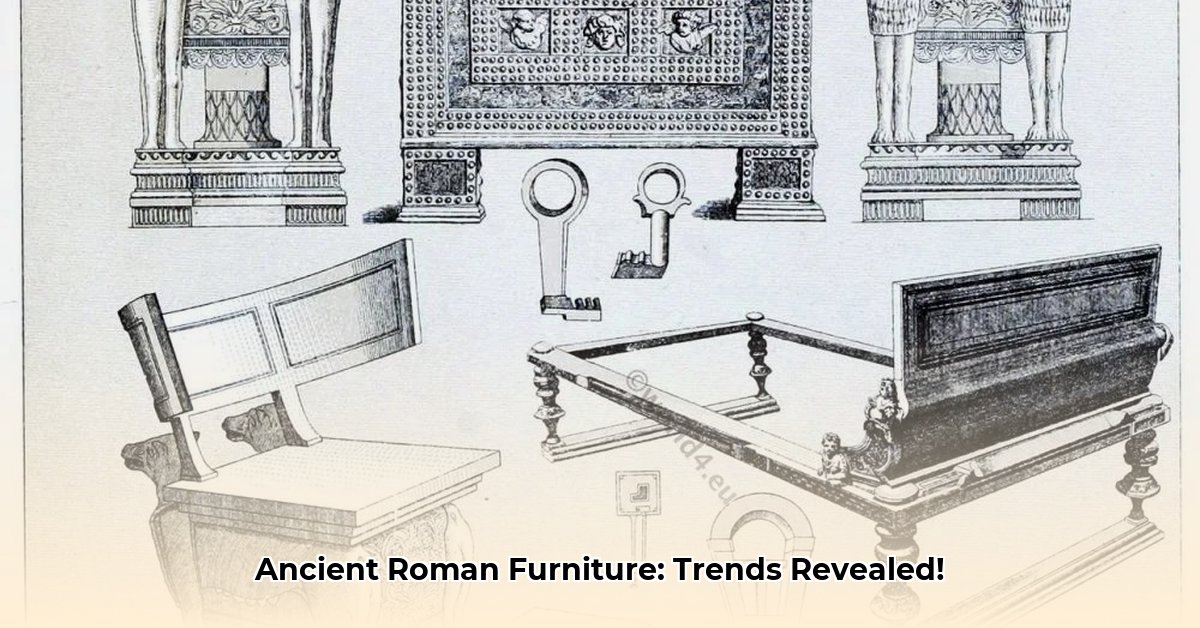
Couches, known as lecti, were utterly central to Roman domestic life. More than mere beds, Romans also used them extensively for dining, particularly in the reclining posture adopted from the Greeks, and for social gatherings. The lectus cubicularis specifically served as a bed for sleeping. Distinct variations included the lectus lucubratorius for study and contemplation during daytime hours, the lectus funebris as a bier for funeral ceremonies, and the lectus genialis associated with marriage. For formal dining, the triclinium involved a set of three couches arranged around a low table.
How did Roman elites achieve comfort on these elaborate pieces? Wealthy Romans adorned their couches with lavish materials such as bronze fittings, inlay of silver, gold, ivory, and tortoise-shell. Some were cast entirely in bronze, while others featured exquisitely carved wooden frames of oak, maple, terebinth, or rare exotic woods with undulating grains known as lecti pavonini (peacock beds). Mattress fillings varied widely based on means: from simple straw or reeds for the less fortunate, to fine wool shorn from Leuconian flocks, and even prized swan’s down for the elite, offering a tangible measure of luxury. Beds were supplied with a raised head-rest, often finished with bronze animal-heads like those of mules, and topped with multiple coverings, counterpanes, and even damask quilts.
Did different seating options truly exist for different social classes? Absolutely. Seating varied significantly based on social standing and specific function. The sella curulis, a distinctive portable, X-shaped chair, typically made of ivory, was a potent symbol of political and military authority, strictly reserved for magistrates. Julius Caesar reportedly had one made of gold. Everyday citizens utilized simpler stools (sellae) and benches (subsellia) for single or communal seating, respectively. The solium, a stiff, high-backed chair, often cut to appear as one solid block of wood, was so tall it required a footstool and was reserved for gods, kings, and the patron receiving clients in the atrium. The cathedra, a chair without arms but with a curved, sometimes sloping back, was initially popular with women, deemed too luxurious for men, but later saw general use by teachers, giving rise to the expression “ex cathedra.” Armchairs, often called thronos, were generally reserved for depictions of deities or highly esteemed individuals. The type of seat one occupied directly communicated one’s position within Roman society.
Tables, or mensae, were indispensable for dining, displaying precious objects, and facilitating daily activities. The versatile mensa could serve numerous purposes, while the monopodium, a table characterized by a single leg, frequently held oil lamps (lucernae) or personal items in bedrooms. The abacus was a table with a rectangular top and a raised rim, used for plates and dishes like a modern sideboard. The delphica had three legs. Roman tables were crafted from wood, stone, or various metals, sometimes with adjustable legs. Affluent Romans particularly favored tables made from expensive citrus wood, with cross sections up to four feet in diameter, some reaching astonishing prices: Cicero paid $20,000, Asinius Pollio $44,000, King Juba $52,000, and one family possessed a table valued at $60,000. These finely wrought pieces unequivocally showcased the owner’s affluence and refined aesthetic sensibilities, serving as prominent status symbols.
How did the Romans manage to keep their possessions safe and orderly in an era before modern security? They relied on chests (arcae) and cabinets (armaria) for storing clothes, valuable items, and even scrolls. These robust pieces were typically constructed from wood, often reinforced with iron, and embellished with bronze hinges and locks. Smaller arcae for jewels were even made of silver or gold. The strongbox, usually positioned in the tablinum (the owner’s home office), securely held the cash and vital documents of the pater familias (the head of the household) and was often chained to the floor as an additional precaution. Cabinets, though lacking the convenient glass doors of modern designs, were divided into compartments and served to preserve books from mice and to display wax death masks (imagines). These multifaceted storage solutions underscore the Roman emphasis on both practicality and security.
Beyond furniture, daily Roman life also involved sophisticated lighting systems and timekeeping devices. Lighting originated from oil lamps (lucernae), meticulously crafted from terracotta or bronze, frequently adorned with intricate artistic designs. They were designed to be carried, suspended from ceilings, or placed on specific tables. Tall lamp-stands, known as candelabra (though originally for wax candles, candelae), illuminated public rooms. Candles, first described in the A.D. first century, were made from tallow or wax, and were even edible during times of extreme hunger, though generally regarded as inferior to oil lamps. Time was meticulously tracked using sundials, which became highly sophisticated, mapping out hours into halves and quarters. Roman playwright Plautus famously complained in the 2nd century B.C. about sundials “cutting and hacking up my days.” Augustus even created a giant sundial using an obelisk in the Campus Martius. For more precise or indoor use, water clocks demonstrated progressive advancements throughout the Roman period, with clepsydrarii and organarii competing in ingenuity. These everyday objects offer a window into their structured daily routines and inherent artistic tastes.
Roman interior design was further characterized by vibrant frescoes depicting landscapes, mythological narratives, or architectural vistas, imbuing rooms with depth and rich color. Mosaics, meticulously crafted from countless tiny pieces of stone or glass (tesserae), adorned both floors and walls with intricate geometric patterns or vivid scenes, sometimes even simulating spilled food in dining rooms. The ingenious hypocaust system, providing under-floor heating, demonstrated the Romans’ commitment to comfort and technological advancement, allowing for consistent indoor temperature. This blend of practicality, artistic flair, and advanced engineering culminated in spaces that were both impressive and eminently livable.
Modern Discoveries and Enduring Legacies
Recent archaeological findings continually deepen our understanding of Roman home furnishings, particularly emphasizing the profound significance of beds in Roman burial customs and their beliefs concerning the afterlife. In February 2024, archaeologists announced the unearthing of a 2,000-year-old Roman funerary bed alongside five oak coffins and skeletons at a London construction site. This marks the first discovery of a complete funerary bed in Britain, crafted from oak with carved feet and wooden pegs, likely used to transport the deceased and intended as a grave good for the afterlife. Accompanying finds included beads, a glass vial, and a decorative lamp from the early Roman Britain period (A.D. 48 to 80).
Further afield, in 2022, archaeologists near Kozani in northern Greece found a burial of a woman on a rare bronze “mermaid bed” dated to the first century B.C. This plain-looking bed featured a rectangular bronze headboard decorated with mermaid depictions and an image of a bird holding a snake, symbolizing the god Apollo. Another bed burial, made of iron and wood, was found in a nearby cemetery in 2021, dating to the fourth century B.C., with an elderly man interred on it. Even the remains of a burnt bed were found at Pompeii in 2023, a charred mass with outlines seared into the walls and floor, including blackened fragments of textile bedclothes and mattress filling, suggesting a lamp may have been knocked over during the volcanic eruption.
Perhaps most surprising are the discoveries related to Roman refrigeration. Archaeology magazine reported findings at the frontier fortress of Novae (modern-day Bulgaria): small, ceramic-tile food storage units, akin to modern fridges, were found in Roman legionary barracks. Excavations in 202











1 thought on “Decoding furniture ancient rome: Trends & practicality revealed”
Comments are closed.