
History isn’t just a timeline of kings, queens, and wars. It’s a sprawling, chaotic collection of human moments—some heroic, some tragic, and some just plain weird. The most bizarre events in history often reveal more about our past than any textbook, proving that reality can be far more absurd than anything a novelist could dream up. From armies defeated by their own drunkenness to a pope putting a corpse on trial, these stories remind us that the past was a wild, unpredictable place.
You’re about to dive into a world where armies of emus outsmart machine-gun-toting soldiers, a great flood of molasses devastates a major city, and a president’s pet parrot gets kicked out of his funeral for swearing. These aren’t legends; they’re documented facts that stretch the limits of belief.
What You’ll Discover at a Glance
This guide isn’t a random list. We’ve organized history’s strangest moments into themes to show you the unbelievable patterns of human absurdity. Here’s a peek at what’s inside:
- Military Mayhem & Epic Fails: Uncover wars fought against birds, armies that defeated themselves, and brilliant deceptions involving inflatable tanks.
- Political & Papal Absurdity: Witness the strangest trials, most ridiculous nominations, and the time a soft drink company briefly commanded a naval fleet.
- When Nature (and Humans) Went Wild: Explore mysterious plagues of dancing and laughter, deadly clouds of lake gas, and disastrous industrial spills involving beer and molasses.
- Science, Espionage, & Strange Fates: Learn about failed CIA spy cats, shocking medical products, and the incredible people who survived the impossible.
Military Mayhem: When Strategy Goes Spectacularly Wrong
War is often described as long periods of boredom punctuated by moments of terror. But sometimes, it’s punctuated by moments of sheer, unadulterated absurdity. These events show that even in the most serious of circumstances, chaos reigns supreme.
The Great Emu War of 1932
After World War I, the Australian government gave land to returning veterans to farm wheat in Western Australia. The only problem? The land was also prime territory for about 20,000 emus. The large, flightless birds developed a taste for wheat, devastating crops and sparking a crisis.
In a move that sounds like a movie plot, the military was called in. Major G.P.W. Meredith led a small contingent of soldiers armed with two Lewis machine guns and 10,000 rounds of ammunition. The campaign was a disaster. The emus proved to be surprisingly brilliant tacticians, splitting into small groups and running in unpredictable patterns. After a month of failure and public ridicule, the military withdrew. The emus had won. It remains one of the most odd historical events in military history.
The Battle Where an Army Fought Itself—And Lost
In 1788, the Austrian army, 100,000 strong, was marching to confront the Ottoman Turks near the town of Karansebes, Romania. One night, a vanguard of hussars crossed a river and bought schnapps from some local Romani people. A group of infantry followed and demanded a share of the alcohol, but the hussars refused, setting up fortifications around the barrels.
An argument escalated into a full-blown fight. During the chaos, someone shouted, “Turci! Turci!” (“Turks! Turks!”). The drunken soldiers panicked. Hussars fled back across the river, running into the main army, which thought they were under Ottoman attack. In the darkness and confusion, different factions of the Austrian army began firing on each other. By morning, without ever seeing a single Turkish soldier, the army had suffered an estimated 1,000 to 2,000 casualties.
The Ghost Army and the Fake Paris
Deception in war can lead to some truly weird events in history. During World War II, the U.S. Army deployed the 23rd Headquarters Special Troops, better known as the “Ghost Army.” This top-secret unit was composed of artists, designers, and sound engineers who used inflatable tanks, powerful speakers blasting combat sounds, and fake radio transmissions to fool the Germans about the size and location of Allied forces. Their masterful illusions saved thousands of lives by drawing enemy fire and diverting divisions.
The French had a similar idea in World War I. To protect the real Paris from German bombers, they began constructing a “Fake Paris” a few miles outside the city. The replica included sham streets, fake buildings, and even a wooden replica of the Gare du Nord railway station, all designed to be lit at night to lure bombers away. The project was never completed, as the war ended in 1918, but it remains one of the more obscure historical events of the era.
When Napoleon Was Attacked by Rabbits
In 1807, fresh off signing the Treaties of Tilsit, Napoleon Bonaparte wanted to celebrate with a rabbit hunt. His chief of staff arranged the event, gathering what was reported to be over 3,000 rabbits. But instead of wild rabbits that would flee, he had sourced tame, domesticated ones.
When the cages were opened, the rabbits didn’t scatter. Instead, they saw the most powerful man in Europe as a food source. The horde of bunnies charged Napoleon and his men, swarming their legs. The great general and his entourage were forced into a chaotic retreat, proving that even a military genius is no match for a stampede of hungry rabbits. You can Explore historys strangest events like this for days and not run out of material.
Political & Papal Absurdity: Power Gone Weird
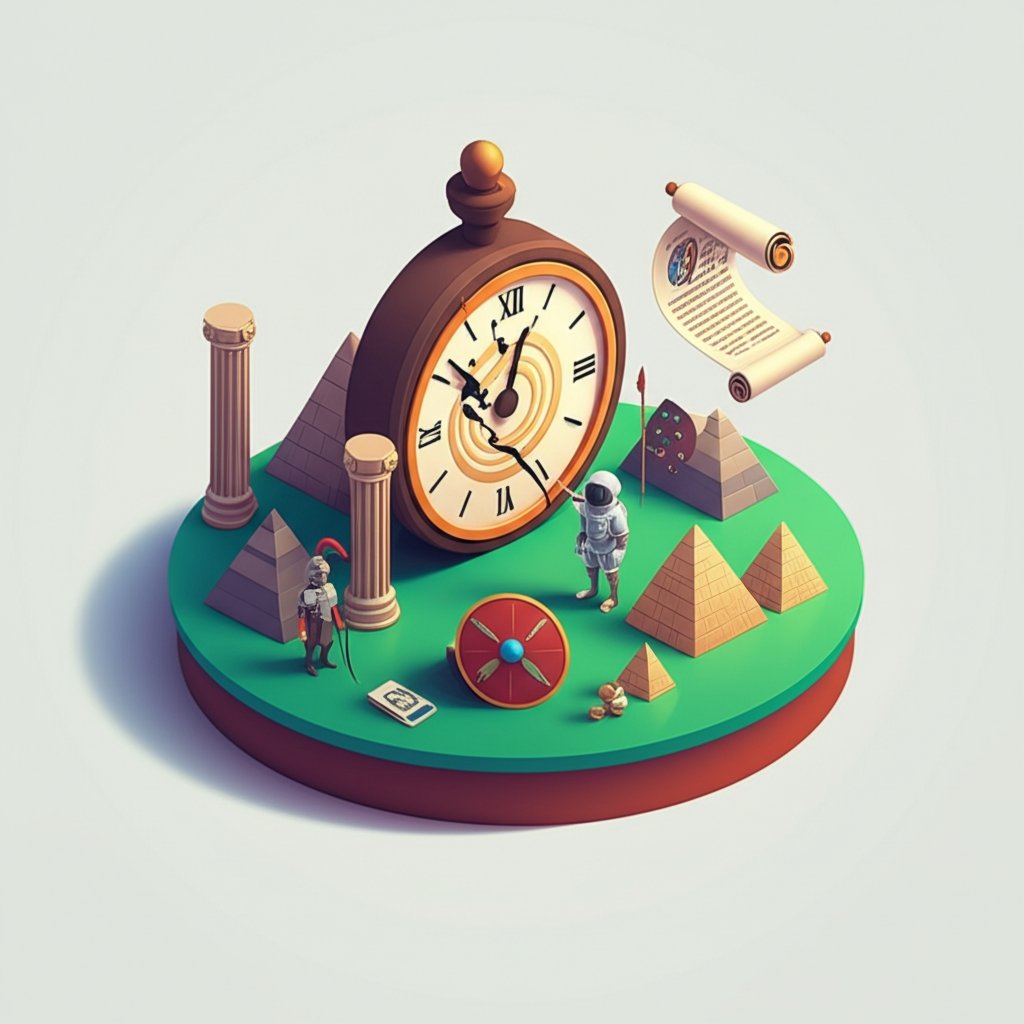
From the halls of government to the hallowed chambers of the Vatican, power doesn’t always lead to sound judgment. In fact, it sometimes leads to decisions so bizarre they defy explanation.
The Cadaver Synod of 897
Perhaps the most grotesque trial in history occurred when Pope Stephen VI had the corpse of his predecessor, Pope Formosus, exhumed seven months after his death. The decaying body was dressed in papal vestments, propped up on a throne, and put on trial for perjury and violating canon law.
A deacon was appointed to speak for the deceased pope, who was unsurprisingly found guilty. His papacy was declared null, his three fingers of benediction were chopped off, and his body was thrown into the Tiber River. This is one of the most Uncover bizarre history you’ll ever encounter.
The President’s Swearing Parrot
Andrew Jackson, the seventh U.S. President, was known for his tough demeanor and colorful language. Apparently, his pet African Grey parrot, Poll, picked up some of his owner’s habits. At Jackson’s funeral in 1845, Poll had to be removed from the service because he wouldn’t stop shouting obscenities at the mourners. The bird’s profane squawking disrupted the solemn occasion, making it one of the more amusing Historys strangest incidents.
When Pepsi Owned the World’s Sixth-Largest Navy
In 1989, at the height of the Cold War, Pepsi struck an unusual deal with the Soviet Union. In exchange for billions of dollars worth of soda concentrate, the USSR traded Pepsi a fleet of 17 submarines, a cruiser, a frigate, and a destroyer. The deal briefly made PepsiCo the sixth-largest military power in the world by number of naval vessels. The company’s CEO famously told the U.S. National Security Advisor, “We are disarming the Soviet Union faster than you are.” Pepsi later sold the fleet for scrap metal.
When Nature (and Humans) Went Wild

Sometimes, the world itself produces unusual happenings in the world. Whether through unexplained mass phenomena or catastrophic man-made accidents, these events show how quickly our normal reality can collapse into chaos.
The Dancing Plague of 1518
In July 1518, in the city of Strasbourg, France, a woman known as Frau Troffea stepped into the street and began to dance. She didn’t stop for nearly a week. Within a month, around 400 other people had joined her in the nonstop dance marathon.
Authorities were baffled. Believing the cure was “more dancing,” they cleared open spaces and even hired musicians. But people kept dancing until they collapsed from exhaustion, heart attacks, and strokes. Theories for the cause of this bizarre plague range from ergot fungus poisoning (which can cause spasms) to stress-induced mass hysteria. It remains one of history’s most unsettling medical mysteries and one of the weirdest historical events on record.
The Great Boston Molasses Flood of 1919
On January 15, 1919, a massive storage tank containing 2.3 million gallons of molasses burst in Boston’s North End. It unleashed a 25-foot-high wave of thick, sticky syrup that moved at an estimated 35 mph. The wave was so powerful it tore buildings from their foundations, buckled an elevated railway, and engulfed everything in its path.
The disaster killed 21 people and injured 150 more. The cleanup took weeks, and residents claimed they could still smell the sweet scent of molasses on hot summer days for decades afterward. This is surely one of the Craziest moments in history.
The Exploding Whale of 1970
When an 8-ton sperm whale washed ashore in Florence, Oregon, the Oregon Highway Division was tasked with its removal. Their chosen method? Dynamite. The plan was to use a half-ton of explosives to disintegrate the carcass into small, manageable pieces that seagulls would then eat.
The ensuing explosion was a spectacular failure. Instead of vaporizing, the blast sent massive chunks of whale blubber raining down on the town, crushing cars and terrifying onlookers. The largest piece of the whale remained right where it had started. The event became an early viral video legend and a textbook example of a terrible idea. These kinds of random events in history serve as cautionary tales.
The Tanganyika Laughter Epidemic of 1962
What started with three girls giggling at a boarding school in Tanganyika (now Tanzania) spiraled into one of the strangest mass psychogenic illnesses ever recorded. The laughter became uncontrollable, spreading from student to student and eventually forcing the school to close.
When the students returned to their home villages, the epidemic spread with them. Over the next several months, more than 1,000 people were afflicted with fits of uncontrollable laughter and crying, leading to the temporary closure of 14 schools. Researchers believe the phenomenon was a case of mass hysteria triggered by stress, one of the most strange happenings in the world of its kind.
Bizarre Science, Espionage, & Strange Fates
Human curiosity and ambition have led to incredible breakthroughs, but they’ve also produced some truly The worlds weirdest events. From marketing heroin as a cough suppressant to attempting to weaponize cats, our quest for knowledge and power has taken some very odd turns.
When Heroin Was a Children’s Cough Syrup
In the late 1890s, the pharmaceutical company Bayer began commercially producing diacetylmorphine and marketed it under the brand name “Heroin.” It was sold over-the-counter as a “non-addictive” morphine substitute and a cough suppressant. Doctors prescribed it for everything from the common cold to tuberculosis, even for children. It took more than a decade for its dangerously addictive properties to be widely acknowledged, making it one of the biggest blunders in medical history. The fact that this was once common practice highlights how much we’ve learned, and some of the Weird stuff happening now may seem just as strange to future generations.
Project Acoustic Kitty: The CIA’s Spy Cat
During the Cold War, the CIA spent an estimated $20 million on a project called “Acoustic Kitty.” The plan was to surgically implant a microphone, transmitter, and battery into a cat, which would then be trained to cozy up to Soviet officials so agents could eavesdrop on their conversations.
After years of training, the first Acoustic Kitty was released for its inaugural field test near a Soviet compound in Washington, D.C. It was immediately hit and killed by a taxi. The project was scrapped shortly after, deemed an impractical failure.
The Man Who Survived Two Atomic Bombs
Tsutomu Yamaguchi was a Japanese engineer on a business trip in Hiroshima on August 6, 1945, when the United States dropped the first atomic bomb. Despite being less than two miles from ground zero, suffering ruptured eardrums and severe burns, he survived.
He spent the night in a bomb shelter and then took a train home—to Nagasaki. He arrived on August 8th and reported for work on the 9th, describing the Hiroshima blast to his skeptical boss. At that exact moment, the second atomic bomb detonated over the city. He survived again. Yamaguchi lived to be 93, becoming a vocal proponent of nuclear disarmament and one of the most Unbelievable historical moments of human resilience.
Frequently Asked Questions About Bizarre History
Are these stories actually real?
Yes, for the most part. While some details may have been embellished over centuries of retelling (especially for ancient events), the core facts of these stories are backed by historical records, news reports, and official documents. Events like the Great Molasses Flood, the Emu War, and the Ghost Army are thoroughly documented. For others, like the Battle of Karansebes, historians rely on a smaller number of contemporary accounts, so some specifics are debated. This is why it’s so rewarding to Discover forgotten history and check the sources for yourself.
What causes mass hysteria events like the Dancing Plague?
Mass psychogenic illness, or mass hysteria, is a phenomenon where a group of people experiences similar physical or emotional symptoms with no identifiable physical cause. It’s often triggered by a stressful or traumatic environment. In the case of the Dancing Plague of 1518, the population of Strasbourg was suffering from famine, disease, and extreme poverty. Experts believe the “dancing” was a collective psychological coping mechanism—a trance-like state that spread through social contagion. You can Uncover historys strange happenings that are equally baffling.
Where can I find more strange historical events?
History is filled with them! You can often find them in the footnotes of history books, local archives, and old newspaper databases. Looking up Historys weirdest dates or specific periods of social upheaval can reveal some of the craziest historical events. Many bizarre events are just waiting to be rediscovered by curious minds.
Why These Weird Stories Matter
Learning about these strange events in history does more than just entertain. It humanizes the past. It reminds us that historical figures weren’t just names on a page; they were people capable of brilliant ideas, profound errors, and moments of complete absurdity. These Odd historical occurrences show us that history is not a neat, linear progression but a messy, unpredictable, and often hilarious series of events. They are some of the weirdest things happening in the past.
From a Greek playwright killed by a falling tortoise to a modern military losing a war to birds, these stories challenge our perception of what’s possible. They encourage us to stay curious, to question the official narrative, and to remember that the truth is almost always stranger than fiction. So the next time you think you’ve heard it all, just remember the Historys weirdest happenings—like the time an army was defeated by schnapps. You can Uncover historys strangest dates and find stories that rival any fantasy novel. There are always more Odd historical events to explore, and the strange events happening around the globe today will surely become the bizarre history of tomorrow. Don’t stop here; Explore historys hidden dates and see what Wildest moments in history you can find.










