For the bigger picture and full context, make sure you read our main guide on 1991 Interesting Facts About A Pivotal Year In History.
The year 1991 wasn’t just another spin around the sun; it was a seismic shift, rewriting geopolitical maps and launching a digital revolution that continues to shape our daily lives. From the dramatic conclusion of the Cold War to the quiet birth of the World Wide Web, the 1991 history events serve as a stark reminder of how rapidly the world can transform. It was a year where old orders crumbled and new paradigms emerged, leaving an indelible mark on history that we’re still processing decades later.
At a glance
- Global Realignment: Witness the official end of the Cold War with the dissolution of the Soviet Union and the conclusion of the Gulf War.
- Societal Overhauls: Understand the momentous repeal of apartheid laws in South Africa and the escalating racial tensions in the US following the Rodney King incident.
- Digital Genesis: Explore the public launch of the World Wide Web, Linux, and other foundational technological advancements.
- Cultural Milestones: Recount the release of iconic albums by Nirvana and Metallica, breakthrough films like “Terminator 2,” and the first Lollapalooza festival.
- Unusual & Unforgettable: Discover a range of quirky and impactful moments, from ancient discoveries to bizarre definitions.
The Iron Curtain Falls: Unpacking the Soviet Union’s End
Few 1991 history events hold as much weight as the official dissolution of the Soviet Union on December 25th. This wasn’t merely a political formality; it was the definitive end of the Cold War, a decades-long standoff that had defined global politics. Mikhail Gorbachev, the Soviet leader who had initiated groundbreaking reforms like Glasnost (openness) and Perestroika (restructuring), resigned, effectively handing power to Boris Yeltsin, the President of the Russian SFSR.
The symbolic lowering of the Soviet flag for the last time marked the end of an empire. This monumental event paved the way for the independence of 15 constituent republics, fundamentally reshaping the political landscape of Eastern Europe and Central Asia. Countries like Uzbekistan, Tajikistan, Kyrgyzstan, Azerbaijan, Ukraine, and Moldova, along with the Baltic states of Lithuania, Latvia, and Estonia, asserted their sovereignty. The Baltic states, in particular, had faced significant Soviet military pressure earlier in the year, with Lithuania experiencing crackdowns in January and all three voting overwhelmingly for independence in March, demonstrating the popular will for self-determination. The collapse signaled a definitive triumph for democratic ideals over communist authoritarianism, ushering in an era of unprecedented global change.
Gulf War’s Conclusion: A New Era of Mideast Tensions
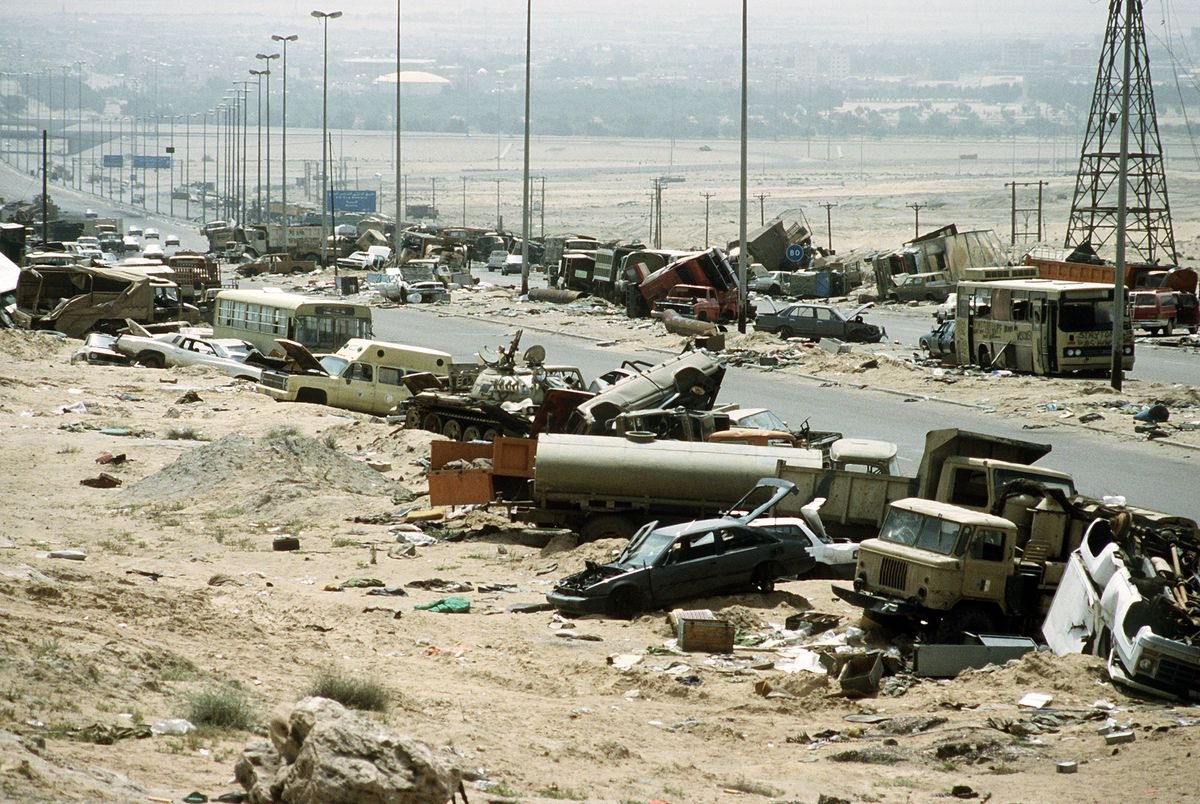
While the Soviet Union was crumbling, another major geopolitical conflict was drawing to a close. The Gulf War, initiated by Iraq’s invasion of Kuwait in August 1990, officially ended on February 28, 1991. The US-led coalition, under the banner of Operation Desert Storm, had launched an air campaign on January 17, followed by a swift and decisive ground invasion, Operation Desert Sabre, on February 24.
This well-coordinated international effort succeeded in expelling Iraqi forces from Kuwait and restoring the Kuwaiti monarchy, but not without significant environmental and human impact. As they retreated, Iraqi forces deliberately set fire to over 700 oil wells in Kuwait, creating an ecological catastrophe that burned for months. Days before the war’s end, a grim reminder of the conflict’s dangers occurred on February 25 when an Iraqi Scud missile struck a US barracks in Dhahran, Saudi Arabia, tragically killing 28 American soldiers. The Gulf War set a precedent for multinational military intervention and, while resolving the immediate crisis, left complex regional dynamics simmering for decades to come.
Shifting Societies: Apartheid’s Demise and Mounting US Tensions
1991 was also a pivotal year for human rights and social justice. In South Africa, President F. W. de Klerk took decisive steps to dismantle the deeply entrenched system of apartheid. On February 1, he announced the repeal of all remaining apartheid laws. By June, the notorious Population Registration Act of 1950, which had classified individuals by race from birth, was officially repealed, alongside other discriminatory legislation. These actions marked a profound shift towards a non-racial democracy, laying the groundwork for Nelson Mandela’s eventual presidency. The international community acknowledged this progress; in July, South Africa’s long suspension from the International Olympic Committee, in place since 1964, was finally lifted, symbolizing its reintegration into global society.
However, closer to home, racial tensions were reaching a boiling point in the United States. On March 3, Los Angeles police officers brutally beat motorist Rodney King during an arrest, an incident captured on amateur video. This footage, broadcast widely, shocked the nation and ignited outrage, leading to charges against the officers on March 15. The subsequent acquittal of the officers in 1992 would spark some of the most destructive urban riots in American history, making the Rodney King incident a stark foreshadowing of the deep-seated racial injustice that continued to plague the nation.
For a broader perspective on how these and other moments contributed to the era’s overall narrative, you can always Discover 1991’s pivotal facts.
Meanwhile, a chilling criminal case gripped the nation when serial killer Jeffrey Dahmer was arrested on July 22 after body parts were discovered in his Milwaukee apartment. Dahmer, who had killed 17 people between 1978 and 1991, became a horrific symbol of the depths of human depravity, his arrest bringing a dark chapter to a close.
The Dawn of Digital: The World Wide Web and Technological Leaps
Among the most significant 1991 history events are those that laid the foundation for our modern digital world. On August 6, the World Wide Web, conceived by Tim Berners-Lee at CERN labs, became publicly available. This wasn’t just an upgrade; it was a paradigm shift, allowing information to be linked and accessed globally via a user-friendly interface. The first website, hosted at CERN, was a simple text page explaining the project, yet it heralded an entirely new era of connectivity and information sharing.
Beyond the Web, 1991 saw a flurry of other groundbreaking technological advancements:
- Linux Kernel: A then-unknown Finnish student, Linus Torvalds, released the first version of the Linux kernel, an open-source operating system that would grow to power everything from servers to smartphones.
- GSM Call: The very first GSM (Global System for Mobile Communications) call was made, marking a crucial step towards standardized digital mobile communication that would eventually make cellular phones ubiquitous.
- Microsoft MS-DOS 5.0: Microsoft released a significant update to its dominant operating system, MS-DOS 5.0, improving memory management and adding utility features.
- Hubble’s First Images: After its launch in 1990, the Hubble Space Telescope began sending back its first spectacular images, revolutionizing our understanding of the universe.
- Color Scanning: HP introduced the HP Scanjet IIc, the first color scanner, at a price point of $1995, making desktop color imaging accessible for the first time.
- Python’s Debut: On February 20, Guido van Rossum released the programming language Python, which would go on to become one of the most popular and versatile languages for everything from web development to artificial intelligence.
These innovations, though seemingly disparate, collectively pointed towards a future where digital connectivity and computing power would profoundly reshape how we work, communicate, and live.
Cultural Resonances: Music, Film, and Pop Culture Milestones
1991 wasn’t just about politics and technology; it was a powerhouse year for culture, too, leaving an enduring legacy in music, film, and sports.
Defining the Sound of a Generation
- Nirvana’s “Nevermind”: Released in September, Nirvana’s second album, featuring the iconic “Smells Like Teen Spirit,” wasn’t just a hit; it was a cultural phenomenon. Selling over 30 million copies worldwide, it single-handedly propelled grunge into the mainstream and redefined rock music for a new generation.
- Metallica’s “The Black Album”: Also a monumental release in August, Metallica’s self-titled “The Black Album” debuted at number one on the Billboard 200. With over 16 million copies sold in the USA alone, it cemented Metallica’s status as a global metal giant and expanded their appeal far beyond their thrash roots.
- Queen’s “Bohemian Rhapsody” Resurgence: Following the tragic death of Freddie Mercury, Queen’s legendary “Bohemian Rhapsody” was re-released, topping the UK charts and demonstrating the song’s timeless appeal and Mercury’s lasting impact.
- Michael Jackson’s “Black or White”: The King of Pop premiered his groundbreaking music video for “Black or White,” notable for its innovative use of morphing technology and its powerful message of racial unity.
- Pearl Jam’s “Jeremy” Inspiration: A tragic real-life event on January 8 saw Jeremy Wade Delle shoot himself in front of his English class, which later inspired Pearl Jam’s poignant and powerful song “Jeremy.”
Cinematic Achievements
- “Terminator 2: Judgment Day”: The biggest movie of the year, earning over $509 million worldwide, “Terminator 2” pushed the boundaries of special effects. Its pioneering use of natural human motion for a computer-generated character (the T-1000) set new industry standards.
- “The Silence of the Lambs”: Released on February 14, this chilling psychological thriller swept the Academy Awards, terrifying audiences and establishing itself as a horror classic.
Pop Culture Phenomena
- First Lollapalooza: The inaugural Lollapalooza festival took place, pioneering the modern multi-genre touring festival concept and becoming a vital platform for alternative music.
- Chicago Bulls’ First NBA Title: Led by the legendary Michael Jordan, the Chicago Bulls clinched their first NBA Championship, marking the beginning of their dominant dynasty and solidifying Jordan’s status as a global icon.
Unusual Discoveries and Quirky Moments
Beyond the grand narratives, 1991 also presented a series of unique and sometimes bizarre events that caught the public’s imagination.
A Glimpse into the Past
- Ötzi the Iceman: In September, hikers in the Ötztal Alps discovered Ötzi the Iceman, a remarkably preserved natural human mummy from about 3,300 BCE. This extraordinary find provided an unprecedented window into Copper Age life, complete with clothing, tools, and even his last meal.
Unforeseen Fortunes and Misfortunes
- Van Gogh Museum Heist: Twenty paintings were stolen from the Van Gogh Museum but were recovered a mere 35 minutes later. The robbers’ getaway was thwarted by a flat tire, turning a high-stakes art heist into a comedic fumble.
- Declaration of Independence Find: A man found a first printing of the US Declaration of Independence tucked inside a $4 painting frame he bought at a flea market. This incredible discovery later sold for a staggering $2.4 million, proving that treasures can hide in the most unexpected places.
- Oceanos Sinks: The Greek-owned cruise ship Oceanos sank off Coffee Bay, South Africa, in August. Miraculously, all 571 passengers and crew were safely evacuated by South African Air Force helicopters in a dramatic rescue operation, a testament to coordinated emergency efforts.
Defining the Everyday
- Cake vs. Biscuit: In a moment of bureaucratic clarity, the British Government officially defined the difference between a cake (something that hardens over time) and a biscuit (something that softens over time), a distinction with surprising implications for taxation.
- KFC Rebrands: Kentucky Fried Chicken officially changed its name to KFC, a move widely believed to be an attempt to de-emphasize the word “fried” for health-conscious consumers.
- Postage Price Hike: On February 4, US postage increased from 25 cents to 29 cents, a small but noticeable change in the daily lives of Americans.
Political and Sporting Shocks
The year also delivered its share of political and sporting reverberations.
- IRA Mortar Attack: The Provisional Irish Republican Army (IRA) launched a daring mortar attack on 10 Downing Street on February 7, attempting to assassinate UK Prime Minister John Major. While Major was unharmed, four people were injured, underscoring the ongoing threat of political violence.
- Fall of Hoxha Statue: On February 20, protesters in Tirana, Albania, dramatically toppled the gigantic statue of the country’s former dictator, Enver Hoxha. This symbolic act represented the public’s rejection of decades of communist rule and the country’s move towards democracy.
- Pete Rose Banned: Baseball officially banned Pete Rose from being elected to the Hall of Fame on January 9, upholding the decision that his lifetime ban for betting on baseball games made him ineligible for the sport’s highest honor.
- Monica Seles Ends Graf’s Streak: On March 11, Monica Seles ended Steffi Graf’s incredible 186-week streak as the world’s number one tennis player, marking a significant shift in women’s professional tennis.
- Reba McEntire’s Band Tragedy: In a somber note, seven members of country music star Reba McEntire’s band and her road manager were killed in a plane crash on March 16, a devastating loss for the music community.
Quick Answers to Common Questions About 1991
What was the most significant political event of 1991?
The most significant political event of 1991 was arguably the dissolution of the Soviet Union on December 25th, which marked the official end of the Cold War and profoundly reshaped global geopolitics.
What major technological advancement occurred in 1991 that still impacts us today?
The most impactful technological advancement was the public availability of the World Wide Web on August 6th. This event laid the foundation for the internet as we know it, fundamentally changing communication, commerce, and information access worldwide.
Did the Cold War officially end in 1991?
Yes, the Cold War officially ended in 1991 with the dissolution of the Soviet Union. This event brought an end to the decades-long ideological and geopolitical rivalry between the US and its allies, and the USSR and its satellite states.
What were some big cultural moments that defined 1991?
Culturally, 1991 was defined by the release of seminal albums like Nirvana’s “Nevermind” and Metallica’s “The Black Album,” the blockbuster film “Terminator 2: Judgment Day,” and the inaugural Lollapalooza festival, all of which left lasting imprints on music and film.
A Year That Echoes Forward
The sheer breadth and impact of 1991 history events make it a year worth studying in depth. It was a period of both destruction and creation, of endings and new beginnings. From the collapse of empires to the birth of transformative technologies, 1991 didn’t just witness change; it actively engineered the world we inhabit today. Understanding these pivotal moments helps us grasp the forces that shaped our present and continue to influence our future, offering a crucial historical lens through which to view ongoing global developments.










