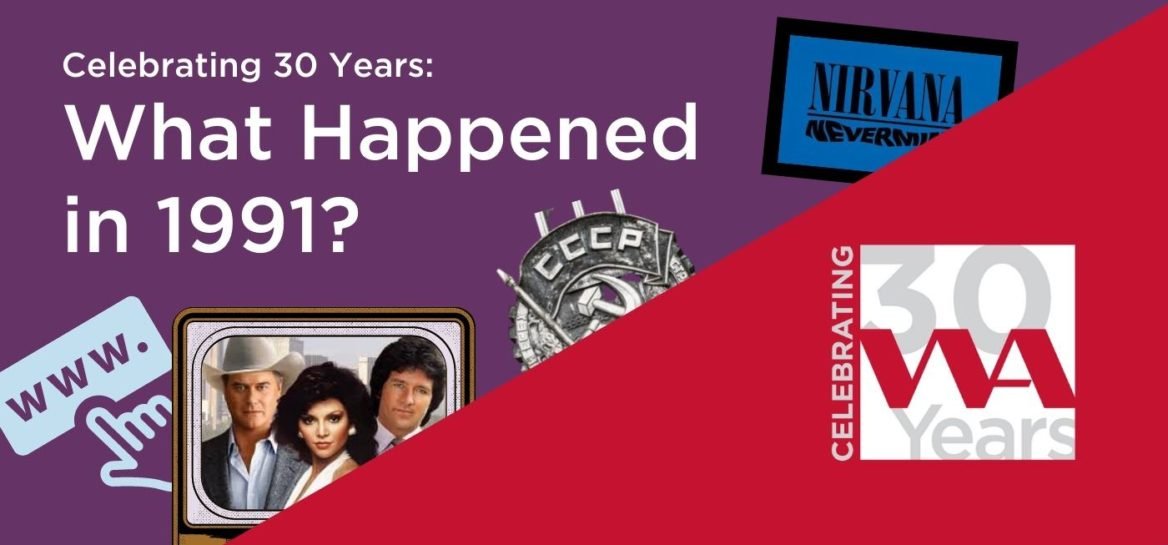
Think about a single year that fundamentally redrew the global map, launched a technological revolution that still defines our daily lives, and set the stage for cultural and social shifts resonating decades later. That year was 1991. What happened in the year 1991 wasn’t just a collection of events; it was a series of seismic shifts that closed old chapters and violently ushered in new ones, leaving virtually no aspect of human endeavor untouched.
It’s easy to look back at history as a steady progression, but some years act as true inflection points. 1991 wasn’t just pivotal; it was a year of explosive transformation, marking both endings and beginnings on a scale rarely seen.
At a glance: Understanding 1991’s Impact
- Geopolitical Reshaping: Witness the dramatic end of the Cold War and the redrawing of national borders.
- Digital Revolution’s Birth: See the public debut of the World Wide Web and foundational software.
- Cultural Milestones: Experience how music and film defined a generation’s sound and vision.
- Social & Economic Realignments: Uncover major shifts in civil rights, justice, and global economies.
- Environmental & Scientific Breakthroughs: Observe crucial discoveries and growing ecological awareness.
The Geopolitical Earthquake: Empires Fall, Nations Rise
If there’s one defining narrative of what happened in the year 1991, it’s the unprecedented geopolitical upheaval. Decades of Cold War tension culminated in a remarkably swift and decisive end, while regional conflicts ignited, signaling a new era of global complexity.
The Collapse of the Soviet Union: A World Transformed
December 25, 1991, isn’t just Christmas Day; it’s the date the Soviet Union officially ceased to exist. This wasn’t merely a change in government; it was the dissolution of a superpower, ending a nearly 70-year experiment and, with it, the global ideological standoff that had defined the Cold War. Mikhail Gorbachev’s resignation marked the final chapter, paving the way for Boris Yeltsin to become the first President of the Russian Federation. The ripple effect was immediate: 15 republics gained independence, a chain reaction that reshaped Eastern Europe and Central Asia entirely. This event wasn’t just political; it was a complete reordering of alliances, trade routes, and national identities that continues to reverberate today.
The Gulf War Concludes: A New Era of Intervention
Before the Soviet Union’s final collapse, the world watched as a major military conflict concluded. The Gulf War, which had begun in August 1990, ended on February 28, 1991, after a concentrated air and ground campaign. This decisive victory saw Iraqi forces expelled from Kuwait and the Kuwaiti monarchy restored. The conflict introduced a new level of media coverage for warfare and highlighted the devastating environmental tactics of the retreating Iraqi army, which set fire to or damaged over 700 oil wells in Kuwait. The swift conclusion of the war, showcasing advanced military technology and international coalition-building, set a precedent for future global interventions.
Yugoslavia’s Unraveling: Seeds of Conflict
While some empires dissolved peacefully, others splintered violently. 1991 saw Slovenia and Croatia declare independence from Yugoslavia, marking the initial sparks of the brutal Yugoslav Wars. This wasn’t just a political declaration; it was a tragic descent into ethnic conflict and civil strife that would dominate headlines for much of the decade. The swiftness of these declarations, followed by immediate military responses, underscored the fragility of multi-ethnic states in a post-Cold War world.
Apartheid’s Demise: A Step Towards Justice
Amidst the global turmoil, a significant stride towards human rights was made in South Africa. June 1991 saw the repeal of the Population Registration Act and other key Apartheid laws, a monumental step orchestrated by President F.W. de Klerk and Nelson Mandela. This move, following years of international pressure and internal struggle, began the dismantling of a deeply entrenched system of racial segregation. In a direct result of these reforms, South Africa’s suspension from the International Olympic Committee was lifted in July, paving the way for its return to global sports. This offered a powerful counter-narrative of progress and reconciliation in a year otherwise marked by fragmentation.
The Digital Dawn Breaks: Laying the Foundations of Tomorrow
While political landscapes were being redrawn, another, quieter revolution was brewing that would change communication, commerce, and culture forever. What happened in the year 1991 on the technological front laid the groundwork for the hyper-connected world we inhabit today.
The World Wide Web Goes Public
Arguably the most significant technological event of 1991 was the public availability of the World Wide Web. On August 6, 1991, Tim Berners-Lee at CERN labs put the first website online, creating a system that allowed information sharing via interconnected documents across a global network. This wasn’t just a novelty; it was the birth of the information age, fundamentally altering how we access data, conduct business, and interact. Before this, the internet was largely a domain for academics and researchers; 1991 brought it within reach of everyone.
Open-Source Computing Takes Root
Beyond the web, 1991 was a landmark year for computing itself. Linus Torvalds released the first version of the Linux kernel, a free and open-source operating system that would challenge proprietary software giants. This spirit of collaborative development became a cornerstone of modern tech, powering everything from supercomputers to Android phones. At the same time, Microsoft released MS-DOS 5.0, a significant update for PC users, and HP introduced the HP Scanjet IIc, the first color scanner, making digital imaging accessible to a broader audience. These advancements, while seemingly disparate, collectively pushed computing power and accessibility forward.
Connecting the World: GSM and Hubble’s First Glimmers
The first GSM (Global System for Mobile Communications) call was also made in 1991, signaling the dawn of truly international and digital mobile telephony. Imagine a world without seamless global calls – 1991 brought us much closer to that reality. Meanwhile, the Hubble Space Telescope, launched in 1990, began sending back its first images, offering humanity an unprecedented view into the cosmos and fueling scientific discovery. And for gaming enthusiasts, the Super Nintendo Entertainment System (SNES) hit shelves, setting new benchmarks for console gaming and graphics. All these innovations were less about immediate disruption and more about planting seeds for exponential growth.
If you’re looking to understand the broader context of these profound shifts and how they tie into other significant events of the year, you can Explore 1991’s interesting facts for a comprehensive overview.
Culture’s New Sound and Vision: Defining a Generation
Beyond politics and pixels, 1991 was an undeniable watershed for popular culture, producing works that would define the decade and beyond. The shift was palpable, moving from the excesses of the 80s to a more raw, authentic, and sometimes cynical sensibility.
The Sound of 1991: Grunge, Metal, and Queen’s Last Bow
Few years can boast such an iconic musical output. Nirvana released “Nevermind” in September 1991, featuring “Smells Like Teen Spirit,” which wasn’t just a song; it was an anthem that single-handedly catapulted grunge into the mainstream, selling over 30 million copies worldwide. This wasn’t just a shift in music style; it was a cultural rebellion. Just a month earlier, Metallica released their self-titled 5th album (“The Black Album”), a monumental record that sold over 16 million copies in the USA alone, cementing their legendary status and bringing metal to an even wider audience.
In a poignant turn, “Bohemian Rhapsody” was re-released in the UK following Freddie Mercury’s death, reaching number 1 and fulfilling his dying wish. These diverse musical titans showcased a year of incredible artistic depth and commercial success. The first Lollapalooza festival also took place, offering an alternative music experience that captured the burgeoning counter-culture movement, proving that the mainstream was ready for something different. Michael Jackson’s “Black or White” music video premiered, an ambitious global affair that pushed boundaries.
Cinematic Spectacle and Small Screen Tensions
On the big screen, “Terminator 2: Judgment Day” dominated, earning over $509 million worldwide. More than just a blockbuster, it was a technological marvel, being the first film to use natural human motion for a computer-generated character, setting a new standard for special effects. This wasn’t just entertainment; it was a glimpse into the future of filmmaking. Meanwhile, on television, the hit show “Seinfeld” faced its own drama as Jason Alexander threatened to quit after his character, George Costanza, was absent from “The Pen” episode. These moments, both grand and trivial, underscore the cultural touchstones that made 1991 so vibrant. And in a memorable branding move, Kentucky Fried Chicken officially rebranded to the more modern and less “fatty” KFC.
Societal Ripples and Realities: Justice, Discovery, and Humanity
1991 wasn’t just about grand political narratives and technological leaps; it was also a year of intense human stories, both harrowing and inspiring, that reflected deeper societal concerns.
Confronting Crime and Injustice
The summer of 1991 was marked by the chilling discovery of serial killer Jeffrey Dahmer, arrested on July 22, after body parts were found in his apartment. He was responsible for the deaths of 17 men between 1978 and 1991, and his crimes horrified the nation, prompting widespread discussions about mental health, victim vulnerability, and police procedures. Meanwhile, the severe beating of motorist Rodney King by Los Angeles police officers in March 1991, captured on amateur video, sparked immediate outrage and laid the groundwork for the devastating LA riots the following year. These incidents forced society to confront uncomfortable truths about policing, racial injustice, and the thin line between order and chaos.
Unearthing the Past, Highlighting Vulnerability
History itself was unearthed in 1991 with the discovery of Ötzi the Iceman, a remarkably preserved mummy dating to approximately 3,300 BCE, in the Ötztal Alps. This wasn’t just an archaeological find; it offered an unprecedented window into prehistoric European life. Tragically, the year also brought instances of human vulnerability. The Greek-owned cruise ship Oceanos sank off Coffee Bay in August, but miraculously, all 571 passengers were safely evacuated, a testament to effective emergency response. In a more somber event, Jeremy Wade Delle shot himself in front of his English class on January 8, 1991, a tragedy that later inspired the iconic Pearl Jam song “Jeremy,” highlighting the struggles of mental health and school violence. Even art wasn’t immune to peril: twenty paintings were stolen from the Van Gogh Museum but were incredibly recovered just 35 minutes later when the robbers got a flat tyre—a blend of audacity and comic misfortune.
Economic Turning Points: Global Markets in Flux
Economically, what happened in the year 1991 was equally transformative, with nations making bold moves, experiencing downturns, and laying foundations for future financial structures.
India’s Economic Liberalization: A Giant Awakens
One of the most significant economic shifts occurred in India, which launched a series of ambitious reforms towards a market-oriented economy. This wasn’t just policy tweaking; it was a fundamental departure from decades of socialist planning, opening India to global trade and investment and setting it on a path to becoming a major economic power. The decision marked a turning point for over a billion people, unleashing entrepreneurial energy and reshaping global supply chains in the decades to come.
Europe’s Path to Union: The Maastricht Treaty
In Europe, a decisive step towards greater integration was taken with the signing of the Maastricht Treaty. This landmark agreement laid the political and economic foundation for the European Union as we know it today, specifically outlining the path towards a single currency—the euro. It was a bold vision for a continent striving for deeper unity and economic stability, a vision that would fundamentally alter trade, travel, and sovereignty for its member states.
Global Economic Contractions and Bubbles Bursting
Not all economic news was about growth or integration. The U.S. experienced a recession in 1991, marking a period of economic contraction and job losses. Meanwhile, Japan’s asset price bubble burst, signaling the beginning of its “Lost Decade” of stagnation. These events highlighted the cyclical nature of global economies and the severe consequences of speculative bubbles, offering cautionary tales for future financial policy. The interplay of these global economic forces demonstrated an increasingly interconnected world, where prosperity and downturns could spread rapidly across borders.
Scientific Frontiers and Environmental Awakening
The year 1991 also proved to be a milestone for scientific inquiry and a critical period for heightened environmental awareness. Humanity continued to probe the universe, unravel the mysteries of life, and confront its impact on the planet.
Pushing the Boundaries of Biology and Medicine
In the realm of science, 1991 was a year of groundbreaking progress. The Human Genome Project, a monumental international research effort to map all human genes, made significant strides, laying the groundwork for future genetic medicine. Crucially, the gene responsible for cystic fibrosis was identified, a major breakthrough in understanding and potentially treating this devastating genetic disease. Further, the first successful gene therapy trial was conducted, offering a glimmer of hope for curing inherited disorders by modifying a patient’s genes. These advancements signaled a new era in biological research, promising therapies that were once the stuff of science fiction.
A Sharper Focus on Our Planet
Environmental concerns also moved to the forefront in 1991. The discovery of the ozone hole over the Arctic, following previous findings over Antarctica, highlighted the global scale of atmospheric damage caused by human activity. This discovery intensified calls for international cooperation on environmental protection. In response, the first Earth Summit was held in Rio de Janeiro, bringing world leaders together to discuss sustainable development and climate change, leading to the establishment of the United Nations Framework Convention on Climate Change (UNFCCC). This wasn’t just a meeting; it was a global acknowledgment of our collective responsibility towards the planet’s future. Nature itself provided a stark reminder of its power with the eruption of Mount Pinatubo in the Philippines, one of the largest volcanic eruptions of the 20th century, which caused temporary global temperature drops due to the vast amounts of ash and aerosols released into the atmosphere.
Practical Lessons from a Pivotal Year
Understanding what happened in the year 1991 isn’t just a historical exercise; it’s a study in rapid, fundamental change that offers invaluable insights into the dynamics of global systems.
1. The Velocity of Geopolitical Change:
- Lesson: Seemingly entrenched political systems can dissolve with shocking speed. The Soviet Union’s collapse reminds us that stability is often more fragile than it appears.
- Application: Pay attention to internal dissent and economic stressors within seemingly powerful states. These are often precursors to significant shifts.
2. The Inexorable March of Technology: - Lesson: Foundational technologies, like the World Wide Web, start quietly but have exponential, world-altering potential.
- Application: Identify emerging technologies that are open-source, collaborative, or address fundamental human needs (communication, information). These are often the ones that scale broadest.
3. Culture as a Mirror and Driver of Change: - Lesson: Music, film, and art don’t just reflect societal anxieties and desires; they can actively shape them. “Nevermind” wasn’t just popular; it articulated a generational mood.
- Application: Cultural trends can indicate deeper societal shifts, offering early warnings or signals of emerging values.
4. The Enduring Fight for Justice: - Lesson: Even amidst global upheaval, the struggle for civil rights and accountability, as seen with Apartheid’s repeal and the Rodney King incident, remains a constant.
- Application: Societal progress is rarely linear; vigilance and advocacy for human rights are continuous requirements.
5. Economic Interdependence is Key: - Lesson: National economic policies, whether liberalization in India or the bursting bubble in Japan, have global repercussions. The push for European unity highlights the desire for stability through integration.
- Application: Understand global economic interdependencies; a crisis in one region can quickly become a challenge for many.
6. Environmental Awareness is a Long Game: - Lesson: Scientific discoveries (like the ozone hole) and major natural events (Pinatubo) can catalyze global awareness and action, but sustained effort is needed.
- Application: Long-term planning for climate and environmental challenges requires international cooperation and consistent policy.
Quick Answers: Common Questions About 1991
What was the single biggest event of 1991?
While subjective, the dissolution of the Soviet Union on December 25, 1991, is widely considered the single biggest event. It formally ended the Cold War, redrew global political boundaries, and fundamentally reshaped international relations for decades to come.
How did the World Wide Web become public in 1991?
Tim Berners-Lee, while working at CERN, developed the protocols and tools for the World Wide Web. He then released the software libraries for the project to the public on August 6, 1991, making it available outside of CERN for the first time and initiating its global expansion.
What was the impact of the Gulf War ending in 1991?
The end of the Gulf War in February 1991 resulted in the liberation of Kuwait from Iraqi occupation, the restoration of the Kuwaiti monarchy, and solidified the role of international coalitions in responding to aggression. It also showcased advanced military technology and highlighted the environmental devastation of oil well fires.
Did any major new technologies emerge in 1991?
Yes, significant technologies emerged or became publicly available, including the World Wide Web, the first version of the Linux kernel, the first GSM call, and the release of the Super Nintendo. These laid crucial groundwork for modern computing and communication.
What was a significant cultural shift in 1991?
The release of Nirvana’s “Nevermind” and its hit single “Smells Like Teen Spirit” is often cited as a major cultural shift. It propelled grunge music into the mainstream, marking a departure from the polished sounds of the 1980s and ushering in a new era of alternative music and culture.
What major human rights progress was made in 1991?
In June 1991, South Africa repealed the Population Registration Act and other key Apartheid laws, taking a monumental step towards ending its system of racial segregation and discrimination. This led to its reintegration into international sports, including the lifting of its Olympic ban.
The Enduring Echoes of 1991
The year 1991 stands as a powerful testament to humanity’s capacity for profound change, both destructive and constructive. From the geopolitical restructuring of nations to the silent birth of the internet, from the raw energy of grunge music to the chilling realities of crime and injustice, 1991 was a year of stark contrasts and undeniable significance.
It showed us that the world is never static, that empires can fall, and new technologies can emerge to reshape our very existence. The events of 1991 didn’t just happen; they carved out the foundations of the 21st century, reminding us that history is not just about the past, but the living, breathing prelude to our present and future.










