For the bigger picture and full context, make sure you read our main guide on 1991 Interesting Facts About A Pivotal Year In History.
1991 wasn’t just another year on the calendar; it was a global reset, a hinge moment where the world as we knew it pivoted dramatically. From seismic geopolitical shifts that redrew maps to the quiet, yet profound, birth of the digital world, the major events in 1991 set the stage for the 21st century. If you’re looking to grasp how seemingly disparate occurrences—like tank movements in Kuwait and a single web server in Switzerland—collectively redefined our shared reality, you’ve come to the right place.
We’re going to dive deep into the specific decisions, turning points, and innovations that made 1991 a crucible of change. Understanding this year isn’t just a historical exercise; it’s a blueprint for recognizing how rapidly our world can transform, even in the absence of a global war.
At a Glance: How 1991 Reshaped Our World
- The Iron Curtain Crumbled: Witnessed the formal dissolution of the Soviet Union, leading to the independence of 15 new nations and the end of the Cold War era.
- A New Kind of Warfare: The Gulf War marked a shift in international military coalitions and the role of technology in conflict.
- Europe’s Path Defined: From the dissolution of the Warsaw Pact to the signing of the Maastricht Treaty, Europe solidified its future trajectory.
- The Web Goes Public: The World Wide Web, largely unknown at the start of the year, was publicly launched, sowing the seeds for today’s interconnected digital landscape.
- Technological Leaps: Major advancements in operating systems, space exploration, and scientific ventures continued to push the boundaries of human capability.
- Societal Transformations: Apartheid officially ended, and nascent conflicts like the breakup of Yugoslavia began, hinting at future challenges.
The Iron Curtain’s Collapse: A New World Order Emerges
For decades, the world had been defined by the ideological struggle between two superpowers. 1991 saw that struggle unequivocally conclude, not with a bang, but with the systemic unraveling of the Soviet Union and its satellite states. This was arguably the most significant geopolitical tremor of the entire year, profoundly impacting international relations and the sovereignty of numerous nations.
The Gulf War: A Test of Global Resolve
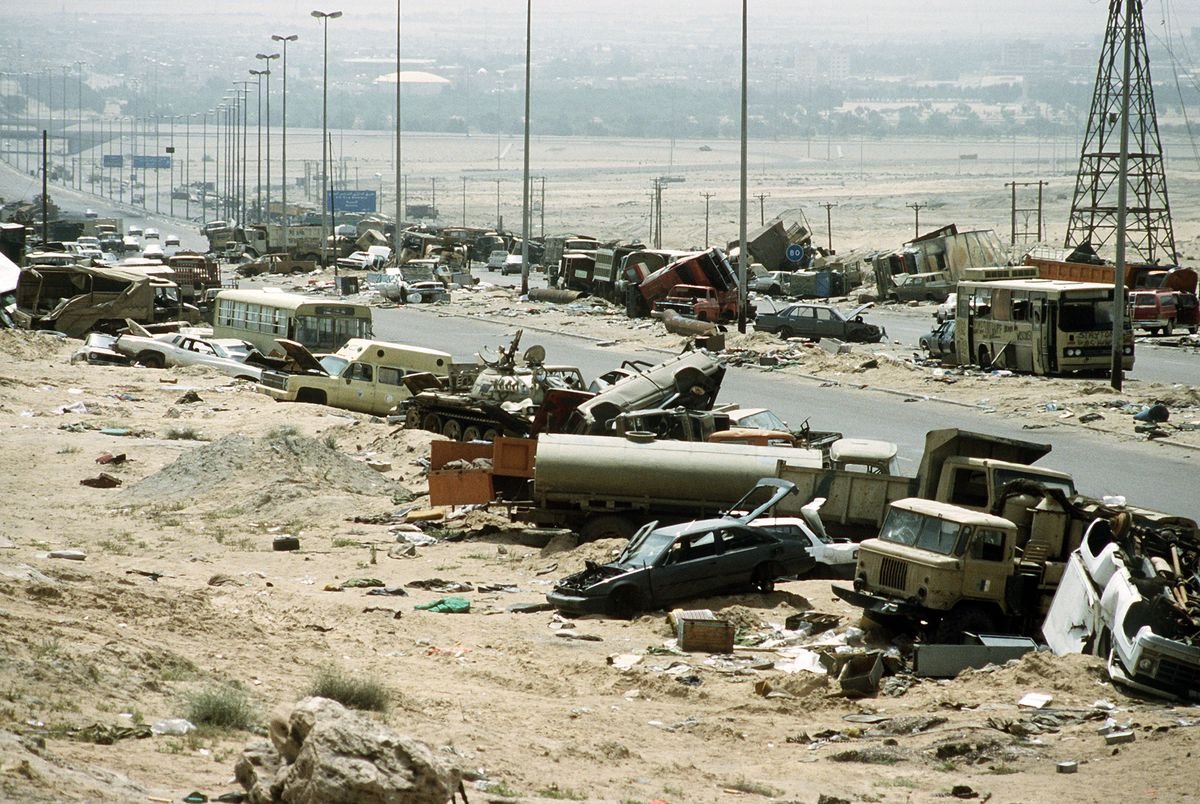
The year kicked off with intense diplomatic failures in the Persian Gulf. Following Iraq’s invasion of Kuwait in August 1990, the United Nations had set a deadline for withdrawal. By January 1991, with peace talks collapsing between US Secretary of State James A. Baker III and Iraqi Foreign Minister Tariq Aziz, the world braced for conflict. On January 17, Operation Desert Storm commenced, a massive air campaign designed to liberate Kuwait.
This wasn’t just a regional conflict; it was a demonstration of a post-Cold War international coalition at work. The coordinated military action, involving forces from multiple nations, effectively pushed Iraqi forces out of Kuwait by late February, though not without significant environmental damage from retreating Iraqi forces setting oil wells ablaze. The rapid, decisive military victory redefined expectations for future interventions and showcased advanced military technology, like the Patriot missile’s interceptions of Iraqi SCUDs.
The Soviet Union’s Final Act: Birth of Nations
While the world’s attention was on the Gulf, the Soviet Union was hemorrhaging. The desire for self-determination, long suppressed, burst forth with undeniable force.
- Baltic Resilience: The Baltic states—Lithuania, Latvia, and Estonia—had been at the forefront of this movement. In January, Soviet troops brutally stormed the Lithuanian Radio and Television Center in Vilnius, killing civilians. This only hardened resolve. Lithuania held an independence referendum in February, followed by official recognition from Iceland. Estonia and Latvia held their own referendums in March, overwhelmingly supporting independence. The United States officially recognized their independence in September, with the Soviet Union itself following suit.
- A Cascade of Declarations: Georgia declared independence in April. Then, in August, a failed coup attempt by hardline communists in Moscow inadvertently accelerated the Soviet Union’s demise. In its wake, a flurry of declarations followed: Estonia (restoration of independence), Moldova, Azerbaijan, and Kyrgyzstan all asserted their sovereignty by the end of August. Tajikistan and Armenia followed in September. Even the Chechen Republic declared sovereignty in November, signaling further internal stresses.
- Ukraine’s Decisive Vote and the CIS: A pivotal moment came on December 1, when over 90% of Ukrainians voted for independence in a national referendum. This vote was seen as the death knell for any realistic prospect of holding the Soviet Union together. Just a week later, on December 8, leaders from Russia, Ukraine, and Belarus met to form the Commonwealth of Independent States (CIS), effectively declaring that the Soviet Union “ceased to exist.”
- The Formal Dissolution: On December 25, 1991, Mikhail Gorbachev resigned as President of the Soviet Union, and the Soviet flag was lowered from the Kremlin for the last time. The USSR formally dissolved, giving rise to 15 independent nations and marking the unequivocal end of the Cold War. Russia assumed the Soviet Union’s seat in the UN, signifying a transfer of international power.
Yugoslavia’s Unraveling: Seeds of Conflict
The year also saw the initial cracks in another multi-ethnic, communist-era federation: Yugoslavia. Slovenia declared its independence on June 26, immediately sparking the Ten-Day War. This brief conflict was resolved by the Brioni Agreement, but it was merely a prelude to the wider, more devastating Yugoslav Wars. By October, Croatia also declared independence, setting the stage for further violent fragmentation, leading the UN Security Council to impose an arms embargo in November. Macedonia and Tajikistan also declared independence, further underscoring the broader trend of national self-determination sweeping Eastern Europe.
Apartheid’s Demise and European Integration
Away from the former Soviet bloc, other significant shifts unfolded. In South Africa, the apartheid laws were formally ended on February 1, and the Population Registration Act was repealed in June. While the transition would be complex, 1991 marked the legal dismantling of this discriminatory system.
Meanwhile, in Europe, nations were looking to build new alliances. The Visegrad Declaration, signed by Poland, Czechoslovakia, and Hungary in February, aimed to foster closer European integration. The Warsaw Pact, the Soviet-led military alliance, officially dissolved in July. Most notably, on December 9-10, European leaders signed the Maastricht Treaty, laying the groundwork for the European Union and eventually, the euro currency. This act fundamentally altered the trajectory of European economic and political cooperation.
The Digital Revolution Ignites: Connecting the Future
While tanks rolled and nations fractured, another, quieter revolution was brewing. In the sterile, often obscure world of computer science, innovations in 1991 would spark a connectivity boom that still reverberates today, forever changing how we access information and interact.
The World Wide Web: A Public Debut
Perhaps the most underestimated major event in 1991 was the public launch of the World Wide Web. On August 23, Tim Berners-Lee, a British computer scientist working at CERN in Switzerland, invited the public to participate in his new project: a global information space where documents could be linked and accessed via the internet. He released the code for the world’s first web browser, editor, and web server.
This wasn’t an instant explosion; it was a quiet unveiling of a concept that promised to “link all information together.” Initially a tool for scientists to share research, it quickly evolved into something much larger. Berners-Lee’s decision to make the underlying protocols (HTTP, HTML, URL) open and royalty-free was crucial, allowing for its rapid and widespread adoption. This wasn’t just a new technology; it was a new paradigm for human communication and information exchange, still unfolding today.
Computing Evolves: OS Innovations
Closer to personal computing, 1991 also saw significant advancements in operating systems. Apple released System 7.0 on May 13, a major update that introduced virtual memory, improved multitasking, and a more streamlined user interface, boosting the Macintosh’s capabilities and user experience. Not to be outdone, Microsoft unveiled MS-DOS 5.0 on June 11, offering better memory management and new utilities, which were critical for the vast number of IBM PC-compatible machines in use. These updates were crucial steps in making computers more powerful and accessible to a broader audience, laying groundwork for the graphical interfaces that would soon dominate.
Pioneering Space and Scientific Exploration
Beyond software, 1991 was a year for ambitious scientific ventures. NASA’s Space Shuttle Atlantis successfully launched and deployed the Compton Gamma Ray Observatory in April, providing a new window into the high-energy universe. This powerful telescope gathered data for over nine years, revolutionizing astrophysics.
Later in the year, the Galileo spacecraft, on its journey to Jupiter, made the first-ever flyby of an asteroid, 243 Ida, in October, providing unprecedented close-up data and images. This demonstrated humanity’s growing capability to explore beyond our immediate planetary neighborhood. On Earth, a unique experiment in self-sustaining ecosystems began on September 26, as eight individuals entered Biosphere 2 for a two-year mission, aiming to study ecological systems and test the viability of living in closed environments. These efforts underscored a global commitment to scientific understanding and exploration, pushing the boundaries of what was known and possible.
Beyond the Headlines: Defining Moments in Culture and Sports
While geopolitical and technological shifts dominated, 1991 was also rich with cultural milestones and thrilling sports moments that captured public imagination and offered glimpses into evolving societal values. From groundbreaking albums to record-breaking athletes, the year left an indelible mark on collective memory. If you’re keen to explore more fascinating details about cultural phenomena, sports triumphs, and the many curious facts that make 1991 such a rich year, you can delve deeper. Discover 1991’s interesting facts to uncover the broader tapestry of events that defined this pivotal period.
Nirvana’s album ‘Nevermind’ hit shelves in September, igniting the grunge movement and profoundly influencing rock music for a generation. Disney’s ‘Beauty and the Beast’ premiered, captivating audiences and later becoming the first animated film nominated for a Best Picture Oscar. Tragically, the music world also mourned the loss of Freddie Mercury, who publicly announced his HIV diagnosis days before his death in November.
In sports, legends continued to etch their names in history. Wayne Gretzky scored his 700th NHL goal. Rickey Henderson broke Lou Brock’s stolen base record, and Michael Jordan earned his first NBA MVP award, leading the Chicago Bulls to their first championship. The world also saw the inaugural FIFA Women’s World Cup, won by the United States, a landmark moment for women’s sports. However, a somber note was struck when Magic Johnson announced he was HIV positive, leading to his retirement from basketball and bringing vital awareness to the AIDS epidemic.
Navigating a Year of Upheaval: Practical Lessons
The sheer volume and magnitude of major events in 1991 offer crucial insights into how global systems can transform. It highlights the interplay between political will, public movements, and technological innovation.
Key Drivers of Change in 1991
- The Fading Empire: The internal contradictions and economic weaknesses of the Soviet Union, combined with the unwavering desire for independence from its constituent republics, proved an unstoppable force. The failed August coup was merely the final catalyst.
- Multilateralism in Action: The Gulf War demonstrated that a broad international coalition, backed by UN resolutions, could act decisively against aggression, even in a post-Cold War world without direct superpower confrontation.
- Technological Leapfrogging: The public release of the World Wide Web wasn’t an isolated event; it built upon decades of internet research. Its open nature ensured rapid adoption, fundamentally altering how information would be created, shared, and consumed.
- Persistent Calls for Freedom: From the streets of Vilnius to the legislative halls of South Africa, the year echoed with movements for self-determination, democratic governance, and an end to oppressive regimes.
The Long-Term Ripple Effects
- Geopolitical Reconfiguration: The collapse of the Soviet Union created a power vacuum and a host of new, independent states, leading to complex diplomatic challenges and regional conflicts that persist to this day (e.g., in the former Yugoslavia).
- A Connected Planet: The World Wide Web, initially a niche tool, rapidly scaled to become the backbone of global communication, commerce, and culture, giving rise to industries and societal norms unimaginable in 1990.
- Renewed International Cooperation: The Gulf War, despite its challenges, established a precedent for coalition-based military responses to international aggression. The Maastricht Treaty set the stage for deeper European integration, impacting global economic and political dynamics.
- Evolving Threat Landscape: While the Cold War ended, new forms of conflict (ethnic, regional, cyber) began to emerge, necessitating new approaches to security and diplomacy.
Quick Answers: Understanding 1991’s Impact
Was the Cold War officially over in 1991?
Yes, unequivocally. The formal dissolution of the Soviet Union on December 25, 1991, marked the official end of the Cold War, concluding decades of ideological and geopolitical rivalry between the US and the USSR.
How did the Gulf War influence future conflicts?
The Gulf War showcased the effectiveness of precision weaponry and coalition warfare, influencing military strategies for decades. It also highlighted the vulnerabilities of critical resources (like oil infrastructure) and the potential for severe environmental damage in modern conflict. The swift resolution also contributed to a perception that certain conflicts could be resolved quickly, which wasn’t always the case in subsequent engagements.
Why was the public launch of the World Wide Web so significant if few people used it initially?
Its significance lay in its potential and its open architecture. By making the protocols free and accessible, Tim Berners-Lee ensured that anyone could build upon it without needing special licenses. This open standard fostered rapid growth and innovation, allowing it to become the global information network it is today. It shifted computing from isolated machines to an interconnected web of information.
Did the dissolution of Yugoslavia in 1991 immediately lead to widespread conflict?
The initial declarations of independence from Slovenia and Croatia in June and October 1991 did immediately lead to conflict, specifically the Ten-Day War in Slovenia and the start of the Croatian War of Independence. While not all of Yugoslavia’s fragments experienced immediate, widespread conflict at the same intensity, 1991 undeniably set the stage for the more brutal and extensive Yugoslav Wars of the 1990s.
What was the impact of the Maastricht Treaty?
The Maastricht Treaty was monumental. It established the European Union, created the framework for a common currency (the euro, though it wouldn’t be introduced until 1999), and laid out pillars for common foreign and security policy, as well as cooperation in justice and home affairs. It represented a deep commitment to political and economic integration across Europe, transforming the continent’s internal dynamics and its role on the world stage.
The Enduring Legacy of a Pivotal Year
1991 was a year of profound transitions, shaping the contours of our contemporary world. It taught us that empires can fall, new technologies can revolutionize daily life, and the human spirit’s desire for freedom can overcome seemingly insurmountable barriers. The major events in 1991 didn’t just happen; they carved new pathways for nations and for humanity, reminding us that history is a dynamic, ever-unfolding narrative where the seeds of the future are sown in the present’s most tumultuous moments. Understanding this year isn’t merely about recalling facts; it’s about recognizing the foundational shifts that continue to influence our geopolitical landscape, our technological progress, and our interconnected global society.










