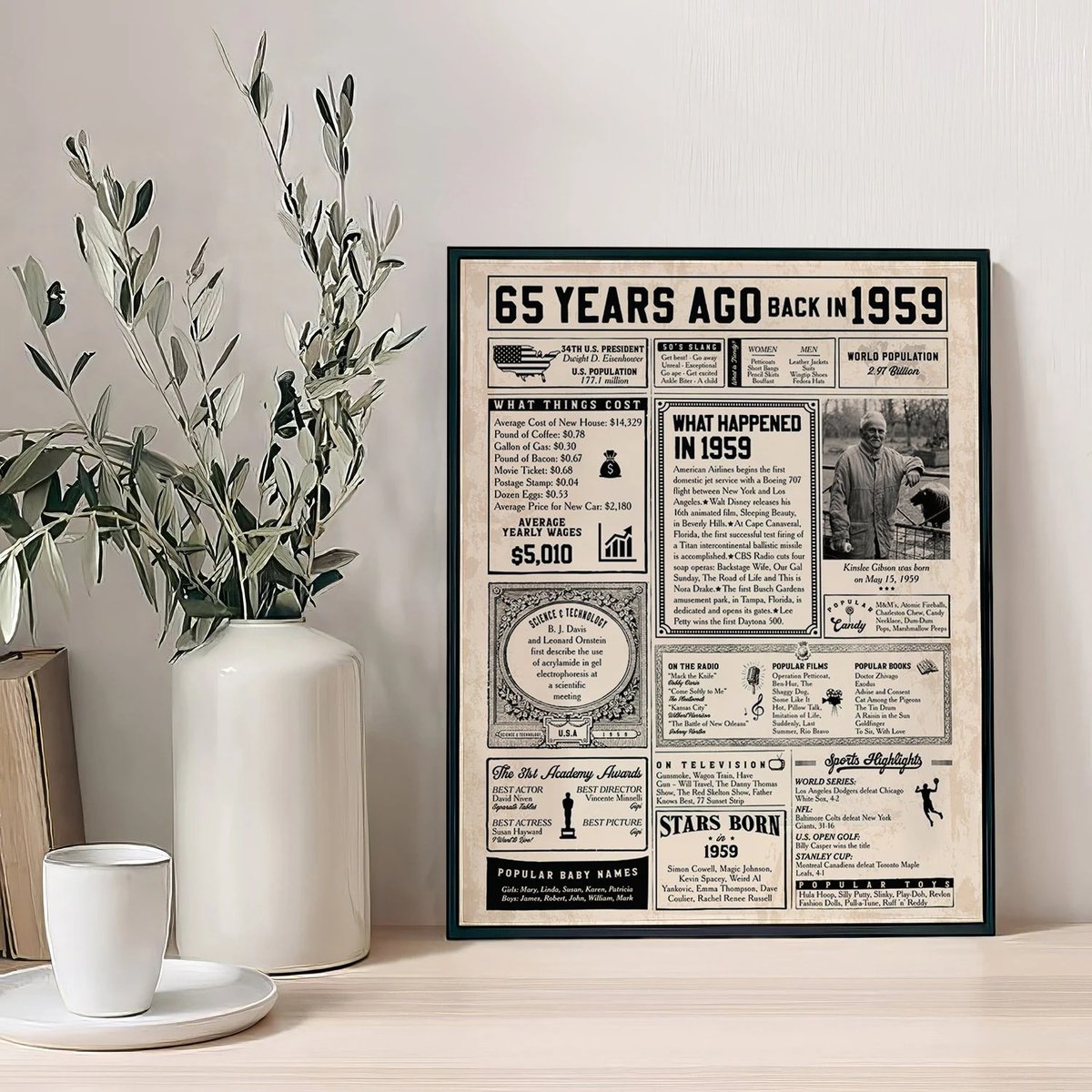
The year 1959 didn’t just turn a page on the calendar; it felt like turning a page on an entire era. Perched precariously between the post-war conformity of the 1950s and the revolutionary chaos of the 1960s, it was a year of profound contradictions and seismic shifts. While families gathered around black-and-white televisions, scientists were capturing the first images of Earth from space. The Cold War simmered with new intensity, but cultural and technological breakthroughs hinted at a completely different future. The big events in 1959 were more than just headlines; they were the foundational cracks in an old world and the blueprints for a new one.
From a revolution 90 miles off the coast of Florida to the birth of plastic perfection in a doll, the year was a relentless cascade of change. We’ll explore the political upheavals that redrew maps, the cosmic race that pushed humanity beyond its terrestrial cradle, and the cultural tremors that still shape how we live, listen, and play today.
1959: The Year at a Glance
Before we dive deep, here’s a quick snapshot of the transformative events that made 1959 a year to remember:
- Political Revolutions: Fidel Castro’s revolutionaries seized power in Cuba, fundamentally altering Cold War dynamics in the Western Hemisphere.
- The U.S. Expands: Alaska and Hawaii officially became the 49th and 50th states, completing the modern map of the United States.
- The Space Race Ignites: The Soviet Union made stunning progress, launching the first probe to escape Earth’s gravity, impact the Moon, and photograph its far side.
- Cultural Icons Are Born: The Barbie doll made her debut, the first Grammy Awards were held, and groundbreaking shows like The Twilight Zone premiered.
- Tragedy and Innovation: A plane crash silenced rock and roll’s brightest stars in “The Day the Music Died,” while a patent for the integrated circuit quietly laid the groundwork for the digital age.
The New Frontier: Reaching for the Moon and Beyond
Nowhere was the tension and ambition of 1959 more apparent than in the skies. The Space Race, a proxy for the ideological battle between the United States and the Soviet Union, accelerated at a breathtaking pace. Every launch was a political statement, and every success was a national triumph.
The Soviet Union’s Lunar Triumphs
The year began with a series of stunning Soviet victories. On January 2, the USSR launched Luna 1, the first spacecraft to escape Earth’s gravity. While it missed its intended lunar impact, it became the first man-made object to orbit the Sun, earning the nickname “Mechta” (Dream).
This was just the opening act. In September, Luna 2 succeeded where its predecessor had not, becoming the first human-made object to make contact with another celestial body when it purposefully impacted the Moon’s surface. Just one month later, Luna 3 executed a brilliant flyby and transmitted the first-ever, haunting images of the Moon’s mysterious far side. For much of the world, it seemed the Soviets were winning the race to space decisively.
America Answers the Call
While the Soviets were landing punches, the United States in 1959 was urgently laying the groundwork for its own cosmic ambitions. On April 9, NASA held a press conference to introduce seven men to the world: the Mercury Seven, America’s first class of astronauts. These stoic test pilots—including names like John Glenn and Alan Shepard—instantly became national heroes, the human face of America’s hopes.
The U.S. also achieved a critical biological milestone. On May 28, two monkeys, a rhesus named Able and a squirrel monkey named Baker, were launched 300 miles into space aboard a Jupiter rocket. Their successful return to Earth proved that living beings could survive the rigors of spaceflight, a crucial step toward sending a human into orbit. These missions were some of the most Notable events from 1959 in the burgeoning space program.
Technology That Redefined the Future
Beyond the space headlines, quieter but equally profound revolutions were taking place. On February 6, Jack Kilby of Texas Instruments filed the first patent for the integrated circuit. This tiny “monolithic” device, which placed all the components of an electronic circuit on a single piece of silicon, was the invention that would ultimately power everything from pocket calculators to smartphones. It’s hard to overstate the importance of What came out in 1959 like this microchip.
In another corner of the tech world, computer pioneers led by Grace Hopper met to design a new, English-like programming language. The result was COBOL (Common Business-Oriented Language), a language that would go on to run countless mainframe systems for governments and corporations for decades to come.
A World in Flux: New Nations and a Chilly Cold War
While humanity looked to the stars, the ground beneath its feet was shifting. From the Caribbean to the Himalayas, political orders were being overthrown, new nations were being born, and the Cold War was entering a new, more personal phase.
Revolution in the Caribbean: Castro’s Cuba
The year began with a bang. On January 1, Cuban dictator Fulgencio Batista fled the country as Fidel Castro’s revolutionary forces marched into Havana. The Cuban Revolution was complete. The U.S. initially took a wait-and-see approach, officially recognizing Castro’s new government on January 7. Castro himself became Prime Minister in February, setting in motion a chain of events that would lead to decades of hostility and bring the world to the brink of nuclear war. This was one of the Key events of 1959 that would echo for decades.
An Expanding America: Alaska and Hawaii Join the Union
For the United States, 1959 was a year of significant growth. After years of debate, President Dwight D. Eisenhower signed proclamations making Alaska the 49th state on January 3 and Hawaii the 50th state on August 21.
The addition of these two states, geographically and culturally distinct from the “lower 48,” not only changed the American flag (a 49-star version was used briefly) but also expanded the nation’s strategic and cultural horizons. This dramatic expansion was one of the biggest stories for Life in 1959 America. It also reflected a key theme of Key American events of 1959.
The Cold War Gets Personal: The “Kitchen Debate”
The ideological clash between capitalism and communism was vividly personified on July 24 at the American National Exhibition in Moscow. In a model American kitchen, U.S. Vice President Richard Nixon and Soviet Premier Nikita Khrushchev engaged in a spontaneous, heated, and now-famous argument.
The “Kitchen Debate” covered everything from washing machines and color television to the merits of their respective economic systems. It was a raw, unscripted glimpse into the deep-seated rivalry and mutual suspicion that defined the era, showing the world that the Cold War wasn’t just about missiles, but also about ideas and standards of living. This was one of the truly Defining moments of 1959. Later that year, in September, Khrushchev made a historic, 13-day trip to the United States, becoming the first Soviet leader to do so.
Shifts on the Global Stage
The year was a whirlwind of geopolitical change around the globe:
- Tibet: A major uprising against Chinese rule began in Lhasa on March 10. Following its brutal suppression, the 14th Dalai Lama was forced to flee into exile in India.
- France: Charles de Gaulle was inaugurated as the first president of France’s new Fifth Republic, a system he designed to bring stability after years of political turmoil.
- Cyprus: Archbishop Makarios III returned from exile and was elected the first president of a soon-to-be-independent Cyprus.
- Singapore: The island city-state became self-governing within the British Commonwealth on June 3.
- Antarctica: On December 1, twelve nations, including the U.S. and USSR, signed the Antarctic Treaty. This landmark agreement set aside the entire continent as a scientific preserve, banning all military activity and staking a claim for peaceful international cooperation. You can Discover what happened in 1959 to see just how significant this agreement was.
Culture Shock: Defining a New Global Identity
As politics and technology reshaped the world, culture was right there with it, providing the soundtrack, the icons, and the stories that defined the human experience. These What happened in 1959 in music, film, and society were just as impactful as any treaty or rocket launch.
The Day the Music Died
On February 3, a small plane crashed in a frozen Iowa cornfield, killing three of rock and roll’s most promising young stars: Buddy Holly, Ritchie Valens, and J.P. “The Big Bopper” Richardson. The tragedy, later immortalized by Don McLean as “The Day the Music Died,” was a devastating blow to a generation and marked a symbolic end to the first, innocent era of rock. It’s one of the most poignant What happened in 1959.
Icons Are Born: Barbie, the Mini, and The Twilight Zone
If music lost some of its brightest lights, other cultural phenomena were just being born. On March 9, at the American International Toy Fair in New York, the world met a doll named Barbara Millicent Roberts. Barbie, with her blonde ponytail and black-and-white striped swimsuit, was an instant sensation, offering girls a vision of adult glamour and independence.
Across the Atlantic, the British Motor Corporation launched a car that would become a global icon: the Mini. Designed by Sir Alec Issigonis, the tiny, space-efficient car was a masterpiece of engineering that perfectly captured the fun and freedom of the coming decade. Both it and Barbie are great examples if you want to Discover 10 facts about 1959.
On television, a new show premiered on October 2 that would forever change the landscape of storytelling. Rod Serling’s The Twilight Zone used science fiction and suspense to explore timeless human themes of fear, morality, and prejudice. Its influence on television and film is still felt today.
Milestones and Scandals
The year saw the first-ever Grammy Awards on May 4, a formal recognition that popular music was an art form worthy of celebration. But the entertainment world also faced a reckoning. The popular TV quiz shows of the era were exposed as frauds when Charles Van Doren, a charismatic Columbia University instructor, admitted to a congressional committee that he had been given the answers in advance. The quiz show scandal shattered public trust and was one of the Major 1959 events in America that revealed a crack in the pristine facade of the 1950s.
A Darker Side: Tragedies That Shook Communities
Not all of 1959’s events were glamorous or world-changing on a grand scale. Many were deeply personal tragedies that left indelible scars.
- The Clutter Murders: On November 15, four members of the Clutter family were brutally murdered in their Holcomb, Kansas, farmhouse. The senseless crime would become the subject of Truman Capote’s landmark “non-fiction novel,” In Cold Blood.
- The Dyatlov Pass Incident: In the remote Ural Mountains of the Soviet Union, nine experienced hikers died under bizarre and terrifying circumstances. Their tent was found cut open from the inside, and their bodies were discovered scattered in the snow, some with inexplicable, severe injuries. The case remains one of history’s most chilling unsolved mysteries.
- Disasters: The year was also marked by catastrophic structural failures. The Knox Mine in Pennsylvania flooded, killing 12 miners. In France, the Malpasset Dam collapsed, sending a massive wall of water through the city of Fréjus and killing over 400 people. These What Defined 1959 were sobering reminders of the fragility of life and technology.
Frequently Asked Questions About 1959
What was the single biggest event of 1959?
This is subjective, but two events stand out for their long-term impact. The Cuban Revolution fundamentally changed the Cold War and U.S. foreign policy for over 60 years. The Soviet Luna missions that reached the Moon for the first time were monumental achievements that accelerated the Space Race, leading directly to the American moon landing a decade later.
What was daily life like in 1959?
For many in America in 1959, it was a time of relative prosperity and suburban growth. The average cost of a new car was about $2,200, and a gallon of gas was 25 cents. It was the tail end of the “Leave It to Beaver” era, but the undercurrents of social and cultural change that would define the 60s were already beginning to surface. This is a central part of understanding What Happened in 1959.
What were some surprising facts from 1959?
Many people don’t know that the first Daytona 500 was held this year, ending in a photo finish. Or that Montreal Canadiens goalie Jacques Plante became the first to regularly wear a protective mask in an NHL game after a nasty puck cut his face. These kinds of stories offer some Discover surprising 1959 facts.
What happened in the US in 1959?
Beyond the admission of Alaska and Hawaii, the Key events of 1959 in the U.S. included the opening of the St. Lawrence Seaway with Queen Elizabeth II and President Eisenhower, the launch of the American Football League (AFL) as a rival to the NFL, and a 116-day steel strike that impacted the national economy. These and other What happened in 1959 showed a nation in transition.
The Enduring Legacy of a Pivotal Year
Looking What happened in 1959, the year feels less like an ending and more like a beginning. It was a pressure cooker, a moment where the forces of technology, ideology, and culture converged to forge the decade that would follow. The seeds of the Cuban Missile Crisis were planted, the first steps toward the digital revolution were taken, and the icons that would populate the pop culture landscape were born.
The world would never be the same. The addition of two new states gave America its modern identity. The race to the Moon started in earnest. A revolution in Cuba set the stage for decades of conflict. And on toy shelves, television screens, and rock and roll stages, a new culture was taking shape. To truly understand the 1960s and beyond, you have to Discover 1959s major events, for this was the year the future arrived.










