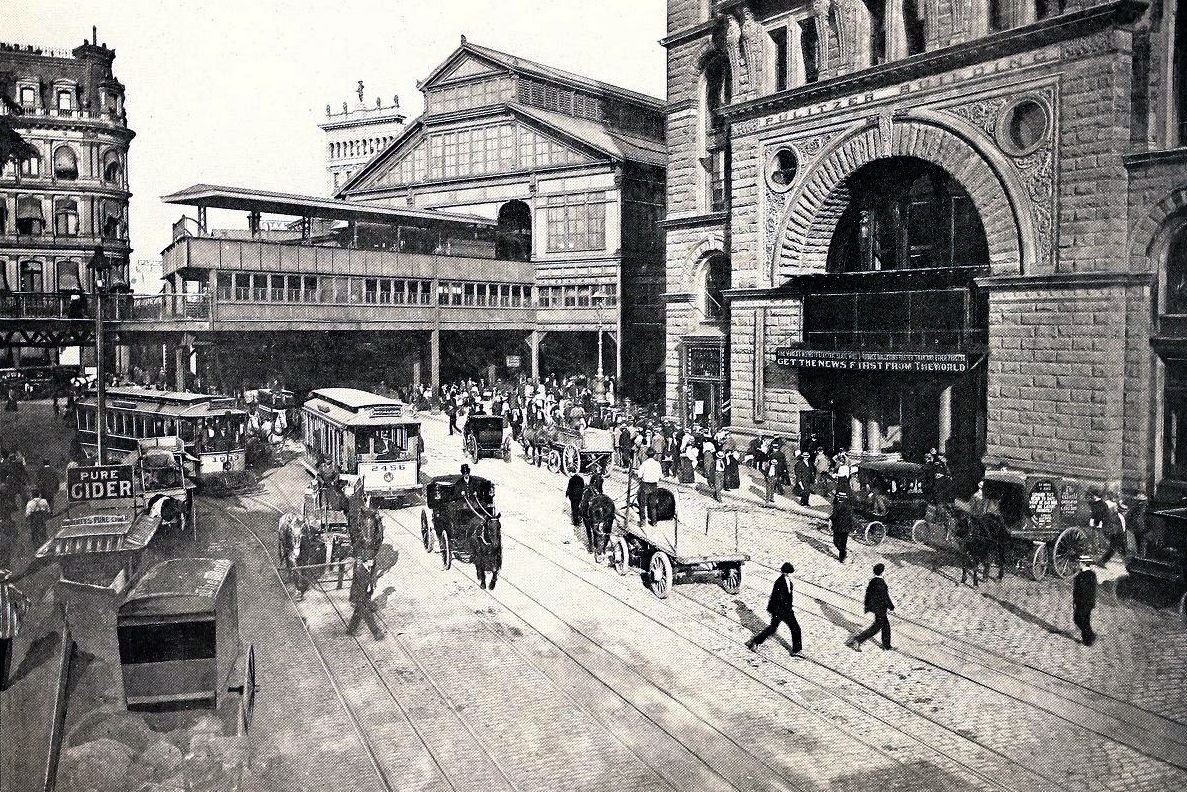
The decades following the Civil War were less a period of quiet healing and more a chaotic, high-stakes sprint into modernity. The 1870 to 1890 timeline isn’t just a list of dates; it’s the story of America grappling with the promises of Reconstruction, the brutal realities of industrialization, and the violent closing of the Western frontier. This era saw the nation lurch from a political bargain that sacrificed civil rights for stability to the rise of steel tycoons and the birth of a new, urban American identity.
Understanding this period is crucial because the tensions born here—between capital and labor, federal power and states’ rights, nativism and immigration, technological progress and social inequality—would define the challenges of the 20th century.
At a Glance: Key Transformations from 1870-1890
This article breaks down the pivotal moments and movements of these two decades. Here’s what you’ll uncover:
- The End of Reconstruction: How a political deal in 1877 formally ended the post-Civil War era of federal intervention in the South, with profound consequences for civil rights.
- The Rise of the Gilded Age: The explosion of industry, the creation of immense fortunes by figures like Carnegie and Rockefeller, and the dawn of corporate America.
- Labor’s Struggle: The violent clashes between workers and corporations, from the Great Railroad Strike to the Haymarket Riot, that shaped the American labor movement.
- The Closing of the Frontier: The final major conflicts with Native American tribes, the impact of the railroad, and the iconic Oklahoma Land Rush that symbolized the end of an era.
- A Nation of Newcomers: The wave of “New Immigration” from Southern and Eastern Europe and the political backlash it created, including the first major law restricting immigration.
From Federal Oversight to “Home Rule”: The End of Reconstruction
The 1870s began with the promise of a truly biracial democracy. The 15th Amendment was ratified in 1870, constitutionally guaranteeing the right to vote for African American men. Yet, this high-water mark of federal protection soon receded, battered by Southern resistance, Northern indifference, and political corruption.
While the monumental conflict of the 1860s had formally ended, the struggle to define the nation’s future continued. The foundation for a new country, forged through the immense trial of Civil War and National Unity, was now being tested in a new economic and social arena.
The Grant Administration: Ideals Marred by Scandal
President Ulysses S. Grant, the Union’s greatest general, genuinely supported Reconstruction efforts. His administration pursued the Ku Klux Klan through the Enforcement Acts and saw African Americans elected to local, state, and even federal offices. However, his presidency became synonymous with scandal.
- Crédit Mobilier (1872): This scandal involved insiders from the Union Pacific Railroad who had formed a construction company and then hired themselves at inflated prices to build the railway line, earning fraudulent profits. To keep the scheme quiet, they bribed influential congressmen with company stock.
- The Whiskey Ring (1875): A network of distillers and public officials conspired to defraud the federal government of millions in liquor tax revenue. The conspiracy reached deep into the Grant administration, even touching his personal secretary.
These scandals, coupled with the devastating economic Panic of 1873, eroded public trust and diverted the North’s attention away from the difficult, expensive, and increasingly violent work of protecting civil rights in the South.
The Compromise of 1877: A Political Bargain with Lasting Consequences
The fate of Reconstruction was sealed not on a battlefield, but in a backroom political deal. The presidential election of 1876 between Republican Rutherford B. Hayes and Democrat Samuel J. Tilden was one of the most contentious in U.S. history, with disputed electoral votes from three Southern states.
To avoid a constitutional crisis, the two parties struck a bargain known as the Compromise of 1877. Democrats agreed to concede the presidency to Hayes. In return, Hayes agreed to a crucial demand: the complete withdrawal of the last remaining federal troops from the South.
This decision effectively ended the Reconstruction era. Without federal protection, the newly empowered Southern Democratic governments, known as “Redeemers,” quickly moved to disenfranchise Black voters and implement segregationist policies, laying the groundwork for the Jim Crow era.
Building a New America: Railroads, Robber Barons, and Reform
As Reconstruction faded, the Gilded Age roared to life. This term, coined by Mark Twain, perfectly captures the era’s dual nature: a glittering, golden surface of technological innovation and immense wealth that masked deep-seated social problems, political corruption, and grinding poverty for the working class.
The Rise of the Tycoons and the Trust
The late 19th century was the age of the industrial titan. Figures like Andrew Carnegie (steel), John D. Rockefeller (oil), and Cornelius Vanderbilt (railroads) built massive empires through a combination of brilliant strategy, ruthless competition, and relentless efficiency. They pioneered new business structures like the trust—a legal arrangement where a group of companies in the same industry agree to be managed by a single board of trustees, effectively creating a monopoly.
This consolidation of power alarmed the public. In response, the federal government made its first tentative steps toward regulation. The Interstate Commerce Act of 1887 was passed to regulate the railroad industry and its often-discriminatory pricing practices, establishing the first federal regulatory agency, the Interstate Commerce Commission (ICC).
A Nation of Immigrants and Cities
The industrial engine required fuel, and its primary fuel was people. Millions of immigrants, increasingly from Southern and Eastern Europe, poured into American cities seeking work in factories, mills, and stockyards. This “New Immigration” transformed the nation’s cultural fabric.
This influx also sparked a nativist backlash. Fears that these new arrivals were un-American, difficult to assimilate, and taking jobs from native-born workers fueled political movements to restrict immigration. The most significant result was the Chinese Exclusion Act of 1882, the first major U.S. law to suspend immigration for a specific nationality.
Labor Fights Back: From the Knights to the AFL
For the millions working 12-hour days in dangerous conditions for low wages, the Gilded Age was anything but golden. This gave rise to a powerful, and often violent, labor movement.
- The Knights of Labor: Founded in 1869 but reaching its peak in the mid-1880s, the Knights were an inclusive organization that welcomed skilled and unskilled workers, women, and African Americans. They advocated for an eight-hour workday and worker cooperatives.
- The Haymarket Square Riot (1886): During a labor demonstration in Chicago, a bomb was thrown at police, leading to a riot that killed several officers and civilians. Although the bomber was never identified, eight anarchist leaders were convicted. The event turned public opinion against the Knights of Labor, who were unfairly associated with the violence, and their influence rapidly declined.
- The American Federation of Labor (AFL): In the wake of Haymarket, the AFL was founded in 1886 under the leadership of Samuel Gompers. Unlike the Knights, the AFL was a federation of craft unions, focusing only on skilled workers. It pursued more pragmatic goals like better wages, hours, and working conditions, becoming the dominant force in the American labor movement for decades.
Key Turning Points in the 1870-1890 Timeline
This era was defined by critical events that shifted the nation’s course. Here’s a breakdown of some of the most impactful moments and their consequences.
| Event & Year | The Immediate Impact | The Long-Term Consequence |
|---|---|---|
| Panic of 1873 | Widespread bank failures, a five-year economic depression, and massive unemployment. | Diverted national attention from Reconstruction, weakened the Republican Party, and fueled labor unrest. |
| Battle of Little Bighorn (1876) | A stunning tactical victory for Lakota, Cheyenne, and Arapaho warriors over Lt. Col. George Custer’s 7th Cavalry. | Galvanized public opinion and led to a massive U.S. military retaliation, ultimately crushing Native resistance on the Northern Plains. |
| Pendleton Civil Service Act (1883) | Passed after President Garfield’s assassination by a disgruntled office-seeker, it replaced the “spoils system” with a merit-based system for federal jobs. | Professionalized the government bureaucracy but also forced political parties to seek campaign funding from wealthy corporations instead of patronage. |
| Statue of Liberty Dedication (1886) | A gift from France, the statue was dedicated in New York Harbor. | Quickly became a powerful symbol of hope and freedom for millions of immigrants arriving in America. |
| Oklahoma Land Rush (1889) | The federal government opened two million acres of former Indian Territory to settlement, with tens of thousands of “Boomers” rushing to claim land. | Symbolized the “closing” of the American frontier and the final dispossession of Native Americans in the region. |
Unpacking the Gilded Age: Your Questions Answered
This complex period often raises more questions than answers. Here are some quick clarifications on common points of confusion.
Q: What exactly was the “Gilded Age?”
A: The term comes from an 1873 novel by Mark Twain and Charles Dudley Warner. It’s a satirical label for the era, suggesting that its glittering surface of new wealth, incredible inventions (like the light bulb in 1879), and rapid growth was a thin veneer hiding serious underlying problems like political corruption, rampant speculation, and the deep poverty experienced by immigrants and the working class.
Q: Why did Reconstruction truly fail?
A: There was no single cause. It was a combination of fierce and violent Southern resistance from groups like the Ku Klux Klan, a gradual waning of political will in the North, and economic crises like the Panic of 1873 that shifted national priorities. The final blow was the Compromise of 1877, a political deal that traded the presidency for the removal of federal troops from the South, leaving African Americans without protection.
Q: Were the “robber barons” good or bad for America?
A: It’s one of the great debates of the period. On one hand, these “captains of industry” built America’s industrial infrastructure, created new technologies, organized production on an unprecedented scale, and in many cases (like Carnegie’s) became immense philanthropists. On the other hand, they used ruthless tactics to destroy competition, brutally suppressed labor unions, and wielded their wealth to corrupt politics, creating a level of economic inequality never before seen in the U.S.
Q: What was the most significant invention during this period?
A: While Alexander Graham Bell’s telephone (patented 1876) revolutionized communication, the most transformative invention was arguably Thomas Edison’s practical incandescent light bulb (1879). More than just the bulb itself, his work on systems for generating and distributing electricity lit up cities, allowed factories to run 24 hours a day, and fundamentally changed the rhythm of daily life.
From Reconstruction to Empire: The Legacy of 1870-1890
The two decades between 1870 and 1890 served as a crucial and often brutal bridge from the agrarian, fractured nation of the Civil War to the industrial, urban, and globally ambitious America of the 20th century. The end of Reconstruction set the stage for nearly a century of racial segregation, while the explosion of industry created both unprecedented wealth and deep social divisions that fueled decades of conflict.
By 1890, with the frontier declared closed by the Census Bureau and the Sherman Antitrust Act passed to curb the power of monopolies, the country was standing at another crossroads. The unresolved issues of this timeline—the struggle for economic justice, the fight for civil rights, and the debate over America’s role in the world—were not relics of the past. They were the very questions that would dominate the century to come.










