The story of America in 1959 is one of profound contradiction. It was a year the nation literally grew bigger, adding two new, non-contiguous states and redrawing its flag twice. Yet, at the same time, the world felt like it was shrinking as the Cold War’s anxieties landed squarely on its doorstep, from the shores of Cuba to the living rooms of Moscow. This was the year of tailfins and burgeoning suburbs, but also of fallout shelters and the dawning realization that the race for the future—in space and on Earth—was far from won.
This year wasn’t just a collection of headlines; it was a crucible. The decisions made and the events that unfolded in the United States during this pivotal 12-month span would directly shape the explosive politics, technological leaps, and cultural upheavals of the 1960s.
At a Glance: The American Experience in 1959
- National Expansion: Learn how and why Alaska and Hawaii became the 49th and 50th states, forever changing America’s geographic and strategic footprint.
- Cold War Flashpoints: Understand the nuances of two key confrontations: the “Kitchen Debate” in Moscow and the rapidly evolving revolution in Cuba.
- The Space Race Heats Up: See how the US responded to Soviet dominance in space by selecting its first astronauts, the Mercury Seven, creating a new class of American hero.
- Cultural Crossroads: Discover how new icons like the Barbie doll and TV shows like The Twilight Zone reflected the era’s blend of consumer optimism and deep-seated anxiety.
- Cracks in the Facade: Uncover the domestic tensions of 1959, from a massive steel strike to the quiz show scandals that eroded public trust.
A Nation Redefined: Adding the 49th and 50th Stars
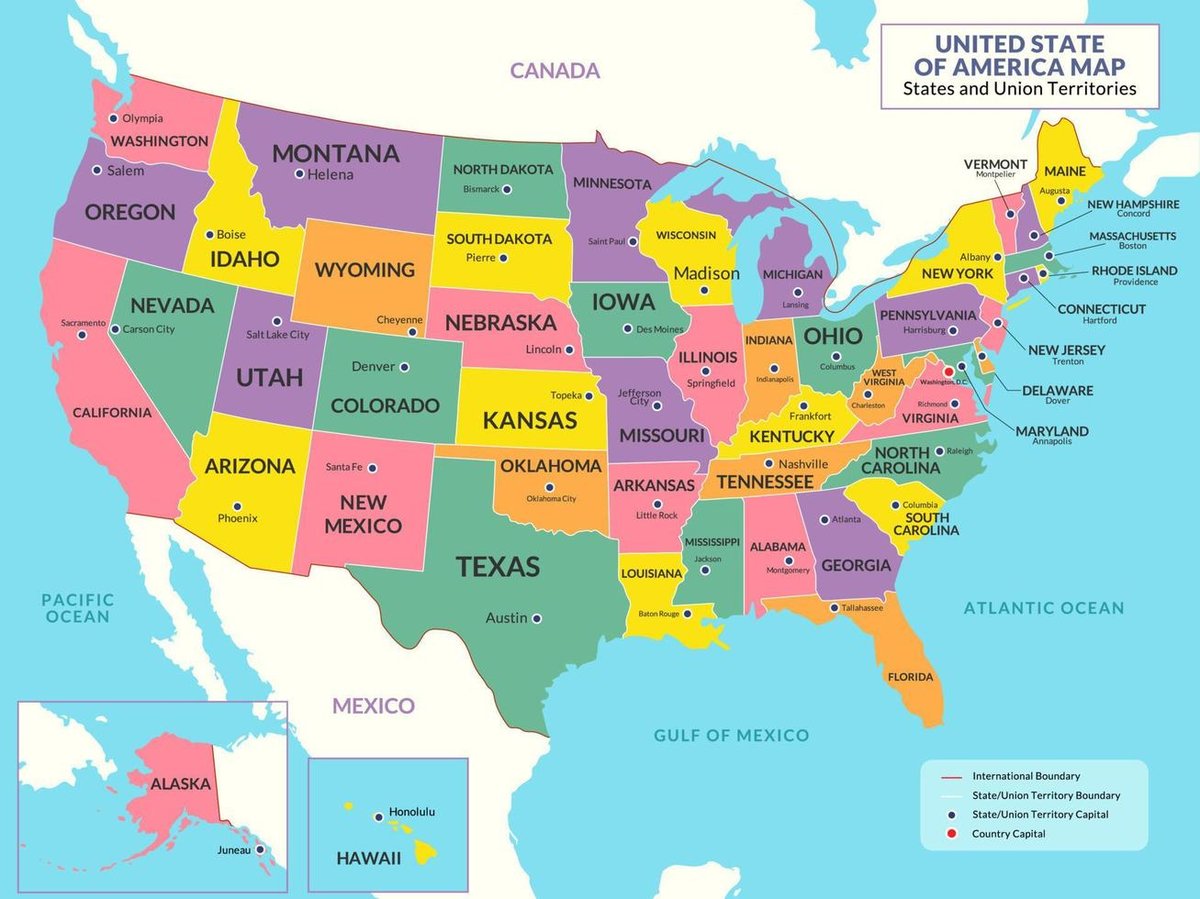
For the first time since 1912, the map of the United States changed in 1959—not once, but twice. This expansion was more than just a cartographical update; it was a strategic repositioning of America for the second half of the 20th century. While these events were unfolding, many other global powers were also in flux. You can Explore 1959’s redefining events to see the wider context of this transformative year.
Alaska: The Arctic Front of the Cold War
On January 3, 1959, President Dwight D. Eisenhower signed the proclamation admitting Alaska as the 49th state. This was the culmination of a long-sought goal for Alaskans, but for Washington, the timing was pure Cold War strategy.
- Geopolitical Value: Located just miles from the Soviet Union, Alaska provided an unparalleled strategic outpost. It became home to a network of early-warning radar stations (part of the DEW Line) designed to detect incoming Soviet bombers or missiles over the Arctic.
- Resource Rich: The state’s vast, untapped reserves of oil, gas, and minerals were seen as a crucial national asset for long-term economic and military strength. Statehood was intended to spur the development needed to access these resources.
The transition wasn’t without friction. Many in the “lower 48” viewed Alaska as a frozen, remote wasteland, questioning the cost of its defense and integration. But the strategic argument, championed by Eisenhower, ultimately won, and on July 4th, the 49-star flag made its official debut across the country.
Hawaii: A Pacific Bridge to Asia
Just as the nation was getting used to 49 stars, the process for the 50th was already complete. Congress approved Hawaiian statehood on March 12, and after a referendum in which Hawaiians voted overwhelmingly in favor (June 27), Eisenhower made it official on August 21.
- Strategic Hub: The Pearl Harbor naval base was the cornerstone of American military power in the Pacific. Statehood solidified its importance and integrated the territory more fully into the national defense structure.
- A Symbol of Diversity: Hawaii’s admission was a powerful, if complicated, symbol. As a majority non-white territory, its statehood was heralded as a demonstration of American multiculturalism—a pointed counter-narrative to Soviet propaganda that often highlighted America’s racial injustices.
- Economic Integration: Statehood brought economic benefits, including federal investment and the growth of tourism and trade, firmly linking the islands’ economy with the mainland.
The Cold War Gets Personal: From Kitchens to Coastlines
While the U.S. expanded, the ideological conflict with the Soviet Union intensified, moving from proxy wars and distant threats to highly personal and dangerously close encounters.
The “Kitchen Debate”: A Showdown Over Lifestyles
On July 24, during the opening of the American National Exhibition in Moscow, Vice President Richard Nixon and Soviet Premier Nikita Khrushchev engaged in an impromptu, fiery debate in the middle of a model American kitchen. The exchange, captured on color videotape, was a landmark moment in public diplomacy.
They weren’t just arguing over the merits of washing machines.
- Capitalism vs. Communism: Nixon championed consumer choice, technological innovation, and the high standard of living available to the average American worker. The kitchen, with its modern appliances, was his Exhibit A.
- Production vs. Consumption: Khrushchev scoffed at the “gadgets,” arguing that Soviet industry focused on heavy machinery and long-term strength, not frivolous consumer goods. He famously promised that the USSR would “overtake and surpass” the US economically.
The debate revealed a core tension of the Cold War: was the superior system the one that built more missiles or the one that put a dishwasher in every home? For the American public watching back home, Nixon’s confident defense of the American way of life was a major political victory.
Cuba: A Revolution at America’s Doorstep
The year began with Fidel Castro’s revolutionary forces seizing power in Cuba, ousting the U.S.-backed dictator Fulgencio Batista on January 1. The initial American reaction was cautious optimism. The Eisenhower administration officially recognized Castro’s new government on January 7.
However, the relationship soured with breathtaking speed.
| Date | Event | Significance |
|---|---|---|
| Jan 1 | Castro’s forces take control of Cuba. | The end of the Batista regime, initially seen by some as a democratic opportunity. |
| Jan 7 | U.S. officially recognizes the Castro government. | A diplomatic move to try and steer the new government in a pro-American direction. |
| Feb 7 | Castro’s government enacts the “Fundamental Law,” consolidating power. | Early signs of an authoritarian, rather than democratic, shift. |
| Feb 16 | Fidel Castro becomes Prime Minister of Cuba. | Power is now centralized in a single figure, making his personal ideology paramount. |
| Throughout the year, Castro’s anti-American rhetoric, embrace of socialist policies, and land reforms targeting U.S.-owned properties created immense alarm in Washington. By the end of 1959, the hopeful recognition of January had curdled into deep suspicion. The stage was set for decades of hostility, including the Bay of Pigs invasion and the Cuban Missile Crisis. |
A Sky Full of Rivals: America’s Scramble in Space
Nowhere was the Cold War rivalry more visible than in the race for space. In 1959, the US was painfully aware it was behind. The year started with the Soviet Union’s Luna 1 becoming the first man-made object to escape Earth’s gravity and fly past the Moon. They followed this up by crashing Luna 2 into the Moon in September—the first human object to touch another celestial body—and Lunik 3 provided the first-ever images of the Moon’s far side in October.
America’s response was a mix of public-facing optimism and frantic behind-the-scenes work.
Meet the Mercury Seven
On April 9, NASA introduced its first class of astronauts to a captivated nation. Scott Carpenter, Gordon Cooper, John Glenn, Gus Grissom, Wally Schirra, Alan Shepard, and Deke Slayton were instantly transformed into national heroes. They were all military test pilots, embodying the “right stuff”—a blend of courage, calm, and technical skill.
The announcement was a masterstroke of public relations.
- It Humanized the Effort: The Space Race was no longer just about rockets and satellites; it was about these seven men. Their lives and training became a national obsession.
- It Created a Goal: Their mission, Project Mercury, had a clear objective: put a man into Earth orbit and return him safely. This tangible goal focused national energy and resources.
Building the Hardware for a New Frontier
While the astronauts trained, the U.S. was rapidly developing its technological capabilities. Key milestones in 1959 showed that, while behind, America was a serious contender:
- February 6: The successful test of the Titan I, a powerful intercontinental ballistic missile (ICBM), demonstrated rocket technology that would be foundational for the space program.
- August 7: The Explorer 6 satellite transmitted the first rudimentary television pictures of Earth from space, a small but significant first.
- December 30: The commissioning of the USS George Washington, the first ballistic missile submarine, showcased American prowess in combining nuclear power and missile technology—a different, but related, aspect of technological supremacy.
Quick Answers to Key Questions About 1959
Q: Why did the US admit two new states in the same year?
A: It was a political compromise. For years, the admission of Alaska (seen as likely to elect Democrats) was paired with the admission of Hawaii (seen as likely to elect Republicans). This bipartisan package deal finally broke the legislative logjam that had prevented either from achieving statehood for decades.
Q: Was America “losing” the Cold War in 1959?
A: It depended on the scorecard. In the Space Race, the Soviets had a clear and dramatic lead, which caused significant American anxiety. In terms of global influence, the fall of Cuba was a major strategic loss. However, the U.S. held a powerful lead in consumer economics, naval power (especially with nuclear submarines), and the strength of its international alliances. The perception was one of being challenged, not defeated.
Q: How significant was the 1959 steel strike?
A: It was massive. The 116-day strike, which began on July 15, involved half a million workers and was one of the longest in U.S. history. President Eisenhower eventually had to invoke the Taft-Hartley Act to force workers back to their jobs. The strike crippled auto manufacturing and construction, demonstrating the immense power of organized labor and the deep-seated tensions between unions and management in the post-war economy.
Q: Did the introduction of the Barbie doll really matter?
A: Absolutely. When Barbie debuted at the New York Toy Fair on March 9, she was more than a doll. She was an icon of American consumer culture and an aspirational figure for young girls. Unlike baby dolls, Barbie was an adult, representing independence, fashion, and a world of possibilities (and impossibilities). Her creation reflected a society grappling with new ideas about femininity and the consumer boom.
Your Guide to Understanding America in 1959
The defining characteristic of 1959 was the tension between surface-level prosperity and deep-seated anxiety. To grasp the year’s importance, focus on these dualities:
- Growth and Fear: The nation was physically growing with new states and economically booming with consumer goods. But this optimism was shadowed by the fear of nuclear annihilation, Soviet technological superiority, and the spread of communism so close to home.
- Innocence and Scandal: It was the era of sock hops and pristine suburbs, yet the quiz show scandals, where contestants like Charles Van Doren admitted to being fed answers, shattered the public’s trust in the new medium of television. The brutal Clutter family murders in Kansas (November 15), later immortalized in Truman Capote’s In Cold Blood, revealed a darkness beneath the peaceful rural facade.
- Ambition and Reality: The U.S. boldly declared its intention to win the Space Race with the Mercury Seven, but the reality was a string of Soviet “firsts.” The nation was aiming for the stars while struggling to catch up.
By viewing 1959 through this lens, you can see it not as a quiet year before the storm of the 60s, but as the year the barometer dropped. The changes to the flag, the threats from abroad, the heroes created in the space program, and the cracks appearing in the culture all set the trajectory for the decade to come. It was the end of the Eisenhower era’s perceived calm and the beginning of a new, more turbulent American chapter.










