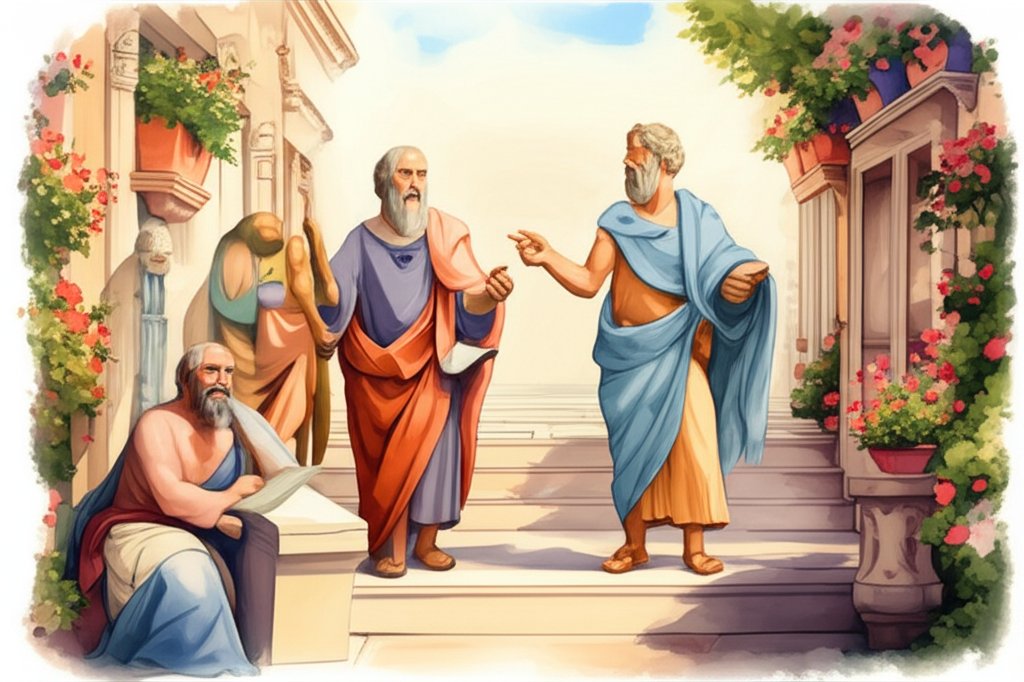
The Athenian marketplace buzzed with talk of Zeus and Poseidon, public sacrifices were commonplace, yet Socrates questioned it all. His unconventional perspectives on the divine – particularly his views on socrates and greek gods – ultimately led to accusations of impiety and his tragic death. But what exactly did he believe, and why was it so controversial?
At a Glance:
- Understand Socrates’ unique perspective on the nature of the divine and its relation to morality.
- Explore the key differences between Socrates’ philosophical approach to religion and traditional Greek beliefs.
- Learn how Socrates’ questioning of the gods contributed to his trial and execution.
- Examine the concept of Socrates’ “daimon” and its role in his life and philosophy.
- Discover how Socrates influenced subsequent philosophical thought on religion and ethics.
Redefining Piety: More Than Just Sacrifices
In ancient Athens, religious piety was largely defined by performing the proper rituals and sacrifices to the Olympian gods. But Socrates challenged this superficial understanding. He argued that true piety wasn’t about appeasing the gods with offerings, but about striving for inner virtue and moral understanding. He believed that self-knowledge, achieved through relentless questioning, was a truer form of worship. For Socrates, genuine piety wasn’t a transaction, but a transformation.
The Nature of Goodness: Gods As Moral Beacons?
Socrates took issue with the traditional portrayals of the Greek gods in mythology. He found their stories of jealousy, deceit, and infighting morally problematic. He questioned whether something was good simply because the gods deemed it so, or if goodness existed independently of divine decree. His argument was that if the gods were truly divine, they must favor goodness, not the other way around. This challenged the very foundation of relying solely on mythological narratives for moral guidance.
One God or Many? Unpacking Socrates’ Theology
Scholars debate whether Socrates was a monotheist in disguise, or if he simply reinterpreted the traditional pantheon. While he often referred to “the god” in the singular, he also spoke of “gods” in the plural. One interpretation is that Socrates believed in a supreme, overarching deity who governed the other gods. Another is that he saw the various gods as different aspects or manifestations of a single, unified divine being. Regardless, his focus was less on the specific identities of the gods and more on the universal principles of goodness, wisdom, and justice they represented – or should represent. You can explore more about Socrates’ beliefs and divine guidance in the pillar article.
The Daimon: Socrates’ Inner Voice of Guidance
Perhaps the most intriguing aspect of Socrates’ religiosity was his claim to be guided by a daimon, often translated as a “divine sign” or “inner voice”. He described it as a voice that would warn him against certain actions, but never directed him to do anything. This daimonion wasn’t considered a traditional god, but rather a personal, divine influence that served as a moral compass. It’s important to note that Socrates never claimed the daimon spoke with the authority or clarity of an oracle; it was a subtle, often negative, guidance.
Example: Socrates claimed his daimon prevented him from pursuing certain political paths, a claim not understood or respected by his peers.
The Trial and Its Religious Undertones
The charges against Socrates – impiety and corrupting the youth – were deeply intertwined with his unorthodox religious views. His questioning of traditional beliefs and his emphasis on reason and self-examination were seen as a threat to the established social order and the authority of the state religion. His defense, where he essentially claimed to be more pious than his accusers because he truly sought wisdom and virtue, further enraged the jury.
Case Snippet: Anytus, one of Socrates’ accusers, was a staunch supporter of traditional Athenian religion, and likely saw Socrates’ teachings as a direct challenge to his values and authority.
How Socrates Changed Thinking About the Divine: A Lasting Legacy
Despite his execution, Socrates’ philosophical revolution continued to influence Western thought. He shifted the focus from external rituals to internal values, paving the way for new approaches to ethics and religion. His emphasis on reason, self-knowledge, and the pursuit of virtue has inspired countless thinkers to question traditional assumptions and seek a deeper understanding of the divine.
Influence: Plato, Socrates’ student, further developed his teacher’s ideas, incorporating them into his own philosophical system and solidifying Socrates’ place as a foundational figure in Western thought.
Practical Playbook: Embracing Socratic Principles Today
While we may not be facing charges of impiety, we can still apply Socrates’ principles to our own lives.
- Question Everything: Don’t blindly accept traditional beliefs or societal norms. Ask yourself why you believe what you believe.
- Seek Self-Knowledge: Take time for introspection and reflection. Understand your own values, motivations, and biases.
- Prioritize Virtue: Strive to live a life guided by ethical principles, such as honesty, justice, and compassion.
- Be Open to Dialogue: Engage in respectful conversations with those who hold different beliefs. Learn from others and challenge your own assumptions.
- Embrace the “Daimon”: Pay attention to your intuition and conscience. Listen to that inner voice that guides you towards moral action.
Quick Answers: Common Questions & Misconceptions
Q: Was Socrates an atheist?
A: It’s unlikely. While he questioned traditional beliefs, he seemed to believe in a higher power or powers, albeit one interpreted through reason and moral principle rather than myth.
Q: Did Socrates reject all Greek gods?
A: He challenged the traditional portrayals and interpretations of the gods, but didn’t necessarily deny their existence outright. He focused on universal principles of goodness and the proper human relationship to the divine.
Q: What was the purpose of Socrates’ “daimon”?
A: It served as a personal moral compass, warning him against wrong actions. It wasn’t a source of comprehensive guidance, but rather a nudge away from potentially harmful choices.
Q: How can I apply Socratic questioning to my own life?
A: Start by asking “why” questions. For example, if you feel obligated to conform to a certain social expectation, ask yourself why that expectation exists and whether it aligns with your own values.
Q: Why was Socrates considered a threat?
A: Because he questioned the established order and encouraged others to do the same. His relentless pursuit of truth and his challenge to traditional authority were seen as subversive by those in power.
Actionable Close: Your Socratic Journey Begins Now
Socrates’ life and death underscores the importance of critical thinking, moral courage, and the pursuit of self-knowledge. His dialogue with socrates and greek gods isn’t about dismissing tradition, but about seeking a deeper, more meaningful understanding of the divine and our place in the universe. Take a moment today to question one belief you hold dear. Where does it come from? Why do you believe it? That’s your first step on the Socratic path.