For the bigger picture and full context, make sure you read our main guide on Socrates Final Words: A Debt to Asclepius Explained.
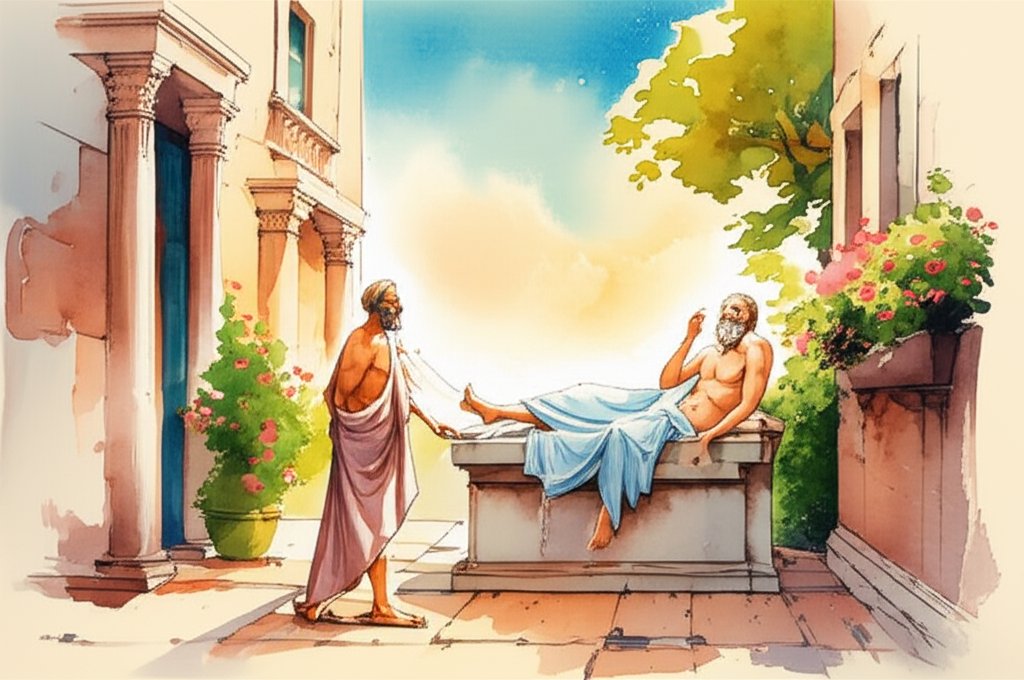
Socrates dying words, “Crito, we owe a cock to Asclepius,” have puzzled scholars for centuries. Are they a simple request, a profound philosophical statement, or something in between? Understanding the layers behind these seemingly simple words unlocks a crucial piece of Socrates’ complex character and his ultimate acceptance of death.
At a glance:
- Explore the various interpretations of Socrates’ last words, from literal to metaphorical.
- Understand the significance of Asclepius in ancient Greek culture and its relevance to Socrates’ final act.
- Analyze the potential meanings behind this “debt” in the context of Socrates’ life and philosophy.
- Consider whether these words represent a final act of defiance or a peaceful acceptance of mortality.
- Learn how to apply Socratic principles of self-reflection to your own understanding of life and death.
Unpacking the Mystery: What Did Socrates Really Mean?
Socrates’ final pronouncement, delivered to his friend Crito, has spawned countless interpretations. At the surface, it sounds like a mundane instruction: settle a debt. But knowing Socrates, it’s rarely that straightforward. Let’s delve into the potential meanings behind this cryptic message.
Asclepius and the Ritual of Healing
Asclepius was the Greek god of medicine and healing. Sacrifices, often roosters, were commonly offered to him upon recovery from illness. This context lends itself to a literal interpretation: Socrates, accepting death, views it as a cure – a release from the “illness” of life.
Could Death Be A Cure?
Socrates often spoke of the body as a prison for the soul, a source of distraction and illusion that hindered the pursuit of true knowledge. From this perspective, death could be seen as a liberation, a “healing” that allows the soul to finally achieve clarity. Understanding Socrates’ cryptic last words helps connect this idea with his broader philosophy.
The “Debt” as a Metaphor for Life
Some scholars propose that the “debt” to Asclepius represents a broader obligation to the gods or to the universe. Socrates, having lived a life dedicated to truth and virtue, may have felt he was finally fulfilling his ultimate purpose, paying the price for his beliefs.
- Example: Imagine a musician who dedicates their life to perfecting their craft. Their “debt” to music might be the years of practice, the sacrifices made, and ultimately, the performance itself.
A Touch of Irony? Socrates’ Trademark Wit
Knowing Socrates’ penchant for irony, it’s also possible that his final words contained a subtle jab at his accusers or at the perceived wisdom of the Athenian society that condemned him. Perhaps he subtly suggested that death was the only cure for their ignorance.
The Political and Philosophical Context: Why It Matters

To truly grasp the significance of Socrates dying words, we need to consider the socio-political context of his trial and execution. Accused of impiety and corrupting the youth, Socrates stood firm in his beliefs, refusing to compromise his principles to save his life.
A Critique of Athenian Values
Socrates challenged the prevailing values of Athenian society, urging individuals to prioritize virtue and wisdom over wealth and power. This stance made him a target for those who felt threatened by his influence.
The Trial as a Clash of Ideologies
The trial of Socrates wasn’t simply about individual guilt or innocence; it was a clash between traditional Athenian values and Socrates’ revolutionary philosophical approach. His death sentence symbolized the rejection of his ideas by the established order.
Socrates’ Acceptance of His Fate
Despite the injustice of his conviction, Socrates accepted his fate with remarkable composure. He believed that death was either a state of nothingness or a journey to another world, and he found both prospects appealing. This calm acceptance suggests a deeper understanding of his own mortality.
Interpreting the Silence: The Delay Before Execution
The period between Socrates’ sentencing and execution was marked by a delay caused by the return of the sacred ship from Delos. During this time, his friends urged him to escape, but he refused, arguing that it would be unjust to defy the laws of Athens, even if they were unjustly applied to him.
Refusal to Escape: A Commitment to Justice
Socrates’ decision to stay and face his execution demonstrates his unwavering commitment to justice and the rule of law. He believed that escaping would undermine the very principles he had dedicated his life to upholding.
Philosophical Discussions in Prison
Socrates used the time before his death to engage in philosophical discussions with his friends, exploring topics such as the nature of the soul, the pursuit of knowledge, and the importance of virtue. These conversations, immortalized in Plato’s dialogues, provide valuable insights into Socrates’ worldview.
Practical Playbook: Applying Socratic Principles to Your Life

While we may not face a death sentence, the principles that guided Socrates’ life and death can offer valuable lessons for navigating our own challenges.
Question Everything: Embrace Critical Thinking
Socrates’ method of inquiry, known as the Socratic Method, involves questioning assumptions and beliefs to arrive at a deeper understanding of truth. Apply this principle to your own life by challenging your own biases and seeking out diverse perspectives.
Live an Examined Life: Reflect on Your Values
Socrates famously said that “an unexamined life is not worth living.” Take time to reflect on your values, your goals, and your relationships. Ask yourself what truly matters to you and align your actions with your beliefs.
Stand Up for Your Principles: Embrace Courage
Socrates refused to compromise his principles, even in the face of death. Cultivate the courage to stand up for what you believe in, even when it’s difficult or unpopular.
Accept the Unknown: Embrace Uncertainty
Socrates embraced the uncertainty of death, viewing it as either a state of nothingness or a journey to another world. Learn to accept the unknown aspects of life and to find peace in the face of uncertainty.
Find Meaning in Simplicity: Value Inner Wisdom
Socrates wasn’t concerned with material wealth or social status. He valued inner wisdom and the pursuit of knowledge above all else. Focus on cultivating your inner life and finding meaning in simple things.
Quick Answers: Common Questions & Misconceptions
Q: Was Socrates religious?
While Socrates was accused of impiety, he maintained a belief in a divine order and in the importance of fulfilling one’s duty to the gods. However, his understanding of the divine was often unconventional and challenged traditional Athenian beliefs.
Q: Did Socrates fear death?
No. Socrates expressed a belief that death was either a peaceful sleep or a transition to another realm where he could converse with great thinkers. He didn’t view death as something to be feared, but rather as a natural part of life.
Q: Why is Socrates considered a philosopher?
Socrates’ method of inquiry, his emphasis on critical thinking, and his unwavering commitment to truth have made him one of the most influential figures in the history of philosophy. His ideas continue to inspire and challenge us to this day.
Q: Could Socrates have avoided execution?
Yes, Socrates could have avoided execution by renouncing his beliefs or by proposing a more lenient penalty. However, he chose to uphold his principles, even at the cost of his own life.
Actionable Close: The Legacy of Socrates Dying Words
Socrates dying words, though seemingly simple, encapsulate the complex and profound nature of his philosophy. They serve as a reminder of the importance of questioning assumptions, living an examined life, and standing up for one’s principles, even in the face of adversity. By embracing these principles, we can honor Socrates’ legacy and strive to live more meaningful and fulfilling lives.










