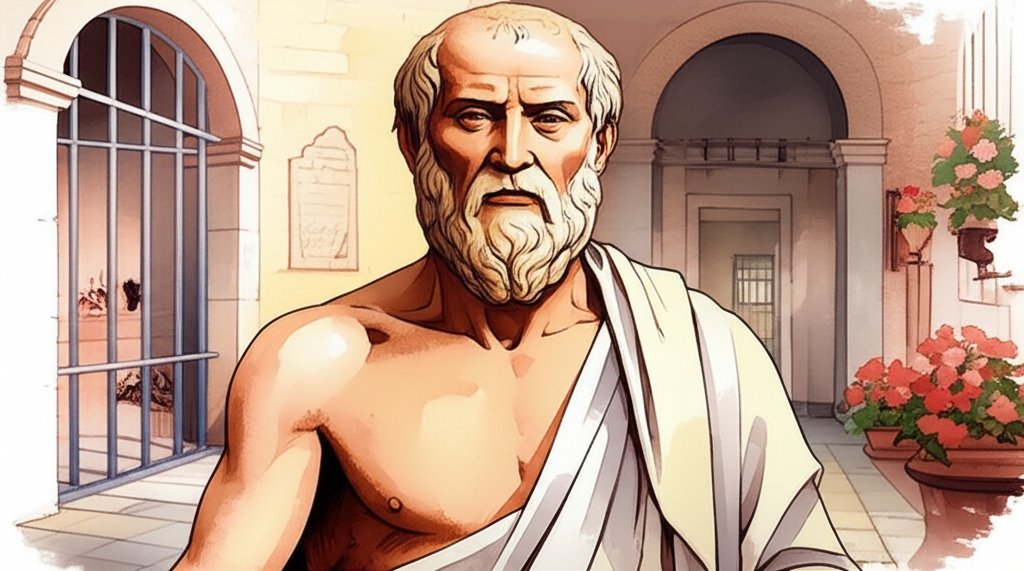
Imagine this: You’re sitting with close friends, the air thick with anticipation. You’re about to drink poison. But instead of despair, you exhibit a calm that confounds everyone. That was Socrates. And his final words, specifically about owing “a cock to Asclepius,” remain one of history’s most puzzling and endlessly debated pronouncements. What did he really mean?
This guide breaks down the context, the interpretations, and the enduring impact of Socrates’s last moments. We’ll explore why those final words continue to resonate, prompting us to question everything we think we know about life, death, and the pursuit of truth.
At a glance:
- Socrates was condemned to death in 399 BC for impiety and corrupting the youth.
- His last words were, “Crito, we owe a cock to Asclepius. Pay it and do not neglect it.”
- Interpretations range from death as healing to fulfilling a religious obligation.
- His death profoundly impacted his students and Western philosophy.
- His legacy encourages us to question assumptions and live an examined life.
The Trial and Death of a Philosopher
To understand the significance of Socrates’s final words, you need to understand the circumstances surrounding his death. He wasn’t just some guy on the street; he was a philosopher who challenged the very foundations of Athenian society.
Socrates lived in a time of great political and social upheaval. His method of questioning everything – the Socratic Method – ruffled feathers. He didn’t offer easy answers, but instead forced people to confront their own ignorance. Accused of not recognizing the gods of the state and corrupting the youth, he was put on trial.
Despite a spirited defense – famously recounted by Plato – he was found guilty. He refused to renounce his beliefs, choosing death over compromise. The method of execution was drinking hemlock, a poison that gradually shuts down the body.
“Crito, We Owe a Cock to Asclepius”: Unpacking the Mystery
Now, let’s get to those famous last words. As Plato recounts in Phaedo, Socrates, moments before death, turned to his friend Crito and said, “Crito, we owe a cock to Asclepius. Pay it and do not neglect it.” Then, he died.
This seemingly simple statement has spawned countless interpretations. Why a cock? Why Asclepius? What did it all mean?
Asclepius: The God of Healing
Asclepius was the Greek god of healing and medicine. Temples dedicated to him were places where people sought cures for illnesses. Oftentimes, supplicants would sleep in the temple overnight, hoping for a divine dream revealing the cure.
The offering of a cock (a rooster) was a common votive offering to Asclepius, given in thanks for a cure. So, the critical question becomes: what “cure” was Socrates referring to?
Interpretation 1: Death as Cure
One of the most prevalent interpretations is that Socrates viewed death as a cure – a release from the pains and troubles of life. Life, with its constant struggles and imperfections, could be seen as a disease. Death, therefore, is the ultimate healing, a return to a state of pure being.
In this view, the rooster is offered in gratitude not for being healed in life, but for being healed from life. The body is sick but the soul can be cleansed.
Interpretation 2: Fulfilling a Religious Obligation
Another interpretation suggests that Socrates was simply fulfilling a religious obligation. He might have made a vow to Asclepius, perhaps in connection with an illness or a near-death experience, and his last words were a reminder to Crito to fulfill that vow. This points to Socrates as more conventionally religious than is often portrayed.
This interpretation is less philosophical and more practical. It suggests that Socrates, even in his final moments, was concerned with fulfilling his duties.
Interpretation 3: Irony and Detachment
Some scholars see Socrates’s last words as ironic. He was known for his intellectual detachment and his ability to rise above emotions. Perhaps he was making a subtle commentary on the absurdity of life and death, using a seemingly trivial request to highlight the grand philosophical questions at stake.
In this light, the rooster becomes a symbol of the everyday concerns that fade into insignificance in the face of mortality. Socrates, ever the provocateur, might have been using his last breath to challenge our conventional notions of what matters. The question of Socrates final words explored may never have a single simple answer.
Why These Words Matter: Socrates’ Enduring Legacy

Regardless of the specific interpretation, Socrates’s final words provide a profound glimpse into his character and his philosophy. They reveal a man who faced death with courage, composure, and an unwavering commitment to his principles.
The Examined Life
Socrates famously said that “the unexamined life is not worth living”. He believed that it was essential to constantly question our assumptions, to challenge our beliefs, and to strive for wisdom. His death, far from disproving his philosophy, reinforced it. He chose to die rather than compromise his principles, demonstrating the ultimate commitment to living an examined life.
The Impact on Plato and Western Thought
Socrates’s death had a profound impact on his students, particularly Plato. Plato’s dialogues are our primary source of information about Socrates, and they are deeply influenced by the events surrounding his trial and execution. Plato’s works explore themes of justice, virtue, and the ideal state, all of which were shaped by his experience of witnessing Socrates’s death.
Socrates’s death also shaped Western thought far beyond Plato. His emphasis on reason, ethics, and self-reflection continues to influence philosophy, political science, and moral discourse today.
Common Questions About Socrates’s Final Words
Let’s tackle some common questions and clear up some misconceptions.
Q: Did Socrates fear death?
A: Based on Plato’s account, Socrates did not appear to fear death. He viewed it as either a state of nothingness or a journey to another world, both of which he found potentially appealing.
Q: Was Socrates innocent?
A: That’s a matter of debate. He was found guilty by an Athenian jury, but many believe the charges were politically motivated. Socrates challenged the status quo, which made him a target of powerful individuals.
Q: Why didn’t Socrates escape?
A: Socrates believed in upholding the laws of Athens, even when those laws were used against him. He felt obligated to accept the consequences of the jury’s decision, even if he disagreed with it. He even had the chance to escape, arranged by his followers, but he refused.
Q: What is the Socratic Method?
A: The Socratic Method is a form of inquiry and discussion between individuals, based on asking and answering questions to stimulate critical thinking and to illuminate underlying presumptions.
Applying Socrates’ Wisdom to Your Life
You might be thinking, “Okay, that’s interesting, but how does this apply to me?” Here’s how you can draw inspiration from Socrates’s life and his final words:
- Embrace the examined life: Don’t be afraid to question your own beliefs and assumptions. Seek out different perspectives and engage in thoughtful reflection.
- Stand up for your principles: Like Socrates, be willing to defend what you believe in, even when it’s difficult.
- Find meaning in mortality: Confront your own mortality and use it as a motivation to live a more meaningful life.
- Practice intellectual humility: Recognize the limits of your knowledge and be open to learning from others.
The Takeaway: A Legacy of Questioning
Socrates’s final words “Crito, we owe a cock to Asclepius. Pay it and do not neglect it,” serve as a powerful reminder of the enduring questions that have preoccupied philosophers for centuries. By examining them, we can gain insight into the nature of life, death, and the pursuit of wisdom.
His willingness to face death with courage and composure is a testament to the power of philosophy and the importance of living an examined life. So, next time you’re faced with a difficult decision, channel your inner Socrates and ask yourself: What would the wisest version of myself do? Or, just maybe, consider sacrificing a rooster to the god of healing.










