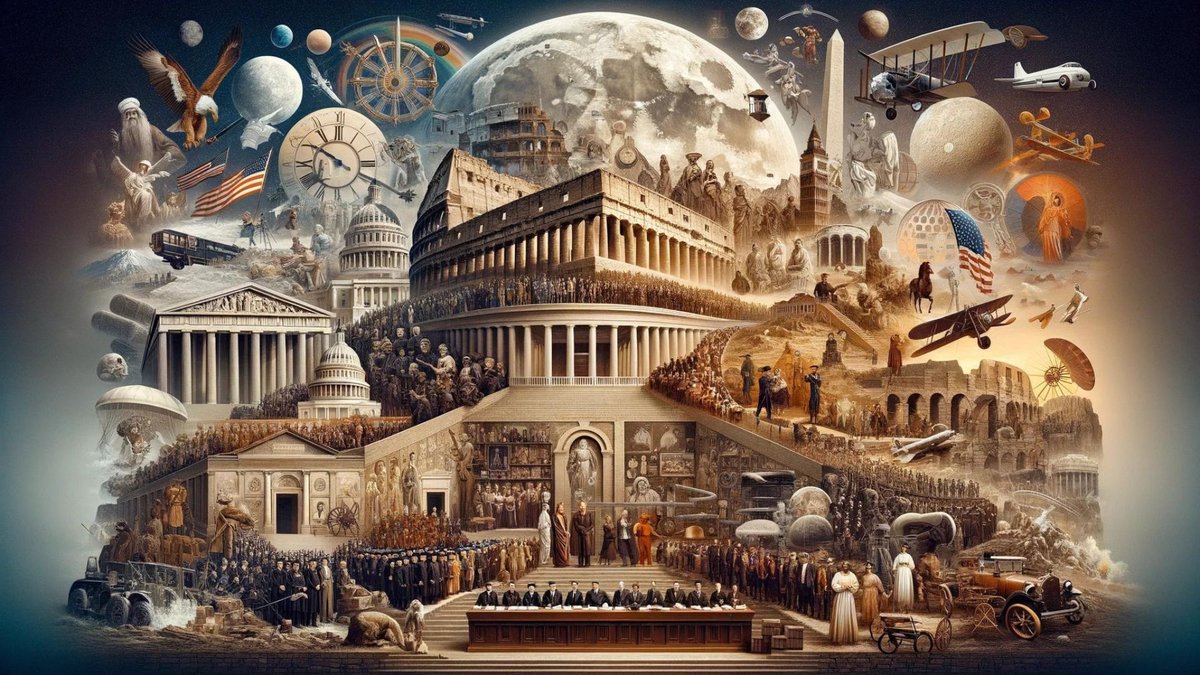
History isn’t just a collection of dates and names; it’s the living story of our journey, a grand narrative woven from countless moments that have profoundly altered human existence. From the subtle shift of a seed being planted to the monumental clash of empires, each event leaves an indelible mark, shaping the societies we inhabit and the future we build. Understanding these pivotal world history events helps us grasp not only where we came from but also the forces that continue to influence us today.
This comprehensive hub is designed to be your guide through the most transformative periods and occurrences, offering a human-first perspective on the core facts, timelines, key players, and enduring impacts that ripple across millennia. Prepare to journey through the ages, uncovering the triumphs, tragedies, and incredible innovations that define our shared human experience. Sometimes, a single day can reshape everything; for an intriguing look at such moments, you might even consider exploring what makes the most eventful day in history.
From Seeds to Cities: The Dawn of Civilization (c. 11,000 BCE – 600 CE)
Our earliest ancestors embarked on an incredible transformation with the Agricultural Revolution, a period spanning roughly 11,000 to 4,000 BCE. This shift from nomadic hunter-gatherer lifestyles to settled farming in regions like the Levant, China, and Africa laid the bedrock for all subsequent civilization. With planned cultivation, irrigation, and specialized labor, humans began to create surplus, leading to the Explore historical turning points that saw the emergence of the First Cities in Mesopotamia, like Uruk, becoming bustling centers by 2900 BCE.
Technological advancements followed rapidly. The First Wheeled Vehicles appeared between 4000-3500 BCE, revolutionizing transport, while the First Writing Systems (c. 3500-2900 BCE) evolved from simple tokens into complex scripts like proto-cuneiform and hieroglyphics, enabling unprecedented record-keeping and cultural transmission. The Great Pyramid of Giza stands as a testament to the organizational and engineering prowess of early civilizations, built around 2600 BCE. Later, the Origin and Development of Modern Alphabets (c. 1850-800 BCE) from the Proto-Sinaitic script to the Phoenician, Greek, and Roman alphabets fundamentally changed how knowledge was shared across vast distances.
Legal and philosophical frameworks also took root. Babylonian King Hammurabi Issued the Code of Hammurabi (c. 1754 BCE), one of humanity’s earliest and most influential legal codes, while the Iron Age Began (c. 1200-500 BCE), marking another significant material leap. The Rise of Ancient Greek Civilization (c. 800-336 BCE) gave us city-states, the Olympic Games, democratic reforms, and philosophical giants like Socrates, Plato, and Aristotle. Simultaneously, profound spiritual movements emerged, with the Life of the Buddha and Birth of Buddhism (c. 563-400 BCE) and the Life of Confucius and Birth of Confucianism (551-479 BCE) in Asia, shaping belief systems for billions.
The ancient world saw the rise of immense empires, too. Alexander the Great Created an Immense Empire (336-323 BCE), spreading Hellenistic culture, while the Unification of China under Qin Shi Huang (247-206 BCE) centralized a vast nation and began the Great Wall. The Rise and Fall of Ancient Roman Civilization (c. 202 BCE – 476 CE) transitioned from a powerful Republic to an Empire, creating a period of unprecedented peace, the Pax Romana. The Life of Jesus and the Birth of Christianity (c. 4 BCE-50 CE) laid the foundation for another major world religion within the Roman Empire, which would later make it its official faith. Even our concept of time was refined with the Birth of the Modern Calendar (45 BCE) by Julius Caesar.
Kingdoms, Calamities, and Connections: The Medieval Period (c. 600 – 1500 CE)
The medieval era opened with the Life of Muhammad and the Birth of Islam (570-630 CE). Originating in Mecca, Islam rapidly expanded across continents, becoming a major global religion and fostering a golden age of scientific and cultural advancement. In Europe, Charlemagne was Crowned Emperor in 800 CE, establishing the Holy Roman Empire and seeking to revive Roman traditions.
Later, the Mongol Empire Began in 1206 CE, growing into the largest contiguous land empire in history, facilitating immense cultural exchange across Eurasia. Closer to home for some, the Signing of the Magna Carta in 1215 CE in England laid crucial groundwork for modern constitutional law and individual liberties. However, this period also saw immense tragedy: the Black Death (1347–1351) ravaged Europe, eliminating an estimated 25-50 million people. This devastating plague led to profound social and economic changes, including labor shortages and the questioning of traditional authorities, ultimately accelerating the decline of feudalism. Indeed, humanity has faced some truly awful moments, and you can Uncover historys worst events to understand their profound impact.
Towards the end of the medieval period, innovation and geopolitical shifts set the stage for a new era. Gutenberg’s Printing Press (c. 1440) revolutionized mass communication, democratizing knowledge and fueling intellectual movements. The Fall of Constantinople (1453) to the Ottoman Empire marked the end of the Byzantine Empire and is often seen as a symbolic close to the medieval age, simultaneously spurring European exploration for new trade routes and contributing to the Renaissance as Greek scholars fled westward.
A World Awakened: Exploration, Revolution, and New Frontiers (c. 1500 – 1800 CE)
The early modern period burst open with Columbus Reaching the Americas in 1492, initiating the Age of Exploration and subsequent European colonization. This event launched the Columbian Exchange, a massive transfer of crops, animals, culture, and tragically, diseases, which devastated indigenous populations but irrevocably reshaped the global economy and demographics. The Protestant Reformation (1517) then shattered religious unity in Western Christianity, leading to centuries of conflict and the rise of new national identities. This tumultuous era also saw the Fall of the Aztec Empire (1521) to Spanish conquistadors, cementing colonial dominance in the Americas.
Intellectual curiosity blossomed during the Scientific Revolution (beginning in 1543), fundamentally changing humanity’s understanding of the natural world. The Defeat of the Spanish Armada (1588) marked a significant shift in European power, contributing to England’s ascent as a global force. Europe continued to be a battleground, as evidenced by the devastating Thirty Years’ War (1618-1648) which redrew the continent’s political map. Meanwhile, the English Civil War (1642–1651) and the subsequent Glorious Revolution (UK) (1688) laid crucial foundations for parliamentary democracy and constitutional monarchy. These shifts were accompanied by scientific breakthroughs like Newton’s Principia Published (1687), which established modern physics. To understand more about the specific currents of the time, you can Discover what happened in the 1700s and see how the world was transforming.
The late 18th century was defined by revolutions. The Industrial Revolution (c. 1760–1840), originating in Great Britain, completely transformed economies from agrarian to industrial, giving rise to factories, urbanization, and modern capitalism. Its far-reaching impact on society, technology, and labor movements is immense; for a deeper dive, consider the industrial revolution and its. Simultaneously, the ideals of liberty and self-governance ignited, leading to the U.S. Declaration of Independence (1776) and the American Revolution (1775–1783), which birthed the United States and inspired independence movements worldwide. Not long after, the French Revolution (1789–1799) profoundly challenged absolute monarchy and feudalism, ushering in new political systems and inspiring further revolutionary movements, including the Haitian Revolution.
The Modern World’s Crucible: Conflicts, Progress, and Global Challenges (19th Century – Present)
The 19th century continued this trajectory of dramatic change. The Napoleonic Wars (1803–1815) reshaped European borders and political thought. Across the Atlantic, the U.S. Civil War (1861–1865) marked a pivotal struggle that ultimately led to the end of slavery with the Emancipation Proclamation (1863). For a closer look at events that occurred exactly two centuries ago, you might be interested in 200 years ago today. In Asia, the Meiji Restoration (1868) rapidly modernized Japan, while in Africa, the Berlin Conference (1884–1885) saw European powers arbitrarily divide the continent, sowing seeds for future conflict.
The Great Wars and Their Aftermath
The early 20th century plunged the world into unprecedented conflict. If you’re curious about a specific year, Explore what happened in 1903, or for a slightly later period, What happened in 1909, as these years foreshadowed the coming storm. The long term causes of WW1 combined with heightened nationalism to create a powder keg. Learn how nationalism led to WW1 and Learn how imperialism caused WWI were key factors. World War I (1914–1918) was a global conflict that redefined warfare and resulted in immense loss of life. Its conclusion, formalized by the Treaty of Versailles (1919), not only ended the war but also inadvertently set the stage for future hostilities; understanding how did the treaty of is crucial here. Meanwhile, the Russian Revolution (1917) led to the birth of the Soviet Union.
The inter-war period was marked by economic turmoil, notably the Stock Market Crash (1929) and the ensuing Great Depression. This instability, along with unresolved grievances from WWI, led to the Rise of Hitler (1933) and Nazi Germany, and ideologies clashed in the Spanish Civil War (1936–1939). For an overview of events from a specific year in this era, What happened in 1924 Explore 1924s can provide more detail.
World War II (1939–1945) remains the largest and most destructive global conflict, characterized by unimaginable atrocities like the Holocaust (1941–1945), the genocide of six million Jews. The war culminated with the use of Atomic Bombs on Hiroshima & Nagasaki (1945), ushering in the nuclear age. Its aftermath reshaped global politics, leading to the United Nations Founded (1945) and the onset of the Cold War (1947), alongside a wave of decolonization movements, such as Gandhi’s Independence Movement in the 1940s. To truly grasp the ongoing repercussions, you might want to See what happened since 1944.
A Cold War and a Changing World Order
The Chinese Communist Revolution (1949) established the People’s Republic of China, and Cold War tensions quickly escalated with proxy wars like the Korean War (1950–1953) and the Vietnam War (1955–1975). Domestically, landmark decisions like Brown v. Board of Education (1954) spearheaded the U.S. Civil Rights Movement (1950s–1960s), highlighted by MLK’s ‘I Have a Dream’ Speech (1963), securing legal equality for Black Americans. The world held its breath during the Cuban Missile Crisis (1962), the closest the U.S. and USSR came to nuclear war. Technological prowess was showcased with the Moon Landing (1969), a monumental achievement in human exploration. Later, the Oil Crisis (1973) caused global economic disruption, and the Iranian Revolution (1979) fundamentally shifted power in the Middle East.
The Information Age and New Millennium Challenges
The late 20th century saw the dramatic conclusion of the Cold War with the Fall of the Berlin Wall (1989), leading to German Reunification (1990) and the Dissolution of the Soviet Union (1991). The End of Apartheid in South Africa (1994) and Nelson Mandela’s election marked a victory for human rights, though tragedies like the Rwandan Genocide (1994) underscored global intervention failures. The new millennium began with the devastating 9/11 Attacks (2001), triggering the War on Terror and the U.S. Invasion of Iraq (2003).
The advent of digital technology brought new forms of connection and disruption. Facebook’s Launch (2004) ignited the social media revolution, fundamentally changing how we interact. Global economic stability was rocked by the Global Financial Crisis (2007–2008), while the Election of Barack Obama (2008) marked a historic milestone. The early 2010s were a period of dynamic change; Explore 2010s key events Discover what else unfolded, from the Arab Spring (2010–2012) democratic uprisings to the Fukushima Nuclear Disaster (2011) that prompted a rethink of global energy.
The mid-2010s saw the Rise of ISIS (2013–2019), new challenges to global security, and the U.N. Adopted SDGs (2015) for sustainable development. Political upheavals included the Brexit Referendum (2016) and the election of Trump Elected U.S. President (2016), reflecting a surge in populism. The #MeToo Movement (2017) sparked a worldwide conversation on sexual misconduct.
The 2020s began with the unprecedented COVID-19 Pandemic (2019), leading to a global health and economic crisis, but also spurred the Discovery of mRNA Vaccines (2020). Social justice movements gained global momentum with the George Floyd Protests (2020) and Black Lives Matter Goes Global (2020). The U.S. Capitol Riot (2021) was an assault on democratic institutions, while globally, the Taliban Reclaimed Afghanistan (2021) as the U.S. war ended. Humanity also continued its quest for knowledge with the James Webb Telescope Launch (2021). More recent geopolitical shifts include Russia Invading Ukraine (2022) and the Israel-Hamas Conflict Escalated (2023), with domestic shifts like Roe v. Wade Overturned (2022) in the U.S. and the passing of Queen Elizabeth II (2022). The mainstreaming of AI with ChatGPT Release (2022) promises another technological revolution. As humanity grapples with the urgent need for action, the COP28 Climate Pact (2023) represents a step towards global climate goals. Even events that might seem unusual, such as Explore Z historical events, form part of this rich tapestry of human history. For a look at specific American events from earlier in the century, you can Discover America in 1910 Explore 1910 or Explore 1912 American history. Additionally, to understand broader contexts, world events in 1850 are worth examining.
History is an ongoing conversation, and the trends of Global Climate Strikes, the Global Refugee Crisis, and the Rise of Authoritarianism continue to unfold, inviting us to learn from the past and actively shape our future. Every event, big or small, contributes to the intricate story of humankind, and by understanding these moments, we empower ourselves to navigate the complexities of our present and build a more informed tomorrow.










