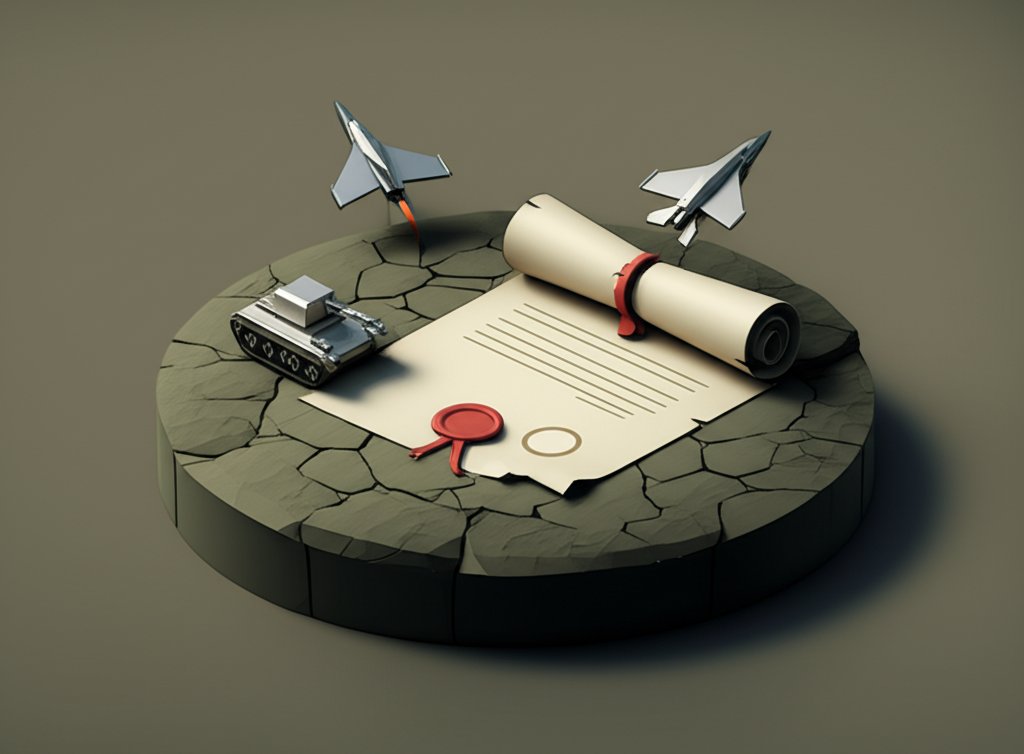
It’s June 28, 1919. Inside the glittering Hall of Mirrors at the Palace of Versailles, German delegates are summoned to sign a treaty they had no hand in writing. The air is thick with the ghosts of millions dead and the electric tension of a peace built on vengeance. This single document, meant to end “the war to end all wars,” would instead become a critical catalyst in the chain of events explaining how did the treaty of versailles lead to ww2 just two decades later. It was less a peace treaty and more a 20-year armistice.
The story of the Treaty of Versailles isn’t just about dusty articles and diplomatic signatures; it’s about how a flawed peace can sow the seeds of an even more devastating conflict. By imposing crippling terms on a defeated Germany, the treaty created a toxic cocktail of national humiliation, economic ruin, and political instability—the perfect breeding ground for a figure like Adolf Hitler and the catastrophic war he would unleash.
At a Glance: The Treaty’s Road to Ruin
Before we dive deep, here are the key ways the Treaty of Versailles set the stage for World War II:
- The “War Guilt Clause”: Germany was forced to accept 100% of the blame for starting WWI. This was a source of profound national humiliation and a powerful rallying cry for extremists.
- Crippling Reparations: The treaty demanded billions of dollars in reparations from Germany, a sum so vast it led to economic collapse, hyperinflation, and widespread poverty.
- Severe Military Restrictions: The once-mighty German army was dismantled, its navy scuttled, and its air force abolished. This neutered the nation’s defenses and wounded its pride.
- Significant Territorial Losses: Germany lost 13% of its European territory, including valuable industrial regions, and all of its overseas colonies, fueling a desire to reclaim what was lost.
- Political Instability: The harsh terms fatally weakened Germany’s new democratic government, the Weimar Republic, making it easy for radical parties like the Nazis to gain support by promising to defy the treaty.
A Peace Forged in Anger
To understand why the treaty was so harsh, you have to picture the world in 1919. World War I had been a meat grinder of unprecedented scale. France, where much of the Western Front was fought, was devastated. Its farmlands were scarred with trenches, its towns were rubble, and an entire generation of its young men was gone. French Prime Minister Georges Clemenceau was driven by one thing: ensuring Germany could never, ever do this again.
David Lloyd George of Great Britain was more of a pragmatist, but he had just won an election on the slogan “Hang the Kaiser” and had to answer to a public demanding justice. Across the Atlantic, U.S. President Woodrow Wilson was an idealist, pushing for his “Fourteen Points” and a new League of Nations that would ensure a lasting, just peace.
But the voices of anger and vengeance, primarily Clemenceau’s, drowned out Wilson’s idealism. The final treaty was a punitive peace, a “Diktat” (dictated peace) forced upon Germany without negotiation. German delegates weren’t invited to the table; they were simply told where to sign. This act of exclusion set the tone for the deep-seated resentment that would follow.
The Crushing Weight of Guilt and Gold
The treaty didn’t just aim to contain Germany; it aimed to cripple and humiliate it. Two articles in particular became infamous symbols of this intent.
The “War Guilt Clause”: A Nation’s Humiliation
Imagine being blamed for a disaster that killed millions and then being handed the bill for the entire thing. That’s what Article 231, the so-called “War Guilt Clause,” did to Germany. It forced the German nation to “accept the responsibility of Germany and her allies for causing all the loss and damage” of the war.
For Germans of all political stripes, this was an unbearable lie. While Germany certainly played a central role in the war’s outbreak, historians agree that the causes were far more complex, involving a web of alliances, imperialism, and militarism across Europe.
This forced confession of sole guilt was more than just words. It was the legal justification for the crushing reparations that followed. But its psychological impact was even more profound. It created a festering wound of injustice that never healed, providing extremist politicians with a powerful and enduring grievance to exploit for years to come.
Reparations and Ruin: Germany’s Economic Collapse
On the foundation of Article 231, the Allies built a mountain of debt. In 1921, the final reparations sum was set at 132 billion gold marks—an astronomical figure, equivalent to nearly half a trillion U.S. dollars today. The renowned economist John Maynard Keynes, a British delegate at the conference, resigned in protest, arguing that the reparations were vindictive and economically nonsensical. He was right.
Germany simply could not pay. Its industrial base was weakened, its colonies were gone, and its economy was in shambles. To make the payments, the government resorted to printing more and more money. The result was one of the most terrifying cases of hyperinflation in human history.
- In early 1922, one U.S. dollar was worth about 320 German marks.
- By late 1923, one U.S. dollar was worth 4.2 trillion German marks.
The currency became utterly worthless. People carried their wages home in wheelbarrows. Life savings were wiped out overnight. A loaf of bread that cost a few marks in the morning could cost thousands by the afternoon. This economic apocalypse destroyed the German middle class, fueled massive unemployment, and bred a deep-seated fear and desperation. When people are that desperate, they become open to radical solutions.
A Republic Born in Defeat, Undermined from Day One
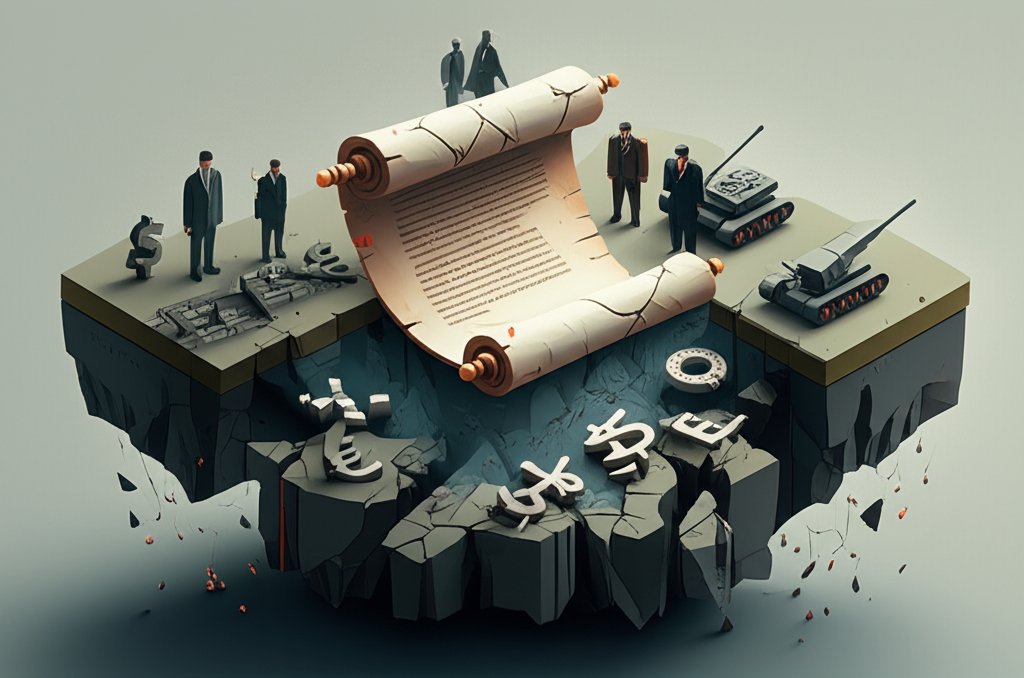
The political consequences of the treaty were just as catastrophic as the economic ones. The treaty effectively signed the death warrant for Germany’s fledgling democracy.
The Weimar Republic and the “November Criminals”
In the final days of WWI, the German Kaiser abdicated, and a new democratic government was formed, later known as the Weimar Republic. Its first major act was to sign the armistice and then the Treaty of Versailles.
This was a disaster. Right-wing nationalists, military leaders, and eventually the Nazis, immediately branded the democratic leaders who signed the treaty as the “November Criminals.” They propagated the toxic “stab-in-the-back” myth: the idea that the brave German army hadn’t been defeated on the battlefield but had been betrayed by treacherous politicians on the home front.
This lie was incredibly effective. The Weimar Republic was forever associated with the shame and humiliation of the Versailles treaty. Every economic hardship, every political crisis, was blamed on the “Diktat” and the “criminals” who signed it. The government lacked legitimacy in the eyes of many Germans from its very first day.
Fertile Ground for Extremism
Economic despair combined with national humiliation created the perfect political storm. People felt betrayed, impoverished, and desperate for a savior. Into this void stepped extremist parties from both the left and the right, promising to tear up the treaty and restore German greatness.
No one was better at exploiting this anger than Adolf Hitler and his National Socialist (Nazi) Party. The Treaty of Versailles was the cornerstone of his propaganda. In fiery speeches, he railed against:
- The injustice of the War Guilt Clause.
- The slavery of the reparations payments.
- The weakness of the “November Criminals.”
- The humiliation of a disarmed military.
He promised to defy the treaty, rebuild the army, reclaim lost lands, and make Germany strong and proud again. For a broken and humiliated people, this message was intoxicatingly powerful. Hitler’s political genius was in weaving all these grievances into a single, powerful narrative about How Versailles Caused WW2 and who was to blame: the Allies, the “November Criminals,” and, in his twisted worldview, the Jews.
A Fateful Decision: The Allies’ refusal to revise the treaty’s harshest terms in the 1920s when the democratic Weimar government was in power meant that when Hitler later defied the treaty, he appeared to many Germans as a strong leader finally standing up for their nation’s rights.
The Military in Chains and a Nation’s Lost Pride
For a country with a deep-rooted militaristic tradition like Germany, the military clauses of the treaty were a profound source of shame.
A Disarmed Giant
The treaty systematically dismantled Germany’s military power:
- The army was limited to just 100,000 men, a tiny force for a nation of its size.
- It was forbidden from having an air force, tanks, submarines, or heavy artillery.
- The navy was restricted to a handful of small ships.
- The Rhineland, a critical industrial region bordering France, was to be permanently demilitarized. No German troops were allowed.
These terms not only left Germany feeling defenseless but also fueled the narrative of a nation being held down by its enemies. When Hitler began openly rearming Germany in the mid-1930s, it was a direct violation of the treaty. But in the eyes of many Germans, he was simply restoring their nation’s right to self-defense. The Western powers, haunted by the memory of WWI and weakened by the Great Depression, did little to stop him.
Carving Up the Homeland
The treaty redrew the map of Europe at Germany’s expense. It lost 13% of its land and millions of its people.
- Alsace-Lorraine, a territory fought over for centuries, was returned to France.
- Parts of West Prussia were given to the newly created nation of Poland, creating the infamous “Polish Corridor.” This separated East Prussia from the rest of Germany and became a major point of friction.
- All overseas colonies in Africa and Asia were seized by the Allies.
Like the military restrictions, these territorial losses were a constant, visible reminder of defeat. They fueled a powerful sense of revanchism—the desire to reclaim lost territory. Hitler’s first aggressive moves, such as the remilitarization of the Rhineland and the annexation of Austria and the Sudetenland, were justified to the German people as simply “revising” the unfair terms of Versailles and bringing German-speaking people back into the Reich.
Was War Inevitable?
It’s tempting to draw a straight line from the ink drying at Versailles in 1919 to the German invasion of Poland in 1939. But history is rarely that simple. Most historians agree that the Treaty of Versailles made World War II possible, but not necessarily inevitable.
Several other critical factors played a role:
- The Great Depression (1929): The global economic crash plunged Germany back into chaos, wiping out the fragile recovery of the mid-1920s. Unemployment skyrocketed, and public anger reached a fever pitch, pushing millions of voters into the arms of the Nazis.
- The Failure of the League of Nations: Woodrow Wilson’s brainchild for collective security was doomed from the start when the U.S. Senate refused to ratify the treaty, meaning the world’s most powerful nation never joined. The League was toothless and proved utterly ineffective at stopping aggression in the 1930s.
- The Policy of Appeasement: In the 1930s, Britain and France, desperate to avoid another war, repeatedly gave in to Hitler’s demands, hoping to satisfy him. This policy only emboldened him, signaling that his violations of the treaty would have no serious consequences.
The treaty created the deep-seated grievances, but these later events provided the opportunity for those grievances to erupt into full-blown war. The treaty was the dry tinder; the Great Depression and appeasement were the sparks.
The Enduring Lesson of Versailles
The Treaty of Versailles stands as a stark reminder that the end of a war is just as critical as the war itself. A peace built on a foundation of humiliation and punishment, rather than reconciliation and a shared vision for the future, is a peace built on sand.
It crippled a new democracy, created economic chaos that fueled extremism, and gave a demagogue like Hitler a ready-made list of grievances to ignite a nation’s anger. It sought to create a permanent peace by permanently weakening one nation, but in doing so, it guaranteed that the resentments of the past would poison the future. The road to World War II was paved with the good intentions and bitter compromises of a treaty that ultimately failed to heal the wounds of one war, and instead, opened the door to another.










