In the revered halls of automotive legends, the Toyota Supra MK5 doesn’t just hold a place; it boldly reclaims a throne. After a seventeen-year hiatus, the return of the fifth-generation Toyota Supra in 2019 wasn’t merely a comeback; it was a defiant redefinition of what a modern sports car built on a storied heritage could achieve. This isn’t a simple facelift or a nostalgic re-release; it’s a meticulously engineered performance machine, born from a relentless pursuit of driving purity and precision.
This definitive guide will plunge into the intricate world of the Toyota Supra MK5, dissecting the profound engineering innovations that cement its status as a contemporary masterpiece. From its potent, BMW-sourced powertrain to its finely chiseled chassis, aerodynamic form, and advanced technological integration, we’ll unveil the secrets behind its exhilarating performance and unwavering appeal. Prepare to uncover indispensable Supra MK5 facts that solidify its position as a world-class sports car, meticulously crafted to dominate both the asphalt and the digital realm.
To fully appreciate the Supra MK5’s impact, it’s helpful to consider the broader history of the brand, exploring compelling facts about Toyota cars and its overall automotive legacy.
The Rebirth of a Legend: Tracing the Toyota Supra MK5’s Evolution
The journey of the Toyota Supra is one steeped in passion, performance, and a narrative of transformation, culminating in the highly anticipated Supra MK5. Its return marked a pivotal moment for enthusiasts globally, signaling Toyota’s renewed commitment to its sports car heritage with a thoroughly modern interpretation.
From Celica to Icon: The Toyota Supra’s Independent Journey
Initially conceived as a more powerful, luxurious variant of the Celica, the Toyota Supra rapidly forged its own distinct identity. Larger engines, enhanced performance, and a dedicated rear-wheel-drive platform set it apart, evolving through four generations. Each iteration pushed performance boundaries, culminating in the revered MKIV. This model achieved mythical status through motorsport triumphs, widespread aftermarket tuning, and iconic appearances in pop culture, especially in films. The immense weight of this legacy profoundly influenced the development of the Toyota Supra MK5, demanding a vehicle that could not only honor its past but boldly blaze a new trail forward. The challenge was to innovate without betraying the soul of the Supra.
The 17-Year Hiatus and the Strategic BMW Partnership
The nearly two-decade absence of the Toyota Supra from Toyota’s lineup left a significant void, which enthusiasts yearned to fill. The eventual return of the Supra MK5 in January 2019 was the result of an ambitious and highly strategic partnership with BMW. This collaboration, which simultaneously yielded BMW’s Z4 Roadster, allowed Toyota to leverage existing premium platforms, state-of-the-art powertrain technology, and established supply chains. This significantly accelerated development, bringing the Toyota Supra back to market faster and more efficiently than an entirely in-house project might have allowed. This unique genesis means the Supra MK5 embodies a harmonious, often-debated but undeniably effective, blend of Toyota’s customer-centric design philosophy and German engineering precision, creating a truly global performance machine that offers a best-of-both-worlds scenario.
Design Philosophy: Bridging Heritage and Modernity
The visual identity of the Toyota Supra MK5 is a crucial part of its allure, meticulously crafted to bridge its iconic past with a futuristic vision. Heavily influenced by the striking FT-1 concept car, the MK5’s design language features dramatic proportions, an aggressive stance, and a series of functional aerodynamic elements. Key design cues such as the “double-bubble” roof (a nod to classic racing cars that also improves aerodynamics and headroom), the pronounced rear haunches, and the overall compact, wide, and low silhouette immediately evoke the Supra legacy while presenting a distinctly modern aesthetic. Every line and curve serves a purpose, not just for visual appeal but to optimize airflow, enhance downforce, and improve cooling, showcasing integrated engineering innovations within its stylistic form. This careful balance ensures the Supra MK5 is instantly recognizable as a Supra, yet undeniably a product of the 21st century.
Powering the Prodigy: Deep Dive into Supra MK5’s Engine Engineering Innovations
At the undeniable heart of the Toyota Supra MK5 lies a symphony of advanced engineering, meticulously orchestrated to deliver an unparalleled driving experience. The core of its prowess can be attributed to several key engineering innovations within its powertrain.
The B58 Inline-Six: A Masterpiece of Power Delivery
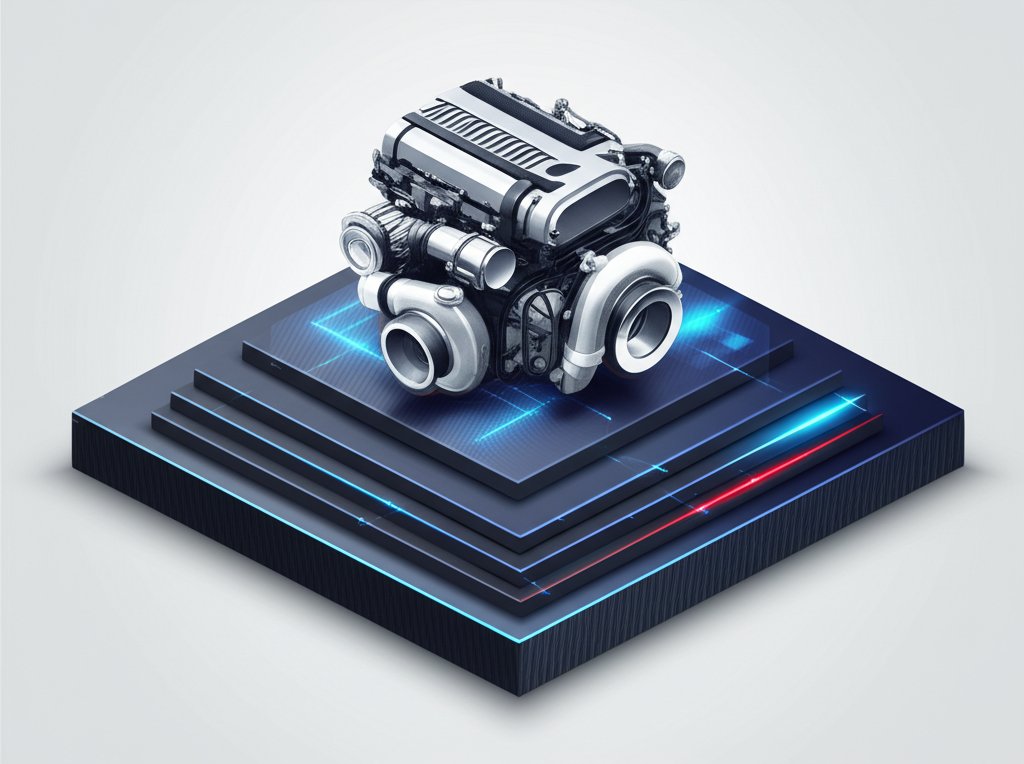
The powerful 3.0-liter turbocharged inline-six engine, coded B58, is undoubtedly one of the most significant engineering innovations in the Supra MK5. This meticulously engineered powerplant isn’t just about raw numbers; it’s about responsive, thrilling, and supremely tunable power delivery.
- Twin-Scroll Turbocharger: Unlike traditional single-scroll turbos, the B58’s twin-scroll design uses two separate exhaust gas inlets, one for each set of three cylinders. This brilliant design minimizes turbo lag by optimizing exhaust flow and scavenging, ensuring near-instantaneous throttle response and a broad, flat torque curve across the entire RPM range. This results in consistent, seamless acceleration. Early models delivered 335 hp and 365 lb-ft of torque, rapidly evolving to a more potent 382 hp and 368 lb-ft in subsequent updates (starting from the 2021 model year), demonstrating continuous performance refinement and Toyota’s commitment to pushing boundaries.
- Variable Valve Timing (Double-VANOS) and Lift (Valvetronic): BMW’s advanced Double-VANOS system (variable camshaft timing on both intake and exhaust valves) precisely controls valve overlap, maximizing combustion efficiency across different engine speeds. Complementing this is Valvetronic, a variable valve lift system that eliminates the need for a traditional throttle body at light loads, improving fuel economy and throttle response by directly controlling intake air. This sophisticated combination significantly enhances both power output and fuel efficiency.
- High-Precision Direct Injection: Fuel is injected directly into the combustion chamber at high pressure, allowing for finer atomization of fuel and more precise control over the air-fuel mixture. This enhances both power and efficiency, especially during dynamic driving conditions and under heavy load.
- Closed-Deck Aluminum Block: The engine block’s closed-deck design provides exceptional rigidity compared to open-deck designs. This allows the B58 to withstand much higher cylinder pressures without deformation, making it incredibly durable and highly receptive to performance modifications and tuning, a key Supra MK5 fact cherished by enthusiasts.
- Integrated Exhaust Manifold: The exhaust manifold is integrated into the cylinder head, which allows for more efficient thermal management. This design helps the engine warm up faster for lower emissions, and also aids in keeping exhaust gases cool before they reach the turbocharger, improving its longevity and efficiency.
This combination of features ensures the Supra MK5 delivers a captivating auditory experience and an intoxicating surge of power, making every acceleration a memorable event.
The Agile Alternative: 2.0L Turbo Four-Cylinder
For those seeking a different dynamic, the Toyota Supra MK5 expanded its engine lineup to include a 2.0-liter turbocharged inline-four, also sourced from BMW (the B48). This variant, introduced for the 2021 model year, offers a compelling alternative to the inline-six. Producing 255 hp and 295 lb-ft of torque, it boasts a lighter curb weight (approximately 200 pounds lighter than the 3.0L model), which translates to an even more agile front end and a more balanced chassis. The 2.0L Supra MK5 facts include a 0-60 mph time in the low 5-second range, providing a lively and engaging experience that focuses on nimble handling rather than outright drag-strip dominance. This option broadens the appeal of the Toyota Supra, offering a choice for different driving preferences and budgets.
Transmission Choices: Automatic and the Manual’s Return
Initially, the Toyota Supra MK5 was exclusively offered with a ZF 8-speed automatic transmission. This unit is celebrated for its lightning-fast shifts, smooth operation, and intelligent programming that adapts to driving styles. Its precise gearing and ability to handle the B58’s substantial torque made it an excellent match for the car’s performance aspirations.
However, recognizing the strong demand from purists and enthusiasts, Toyota made a significant engineering innovation for the 2023 model year: the introduction of a new 6-speed manual transmission for the 3.0-liter models. This wasn’t merely slotting in an existing gearbox; it required specific tuning and engineering to optimize pedal placement, shift feel, and clutch actuation for a truly engaging driver experience unique to the Toyota Supra. The manual option significantly enhanced the overall connection between driver and machine, directly addressing a key desire within the enthusiast community and further enriching the Supra MK5 driving experience.
Precision Crafted: Chassis, Suspension, and Aerodynamic Engineering Innovations

Beyond the raw power of its engine, the chassis, suspension, and aerodynamic design are critical elements defining the Toyota Supra MK5’s exceptional handling, precise responsiveness, and sublime ride quality, showcasing further profound engineering innovations.
Architecting Agility: The Rigid Chassis and Ideal Weight Distribution
Achieving a near-perfect 50:50 front-to-rear weight distribution is crucial for balanced handling, minimizing understeer or oversteer tendencies. The Supra MK5 was engineered from the ground up to place heavy components (like the engine and transmission) optimally, ensuring this ideal balance is maintained. Adding to this, extensive use of high-strength steel and aluminum in key areas creates a remarkably stiff body shell, 2.5 times more rigid than the previous MKIV. This torsional rigidity is fundamental for precise suspension control and minimizes chassis flex, translating directly to sharper steering response, greater stability during high-speed maneuvers, and superior feedback to the driver, particularly during hard cornering and spirited driving. This structural integrity is a cornerstone of the Supra MK5’s dynamic prowess.
Adaptive Variable Suspension (AVS): Tailored Dynamics
The Adaptive Variable Suspension (AVS) system is a sophisticated engineering innovation that continuously adjusts the damping force of each shock absorber. Using an array of sensors, AVS monitors road conditions, vehicle speed, steering input, and braking force in real-time. This allows the Supra MK5 to offer a comfortable, compliant ride during cruising and daily driving, yet firm up almost instantly for aggressive driving scenarios or when a Sport mode is selected. The system varies oil flow within each damper, providing a truly dual-character performance that delivers the best of both worlds: composed comfort on rough surfaces and resolute stability and precision when pushed to its limits on a track or winding road.
Active Rear Differential: Grip and Control Unleashed
The Active Rear Differential is a cornerstone of the Toyota Supra MK5’s dynamic prowess. This electronically controlled, multi-plate limited-slip differential continuously varies the locking force between the rear wheels from 0 to 100 percent. Unlike traditional mechanical differentials, the active differential uses an electric motor and clutch pack to precisely distribute torque. During acceleration out of a corner, it intelligently sends power to the wheel with the most grip, maximizing traction and allowing the Supra MK5 to put its power down efficiently without excessive wheelspin. Under braking, it helps stabilize the vehicle. When cornering, it can even apply different amounts of torque to each wheel to help rotate the car, effectively enhancing agility and minimizing understeer. This is a critical engineering innovation that provides immense confidence and control to the driver.
Aerodynamic Prowess: Form Meets Function
The visually striking design of the Toyota Supra MK5 is not merely aesthetic; it’s a masterclass in functional aerodynamics, an area brimming with subtle yet crucial engineering innovations. Every curve, vent, and spoiler serves a precise purpose, contributing significantly to the car’s stability, cooling efficiency, and overall performance at speed.
- Double-Bubble Roof: Distinctive and functional, this design element optimizes headroom for occupants wearing helmets (a nod to its track capabilities) while simultaneously reducing the frontal area and improving the car’s drag coefficient.
- Wide and Low Stance: The car’s dimensions – a length of 4,380 mm (172.5 in), width of 1,855 mm (73.0 in), and a low height of 1,290 mm (50.8 in) – combined with wide rims and tires, create an aggressive posture. This wide track enhances stability and grip, allowing for higher cornering speeds and a planted feel.
- Integrated Spoilers and Vents: Subtle yet highly effective aerodynamic elements are integrated throughout the design. The front splitter manages airflow under the car, reducing front-end lift. The rear ducktail spoiler generates meaningful downforce, improving high-speed stability without creating excessive drag. Functional air intakes and outlets are strategically placed to cool critical components like the engine, brakes, and differential, preventing heat soak during strenuous driving.
- Air Curtains and Smooth Underbody: Air curtains located at the front corners guide airflow efficiently around the wheels, reducing turbulence. Crucially, the nearly flat underbody of the Supra MK5 minimizes turbulence beneath the car, reducing aerodynamic lift and improving overall efficiency – a detail often overlooked by casual observers but vital for top-tier performance.
Beyond the Drive: Technology, Safety, and User Experience in the Toyota Supra MK5
The Toyota Supra isn’t just about raw power and cornering prowess; it also embraces modern technology to enhance the driving experience and prioritize safety, showcasing further advanced engineering innovations that cater to a contemporary audience.
Driver-Centric Cockpit: Ergonomics and Infotainment
The interior of the Toyota Supra MK5 is an exercise in driver focus, blending ergonomic design with intuitive technology. The digital instrument cluster provides essential driving information with crisp graphics, configurable to the driver’s preferences. A centrally located infotainment screen (available in 8.8-inch sizes) offers access to navigation, media, and vehicle settings. While borrowing elements from its BMW counterpart, Toyota has ensured a distinct Supra feel with unique color schemes and badging. Features like available heated Alcantara-trimmed or leather seats, a head-up display for key information projection, and a premium JBL 12-speaker audio system elevate the cabin experience. The intuitive control layout, including a rotary controller for the infotainment system, ensures that the driver’s attention remains on the road, while still having seamless access to connectivity features (Apple CarPlay, Android Auto) and various vehicle settings.
Comprehensive Safety Systems: Protecting the Thrill
Toyota’s unwavering commitment to safety is evident in the Supra MK5, which integrates a comprehensive suite of advanced safety features designed to protect its occupants and enhance driver confidence. This proactive approach ensures that the car not only offers exhilarating performance but also provides a secure and reassuring driving environment, leveraging cutting-edge engineering innovations.
- Pre-Collision System with Pedestrian Detection: Utilizes a combination of camera and radar to detect vehicles, pedestrians, and cyclists in the car’s path. It provides visual and audible warnings and, if necessary, automatic braking assistance to mitigate or even prevent potential collisions.
- Lane Departure Warning with Steering Assist: Monitors lane markings and alerts the driver if the vehicle begins to drift without signaling. In some instances, it can even provide gentle steering correction to help keep the car centered in its lane.
- Adaptive Cruise Control: Maintains a driver-set speed while also keeping a pre-set distance from the vehicle ahead. It automatically adjusts speed to slow down or accelerate with traffic flow, reducing driver fatigue on long journeys.
- Rear Cross-Traffic Alert: When backing out of a parking space, this system warns the driver of approaching vehicles from either side that may not be visible.
- Blind Spot Monitor: Alerts the driver to vehicles in their blind spots, aiding in safer lane changes.
- Eight Airbags: A comprehensive airbag system, including front, side, knee, and curtain airbags, provides multi-directional protection for occupants in the event of a collision.
These engineering innovations in safety allow drivers to fully enjoy the Supra MK5’s capabilities with enhanced peace of mind, knowing a robust safety net is in place.
The Daily Driver Experience: Usability and Refinement
Despite its potent performance credentials, the Toyota Supra MK5 is surprisingly livable for daily driving. The adaptive suspension, even in its firmer Sport mode, avoids being overly harsh, providing a compliant ride that manages to soak up road imperfections without sacrificing feel. Cabin refinement is notable, with good insulation against road and wind noise, making longer journeys comfortable. The cabin offers adequate space for two adults and their luggage, with a reasonably sized trunk that can accommodate weekend bags. This blend of track-ready performance and genuine daily usability is a testament to the comprehensive engineering innovations applied throughout its development, making the Supra MK5 a versatile machine for enthusiasts who don’t want to sacrifice practicality for performance.
Supra MK5 Facts: Performance, Customization, and Cultural Impact
The Supra MK5 has quickly cemented its place in the automotive world, building on the profound legacy of its predecessors while carving out its own unique identity. Here are some compelling Supra MK5 facts that highlight its impact and enduring appeal.
Hard Stats: Acceleration, Top Speeds, and Track Prowess
The performance of the Toyota Supra MK5 is undeniably impressive and a major draw for enthusiasts.
- 3.0-liter Variant (Early Models, 335 hp): 0-60 mph in a brisk 4.1 seconds.
- 3.0-liter Variant (Post-2021 Models, 382 hp): 0-60 mph in an impressive 3.9 seconds, with some independent tests even achieving sub-3.8 second times.
- 2.0-liter Variant (255 hp): 0-60 mph in the low 5-second range, offering a lighter, more agile feel.
- Top Speed: Electronically limited to 155 mph (250 km/h) for all variants, a common practice for performance vehicles.
- Braking: Equipped with robust Brembo brakes (on 3.0L models) providing excellent stopping power and fade resistance, crucial for track use.
- Handling: Its precision handling, aided by its rigid chassis, adaptive suspension, active differential, and wide sticky tires, makes it a formidable presence on winding roads and track days alike. It consistently earns high marks for its neutral balance and responsive steering.
These Supra MK5 facts underscore its capability as a serious performance machine, designed to excite and engage.
The Tuner’s Dream: Unlocking the Supra MK5’s Potential
A significant Supra MK5 fact is its inherent appeal to the aftermarket and tuning community. Like its legendary MKIV predecessor, the Supra MK5 has been enthusiastically embraced by enthusiasts eager to personalize and enhance its performance. The B58 engine, known for its robust closed-deck construction and strong internals, responds exceptionally well to modifications. Significant power gains are readily achievable through software tunes (often pushing power well over 500 hp with basic bolt-ons), upgraded turbochargers, and exhaust systems. This ease of modding, combined with a plethora of available suspension, wheel, and aerodynamic upgrades, taps directly into the JDM (Japanese Domestic Market) tuning culture that reveres the Toyota Supra. This ensures the MK5 will have a long and vibrant life within the enthusiast community, reflecting a continuous evolution of its engineering innovations by owners.
Pop Culture Icon: From Gaming to the Big Screen
The Toyota Supra has always been a star, with the MKIV gaining immense fame through its iconic role in “The Fast and the Furious” franchise. The Supra MK5 continues this tradition, featuring prominently in various popular video games (such as Gran Turismo, Forza Horizon, Need for Speed), movies, and TV shows. This sustained presence solidifies its place as a contemporary symbol of speed, performance, and automotive aspiration. Beyond the digital and silver screens, it actively participates in various motorsport competitions, from grassroots drifting events to professional racing series. This real-world application proves its mettle where it truly counts: on the asphalt, driven to its limits.
Critical Reception and Market Acceptance
Upon its launch, the Toyota Supra MK5 garnered considerable attention and debate, largely due to its BMW partnership. However, critical reviews quickly lauded its exceptional driving dynamics, powerful engines, and striking design. While some purists initially expressed reservations, the overwhelming sentiment from automotive journalists and actual owners has been positive, praising its engaging character, everyday usability, and significant tuning potential. Market acceptance has been strong, with the Toyota Supra consistently being a desirable sports car, particularly after the introduction of the manual transmission option. This demonstrates that its blend of heritage and modern engineering innovations successfully resonates with a broad audience.
The Toyota Supra Legacy: MK5’s Place Among Icons
Understanding the Toyota Supra MK5 fully requires a look at its heritage, particularly how it measures up against the revered MKIV and how it carves its path forward.
Bridging Generations: MK5 vs. MKIV
The Supra MK5 faced the monumental task of living up to the legendary status of the MKIV. While the MKIV was celebrated for its indestructible 2JZ-GTE twin-turbo engine and immense tuning potential, the MK5 brings its own set of formidable arguments to the table. The B58 engine, while a different philosophy (single twin-scroll turbo vs. sequential twins), offers comparable and often superior stock performance, better fuel efficiency, and equally strong tunability potential. Key Supra MK5 facts indicate it is considerably more rigid and dynamically superior from the factory.
Where the Supra MK5 truly evolves the Toyota Supra nameplate is in its dynamic handling, modern technology integration, and everyday usability. The MK5 is a more refined, technologically advanced, and dynamically superior car straight off the showroom floor, offering a sophisticated blend of raw performance and comfortable daily driving. It embraces modern safety, connectivity, and driver-assistance systems that were unfathomable in the MKIV’s era. It’s a contemporary interpretation of the Supra ethos: a powerful, engaging, and iconic sports car, ready for the 21st century’s demands. It respects its heritage by offering a pure driving experience while leveraging cutting-edge engineering innovations to deliver a superior, well-rounded package.
The Future of Toyota Supra: Evolution Continues
The journey of the Toyota Supra MK5 is far from over. Toyota has demonstrated a commitment to continuous improvement, evidenced by the iterative power bumps and the introduction of the manual transmission. Future model years are likely to see further refinements, special editions that celebrate its growing legacy (like the 45th Anniversary Edition), and potentially even more advanced technological integrations. As the automotive world shifts towards electrification, it remains to be seen how the Toyota Supra nameplate might adapt, but one thing is certain: the spirit of performance and engineering innovations will remain at its core. The MK5 has successfully reignited the flame, ensuring the Supra continues to be a relevant and desired sports car for years to come.
Conclusion
The Toyota Supra MK5 is far more than just a revival; it’s a meticulously engineered marvel that redefines what a modern sports car built on a legendary lineage can be. Through its powerful B58 (or agile B48) engine, precision-crafted chassis dynamics, sophisticated adaptive suspension, functional aerodynamic design, and a comprehensive suite of advanced technologies, the Supra MK5 embodies a relentless pursuit of performance and driver engagement. It is a testament to groundbreaking engineering innovations, a car brimming with compelling Supra MK5 facts that highlight its prowess, and a supremely worthy successor to the revered Toyota Supra nameplate.
Whether you’re a long-time enthusiast of the Toyota Supra or new to its intoxicating allure, the Toyota Supra MK5 offers an unparalleled blend of heritage, power, precision, and cutting-edge design. It stands as a beacon of Toyota’s commitment to building thrilling driver’s cars, securing its position as a dominant force in the high-performance automotive landscape for years to come. Experience the culmination of engineering secrets revealed; experience the Supra MK5.
FAQ
What are the main engineering innovations in the Toyota Supra MK5?
The primary engineering innovations in the Toyota Supra MK5 include its powerful B58 inline-six twin-scroll turbocharged engine (or the agile B48 2.0L turbo-four), ideal 50:50 weight distribution, an exceptionally rigid chassis, Adaptive Variable Suspension (AVS) for dynamic damping, and an active rear differential for superior traction and cornering control. Its functional aerodynamic design, including the double-bubble roof and integrated spoilers, also represents key innovations.
Is the Toyota Supra MK5 a standalone model?
Yes, the Toyota Supra MK5 is a standalone model. While its lineage began as a high-performance variant of the Celica, it quickly developed its own distinct identity through multiple generations. The MK5, though developed in a strategic partnership with BMW, is uniquely tuned and styled by Toyota, making it a distinct and standalone Toyota Supra model in its own right.
What are the key performance specifications for the Toyota Supra MK5’s 3.0-liter engine?
The 3.0-liter turbocharged inline-six engine in the Supra MK5 initially produced 335 hp and 365 lb-ft of torque (2020 model year). More recent models (post-2021) boast an enhanced 382 hp and 368 lb-ft of torque, allowing for an impressive 0-60 mph acceleration of approximately 3.9 seconds. Its top speed is electronically limited to 155 mph (250 km/h).
How does the Supra MK5 prioritize safety?
Toyota has prioritized safety in the Toyota Supra MK5 by equipping it with a suite of advanced safety features. These include a Pre-Collision System with Pedestrian Detection, Lane Departure Warning with Steering Assist, Adaptive Cruise Control, Rear Cross-Traffic Alert, Blind Spot Monitor, and a comprehensive system of eight airbags. These features leverage sophisticated engineering innovations to provide active and passive protection.
What contributes to the Toyota Supra MK5’s sleek and aerodynamic design?
The Supra MK5’s design is highly aerodynamic and functional. Key elements include its distinctive double-bubble roof, a wide and low stance for stability, integrated front splitters and a rear ducktail spoiler for generating downforce, strategically placed functional air intakes and outlets for cooling, and a smooth underbody to minimize turbulence and improve aerodynamic efficiency. These are all critical engineering innovations that enhance performance.
Is the Toyota Supra MK5 customizable?
Yes, a crucial Supra MK5 fact is its strong appeal to the aftermarket and tuning community. The B58 engine is known for its robust construction and exceptional tunability, allowing enthusiasts to achieve significant power gains through software tunes and upgraded components. The chassis and suspension also offer ample opportunities for modification, continuing the rich JDM legacy of the Toyota Supra as a highly customizable performance platform.










