Step into a world where dazzling beauty meets ancient wisdom. For centuries, humanity has been captivated by the allure of birthstones, those exquisite gemstones believed to hold unique significance for individuals born in specific months. But what if there’s more to these sparkling treasures than meets the eye? Beyond their aesthetic appeal lies a rich tapestry of history, mythology, and energetic properties, waiting to be unveiled.
This guide will take you on an extraordinary journey to reveal the profound birthstone meanings, delve into the fascinating birthstone secrets whispered through time, and explore the inherent power embedded within these precious gems. Prepare to be astonished as we unlock the hidden narratives and vibrant energies that connect us to the Earth’s most beautiful creations.
The Enduring Legacy: A Journey Through Birthstone History and Evolution
The concept of associating specific gemstones with months dates back millennia, rooted in astrological beliefs and ancient texts. Far from being a modern marketing invention, birthstones represent a deep cultural connection to the cosmos and the natural world.
From Ancient Talismans to Modern Traditions: How Birthstones Came to Be
The earliest known association of specific stones with months can be traced to the Breastplate of Aaron, described in the Bible’s Book of Exodus. This sacred garment was adorned with twelve precious gems, each representing one of the twelve tribes of Israel. Later, scholars and mystics began linking these gems to the twelve signs of the zodiac and, subsequently, to the twelve months of the year, believing they offered protection, healing, and good fortune to the wearer.
Over the centuries, different cultures – from the ancient Hindus and their Navaratna (nine gems) to Tibetan traditions – developed their own systems of birthstone attribution. It wasn’t until 1912, when the American National Association of Jewelers (now Jewelers of America) standardized a list, that many of the birthstones we recognize today became widely accepted. Even then, the list has seen occasional updates, with new additions like tanzanite and spinel reflecting advancements in gemology and shifts in popular appeal. This evolution highlights a fascinating birthstone secret: their significance is a living tradition, continually shaped by human discovery and belief.
Beyond the Calendar: Understanding Gemstone Families and Types
While all birthstones are gemstones, not all gemstones are birthstones. A gemstone is a piece of mineral crystal, which, when cut and polished, is used to make jewelry or other adornments. They are valued for their beauty, rarity, and durability. Precious gems traditionally referred to diamonds, rubies, sapphires, and emeralds, distinguished by their exceptional hardness, brilliance, and scarcity. Other gems are often categorized as “semi-precious,” though modern gemology often prefers more precise terms based on species, variety, and quality.
Understanding the family a gem belongs to (e.g., beryl for emerald and aquamarine, corundum for ruby and sapphire, quartz for amethyst and citrine) provides insight into its physical properties like hardness (measured on the Mohs scale), crystal structure, and potential origins. This scientific basis complements the mystical birthstone meanings, offering a holistic understanding of these natural wonders.
To further explore the fascinating world of gemstones beyond birthstones and their historical significance, consider checking out these fun facts about gemstones that reveal even more about their unique properties.
Birthstone Meanings Unveiled: Decoding the Wisdom of Each Month’s Gem
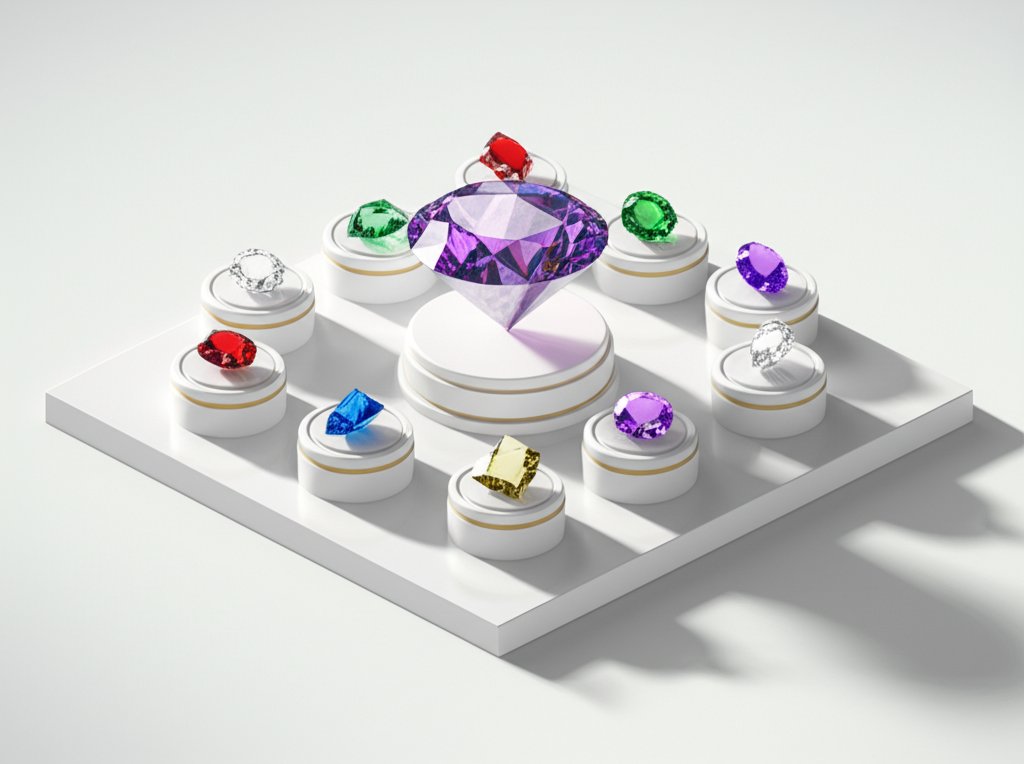
Each birthstone is imbued with a unique essence, a symbolic language that speaks to the characteristics, strengths, and spiritual needs of those born under its influence. Exploring these birthstone meanings helps us connect with our inner selves and understand the gifts each gem offers.
January: Garnet – The Stone of Commitment & Energy
The vibrant garnet, January’s birthstone, stands for passion, energy, and protection. Derived from the Latin “granatum,” meaning seed, it echoes the juicy red seeds of a pomegranate, symbolizing life, regeneration, and the promise of new beginnings. Ancient Egyptians and Romans wore garnets for protection and to ward off evil. This precious gem is believed to inspire love, commitment, and vitality. Its deep red hues awaken the root chakra, grounding the wearer and fueling creative endeavors while providing courage and hope, especially during times of change.
February: Amethyst – The Stone of Serenity & Spiritual Awakening
February claims the regal amethyst, a captivating purple quartz known for its calming and spiritual properties. Its name, from the Greek “amethystos,” means “not drunk,” alluding to ancient beliefs that it prevented intoxication and cleared the mind. This gemstone is a powerful ally for clarity, intuition, and spiritual growth. It’s said to soothe the mind, reduce stress, and promote peaceful sleep. Revered by royalty and spiritual leaders alike, amethyst connects with the crown chakra, fostering wisdom, inner peace, and divine connection. The ancient Egyptians and Romans carved it into intaglios, showcasing its long-standing cultural importance.
March: Aquamarine – The Stone of Courage & Clarity
The tranquil aquamarine, March’s birthstone, mirrors the serene blue hues of the ocean. Its name literally means “water of the sea,” and sailors historically carried it as a talisman for safe passage and to calm troubled waters. This precious gem is associated with courage, communication, and emotional clarity. It’s believed to soothe anxieties, enhance self-expression, and foster harmony in relationships. Aquamarine connects to the throat chakra, encouraging honest and clear communication. Brazil is famed for producing some of the largest aquamarines ever found, including a colossal gem measuring 48.5 cm long.
April: Diamond – The Stone of Invincibility & Eternal Love
April’s dazzling diamond is synonymous with eternal love, strength, and invincibility. Formed deep within the Earth under immense pressure, its unparalleled hardness and brilliant fire make it the ultimate symbol of enduring commitment and purity. Structurally, diamonds are pure carbon atoms arranged in a robust cubic pattern, explaining their exceptional durability. Beyond romantic symbolism, this gemstone is believed to enhance inner strength, courage, and clarity of thought, reflecting light and truth. As one of the most coveted precious gems, its ability to refract light creates an extraordinary sparkle, captivating all who behold it.
May: Emerald – The Stone of Growth & Abundance
The lush green emerald, May’s birthstone, is a symbol of rebirth, growth, and fertility. Its vibrant color, attributed to the presence of chromium, evokes the verdant beauty of spring. Ancient civilizations, particularly the Egyptians, highly prized emeralds, associating them with the goddess Venus and attributes of love, hope, and healing. This gemstone is believed to open the heart chakra, fostering compassion, harmony, and unconditional love. It’s also thought to promote wisdom, foresight, and abundance, bringing success and good fortune to its wearer.
June: Pearl, Alexandrite, Moonstone – The Gems of Purity & Intuition
June is uniquely graced with three birthstones: the classic pearl, the color-changing alexandrite, and the luminous moonstone.
July: Ruby – The Stone of Passion & Prosperity
The fiery ruby, July’s birthstone, is the “king of gems,” symbolizing passion, protection, and prosperity. Its intense red hue is associated with the life force, blood, and vital energy. Ancient cultures believed rubies held the power of the sun and could inspire love, courage, and good fortune. This precious gem is thought to energize the wearer, stimulate the heart chakra, and protect against negative energies. It’s also linked to wealth and success, making it a powerful talisman for those seeking to amplify their drive and achieve their ambitions.
August: Peridot, Spinel, Sardonyx – The Gems of Protection & Radiance
August offers a trio of protective and vibrant birthstones: peridot, spinel, and sardonyx.
September: Sapphire – The Stone of Wisdom & Royalty
September’s birthstone, the majestic sapphire, is revered for its deep blue color, symbolizing wisdom, nobility, and truth. Historically, kings and queens wore sapphires as protection from envy and harm, and as a symbol of divine favor. While most famous for its stunning blues, sapphires (a variety of corundum, like ruby) come in almost every color except red. This precious gem is believed to promote mental clarity, focus, and inner peace, connecting to the third eye and throat chakras. It encourages spiritual insight, loyalty, and honest self-expression.
October: Opal, Tourmaline – The Gems of Creativity & Healing
October celebrates two magnificent and colorful birthstones: opal and tourmaline.
November: Topaz, Citrine – The Gems of Joy & Manifestation
November brings forth two radiant birthstones: topaz and citrine.
December: Tanzanite, Zircon, Turquoise – The Gems of Serenity & Success
December boasts a captivating trio of birthstones: tanzanite, zircon, and turquoise.
Birthstone Secrets: Unlocking the Hidden Power of Precious Gems
Beyond their assigned month, birthstones and precious gems hold energetic properties that have been utilized for healing, protection, and spiritual growth across diverse cultures and throughout history. These are the deeper birthstone secrets that connect us to the Earth’s profound energies.
The Energetic Vibrations: How Gemstones Interact with Your Aura
Every gemstone possesses a unique vibration, an energetic signature derived from its mineral composition, crystal structure, and formation process. This “power” isn’t magic in the conventional sense, but rather a subtle interaction with our own energetic fields, or aura. Just as a tuning fork resonates with a specific frequency, a birthstone can help align, balance, or amplify our internal energies.
Many traditions link specific gems to the body’s seven main energy centers, or chakras. For instance, red gemstones like garnet and ruby resonate with the root chakra, promoting stability and vitality, while blue gems like sapphire and aquamarine connect to the throat and third eye chakras, enhancing communication and intuition. This energetic synergy is a core component of the birthstone meanings and their perceived benefits.
Talismans and Amulets: Historical Beliefs in Gemstone Protection and Luck
Throughout history, precious gems and birthstones have been worn not only for adornment but as powerful talismans and amulets.
These beliefs underscore a profound birthstone secret: humans have instinctively understood the subtle “power” these gems hold, attributing to them a capacity to influence fate, health, and spiritual well-being.
Beyond Month: Choosing Your Personal Power Stone
While your birth month gemstone holds special significance, you are not limited to it. Many people find a deeper connection with other gemstones based on personal resonance, specific needs, or even astrological zodiac signs.
This personalized approach allows for a deeper, more active engagement with the world of precious gems, moving beyond rigid traditions to a more intuitive and empowering connection.
Embracing Your Gem: Care, Cleansing, and Connection
To truly honor the “power” and beauty of your birthstone or any precious gem, understanding how to care for it, cleanse its energy, and connect with its essence is vital.
Nurturing Your Precious Gem: Essential Care Tips
Proper care ensures your gemstones retain their brilliance and last for generations.
Understanding the specific needs of your individual birthstone is key to preserving its beauty and energetic integrity.
Recharging Your Stone: Methods for Energetic Cleansing
Just as we cleanse our physical bodies, gemstones benefit from energetic cleansing to clear accumulated negative energies and restore their vibrancy. Remember, these are traditions and beliefs, not scientific prescriptions.
Regular cleansing helps maintain the perceived “power” and clarity of your birthstone, allowing its inherent birthstone meanings to shine through.
Conclusion: Embrace Your Gemstone Legacy
From ancient talismans to modern symbols of personal identity, birthstones offer a profound connection to history, natural beauty, and inner wisdom. We’ve journeyed through their remarkable origins, uncovered the deep birthstone meanings of each month’s gemstone, and explored the fascinating birthstone secrets that reveal their energetic “power” as precious gems.
Whether you wear your birthstone for its stunning aesthetic, its symbolic resonance, or its believed energetic benefits, these natural wonders serve as a constant reminder of our unique place in the world. Embrace the hidden narratives and vibrant energies that lie within these sparkling treasures, and let them empower, protect, and inspire you on your own life’s journey. Your gem is more than just an adornment; it’s a piece of Earth’s ancient magic, waiting to connect with you.
FAQ Section
Question 1: What is the difference between birthstones and other gemstones?
Answer 1: All birthstones are gemstones, but not all gemstones are birthstones. A gemstone is any mineral or organic material valued for its beauty, rarity, and durability. A birthstone is a specific gemstone traditionally associated with a particular month of the year or a zodiac sign, believed to hold special significance for individuals born during that period. The concept of birthstones adds a symbolic and personal layer to the general category of gemstones.
Question 2: Can I wear a birthstone that isn’t for my birth month?
Answer 2: Absolutely! While your assigned birthstone holds a unique connection, you are free to wear any gemstone that resonates with you. Many people choose gems based on their birthstone meanings, desired energetic properties, astrological zodiac sign, or simply because they are drawn to its beauty. Choosing a stone based on intuition or specific needs can create a powerful personal connection, regardless of your birth month.
Question 3: How do birthstones acquire their meanings and perceived power?
Answer 3: The birthstone meanings and perceived “power” of precious gems are largely derived from a blend of ancient beliefs, cultural traditions, mythology, and historical observations. Their color, rarity, transparency, and durability often influenced these associations. For example, red stones like garnet and ruby might symbolize passion due to their vibrant hue, while clear stones like diamond are linked to purity. Many beliefs also stem from early astrological systems, folklore, and the use of gemstones as talismans for protection or healing across various civilizations.
Question 4: Are there alternative birthstones for each month?
Answer 4: Yes, many months have multiple birthstones. While the 1912 American list standardized many, historical and regional traditions offer alternatives. For instance, June has pearl, alexandrite, and moonstone; August has peridot, spinel, and sardonyx; and December features tanzanite, zircon, and turquoise. These alternative birthstones often arose from different cultural practices or later discoveries of new gems, providing more choices to suit personal preferences and budgets.
Question 5: What makes certain gems “precious”?
Answer 5: Historically, the term “precious gems” referred specifically to diamonds, rubies, sapphires, and emeralds. This distinction was based on their rarity, exceptional hardness, dazzling brilliance, and high value. While these four remain highly prized, modern gemology often emphasizes the quality and individual characteristics of any gemstone (e.g., clarity, cut, color, carat weight) rather than a strict “precious” vs. “semi-precious” categorization, as many “semi-precious” stones can be incredibly rare and valuable.
Question 6: How can I identify a genuine gemstone?
Answer 6: Identifying a genuine gemstone can be challenging and often requires expert knowledge and specialized equipment. Key indicators include examining the stone’s color consistency, clarity (inclusions or lack thereof), cut quality, and weight. Many natural gems have characteristic internal imperfections or “fingerprints.” The most reliable method is to consult a certified gemologist or a reputable jeweler who can perform tests such as refractive index measurement, specific gravity tests, and microscopic examination to determine authenticity and identify any treatments.










