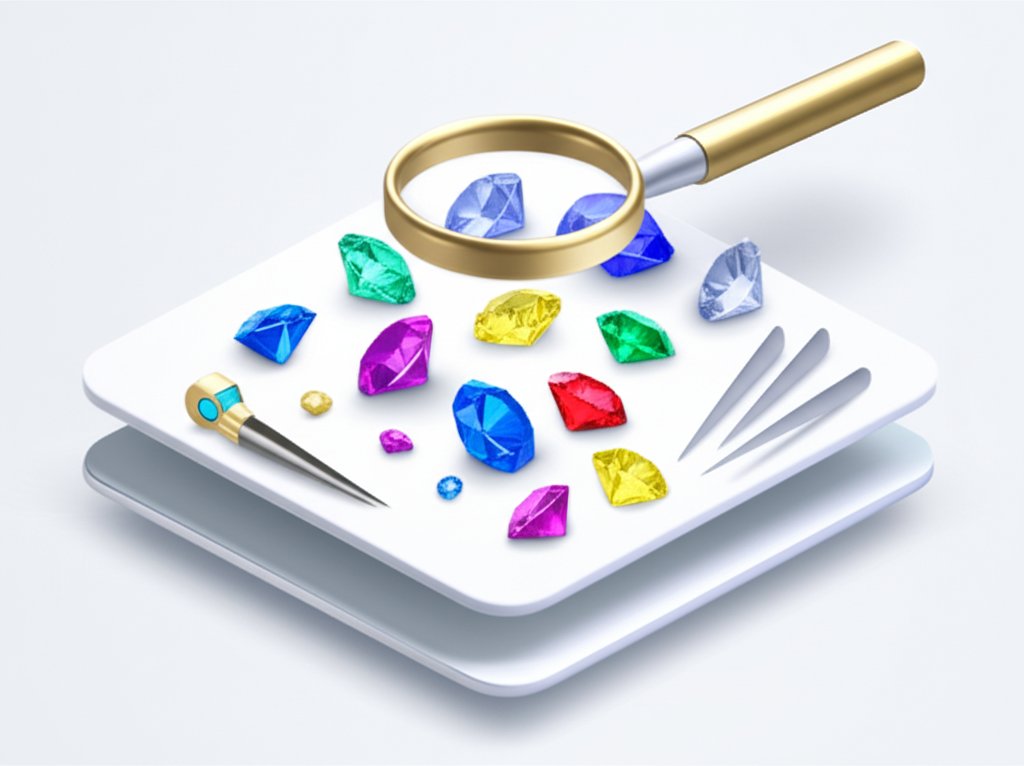
Welcome to the captivating universe of unique gemstones, where every stone tells a story of geological wonder, intricate formation, and dazzling beauty. Far beyond the commonly known diamonds, rubies, sapphires, and emeralds, lies a realm of extraordinary minerals that defy convention and captivate the discerning eye. But how do you navigate this specialized world? How can you confidently embark on gemstone identification, understand the nuances of gemstone grading, and accurately assess the true value of these precious gems?
This comprehensive guide is your essential companion on a journey into the heart of these exceptional treasures. We’ll unveil expert gemstone insights, equipping you with the knowledge to identify, evaluate, and appreciate the rarest and most fascinating stones the Earth has to offer. Whether you’re a budding collector, a seasoned enthusiast, or simply captivated by the allure of the uncommon, prepare to unlock the secrets to mastering the world of unique gemstones.
To appreciate these uncommon stones fully, it’s helpful to expand your knowledge base and explore fascinating facts about gemstones, covering their origins and composition.
What Makes a Gemstone Truly Unique? Beyond the Ordinary
The term “unique gemstones” evokes images of rarity, distinctive beauty, and perhaps a touch of mystique. But what truly sets a gemstone apart from its more common counterparts? It’s a combination of factors that elevate a stone from beautiful to extraordinary, making it a coveted treasure for collectors and connoisseurs alike.
Defining “Unique” in Gemology
In gemology, “unique” often transcends mere aesthetic appeal. A gemstone’s uniqueness can stem from extreme rarity—meaning its geological occurrence is incredibly limited—or from possessing exceptional characteristics rarely seen in other minerals. This might include an unusual color, a rare optical phenomenon, specific inclusions that tell a geological story, or a distinctive crystal habit. Unlike mass-produced items, each unique gemstone carries an inherent individuality, making it impossible to find two exactly alike.
Factors Contributing to Rarity and Distinction
Several key factors contribute to a gemstone’s rarity and, consequently, its uniqueness:
- Limited Geographical Sources: Many unique gemstones are found in only one or a handful of locations worldwide. Tanzanite, for instance, is exclusively mined in a small area near Mount Kilimanjaro in Tanzania. Such restricted origins inherently limit supply.
- Complex Formation Conditions: The creation of certain gemstones requires very specific and often rare geological conditions—combinations of pressure, temperature, and specific chemical elements—that are seldom met. This makes their formation a geological anomaly.
- Unusual Chemical Composition: Some gems have chemical compositions that are not common, leading to unique properties like intense color saturation or distinctive pleochroism.
- Unique Optical Phenomena: Phenomenal gems exhibit special light interactions, such as alexandrite’s color change, adularescence in moonstone, or the fiery play-of-color in opal. When these phenomena are particularly striking or rare within a specific gem type, they contribute significantly to its uniqueness.
- Inclusions that Tell a Story: While inclusions often reduce value in common gems, specific, aesthetically pleasing, or highly diagnostic inclusions can make a gemstone unique. “Horsetail” inclusions in Demantoid Garnet, for example, are highly prized.
- Historical and Cultural Significance: A stone’s lineage or connection to significant historical events or cultures can also imbue it with a unique identity and elevate its desirability.
The Spectrum of Precious Gems and Lesser-Known Wonders
Historically, precious gems were classified into four categories: diamond, ruby, sapphire, and emerald. All others were deemed “semiprecious.” However, modern gemology has largely moved away from this outdated distinction. Today, a gemstone’s value and desirability are assessed by its individual beauty, rarity, and quality (often evaluated by the 4Cs).
This shift in terminology highlights an important truth: many so-called “semiprecious” stones can be far rarer and more valuable than some of the traditional “precious gems.” For example, a high-quality demantoid garnet or a top-grade Paraíba tourmaline can command prices per carat that rival or exceed those of many diamonds, rubies, or sapphires. This expanding understanding encourages gem enthusiasts to look beyond conventional classifications and appreciate the full spectrum of unique gemstones available, from well-known rarities to newly discovered wonders.
The Art and Science of Gemstone Identification
Accurate gemstone identification is the cornerstone of responsible collecting and informed purchasing. It’s a blend of meticulous observation, scientific testing, and accumulated knowledge. For unique gemstones, where rarity and specific characteristics dictate much of their value, precise identification becomes even more critical.
Essential Tools for the Amateur and Professional
While professional gemological laboratories employ sophisticated, often expensive equipment, many basic forms of gemstone identification can be performed with relatively simple tools:
- 10x Loupe: This magnifying tool is indispensable for examining a gem’s surface, facets, inclusions, and distinguishing features. A good quality loupe is the first step for any serious gem enthusiast.
- Tweezers: For safely handling gems without leaving fingerprints or causing damage.
- Dichroscope: Helps observe pleochroism (different colors when viewed from different angles), a key diagnostic feature for many colored stones.
- Refractometer: Measures the refractive index (RI) of a gemstone, which is how much light bends when entering the stone. This is one of the most important identifying properties.
- Polariscope: Used to determine a gem’s optical character (Singly Refractive, Doubly Refractive, Aggregate). This helps narrow down possibilities significantly.
- Chelsea Filter: Useful for distinguishing certain colored stones based on their absorption of light, particularly for emeralds.
- Specific Gravity Liquids (or Hydrostatic Weighing): Measures the density of a gem, providing another crucial data point for identification.
- Hardness Pencils/Set: While not always recommended for finished jewelry, a Mohs hardness scale kit can help determine hardness, a fundamental property.
- UV Light (Longwave & Shortwave): Observes fluorescence, which can be diagnostic for some gems and treatments.
- Spectroscope: Analyzes the light absorption spectrum of a gem, revealing characteristic patterns caused by trace elements. This is a powerful tool for advanced identification.
Step-by-Step Gemstone Identification Process
A systematic approach is crucial for reliable gemstone identification:
Initial Observation (Unaided Eye & Loupe):
- Color: Note the hue, tone, and saturation. Are there any color zones?
- Transparency: Is it transparent, translucent, or opaque?
- Luster: How does light reflect off the surface (vitreous/glassy, adamantine, silky, greasy)?
- Crystal Habit (if rough): What is the natural shape of the crystal?
- Cut & Polish: How well is the stone cut? Are there any surface blemishes?
- Magnification (10x loupe): Look for inclusions (internal features), growth patterns, double refractions, facet junctions, and any signs of treatment. Inclusions can be “fingerprints” of a gem’s origin or type.
Optical Property Testing:
- Refractive Index (RI): Measure with a refractometer. This is often the most definitive test.
- Optical Character (Polariscope): Determine if the gem is singly refractive (SR) or doubly refractive (DR). SR stones include diamond, spinel, garnet, and cubic zirconia. DR stones are the majority, including quartz, tourmaline, sapphire, ruby, and peridot.
- Pleochroism (Dichroscope): Observe if the color changes with orientation, indicating a DR stone and sometimes its identity (e.g., strong pleochroism in iolite or tanzanite).
- Fluorescence (UV Lamp): Note if the stone glows under longwave or shortwave UV light, and what color.
Physical Property Testing:
- Specific Gravity (SG): Determine the density. Every gem type has a characteristic SG range.
- MOHS Hardness (if appropriate): Gently test scratch resistance against known materials. Caution: Avoid scratching valuable finished stones.
Advanced Testing (if needed and available):
- Spectroscopy: Use a spectroscope to analyze light absorption patterns, which can confirm identity or reveal trace elements.
- Hydrostatic Weighing: A more precise way to measure specific gravity for larger or unset stones.
- Microscopy: For detailed examination of inclusions.
By systematically applying these tests and cross-referencing findings with established gemological data, you can confidently identify most gemstones.
Common Misconceptions and Advanced Techniques
One common misconception is that color alone is enough for gemstone identification. While color is a primary characteristic, many different gems can share similar hues (e.g., red ruby vs. red spinel vs. red garnet). Relying solely on color can lead to misidentification. Another error is confusing natural stones with synthetics or simulants without proper testing.
Advanced techniques, typically conducted in professional labs, include:
- Raman Spectroscopy: Identifies mineral composition by analyzing molecular vibrations.
- Infrared Spectroscopy (FTIR): Identifies organic molecules, treatments like resin filling, or distinguishing natural from synthetic.
- X-ray Fluorescence (XRF): Determines elemental composition.
- Electron Microprobe: Micro-analytical technique for precise chemical analysis.
- Micro-Raman Spectroscopy: Identifies minute inclusions non-destructively.
These methods provide definitive answers, especially for difficult-to-identify unique gemstones or when distinguishing between natural and treated stones.
Identifying Synthetics and Treatments
A crucial aspect of gemstone identification is discerning natural stones from synthetics (man-made stones with the same chemical composition as natural ones) and simulants (stones that look like a natural gem but have different chemical compositions, e.g., cubic zirconia for diamond). Also vital is recognizing treatments, which are processes used to enhance a gem’s appearance (e.g., heat treatment, fracture filling, dyeing). While some treatments are common and accepted (like heating sapphire), others can significantly impact value or longevity.
Heat: May leave tell-tale “snowball” inclusions or altered rutile needles.
Fracture Filling: Visible as iridescent flashes within fractures or distinct “feather” patterns.
Dyeing: Color concentrated in fractures or surface irregularities.
Irradiation: Can cause color zoning or be unstable.
Always assume a unique or particularly vibrant stone has been treated unless certified otherwise by a reputable lab.
Unlocking Value Through Gemstone Grading and Evaluation
Understanding gemstone grading is paramount to appreciating the true worth of any stone, especially when dealing with unique gemstones. Unlike diamonds, which have a universally accepted 4Cs grading system (pioneered by the GIA), colored precious gems often lack such a standardized, objective system. This makes expert evaluation and reputable certifications even more critical.
The “4 Cs” Re-examined for Colored Unique Gemstones
While the “4 Cs” – Color, Clarity, Cut, and Carat Weight – remain fundamental, their application to colored unique gemstones requires a nuanced approach compared to diamonds.
Color: This is often the most significant factor for colored gems, driving up to 70% of a gem’s value.
- Hue: The primary color (e.g., blue, red, green).
- Tone: The lightness or darkness of the color. Ideal tones are medium to medium-dark.
- Saturation: The intensity or purity of the color, often described as vivid, strong, moderate, weak. Highly saturated, vibrant colors are generally most prized.
- Color Distribution: Evenness of color. Uneven distribution (color zoning) can reduce value.
- Expert Insight: For unique gems like Padparadscha sapphire, a specific delicate orange-pink hue is paramount. For Tanzanite, a strong blue-violet is desired. Color-change stones like Alexandrite are graded heavily on the distinctiveness and completeness of their color shift.
Clarity: Refers to the absence of internal inclusions and external blemishes.
- Unlike diamonds, where “loupe clean” (FL/IF) is the ideal, many colored precious gems are naturally included, and some inclusions are even accepted or desired. For instance, “silk” within sapphires can enhance asterism, and “jardin” (garden) inclusions in emeralds are characteristic.
- The GIA classifies colored gems into three types based on their typical clarity:
- Type I: Usually eye-clean (e.g., aquamarine, topaz).
- Type II: Usually included (e.g., sapphire, ruby, garnet).
- Type III: Almost always included (e.g., emerald, tourmaline, tanzanite).
- For unique gemstones, clarity is assessed relative to their type. An eye-clean Type III stone would be exceptionally rare and valuable.
Cut: How well the gem has been proportioned, faceted, and polished.
- A good cut maximizes a gem’s brilliance, fire, and scintillation, bringing out its best color.
- For colored gems, the cutter often prioritizes preserving weight and enhancing color over achieving perfect symmetry, especially for unique gemstones where rough material is scarce.
- Fenestration (windowing): Light passing straight through the bottom of the stone, often reducing value.
- Extinction: Dark areas in the stone due to poor light return.
- Shape: While traditional shapes exist, unique gemstones might be cut into custom, free-form, or cabochon shapes to best display their individual characteristics, such as play-of-color in opal or chatoyancy in cat’s eye.
Carat Weight: The weight of the gemstone (1 carat = 0.2 grams).
- Larger unique gemstones are exponentially rarer and thus command significantly higher prices per carat, unlike smaller stones where price per carat increases more linearly. Finding a large, high-quality precious gem is extremely challenging.
Understanding Gemstone Grading Reports and Certifications
Given the complexities of colored gemstone grading, independent laboratory certification is indispensable, particularly for unique gemstones with significant value. These reports provide an objective assessment of a gem’s characteristics, including its identity, natural vs. synthetic origin, and presence of treatments.
Leading gemological laboratories include:
- Gemological Institute of America (GIA): Internationally recognized as a gold standard, known for rigorous research and consistent grading.
- Gübelin Gem Lab (Gübelin): Renowned for expertise in colored stones, especially rubies, sapphires, and emeralds, often providing origin reports.
- Swiss Gemmological Institute (SSEF): Another highly respected lab, particularly for origin determination and pearl testing.
- GemResearch Swisslab (GRS): Known for its focus on origin and treatment identification for colored gemstones.
- Laboratoire Français de Gemmologie (LFG): A historical and respected European lab.
- American Gemological Laboratories (AGL): Offers detailed reports focusing on origin and treatment.
Key Takeaway: Always obtain a report from a reputable, independent gemological laboratory for any significant unique gemstone purchase. The report should detail species, variety, weight, measurements, cutting style, color, clarity, presence/absence of treatments, and often, geographic origin.
Factors Influencing a Precious Gem’s Market Value
Beyond the 4Cs and certification, several other factors heavily influence the market value of precious gems, especially those considered unique:
- Rarity: How scarce is the gem? The fewer sources and the more challenging its formation, the higher its value.
- Demand & Popularity: Market trends and collector interest can significantly impact prices. A surge in popularity can drive up prices for a formerly obscure stone.
- Origin: Specific origins are highly prized due to historical reputation for quality (e.g., Kashmir sapphire, Burmese ruby, Colombian emerald). An origin report from a top lab can add substantial value.
- Treatment Disclosure: Undisclosed treatments drastically reduce value. Accepted treatments are factored into pricing. Unaccepted or unstable treatments can make a stone almost worthless.
- Dealer Reputation: The integrity and expertise of the dealer play a role in fair pricing and accurate representation.
- Economic Conditions: Broader economic factors and disposable income affect the luxury market.
The Role of Treatments in Gemstone Grading and Value
Treatments are an integral part of the gemstone industry, aiming to enhance a gem’s appearance or durability. While some treatments are routine, stable, and accepted (like heat treatment for ruby and sapphire), others are less stable, less accepted, or significantly impact value.
Common Treatments:
- Heat Treatment: Used for sapphire, ruby, tanzanite, etc., to improve color and clarity. Generally accepted, but unheated gems are rarer and command higher prices.
- Irradiation: Used for topaz, certain quartzes, and some diamonds to change or enhance color.
- Fracture Filling/Clarity Enhancement: Oiling emeralds, glass filling rubies, or polymer filling for diamonds. Can improve appearance but impacts durability and potentially stability. Often requires re-treatment.
- Dyeing: Commonly used for opaque or porous stones like jadeite or chalcedony.
- Surface Coatings: Thin layers applied to alter color. Less durable and less accepted.
Expert Insight: Reputable gemstone grading reports will always disclose any detectable treatments. The absence of treatment combined with exceptional quality is the pinnacle of rarity and value for many unique gemstones. Always inquire about treatments and their impact on a stone’s value and care requirements.
A Deep Dive into Extraordinary Unique Gemstones
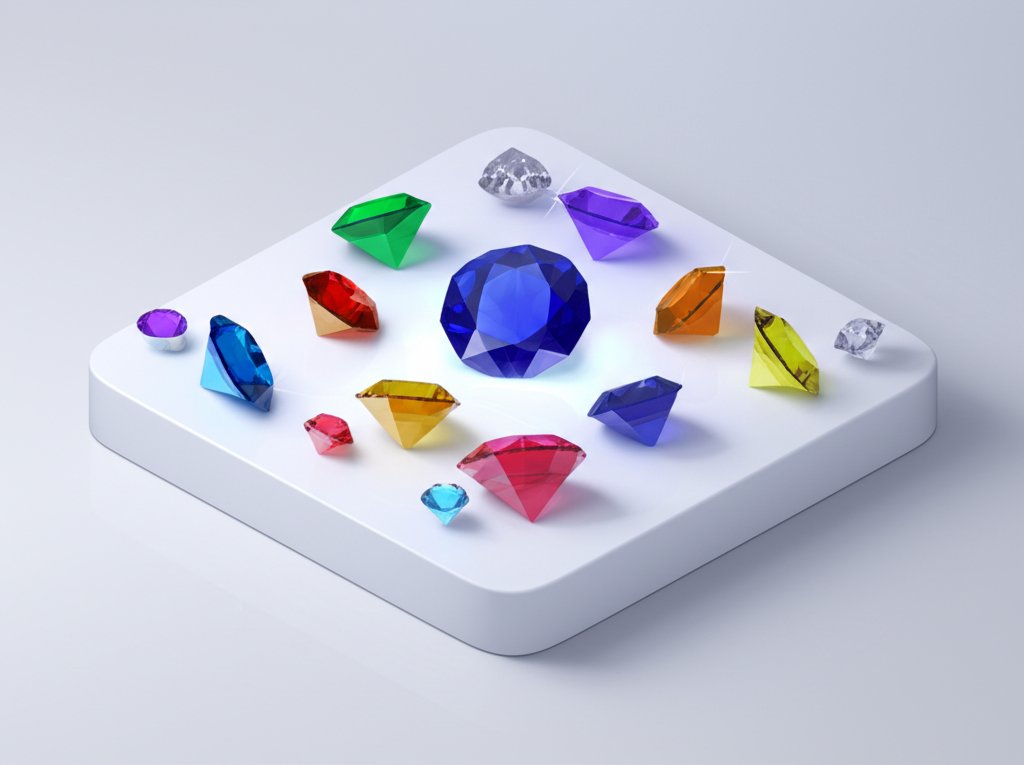
The world of unique gemstones is vast and full of mesmerizing wonders, each with a distinct identity, history, and geological narrative. While the original article touched on a few well-known gems, let’s explore some truly extraordinary examples that exemplify rarity, unique optical properties, or exceptional beauty, providing deeper gemstone insights.
Alexandrite: The Color-Changing Marvel
Perhaps one of the most celebrated unique gemstones, alexandrite is a rare variety of the mineral chrysoberyl, famous for its dramatic color-change phenomenon. In daylight or fluorescent light, it appears emerald green to bluish-green; under incandescent light, it transforms into a raspberry red to purplish-red. This remarkable shift—often described as “emerald by day, ruby by night”—is due to its unusual absorption spectrum, which is highly sensitive to the type of light source.
- Rarity: Original sources in the Ural Mountains of Russia (discovered in 1830) are now largely depleted. New deposits have been found in Brazil, Sri Lanka, and East Africa, but large, fine specimens remain exceedingly rare and expensive.
- Identification Tips: Look for distinct pleochroism and its characteristic color change. Synthetics exist and usually have a purer, more pronounced color change than natural ones.
- Value: Highly dependent on the clarity, the strength of the color change, and the quality of the colors themselves. A strong, complete change from pure green to pure red commands the highest prices per carat.
Tanzanite: Kilimanjaro’s Blue-Violet Treasure
Tanzanite is a relatively new discovery, found only in 1967 in the Merelani Hills near Mount Kilimanjaro in Tanzania, making it one of the most geologically confined unique gemstones. This blue-violet to violet-blue variety of the mineral zoisite is celebrated for its intense trichroism, meaning it can show three different colors (blue, violet, burgundy) depending on the viewing angle. Most tanzanite is heat-treated to enhance its vibrant blue-violet hue from naturally brownish tones.
- Rarity: Its single-source origin makes it incredibly rare. Experts predict exhaustion of primary deposits within decades.
- Identification Tips: Strong pleochroism is a key indicator. Look for a strong blue and violet, and a reddish component when rotated. Its relatively low hardness (6-7 on Mohs) compared to sapphire (9) is also important.
- Value: Determined by the intensity and saturation of its blue-violet color, with the finest, most saturated stones (“AAA” or “Mastergem” quality) being the most valuable. Larger stones with exceptional color command premium prices.
Padparadscha Sapphire: The Lotus Blossom Gem
The name “Padparadscha” is derived from the Sinhalese word for “lotus blossom,” perfectly describing this incredibly rare and beautiful variety of sapphire. Its color is a delicate blend of pink and orange, often described as a sunset hue, and it must fall within a very specific range to be truly called Padparadscha. There is ongoing debate among gemologists about the exact parameters for this color, making it a truly unique and sought-after stone.
- Rarity: Extremely rare, found primarily in Sri Lanka (Ceylon), but also in Madagascar and Tanzania. Untreated Padparadscha sapphires are even rarer and more valuable.
- Identification Tips: The unique pink-orange color is the defining feature. Gemological labs issue specific reports for Padparadscha, often noting if heat treatment has been applied.
- Value: Driven by the precise balance and saturation of pink and orange. Stones with a clear, balanced blend without leaning too heavily towards either pink or orange fetch the highest prices. Untreated stones are significantly more valuable.
Demantoid Garnet: The Horsetail Inclusion Secret
Demantoid garnet is a vibrant green variety of andradite garnet, known for its exceptional brilliance (higher than diamond!) and dispersion (fire). Discovered in Russia’s Ural Mountains in the mid-19th century, its name means “diamond-like luster.” What truly sets it apart among unique gemstones are its distinctive “horsetail” inclusions—fibrous bundles of byssolite or chrysotile asbestos that fan out like a horse’s tail. These inclusions are unique to demantoid and are highly prized, serving as an identifying characteristic and increasing value.
- Rarity: The original Russian sources produce some of the finest material but are limited. New deposits in Namibia and Madagascar yield beautiful stones, but often without the prized horsetail inclusions.
- Identification Tips: Look for high dispersion (fire) and, ideally, the distinctive horsetail inclusions under magnification.
- Value: Influenced by intense green color, high brilliance, and the presence (and aesthetic appeal) of horsetail inclusions.
Spinel: The Imposter No More
Historically, many large, red precious gems in crown jewels, thought to be rubies, were later identified as spinel. Spinel shares a similar appearance with ruby and sapphire but is a distinct mineral. Today, fine spinel is recognized as a magnificent gemstone in its own right, celebrated for its vibrant colors (reds, pinks, blues, purples) and excellent durability. Red spinel from Burma (Myanmar) and blue-violet spinel from Mahenge, Tanzania, are particularly prized.
- Rarity: High-quality, large spinels are rare, especially in intense red and vibrant blue hues.
- Identification Tips: Spinel is singly refractive (SR), which distinguishes it from ruby/sapphire (DR). It also typically lacks the typical inclusions found in corundum.
- Value: Based on color saturation and clarity. Intense reds and vibrant “cobalt” blues command the highest prices. Unheated spinels are common and preferred.
Other Notable Unique Gemstones
The world of unique gemstones extends far beyond these examples, offering a wealth of possibilities for collectors:
- Benitoite: California’s official state gem, found in only one commercial mine. It’s a striking blue, highly dispersive gem, often exhibiting strong fluorescence.
- Red Beryl (Bixbite): An extremely rare red variety of beryl, found almost exclusively in Utah, USA. Often called “red emerald” due to its rarity and stunning color.
- Black Opal: From Lightning Ridge, Australia, renowned for its dramatic “play-of-color” (opalescence) against a dark body tone, making the colors appear incredibly vivid.
- Imperial Topaz: A rare and valuable variety of topaz found only in Brazil and Pakistan, characterized by its golden orange to pinkish-orange hues.
- Kunzite: A beautiful pink to lilac variety of spodumene, known for its strong pleochroism and often found in large sizes.
- Zultanite / Csarite: A rare, color-changing variety of diaspore from Turkey, showing shades of kiwi green, champagne, and raspberry.
Each of these unique gemstones offers a distinctive beauty and a fascinating story, inviting deeper exploration and appreciation for geology’s artistry.
Practical Gemstone Insights for Collectors and Buyers
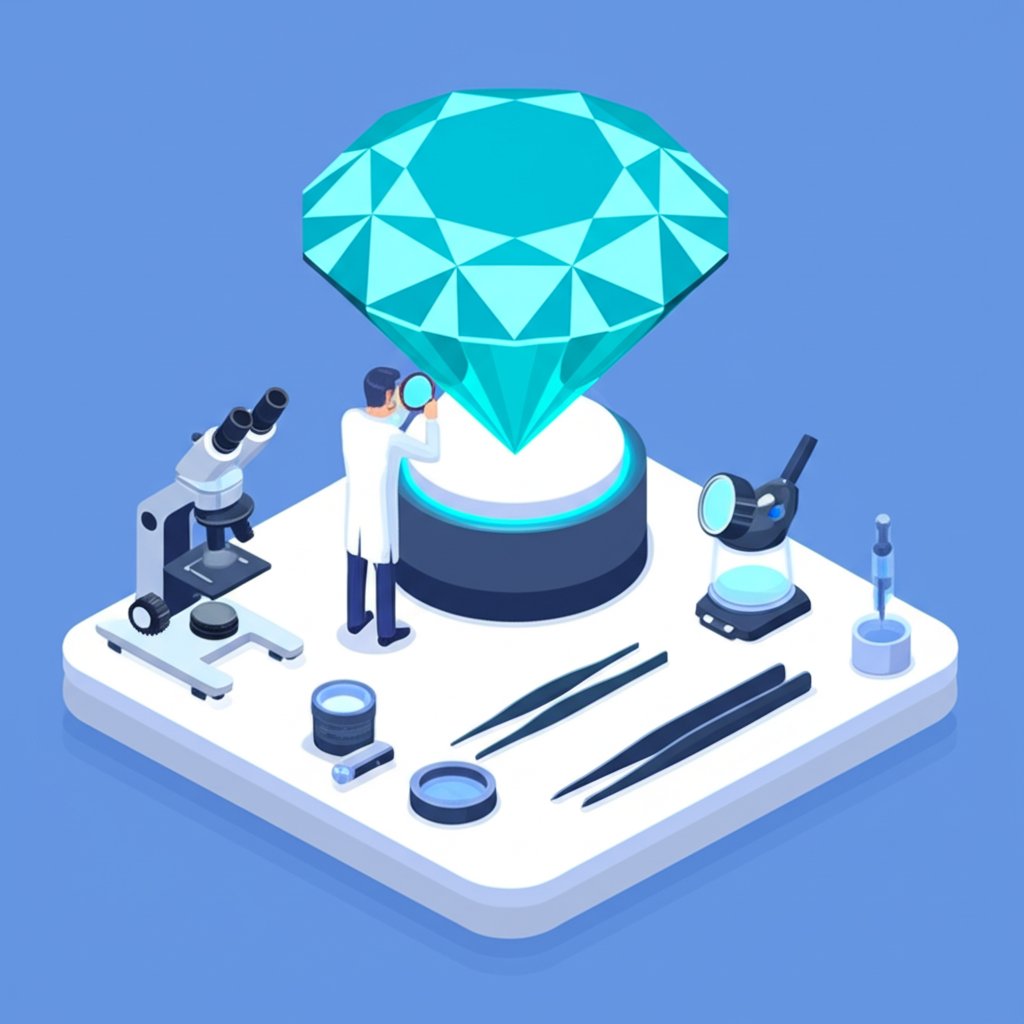
Navigating the world of unique gemstones requires more than just knowing types and properties; it demands practical wisdom and a discerning eye. Whether you’re making your first significant purchase or expanding an existing collection, these gemstone insights will guide you toward making informed decisions and protecting your investment.
How to Buy Unique Gemstones Wisely
Purchasing precious gems, especially rare and unique ones, is an investment. Due diligence is crucial:
- Educate Yourself: The more you know about gemstone identification, characteristics, and market values, the better equipped you’ll be. Read books, attend gem shows, and consult reputable online resources like the GIA.
- Seek Reputable Dealers: Buy from established jewelers, gem dealers, or auction houses with a proven track record, positive reviews, and transparency. A trustworthy dealer will provide clear information about the stone’s origin, treatments, and any potential issues.
- Prioritize Certification: For any significant unique gemstone purchase, insist on a grading report from an independent, internationally recognized gemological laboratory (GIA, Gübelin, SSEF, GRS, AGTA-GTL). This report is your assurance of the stone’s identity and characteristics. Ensure the stone matches the report.
- Inspect the Gem Personally (or via high-resolution images): Examine the stone under various lighting conditions. Use a 10x loupe to look for inclusions, facet quality, and any signs of damage or undisclosed treatments.
- Understand Value Drivers: Remember that color, clarity, cut, and carat weight (the 4Cs) are paramount, but for unique gems, rarity, origin, and the absence of treatments can exponentially increase value.
- Compare Prices: Don’t buy the first stone you see. Research comparable gems from different vendors to ensure you’re getting a fair price for the quality.
- Ask Questions: A knowledgeable dealer welcomes questions about the gem’s history, source, treatments, and care.
Caring for Your Precious Gems: A Guide to Longevity
Proper care is essential to preserve the beauty and value of your precious gems. Different gemstones have varying hardness, toughness, and stability, requiring specific care routines.
- Know Your Gemstone’s Properties: Understand its Mohs hardness (resistance to scratching) and toughness (resistance to chipping/breaking).
- Hardness: Diamonds (10) are the hardest, but many unique gemstones are softer (e.g., tanzanite 6-7, opal 5.5-6.5).
- Toughness: Jadeite is incredibly tough, while emeralds can be brittle due to inclusions.
- Cleaning:
- Gentle Soapy Water: The safest method for most gems. Use a soft brush (like a toothbrush) to gently scrub, then rinse thoroughly and pat dry with a lint-free cloth.
- Avoid Ultrasonic Cleaners: Not suitable for fragile gems (emerald, opal, tanzanite, moonstone), fracture-filled stones, or those sensitive to heat/vibration. The vibrations can exacerbate fractures or dislodge fillings.
- Avoid Steam Cleaners: Similar to ultrasonics, steam can be too harsh for many unique gemstones.
- Chemicals: Keep gems away from harsh chemicals, household cleaners, perfumes, and hairsprays, which can dull their luster or even damage them.
- Storage: Store precious gems separately in soft pouches or compartmentalized jewelry boxes to prevent scratching. Harder gems can scratch softer ones.
- Wear with Care: Remove jewelry during strenuous activities, gardening, or when applying cosmetics. Be particularly mindful with rings, as they are exposed to the most wear and tear.
- Professional Check-ups: Have your jewelry professionally inspected annually by a reputable jeweler to check settings and ensure stones are secure.
The Investment Potential of Unique Gemstones
While all investments carry risk, certain unique gemstones have demonstrated strong appreciation in value, making them attractive for savvy collectors. This potential is usually tied to:










