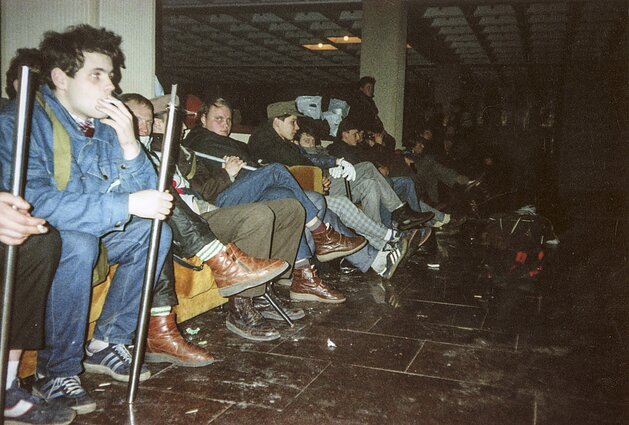
Imagine a single year acting as a historical pivot point, where the foundations of one era crumbled and the blueprints for another were hastily drawn. That year was 1991, and its key events didn’t just mark the passage of time; they fundamentally reshaped global power, technology, and culture, setting us on an irreversible course toward the world we know today. From the fall of empires to the birth of the internet, understanding 1991 is like peering into the crucible of modern history. It was a year where the geopolitical landscape was dramatically redrawn, technological advancements promised a connected future, and cultural touchstones emerged that still resonate today.
At a Glance: What 1991’s Transformations Mean for You
- The Global Map Was Redrawn: The Soviet Union’s dissolution and the end of the Cold War created a new world order, influencing international relations for decades.
- Modern Warfare Took Shape: The Persian Gulf War redefined military strategy, technological deployment, and media coverage of conflict.
- The Digital Revolution Began in Earnest: The World Wide Web’s public release unlocked unprecedented connectivity and communication.
- Cultural & Social Undercurrents Surfaced: Groundbreaking music, film, and sports moments reflected deeper societal shifts and challenges.
- Economic & Environmental Warnings Appeared: Recessions, market shifts, and natural disasters highlighted global vulnerabilities and interconnectedness.
The Unraveling of Old Orders: Geopolitical Earthquakes
1991 delivered a series of geopolitical shocks that fundamentally redefined global power structures. The most monumental was the formal dissolution of the Soviet Union on December 25th. This wasn’t merely a political event; it was the final curtain call for the Cold War, a decades-long standoff that had shaped international policy, military spending, and ideological battles. Mikhail Gorbachev’s resignation and the lowering of the Soviet flag over the Kremlin, replaced by Russia’s tricolour, symbolized the end of an era and the birth of multiple independent republics. Countries like Lithuania, Latvia, Estonia, and Ukraine declared independence throughout the year, marking a dramatic shift from a bipolar world to a more complex, multipolar one.
Even before the Soviet Union’s collapse, another major conflict dominated headlines: the Persian Gulf War (Operation Desert Storm). Triggered by Iraq’s invasion of Kuwait, this conflict showcased a new kind of warfare. From January 16th, US-led coalition forces launched a devastating air campaign, followed by a swift ground invasion. This war demonstrated the power of precision weaponry, the strategic importance of oil, and the immediate global impact of regional conflicts. The conflict highlighted the United Nations’ role in coordinating international responses and set precedents for coalition operations. The destruction of Kuwaiti oil fields by retreating Iraqi forces also brought environmental warfare into stark focus, creating the world’s largest oil spill and a monumental ecological disaster.
Away from these flashpoints, the year also brought profound internal changes to nations grappling with their own histories. In South Africa, President F. W. de Klerk began to systematically dismantle apartheid, repealing discriminatory laws and paving the way for a more inclusive society. The meeting between Nelson Mandela and Zulu prince Mangosuthu Buthelezi, after 28 years, signaled nascent efforts toward reconciliation and an end to inter-ethnic violence. This painstaking process offered a powerful lesson in political transition and the long road to justice.
The Dawn of Connectivity: Reshaping Technology and Communication
While the geopolitical map was being redrawn, an equally significant revolution was quietly bubbling in the digital realm. August 6, 1991, marks a date that few initially recognized as pivotal: Tim Berners-Lee made the World Wide Web publicly available with the creation of the first website, info.cern.ch. This wasn’t just a technological advancement; it was the genesis of a global information network that would utterly transform how we communicate, work, and interact. What started as a modest system for sharing research among physicists soon blossomed into the internet we know today.
Complementing this, Linus Torvalds released the first version of the Linux kernel, a free and open-source operating system that would become a cornerstone of server infrastructure and a champion for collaborative software development. This release offered an alternative to proprietary systems and fueled a movement towards open-source innovation. Meanwhile, the first GSM call was made, signaling a crucial step forward in the mobile phone revolution. These early developments laid the groundwork for ubiquitous mobile communication, allowing individuals to connect regardless of their location, a concept that was still largely futuristic at the time.
Other technological milestones underscored this accelerating pace of innovation. Microsoft released MS-DOS 5.0, expanding the capabilities of personal computing. The Hubble Space Telescope began sending back its first images, offering humanity unprecedented views of the cosmos. NASA’s Galileo spacecraft made history by becoming the first probe to visit an asteroid, 951 Gaspra, expanding our understanding of the solar system. These achievements, from the mundane to the astronomical, collectively demonstrated a growing human capacity to harness technology for exploration, information, and connection. If you’re looking for more intriguing facts from this transformative year, you might want to Discover 1991’s pivotal facts.
Cultural Echoes and Social Awakenings
1991 wasn’t just about politics and technology; it was a vibrant year for culture and a reflective one for society. In music, Nirvana released “Nevermind” on September 24th, an album that didn’t just define the grunge movement but ripped through mainstream pop culture, altering the sound of rock music for a generation. Its raw energy and introspective lyrics resonated deeply, pushing alternative music into the forefront. Meanwhile, the first Lollapalooza festival took place, showcasing a diverse lineup of alternative bands and establishing a new model for music festivals.
The silver screen also delivered unforgettable experiences. “Terminator 2: Judgment Day” pushed the boundaries of special effects, becoming a benchmark for action cinema. “The Silence of the Lambs” (released February 14) captivated audiences with its chilling psychological depth, while Disney’s “Beauty and the Beast” premiered, marking a resurgence for animated musicals and becoming the first animated film ever nominated for the Academy Award for Best Picture. These films not only entertained but also reflected evolving storytelling and technical capabilities.
In sports, Michael Jordan led the Chicago Bulls to their first NBA Championship, marking the beginning of a dynasty and solidifying Jordan’s status as a global icon. However, 1991 also brought moments of profound human vulnerability. Magic Johnson’s announcement on November 7th that he was HIV positive and his immediate retirement from the NBA sent shockwaves across the globe. This courageous disclosure brought unprecedented public awareness to the AIDS epidemic, helping to destigmatize the disease and spark vital conversations. Tragically, just weeks later, Queen’s lead singer Freddie Mercury died from AIDS on November 24th, further emphasizing the devastating impact of the virus. These events transcended sports and entertainment, becoming defining moments in public health awareness.
Social issues also came to the fore, demanding accountability and reform. The video-recorded severe beating of motorist Rodney King by four Los Angeles police officers on March 3rd ignited a national debate on police brutality and racial justice, the repercussions of which would be felt for years. In another chilling development, the discovery of multiple victims in Jeffrey Dahmer’s apartment in Milwaukee brought the horrors of serial murder into sharp public focus. These incidents, though disparate, highlighted critical fault lines within society and sparked urgent calls for change.
Economic Undercurrents and Environmental Reckonings
Beneath the geopolitical shifts and cultural waves, 1991 also revealed underlying economic vulnerabilities and the stark reality of environmental challenges. The US experienced a recession, impacting businesses and households across the nation. Globally, Japan’s asset price bubble burst, leading to a prolonged period of economic stagnation known as the “Lost Decade,” a stark warning about speculative markets. These economic shifts underscored the interconnectedness of global economies and the ripple effects of financial instability. OPEC’s decision to cut oil production later in the year reflected efforts to stabilize the market in the wake of the Gulf War’s disruptions.
The year was also marked by a sobering series of natural and human-made disasters. A devastating tropical cyclone in Bangladesh on April 29th killed 138,000 people, highlighting the extreme vulnerability of certain regions to climate events. The eruption of Mount Pinatubo in the Philippines on June 15th was one of the 20th century’s largest, causing widespread destruction and even measurably impacting global climate. Tragic accidents, like the Nigeria Airways Flight 2120 crash that killed all 261 onboard after takeoff from Jeddah, and the Oakland Hills wildfire that destroyed thousands of homes and claimed 25 lives, served as stark reminders of human and environmental fragility. These events reinforced the urgent need for disaster preparedness, international aid, and environmental stewardship.
Decoding 1991’s Blueprint: Practical Lessons from a Pivotal Year
Looking back at the key events of 1991, we can glean practical insights into how rapid, large-scale change unfolds and its lasting implications.
- Embrace Disruption as the New Normal: The dissolution of the Soviet Union and the birth of the World Wide Web weren’t incremental changes; they were fundamental ruptures. For organizations and individuals, 1991 teaches that anticipating and adapting to seismic shifts—whether geopolitical or technological—is crucial for survival and growth. Those who recognized the shift from Cold War dynamics or the potential of the internet were better positioned for the coming decades.
- Technology is a Double-Edged Sword: The rise of the WWW offered unprecedented opportunities for connection and information, while advanced military technology in the Gulf War demonstrated destructive power. Understanding this duality means leveraging technology for progress while implementing safeguards against misuse. The public availability of the internet, for example, opened doors but also created new challenges related to privacy and misinformation that we grapple with today.
- Social Justice Demands Continuous Attention: The Rodney King incident, the dismantling of apartheid, and the public health crisis brought on by AIDS all underscored the persistent need to address systemic inequalities and human rights. These events show that progress often comes from sustained advocacy and difficult conversations, not just policy changes. They offer a blueprint for recognizing and responding to critical social issues.
- Interconnectedness Amplifies Impact: Whether it was the economic ripple effects of Japan’s bubble burst, the global response to the Gulf War, or the worldwide awareness spurred by Magic Johnson’s announcement, 1991 demonstrated how profoundly interconnected our world had become. Decisions made in one corner of the globe could (and did) have immediate and far-reaching consequences everywhere else. This insight is foundational for modern global strategy and problem-solving.
- Resilience is Key to Navigating Crisis: From devastating natural disasters to political upheavals, 1991 presented numerous crises. The ability of communities and nations to rebuild, adapt, and learn from these challenges—whether it was rebuilding Kuwait or South Africa transitioning post-apartheid—is a testament to human resilience. These scenarios underscore the importance of robust infrastructure, adaptable leadership, and a commitment to recovery.
Quick Answers to Lasting Questions about 1991
Q: Why is 1991 considered such a pivotal year in history?
A: 1991 is pivotal because it witnessed the end of the Cold War and the formal dissolution of the Soviet Union, fundamentally redrawing the global geopolitical map. Simultaneously, the public release of the World Wide Web initiated the digital revolution, forever changing communication and information access. These simultaneous, monumental shifts made it a true turning point.
Q: How did the end of the Cold War in 1991 specifically impact the world?
A: The end of the Cold War eliminated the bipolar superpower rivalry that had defined international relations for decades. It opened up new geopolitical alliances, redirected military spending, and fostered the spread of democratic ideals. It also led to the independence of numerous former Soviet republics, creating a more diverse and complex international system.
Q: What was the significance of the World Wide Web becoming public in 1991?
A: Making the World Wide Web publicly available transformed it from a niche scientific tool into a global platform. It democratized access to information, facilitated unprecedented levels of communication, and laid the foundation for the e-commerce, social media, and digital services that dominate modern life. It was the spark for the internet age.
Q: How did 1991 influence sports and culture?
A: Culturally, 1991 saw the rise of grunge with Nirvana’s “Nevermind” and the advent of alternative music festivals like Lollapalooza, redefining popular music. In film, “Terminator 2” pushed visual effects, and “Beauty and the Beast” set new animation standards. Socially, Magic Johnson’s HIV announcement raised global awareness, and the Rodney King beating sparked critical conversations about policing and racial justice.
Q: Were there any major economic or environmental challenges in 1991?
A: Yes, the US experienced a recession, and Japan’s asset price bubble burst, leading to its “Lost Decade.” Environmentally, the Gulf War created the world’s largest oil spill, and natural disasters like the Bangladesh cyclone and Mount Pinatubo eruption caused immense devastation and highlighted vulnerabilities to climate and geological events.
Navigating the Aftershocks: What 1991 Still Teaches Us
The key events of 1991 weren’t isolated incidents; they were interconnected tremors that continue to shape our present and future. The geopolitical fluidity we see today, the relentless march of digital innovation, and the ongoing struggles for social justice all have their roots firmly planted in that pivotal year. Recognizing these foundations allows us to better understand current global dynamics—from the complexities of international relations to the rapid evolution of technology and the enduring fight for equality. 1991 serves as a powerful reminder that history is not static; it is a living, breathing force that constantly redefines our world and our place within it. The lessons from its challenges and triumphs offer invaluable guidance as we navigate our own era of profound transformation.










