For the bigger picture and full context, make sure you read our main guide on Ancient Mysteries: Lost Civilizations and Unexplained Artifacts Revealed.
What secrets are buried beneath the sands of time, hidden in undeciphered texts, or carved into colossal monuments? These are the questions that drive the study of ancient history mysteries, where tangible evidence clashes with intangible theories. From lost cities to perplexing artifacts, the ancient world continues to challenge our understanding of human history.
At a glance:
- Explore some of the most enduring and intriguing unsolved mysteries from civilizations long past.
- Understand the core questions surrounding sites like the Nazca Lines, Stonehenge, and Göbekli Tepe.
- Examine the role of new technologies in uncovering fresh insights into these ancient puzzles.
- Discover actionable steps you can take to further explore these mysteries on your own.
When Ancient Civilizations Leave Breadcrumbs… But No Map
The allure of ancient history mysteries stems from the tantalizing hints left behind by past civilizations. These remnants—monuments, artifacts, and undeciphered texts—beg to be understood. But without a complete picture, these clues often lead to more questions than answers.
Consider the Nazca Lines in Peru. These massive geoglyphs, etched into the desert landscape between 100 BC and 700 CE, depict animals, plants, and geometric shapes. Some stretch for over a thousand feet. What purpose did they serve? Were they astronomical calendars, ritual pathways, or offerings to the gods? Despite decades of research, their true meaning remains elusive.
Monumental Mysteries: What Were They Thinking?
Large, ambitious building projects are a hallmark of many ancient civilizations. However, the purpose and technology behind some of these creations are still debated today.
Stonehenge: More Than Just a Pile of Rocks?
Stonehenge, a prehistoric monument in England, is a prime example. Construction spanned approximately 1,500 years. Huge stones, some weighing several tons, were transported over 200 miles from Wales. The monument’s alignment with the solstices suggests an astronomical purpose. But why did ancient Britons invest so much time and effort into building it? Was it a temple, an observatory, or a burial site? Or perhaps, a combination of all three?
Göbekli Tepe: Rewriting the History of Religion?
Göbekli Tepe, located in present-day Turkey, challenges our understanding of the origins of religion and civilization. Dating back to 10,000 BCE, it is the oldest known temple in the world. The site features massive T-shaped pillars carved with intricate animal figures and abstract symbols. What beliefs and rituals were practiced at Göbekli Tepe? And why was it deliberately buried around 8200 BCE? These questions continue to puzzle archaeologists.
The Enigmas of Lost Knowledge
Some ancient history mysteries involve artifacts that suggest a level of knowledge or technology that seems out of place in their historical context.
The Antikythera Mechanism: An Ancient Computer?
The Antikythera Mechanism, discovered in a shipwreck off the coast of Greece, is a stunning example. This 2,000-year-old device is considered the first analog computer. It was used to track the movements of the sun, moon, and planets, and even predict eclipses. How did ancient Greek scientists develop such a sophisticated instrument? And what other technological marvels might have been lost to time? Delve into ancient mysteries to explore the broader scope of these discoveries.
The Voynich Manuscript: Code or Hoax?
The Voynich Manuscript, a 15th-century codex filled with bizarre illustrations and written in an unknown script, presents a different kind of enigma. Despite centuries of study by cryptographers and linguists, the manuscript remains undeciphered. Is it a complex cipher, an extinct language, or simply an elaborate hoax? The answer continues to elude researchers.
Lost Civilizations: Swallowed by the Earth (or Sea)
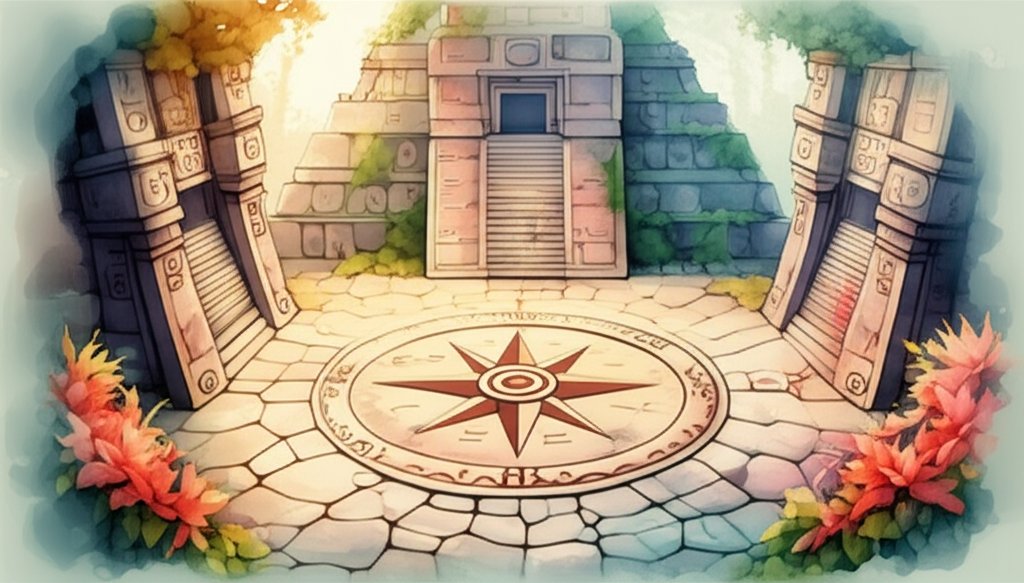
The discovery of lost cities and submerged structures hints at the existence of advanced civilizations that have vanished from the historical record.
Thonis-Heracleion: A City Lost to the Waves
Thonis-Heracleion, a once-thriving Egyptian port city, was rediscovered in the early 2000s after being submerged in the Mediterranean Sea for centuries. The city likely collapsed due to a combination of earthquakes, tsunamis, and soil liquefaction. Excavations have revealed temples, statues, and other artifacts, offering a glimpse into the city’s rich history.
Yonaguni Monument: Nature or Artifice?
The Yonaguni Monument, an underwater rock formation off the coast of Japan, is another intriguing site. Some believe it is a natural formation, while others argue that it is evidence of a lost civilization. The structure features flat platforms, sharp angles, and what appear to be stairs and columns. If it is man-made, who built it, and when?
Solving the Puzzles of the Past: A Modern Approach
New technologies and interdisciplinary approaches are helping to shed light on ancient history mysteries.
- Archaeological digs aided by drones: Drones are being used to create detailed maps of archaeological sites, helping researchers to identify potential areas for excavation.
- Digital reconstruction: Computer modeling and visualization software can recreate ancient structures and landscapes, allowing researchers to better understand their original appearance and function.
- DNA analysis: Analyzing ancient DNA can provide insights into the ancestry, health, and diet of past populations. It is being used to learn where the Justinian plague originated, pointing to possible origins in Kyrgyzstan, Kazakhstan.
- Linguistic Analysis: Machine learning and computational linguistics are being applied to the study of undeciphered texts, such as the Voynich Manuscript.
Practical Playbook: How to Explore Ancient Mysteries
Want to delve deeper into ancient history mysteries? Here’s a roadmap.
- Start with credible sources: Look for books, articles, and documentaries produced by reputable archaeologists, historians, and scientists. Avoid sensationalized or pseudoscientific claims.
- Visit museums and archaeological sites: Experiencing ancient artifacts and structures firsthand can bring history to life. Check museum websites for exhibits related to ancient history mysteries.
- Join online communities: Connect with other enthusiasts and researchers online. Participate in forums, discussions, and citizen science projects.
- Learn the basics of archaeology and related disciplines: Understanding archaeological methods, dating techniques, and historical context can help you to evaluate evidence and theories more critically.
- Consider traveling to relevant locations: If possible, plan a trip to see the Nazca Lines, Stonehenge, Göbekli Tepe, or other sites of interest.
Quick Answers: Clearing Up Common Misconceptions
- Are ancient history mysteries always about aliens or advanced technology? Not necessarily. While some mysteries involve artifacts that suggest advanced knowledge, many others revolve around more mundane questions of daily life, social organization, and religious beliefs.
- Is it possible to solve all ancient history mysteries? Probably not. Some mysteries may never be fully resolved due to a lack of evidence, the destruction of artifacts, or the loss of historical records. However, new discoveries and technologies continue to provide fresh insights into the past.
- Are all theories about ancient history mysteries equally valid? No. Theories should be based on evidence and subject to critical evaluation. Reject unsubstantiated claims, pseudoscientific explanations, and conspiracy theories.
Take Action: Your Next Step into the Past
The study of ancient history mysteries is an ongoing process of discovery, interpretation, and debate. By engaging with credible sources, exploring archaeological sites, and connecting with other enthusiasts, you can contribute to our understanding of the past and appreciate the enduring power of human curiosity. Consider focusing your research on one specific mystery that intrigues you, such as the purpose of the Roman Dodecahedrons, and see how new research informs old questions.










