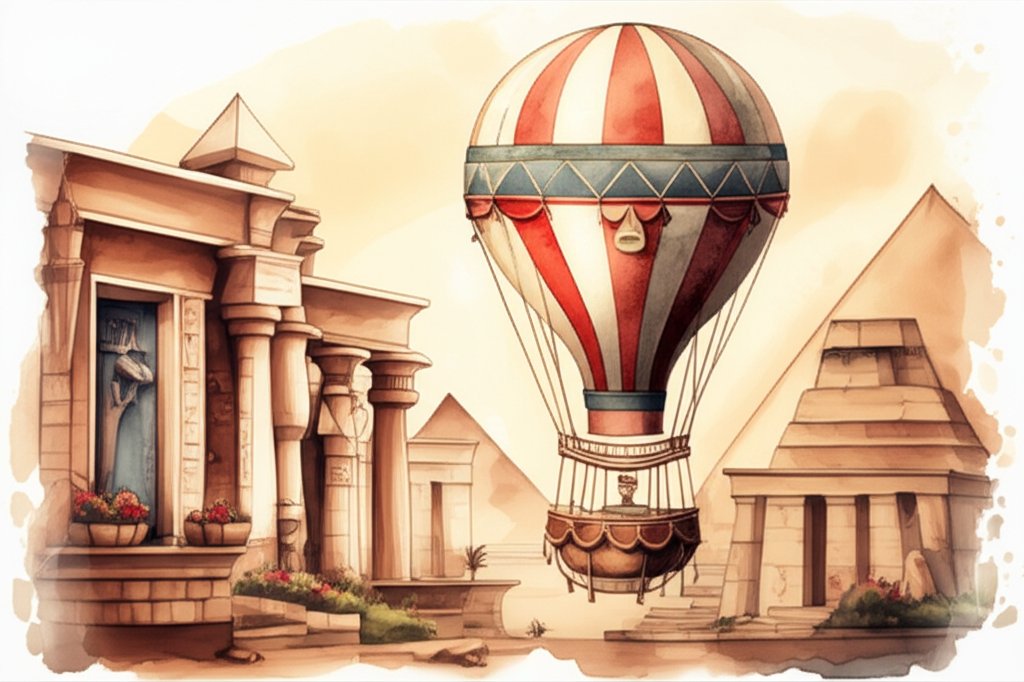
Ancient Egyptian history stretches back over 3,000 years, a testament to a civilization that thrived along the fertile Nile River valley. From its unified beginnings around 3100 B.C. to its eventual incorporation into the Roman Empire, Egypt left an indelible mark on the world. Let’s explore the key eras and rulers that shaped this fascinating civilization.
The Lifeblood of a Civilization: Geography and Resources
Egypt’s story is inextricably linked to the Nile. The river’s annual floods, occurring between June and August, deposited rich, black soil – known as “Kemet” – creating ideal conditions for agriculture. This fertile land provided the foundation for a thriving society, supporting the cultivation of wheat, barley, and other essential crops. The consistent food supply allowed for population growth, specialization of labor, and the development of complex social structures.
From Villages to Kingdoms: The Dawn of Ancient Egypt
Even before unification, the seeds of Egyptian civilization were being sown. Early hominids inhabited the region nearly 2 million years ago, and settled villages relying on agriculture emerged roughly 7,000 years ago. Around 5,200 years ago the earliest written inscriptions were created, marking the transition into recorded history. Before a unified Egypt, however, two distinct kingdoms arose: the Red Land in the north and the White Land in the south. Are you curious about prehistoric egypt and how it set the stage for the dynasties to come? This is a great place to begin.
Unification and the Rise of the Pharaohs
The unification of Upper and Lower Egypt around 3100 B.C. marked a pivotal moment. King Narmer, also known as Menes, is credited with achieving this feat, becoming the first pharaoh and establishing Memphis as the capital. This event ushered in the Early Dynastic Period, laying the foundation for the dynasties that would define ancient Egyptian history.
Dynastic Divisions: A Roadmap to Understanding Egyptian History

To better understand the long arc of ancient Egyptian history, scholars divide it into dynasties, a system popularized by the Egyptian priest Manetho. These dynasties are further grouped into periods, each with its own distinct characteristics:
- Early Dynastic/Archaic Period (Dynasties 1-2): This era saw the development of kingship ideology and the earliest forms of hieroglyphic writing.
- Old Kingdom (Dynasties 3-6, c. 2650-2150 B.C.): Famously known as the “Age of the Pyramids,” the Old Kingdom witnessed the construction of monumental structures like the Step Pyramid commissioned by King Djoser and designed by Imhotep. The Great Pyramid of Giza, built for Khufu (Cheops), stands as a testament to the engineering prowess of this era. A strong central government and successful campaigns in Nubia and Libya characterized this period, but internal factors eventually led to its collapse.
- First Intermediate Period (Dynasties 7-10, part of 11, c. 2150-2030 B.C.): A period of political instability and decentralization, with weak central authority and regional leaders vying for power.
- Middle Kingdom (Dynasties 11-12, c. 2030-1640 B.C.): Mentuhotep II reunited Egypt, ushering in a new era of stability and prosperity. Pyramid building resumed, and significant advancements were made in medicine, as evidenced by the Edwin Smith surgical papyrus. The Middle Kingdom also pursued a more expansive foreign policy, establishing colonies in Nubia and engaging in trade and diplomacy with other nations.
- Second Intermediate Period (Dynasties 14-17): The central government weakened once again, and foreign rulers known as the Hyksos gained control over northern Egypt.
- New Kingdom (Dynasties 18-20, c. 1550-1070 B.C.): A period of reunification and imperial expansion. Ahmose I drove out the Hyksos and established a vast empire stretching from Nubia to the Euphrates River. Notable pharaohs of this era include Hatshepsut, Thutmose III, Amenhotep III, Akhenaten, Tutankhamun, and Ramses II. The Valley of the Kings became the primary burial site for pharaohs during this time.
- Third Intermediate Period (Dynasties 21-24, c. 1070-713 B.C.): Another period of political fragmentation and weak central government.
- Late Period (Dynasties 25-31, c. 712-332 B.C.): This era saw Egypt under foreign control, with rule by Nubians, Persians, and Assyrians.
Pharaohs and Power: Key Rulers and Their Legacies
Within these periods, certain rulers stand out for their impact on Egyptian history:
- Narmer (Menes): The unifier of Upper and Lower Egypt, laying the foundation for the dynastic era.
- Djoser: The pharaoh who commissioned the Step Pyramid, a groundbreaking architectural achievement.
- Imhotep: The brilliant architect and physician who designed the Step Pyramid, showcasing the intellectual capabilities of the time.
- Khufu (Cheops): The pharaoh for whom the Great Pyramid of Giza was built, symbolizing the power and ambition of the Old Kingdom.
- Mentuhotep II: The pharaoh who reunited Egypt and ushered in the Middle Kingdom.
- Hatshepsut: A powerful female pharaoh who ruled with authority and commissioned impressive building projects.
- Akhenaten: The pharaoh who attempted to introduce monotheistic worship of Aten, a controversial religious reform.
- Tutankhamun: The pharaoh who reversed Akhenaten’s religious changes and whose tomb provided invaluable insights into ancient Egyptian burial practices.
- Ramses II: Remembered for his extensive building projects and military campaigns, and for signing one of the world’s first known peace treaties.
If you are looking for more information, ancient egypt books, will help you learn more!
Religion and the Afterlife: Beliefs That Shaped a Civilization
Religion played a central role in ancient Egyptian life. The Egyptians were polytheistic, worshipping a pantheon of gods and goddesses, including Osiris (god of the underworld) and Amun-Ra (sun god). They believed in the afterlife and the importance of preparing for it through mummification, spells from the Book of the Dead, and the provision of shabti figurines. Akhenaten’s attempt to establish monotheism was a notable departure from traditional beliefs, but it was ultimately short-lived.
Writing and Language: Preserving Knowledge and Culture
The Egyptians developed a sophisticated writing system, starting with hieroglyphic script. As time went on, hieratic and Demotic scripts emerged as simplified forms of writing. After Alexander the Great’s conquest, Greek became more common, influencing language and culture. Later, Coptic (Egyptian written with the Greek alphabet) emerged alongside Christianity, and Arabic spread following the Islamic conquest.
The Greco-Roman Era and the End of an Era
Alexander the Great conquered Egypt in 332 B.C., ushering in the Ptolemaic Dynasty, founded by Ptolemy I. The Ptolemaic Dynasty lasted until the death of Cleopatra VII in 30 B.C., after which Egypt became part of the Roman Empire.
Even the name “Egypt” has a rich history. To further your historical explorations, take a look at egypt meaning, to discover the origins of modern day Egypt’s name.
Legacy and Enduring Influence
Ancient Egypt’s contributions to the world are significant and far-reaching. Their advancements in writing, architecture, mathematics, medicine, and art continue to inspire awe and admiration. Their religious beliefs and practices have also had a lasting impact on subsequent cultures. Discovering prehistoric egypt allows us to comprehend the full extent of ancient Egypt’s influence on our modern world.
While the ancient Egyptian civilization eventually faded, its legacy lives on. By understanding its key eras, rulers, and cultural achievements, we can gain a deeper appreciation for this remarkable civilization and its enduring impact on the world. The history of ancient Egypt reminds us that every civilization, no matter how grand, is shaped by its geography, its leaders, and its beliefs. Studying Egypt’s rise and fall offers valuable lessons about the cyclical nature of history and the enduring power of human creativity.










