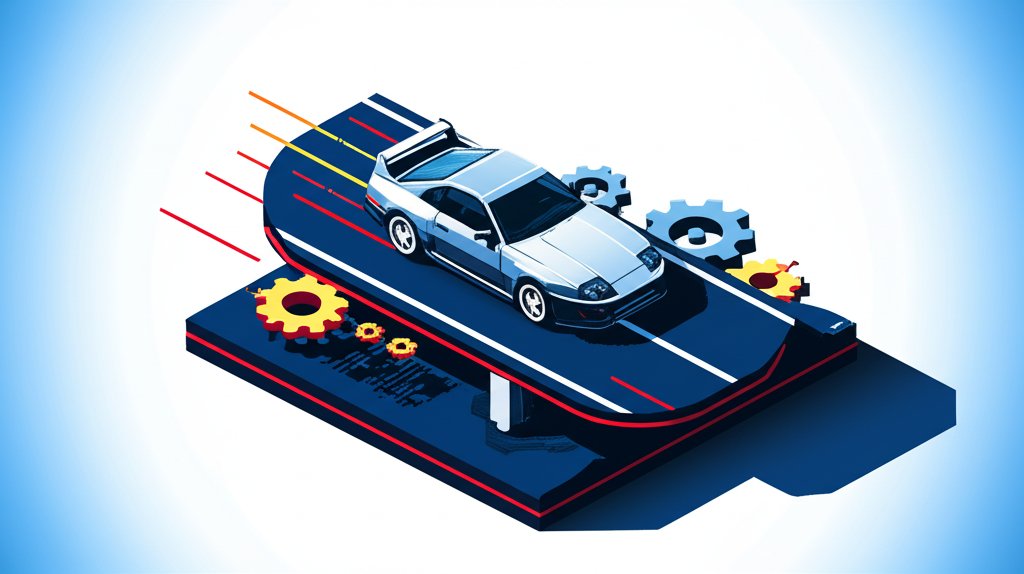
The Toyota Supra. Just the name conjures images of blistering speed, precision engineering, and a legacy forged on both asphalt and silver screen. More than just a car, it’s an iconic sports car that has consistently pushed the boundaries of automotive excellence, captivating enthusiasts worldwide for generations. While many recognize its distinctive silhouette, fewer are privy to the intricate Supra facts and captivating journey that have cemented its place in history. From its humble beginnings as a luxurious offshoot to its modern rebirth, the Toyota Supra embodies a relentless pursuit of performance and innovation. Get ready to embark on an exhilarating ride as we uncover the fascinating truths behind this unparalleled machine, a true Toyota sports car designed to dominate roads, tracks, and minds alike.
The Genesis: From Celica Roots to Standalone Supremacy
The story of the Toyota Supra is one of calculated evolution and ambitious transformation. What began as a premium trim level quickly developed a formidable identity of its own, setting the stage for decades of high-speed heritage.
Exploring the Supra’s origins offers a glimpse into Toyota’s broader history, and you can delve deeper into other interesting Toyota car facts to appreciate the brand’s evolution.
The Celica Supra (A40 & A60): Birth of a Grand Tourer
The Supra’s lineage officially commenced in 1978 (for the 1979 model year), marketed as the Toyota Celica XX in Japan and the Celica Supra in export markets. Toyota’s initial goal was to rival the successful Datsun Z-car, offering a more luxurious and powerful grand tourer experience. These early models, the first-generation A40 and second-generation A60, were essentially longer, wider versions of the Celica liftback. This increased dimension was crucial, as it allowed Toyota to house its more potent inline-six engines – a configuration that would become a defining Supra fact and a signature characteristic for decades.
The A40 Celica Supra immediately distinguished itself with a longer wheelbase, a unique front fascia, and, crucially, a smooth inline-six engine – initially a 2.6-liter 4M-EU and later a 2.8-liter 5M-E. The second-generation A60, launched in 1981, refined this concept significantly. It introduced more aggressive, angular styling, a driver-focused interior, and improved suspension. Performance-oriented “P-Type” models, featuring wider wheels and flared fenders, foreshadowed the extreme performance to come. These early iterations, while still connected to the Celica name, laid the foundational layers for the automotive excellence that the Toyota Supra was destined to represent.
Forging Independence (A70): A True Performance Flagship
A pivotal moment in the Toyota Supra’s history arrived in 1986 with the launch of the A70 generation, officially shedding the “Celica” prefix and rebranding simply as the Toyota Supra. This bold move underscored Toyota’s commitment to establishing the Supra as its dedicated high-performance flagship, a distinct Toyota sports car. The A70 was a true technological showcase for its era, breaking new ground.
One of the most significant Supra facts from this era is the introduction of a turbocharged engine option – the 7M-GTE – in 1987. This made it Japan’s first production car to offer a factory-installed turbocharger with a ceramic turbine wheel. The 7M-GTE engine, producing up to 230 horsepower, propelled the Supra into the realm of serious performance contenders, establishing its reputation for speed and advanced engineering. Furthermore, the A70 featured innovative suspension technology like Toyota’s TEMS (Toyota Electronic Modulated Suspension), which allowed drivers to electronically adjust damper settings, and optional ABS, showcasing the brand’s dedication to cutting-edge features in what was rapidly becoming an iconic sports car. The A70’s sleek, wedge-shaped design with pop-up headlights also defined a distinctive aesthetic that remains beloved by fans.
The Legendary A80: Peak JDM Icon
The fourth-generation Toyota Supra, the A80, launched in 1993, is arguably the most famous and universally recognized among all Supra facts. After extensive redesign and an emphasis on pure performance, the A80 took the Supra to unprecedented heights, becoming a legend in its own right. Its completely re-engineered chassis was lighter and more rigid, and its streamlined, muscular body with a distinctive rear spoiler became instantly iconic.
This generation offered two primary 3.0-liter inline-six engine options: the naturally aspirated 2JZ-GE (220 hp) and the legendary twin-turbocharged 2JZ-GTE. The 2JZ-GTE produced 276 hp in Japan (due to the “Gentlemen’s Agreement” speed and power limit) and a robust 320 hp in export markets. The A80’s advanced engineering also included innovative features like a lightweight aluminum hood, a semi-dry sump oil system, and a robust braking system. This model was designed for performance, capable of 0-60 mph in under 5 seconds – a truly staggering feat for a production car of its time. Its blend of power, handling, and unmistakable presence solidified its status as an iconic sports car and propelled the Toyota Supra into global stardom.
Engines of Legend: Powering Unrivaled Performance

The heart of any iconic sports car lies in its engine, and the Toyota Supra boasts a legendary lineage of powerplants that have fueled its reputation for unparalleled automotive excellence.
The Inline-Six Philosophy: Engineering for Smooth Power
From its inception, the Supra committed to the inline-six engine configuration, a deliberate choice that pays homage to some of Toyota’s most revered vehicles, including the iconic Toyota 2000GT – often considered Japan’s first supercar – and the luxurious Toyota Crown sedan. The inline-six design offers inherent advantages such as remarkable smoothness, excellent balance due to its primary and secondary forces being naturally balanced, and a distinctive, harmonious exhaust note. These qualities define a premium driving experience, and this commitment to the inline-six is a fundamental Supra fact that ties its performance identity to a rich heritage of Toyota sports car engineering.
The Unbeatable 2JZ-GTE: Tuner’s Dream, Street Dominator
When one thinks of the Toyota Supra and automotive excellence, one engine inevitably comes to mind: the 2JZ-GTE. Introduced in the fourth-generation A80 Toyota Supra in 1993, this twin-turbocharged, 3.0-liter inline-six engine became the stuff of legend. Producing 320 horsepower in its original export form, the 2JZ-GTE was an engineering marvel, designed with robustness far beyond its factory output.
What truly set the 2JZ-GTE apart, making it one of the most compelling Supra facts, was its incredible durability and over-engineered design. Its robust cast-iron block, strong internals including a forged crankshaft and connecting rods (in early models), and its remarkable capacity to handle immense power with minimal internal modifications made it a tuner’s dream. It wasn’t just powerful; it was virtually bulletproof, capable of reliably pushing well beyond 1,000 horsepower with the right modifications. This engine’s reputation for extreme tunability and reliability remains a cornerstone of the Supra’s status as an iconic sports car and a benchmark for performance in the aftermarket world.
Modern Might: The BMW-Sourced B58 and Beyond
After a 17-year hiatus, the Toyota Supra made a triumphant return with the fifth-generation (A90/A91) GR Supra. This modern incarnation continues the inline-six engine philosophy, albeit through a strategic partnership with BMW. The GR Supra is primarily powered by BMW’s B58 3.0-liter turbocharged inline-six engine. This engine, known for its smooth power delivery and significant tuning potential, initially produced 335 horsepower, which was later increased to 382 horsepower for the 2021 model year and beyond. Toyota also introduced a lighter, more agile 2.0-liter turbocharged inline-four engine option, producing 255 horsepower, offering a different driving dynamic.
While the engine’s origin was a point of discussion for purists, the B58 has proven to be a highly capable and reliable powerplant, propelling the GR Supra from 0-60 mph in under 4 seconds for the 3.0-liter model. Toyota Gazoo Racing (GR) has meticulously tuned the engine management and exhaust note to deliver a distinct Toyota sports car experience. Furthermore, a significant Supra fact for enthusiasts is the reintroduction of a 6-speed manual transmission option for the 3.0-liter GR Supra in 2023, catering to drivers seeking a more engaging, purist driving experience. This strategic evolution ensures the Supra continues its legacy of powerful, engaging engines, delivering modern automotive excellence.
Design & Innovation: Visual Identity of an Iconic Sports Car

Beyond sheer power, the Toyota Supra has always been characterized by its striking design and pioneering technological features, solidifying its place as an iconic sports car.
Evolving Aesthetics: From Grand Tourer to Aerodynamic Beast
The Supra’s visual journey is a compelling narrative of evolving automotive design. The first two generations (A40, A60) emerged from the then-popular Celica platform, featuring the long hood, short deck proportions characteristic of grand tourers, often accented with classic square headlamps or sporty pop-up lights for the A60.
The A70 generation, the first standalone Supra, embraced the wedge-shaped aesthetics popular in the mid-80s, with a low-slung profile, sharp lines, and distinctive pop-up headlights that gave it a sleek, aggressive stance. This design clearly communicated its intent as a serious performance machine.
However, it was the A80 generation that truly cemented the Supra’s visual identity as an iconic sports car. Its organic, muscular, and aerodynamic body was a radical departure, shedding the angular lines for a more rounded, flowing form. The massive rear wing, often a defining feature, was not just aesthetic but functional, providing downforce. The double-bubble roof (a nod to racing helmets) and wide, purposeful stance contributed to its timeless appeal.
The modern GR Supra (A90/A91) carefully blends homage with contemporary design. Its aggressive front fascia, prominent rear haunches, and the distinctive double-bubble roof are clear callbacks to the A80, while sharp creases and modern LED lighting bring it firmly into the 21st century. It’s a design that immediately communicates power and agility, ensuring its status as a visually stunning Toyota sports car.
Interior Refinement & Cutting-Edge Tech Through the Eras
The Supra wasn’t just about exterior flash; its interiors and onboard technology consistently set benchmarks. Early Celica Supra models offered a more luxurious cabin than their Celica counterparts, with advanced features for the late 70s and early 80s, including digital instrumentation and premium audio systems.
A remarkable Supra fact is that the 1981 second-generation model was one of the first production cars in the world to offer a factory-installed navigation computer system in Japan. This early foray into on-board computing demonstrates Toyota’s commitment to integrating advanced technology. The A70 introduced a driver-centric cockpit with advanced electronic controls, like the aforementioned TEMS.
The A80 interior was minimalist yet purposeful, focusing on the driver with a clean layout and high-quality materials. It featured advanced climate control and premium sound systems, ensuring a comfortable yet focused driving environment for an iconic sports car.
The GR Supra takes a significant leap in modern technology, benefiting from its BMW partnership. The interior is luxurious and driver-focused, featuring a digital gauge cluster, premium infotainment system (with available 12-speaker 500-watt JBL Premium Audio System), and seamless smartphone integration (Wireless Apple CarPlay compatibility with full-screen capability). Advanced driver-assistance systems (ADAS) are also prominently featured, including Full-Speed Dynamic Radar Cruise Control (on automatic models), Blind Spot Monitor, Rear Cross-Traffic Alert, Speed Limit Information, and Parking Sensors with Emergency Braking Function. The Toyota Supra Connect trial also offers Remote Services, Automatic Emergency Call, Real-Time Traffic Information, and Stolen Vehicle Recovery, highlighting its commitment to modern automotive excellence and connectivity in a high-performance package.
A Global Phenomenon: The Supra’s Cultural Legacy
Beyond its engineering prowess, the Toyota Supra transcended the automotive realm to become a bona fide pop culture icon, influencing generations of car enthusiasts and cementing its place as an iconic sports car in the public consciousness.
Fast & Furious: A Silver Screen Legend
Perhaps no single factor catapulted the A80 Supra into global superstardom more than its prominent role in the “Fast and Furious” film franchise. The unmistakable orange 1994 Supra driven by Paul Walker’s character, Brian O’Conner, in the original 2001 movie, became an instant legend. Its dramatic drag race against a Ferrari, its incredible performance, and its custom modifications perfectly encapsulated the burgeoning import tuning scene of the late 90s and early 2000s.
This appearance was more than just a cameo; it turned the Supra into a household name, inspiring countless car builds, posters, and dreams for a generation. It also solidified the image of the Japanese Domestic Market (JDM) tuning culture in mainstream media, making the Supra synonymous with speed, customization, and raw street power. This cinematic exposure is undeniably one of the most impactful Supra facts that contributed to its legendary status as a Toyota sports car and a symbol of accessible performance.
Dominating Digital Raceways: Gaming Icon
The Toyota Supra’s presence extends far beyond the silver screen. It has been a perennial favorite in virtual garages and racetracks across countless video games. From the highly realistic simulation of “Gran Turismo” to the street racing excitement of “Need for Speed,” “Forza Horizon,” and “Tokyo Xtreme Racing,” the Supra has allowed millions to experience its thrill digitally. Its balanced chassis, powerful engine, and distinctive aesthetics made it a top choice for players looking to customize and compete, further ingraining its image as a high-performance machine. This constant virtual representation has kept the Supra relevant and desirable, ensuring its enduring appeal among new generations of car enthusiasts. It bridges the gap between digital aspiration and real-world automotive excellence.
The Aftermarket Empire: A Canvas for Extreme Performance
The Supra’s reputation for automotive excellence is bolstered by its incredible adaptability in the aftermarket world. Both the A70 and particularly the A80 generations, thanks to their robust engineering, became platforms for extreme modification. Tuners around the globe recognized the 2JZ-GTE’s potential to handle staggering amounts of horsepower, often far exceeding 1,000 hp even with stock internals for short bursts, and reliably with reinforced components. This made the Supra a benchmark for drag racing, time attack, and show car builds. The availability of parts, combined with the engine’s inherent strength and Toyota’s solid build quality, fostered a massive subculture dedicated to extracting every ounce of performance from this iconic sports car. The aftermarket ecosystem around the Toyota Supra is a testament to its enduring design and engineering prowess.
The GR Supra: Reimagining Automotive Excellence
After a significant hiatus, the Toyota Supra made a triumphant return to the market, reigniting debates and excitement among fans. While different, the fifth-generation (A90/A91) GR Supra proudly carries the torch of its predecessors, continuing the legacy of automotive excellence for a new era.
A Strategic Partnership: BMW’s Influence on the A90/A91
The return of the Supra in 2019 (as a 2020 model) was marked by a significant and sometimes controversial Supra fact: its collaboration with BMW. Developed alongside the BMW Z4 (G29), the GR Supra shares its platform, many interior components, and its acclaimed inline-six engine with its German counterpart. This partnership allowed Toyota to bring back the Supra more quickly and cost-effectively, leveraging BMW’s expertise in manufacturing powerful and refined compact sports car components.
The GR Supra is powered by a BMW-sourced 3.0-liter turbocharged inline-six engine (B58), producing up to 382 horsepower (in later versions), along with an optional 2.0-liter turbocharged four-cylinder. While some purists questioned the non-Toyota engine, the result is a car that delivers exhilarating performance, precise handling, and a luxurious interior, blending Japanese design philosophy with German engineering precision. This collaboration signifies a modern approach to creating an iconic sports car in a challenging and competitive market.
Modern Features & Driver-Focused Technology
The GR Supra is packed with modern amenities and performance-enhancing technologies. Beyond the potent BMW engines, it features advanced chassis tuning by Toyota Gazoo Racing (GR), ensuring a distinct driving feel compared to its Z4 sibling. A highly rigid body structure, adaptive variable suspension, and an active rear differential (on 3.0L models) contribute to its sharp handling and exceptional grip.
Inside, as mentioned, the GR Supra offers a premium experience with features like a digital instrument cluster, an 8.8-inch touchscreen infotainment system (with navigation standard on higher trims), and a suite of advanced safety technologies. Performance features also include launch control for rapid acceleration and a sport-tuned exhaust system that enhances the inline-six’s distinctive growl. Furthermore, the Toyota sports car now uniquely offers a complimentary NASA membership and one free one-on-one High-Performance Driving Experience, emphasizing its track-ready capabilities and Toyota’s commitment to pure driving pleasure.
Continuing the Legacy: GR’s Vision for the Future
Despite the shared platform, Toyota Gazoo Racing (GR) put their unique stamp on the GR Supra through distinct tuning, suspension, and styling that differentiates it significantly from the Z4. Its aggressive, yet nostalgic design cues, subtly referencing earlier generations like the A80’s double-bubble roof and specific headlight designs, ensure it looks and feels like a true Supra.
The GR Supra continues to be a formidable performer on both road and track, praised for its engaging driving dynamics, powerful acceleration, and striking appearance. It remains a magnet for attention, demonstrating that even with a modern twist, the spirit of the Toyota Supra as an iconic sports car and a symbol of automotive excellence remains undiminished. It’s a testament to how an automotive legend can adapt and thrive in a new era, continuing to inspire enthusiasts worldwide to experience the thrill of a purpose-built Toyota sports car.
Conclusion
The journey of the Toyota Supra is a compelling narrative of continuous innovation, raw power, and profound cultural impact. From its humble beginnings as a Celica offshoot to its reign as a JDM icon synonymous with the legendary 2JZ-GTE engine, and its modern rebirth as the GR Supra, this vehicle has consistently embodied automotive excellence. The intricate Supra facts reveal a car that is not just fast, but pioneering; not just stylish, but legendary; and not just engineered, but deeply beloved. It is truly an iconic sports car that has captivated hearts and minds, leaving an indelible mark on the automotive world for generations to come. The Toyota Supra isn’t merely a machine; it’s a testament to the thrill of driving, the pursuit of perfection, and the relentless evolution of a genuine Toyota sports car legend.
FAQ Section
Q1: What does “Supra” mean?
A1: The name “Supra” is derived from the Latin word meaning “above,” “to surpass,” or “beyond.” This aptly reflects the car’s philosophy of being a superior performance vehicle that strives for automotive excellence and to rise above its competitors.
Q2: How many generations of the Toyota Supra are there, and what are their key distinctions?
A2: There are five distinct generations of the Toyota Supra:
Q3: What is the most famous Toyota Supra engine, and why is it so highly regarded?
A3: The most famous and iconic Toyota Supra engine is unequivocally the 2JZ-GTE twin-turbocharged 3.0-liter inline-six found in the fourth-generation (A80) model. It is renowned for its immense power potential, incredible durability, and exceptional tunability, allowing it to reliably achieve well over 1,000 horsepower with aftermarket modifications. This over-engineered design made it a legend among tuners and enthusiasts.
Q4: How did the Toyota Supra become such an iconic sports car, particularly the A80 generation?
A4: The Supra gained widespread fame due to a combination of factors: its exceptional performance capabilities (especially the A80’s 2JZ-GTE engine), its legendary engine’s tunability beloved by the aftermarket community, and its significant appearances in popular culture. Most notably, its starring role as an iconic sports car in the “Fast and Furious” film franchise and its recurring presence in numerous video games like “Gran Turismo” cemented its status in the public consciousness, making it a dream car for millions.
Q5: Is the new Toyota Supra (GR Supra) a “real” Toyota, considering its BMW components?
A5: Yes, the GR Supra is unequivocally a real Toyota. While it was developed in collaboration with BMW and shares its platform and primary engine (the B58 inline-six), Toyota Gazoo Racing (GR) was heavily involved in its design, chassis tuning, suspension, and overall driving dynamics. This meticulous engineering by Toyota ensures it delivers a distinct Toyota Supra experience that honors its heritage of automotive excellence and is a true Toyota sports car.
Q6: What unique technological features did early Toyota Supra models offer, beyond just powerful engines?
A6: Early Toyota Supra models were technological pioneers for their time. A significant Supra fact is that the 1981 second-generation model (A60) was one of the first production cars in the world to offer a factory-installed navigation computer system in Japan. Additionally, the third-generation A70 introduced features like Toyota Electronic Modulated Suspension (TEMS), which allowed drivers to adjust damper settings electronically for varying driving conditions, demonstrating Toyota’s early commitment to integrating advanced technology for enhanced performance and driver comfort.










