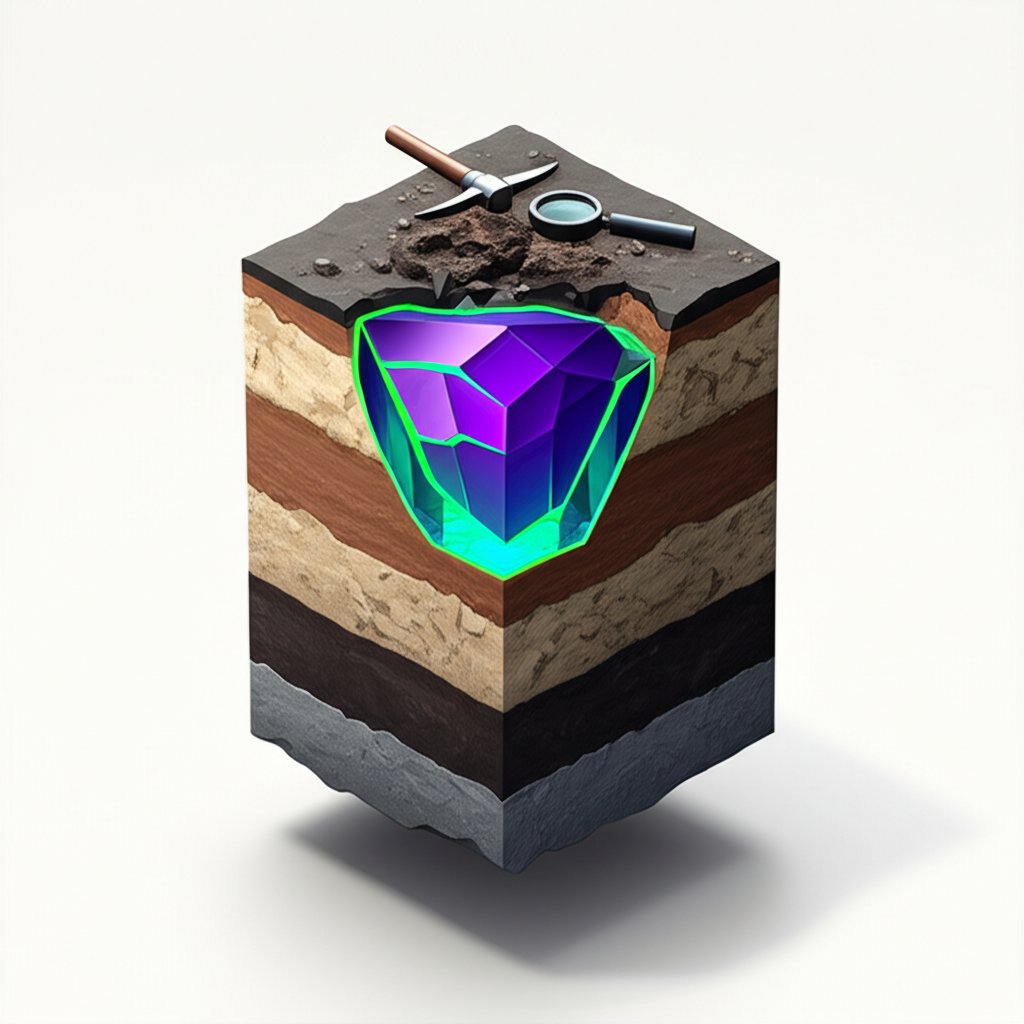
Welcome, intrepid explorers, to the mesmerizing realm where Earth’s raw power transforms into breathtaking beauty. For millennia, humanity has been captivated by the allure of gemstones, those radiant treasures born from geological wonders. Beyond their dazzling sparkle and historical significance, these precious stones harbor secrets stranger than fiction, a true gemstone enigma waiting to be uncovered.
Forget what you think you know. In this ultimate guide, we promise to deliver not just facts about gemstones, but a collection of weird facts about gemstones that will utterly astound you. From cosmic origins to peculiar optical illusions, prepare to have your mind blown as we delve into the extraordinary, the inexplicable, and the truly bizarre world beneath the surface. Get ready to rethink everything you thought you knew about these captivating jewels.
The Unseen Lives of Precious Stones: Bizarre Gemstone Facts You Won’t Believe
The conventional wisdom about precious stones often focuses on their beauty and rarity. But dig a little deeper, and you’ll find astonishing secrets that defy explanation, revealing weird facts about gemstones that challenge our perceptions.
To understand the true breadth of these geological marvels, it’s worth exploring even more fascinating facts about gemstones, delving into their formation, history, and cultural significance.
Opals: Nature’s Liquid Fire and Their Fragile Truth
Opals, the birthstone of October, are renowned for their hypnotic “play-of-color,” a vibrant dance of hues that shifts with every angle. This phenomenon, known as opalescence, results from microscopic silica spheres arranging themselves in a grid-like pattern, diffracting light into a spectrum of colors. But here’s where the weirdness begins:
- Water Content is Key: Unlike most
gemstones, opals contain a significant percentage of water, often between 3% and 10%. This water is crucial for their structural integrity and vibrant play-of-color. - The “Thirsty” Gem: Extreme heat or very dry conditions can cause this internal water to dehydrate and evaporate. When this happens, opals can crack, craze, or even completely disintegrate, turning their brilliance to dust. This makes them one of the most delicate
precious stonesto care for. Some ancient tales even spoke of opals “dying” if not kept near moisture, a primitive understanding of their unique composition. - Hydrophane Opals: Even stranger are hydrophane opals, which can absorb water. If immersed, they might temporarily lose their play-of-color, only to regain it as they dry out, sometimes appearing translucent before returning to their former glory. This peculiar behavior makes them an unending source of fascination and a true
gemstone enigma.
Alexandrite: The Chameleon of the Gem World
Alexandrite is so rare and so captivating that it was once famously described as “emerald by day, ruby by night.” This dramatic color-change phenomenon is one of the most prized and bizarre facts about gemstones.
- A Trick of the Light: Alexandrite appears vibrant green or bluish-green in natural daylight or fluorescent light, but transforms into a reddish-purple hue under incandescent light. This isn’t just a subtle shift; it’s a profound transformation that makes it appear like two entirely different
precious stones. - Chromium’s Role: The secret lies in its unique chemical composition, specifically the presence of chromium. Alexandrite absorbs yellow and green light while transmitting both red and blue-green light. Depending on the light source, which has varying spectral distributions, one color becomes dominant, creating this stunning optical illusion.
- Extreme Rarity: Discovered in the Ural Mountains of Russia in the 1830s on the future Alexander II’s birthday, alexandrite remains one of the rarest
gemstones, a true natural marvel. Its dramatic Jekyll-and-Hyde personality makes it a pinnacle ofweird facts about gemstones.
Extraterrestrial Origins: Diamonds from the Stars
While most gemstones form deep within the Earth’s mantle, some possess truly cosmic origins, making them some of the most extraordinary facts about gemstones.
- Carbonado Diamonds: Black diamonds, known as carbonados, are found primarily in Brazil and the Central African Republic. Their unique porous structure and nitrogen-free composition led scientists to propose an astonishing theory: they didn’t form on Earth.
- Supernova Creation: Evidence suggests that carbonado diamonds were formed in outer space, possibly in stellar supernovas, billions of years ago. They then arrived on Earth via meteorites, surviving the fiery descent and leaving behind a trail of
gemstone enigma. Imagine wearing a diamond that traveled light-years through the cosmos!
Self-Healing Gems: Peridot’s Peculiar Property
Peridot, the vibrant green birthstone for August, is one of the few gemstones that forms in only one color. But it harbors an even stranger secret: a remarkable ability to “heal” itself.
- Volcanic Birth: Peridot is a form of olivine, a mineral found in basaltic lavas, and is one of the first minerals to crystallize from molten rock. It’s often brought to the surface by volcanic activity.
- Internal Repair: When peridot crystals are subjected to intense heat and pressure, say during a volcanic eruption, microscopic fractures can appear. However, under specific conditions, the mineral can recrystallize and effectively “mend” these internal cracks, a process known as annealing. While not always perfect, this natural self-repair is a fascinating geological phenomenon, a true
weird fact about gemstones. It makes you wonder what other secrets theseprecious stoneshold.
Gemstones That Breathe: The Paradox of Organic Gems
Not all gemstones are minerals. Some are organic, meaning they are formed by living organisms or biological processes, adding a fascinating dimension to facts about gemstones.
- Amber’s Ancient Embrace: Amber is fossilized tree resin, often containing perfectly preserved insects, leaves, or even small reptiles from millions of years ago. These tiny, ancient inclusions offer a direct window into prehistoric ecosystems, making amber a living time capsule and a truly unique
gemstone enigma. - Pearls’ Layered Beauty: Pearls are formed within the soft tissue of living mollusks as a defense mechanism against irritants. Over time, layers of nacre build up, creating the lustrous gem.
- Coral’s Skeletal Splendor: Precious coral is the skeletal remains of marine polyps. These vivid red, pink, or orange structures are harvested from deep-sea environments.
- Ammolite’s Rainbow Glow: Ammolite, found mostly in Alberta, Canada, is the fossilized shell of ancient marine mollusks called ammonites. Its iridescent play of color comes from the aragonite structure of the shell, making it a “living” fossil. These organic
precious stonesrequire special care due to their delicate nature, aweird fact about gemstonescompared to their mineral counterparts.
Beyond the Sparkle: Deep Dive into Gemstone Science and Formation
To truly understand the gemstone enigma, we must explore the rigorous science behind their creation and their inherent properties. Understanding these facts about gemstones provides a deeper appreciation for their natural wonder.
Earth’s Pressure Cooker: How Gemstones are Born
The formation of gemstones is a testament to Earth’s immense geological forces, a process of alchemy under extreme conditions.
- Igneous Origins: Many
gemstones, like diamonds, rubies, and sapphires, are born from igneous activity, crystallizing from molten magma deep within the Earth’s crust and mantle. Diamonds, for example, require immense pressure and high temperatures (over 1000°C) found at depths of 150-200 km before being rapidly brought to the surface by volcanic eruptions. - Metamorphic Marvels: Others, like garnet and jade, form through metamorphism, where existing rocks are transformed by heat, pressure, and chemical reactions over millions of years, creating new mineral structures and
precious stones. - Sedimentary Secrets: Even sedimentary processes contribute, with
gemstoneslike opal forming from silica-rich groundwater seeping into cracks and voids. Each origin story adds a layer to the profoundgemstone enigma.
The Illusion of Color: Chromophores and Light Interaction
What gives gemstones their dazzling array of colors? It’s often not the primary mineral itself, but trace impurities and the way light interacts with their atomic structure.
- Chromophores: The vibrant hues of many
precious stonesare due to “chromophores” – specific trace elements like chromium, iron, vanadium, or manganese. For instance, tiny amounts of chromium create the intense red of rubies and the green of emeralds (both forms of the mineral corundum and beryl, respectively). - Allochromatic vs. Idiochromatic:
Gemstonesthat get their color from impurities are called allochromatic. Idiochromaticgemstones, on the other hand, derive their color from their own essential chemical composition (e.g., malachite is always green due to its copper content). - Light Scattering: Phenomena like the adularescence of moonstone (the ghostly glow) or the labradorescence of labradorite (the shimmering iridescence) are caused by light scattering off microscopic intergrowths or thin layers within the stone. These optical effects are among the most beautiful
weird facts about gemstones.
The Mohs Scale and Beyond: Understanding Hardness and Durability
While gemstones are associated with toughness, their durability varies wildly, making these facts about gemstones crucial for care.
- Mohs Hardness Scale: The Mohs scale, ranging from 1 (talc) to 10 (diamond), measures a mineral’s resistance to scratching. A diamond, at 10, is the hardest naturally occurring substance, making it incredibly durable for jewelry.
- Cleavage and Tenacity: However, hardness isn’t the only factor. Cleavage (tendency to break along specific planes) and tenacity (resistance to breaking or chipping) are equally important. Even a diamond, despite its hardness, can cleave cleanly along certain planes if struck precisely.
- The Fragile Beauty: Opals, at 5.5-6.5 on the Mohs scale, are relatively soft and also have no cleavage but a high tenacity when hydrated, yet their water content makes them vulnerable to cracking, as we discussed. Emeralds (7.5-8) are hard but are often naturally included, making them susceptible to chipping. These nuances are vital
facts about gemstonesfor anyone who owns them.
Flaws or Features? The World of Gemstone Inclusions
Inclusions, often seen as imperfections in precious stones, can sometimes be the very thing that makes a gemstone unique, valuable, or outright bizarre.
- Storytellers of the Past: Inclusions can be tiny crystals, gas bubbles, liquid pockets (sometimes even ancient water, like in enhydro quartz), or even other minerals trapped within the growing
gemstone. They act as geological fingerprints, telling the story of the stone’s formation and origin. - The Star Effect: The asterism (star effect) in star rubies and sapphires is caused by precisely aligned needle-like rutile inclusions. Without these “flaws,” there would be no star, making them highly desirable examples of
weird facts about gemstones. - Tourmalinated Quartz: Quartz with perfectly formed tourmaline needles running through it is another example where inclusions enhance beauty and value. These captured elements transform a common mineral into a fascinating, unique display.
The Ancient Allure and Modern Mysteries: Unraveling the Gemstone Enigma
For millennia, gemstones have transcended mere adornment, weaving themselves into the fabric of human culture, belief, and history. Their enduring mystery is perhaps the greatest gemstone enigma of all.
Cursed Gems and Legendary Lore: Myths and Superstitions
From ancient civilizations to modern folklore, precious stones have been imbued with mystical powers, curses, and blessings, giving rise to some of the most captivating weird facts about gemstones.
- The Hope Diamond’s Curse: One of the most famous examples is the Hope Diamond, a deep blue
precious stonerumored to bring misfortune, madness, and even violent death to its owners. While likely embellished, the legend adds an undeniable aura of mystery. - Opals of Ill Omen: Historically, opals were sometimes associated with bad luck, largely due to a popular novel by Sir Walter Scott, “Anne of Geierstein,” where a cursed opal brought ruin to its owner. This led to a historical dip in opal popularity, despite their inherent beauty.
- Protective Amulets: Conversely, many
gemstoneswere seen as protective. Amethyst was believed to prevent intoxication, jade to promote harmony and good fortune, and sapphires to guard against evil. These beliefs, though often dismissed today, highlight the deep cultural significance andgemstone enigmatheseprecious stoneshave held.
Gemstones as Time Capsules: Clues to Earth’s Past
Beyond their beauty, gemstones are invaluable scientific tools, acting as geological chronometers and revealing facts about gemstones that shed light on Earth’s deep history.
- Dating the Earth: Zircon crystals, for instance, are incredibly durable and contain uranium, which decays into lead at a known rate. Scientists use zircons from ancient rocks to accurately date the formation of continents and the earliest crustal events on Earth – pushing our understanding of planetary history back billions of years.
- Ancient Environments: Inclusions within
gemstonescan reveal details about the ancient environments in which they formed. Tiny pockets of fluid, gas, or even other minerals can tell scientists about the temperature, pressure, and chemical composition of the Earth’s interior millions of years ago, offering a truegemstone enigmawaiting to be deciphered.
The Evolving Definition of “Precious”: From Scarcity to Sentiment
The distinction between precious stones and “semi-precious” stones is largely a historical and marketing one, rather than a scientific classification, revealing an interesting evolution in facts about gemstones.
- Historical Hierarchy: Traditionally, diamonds, rubies, sapphires, and emeralds were deemed “precious” due to their rarity, hardness, and historical demand. All other
gemstonesfell into the “semi-precious” category. - Modern Reassessment: Today, this distinction is largely outdated in gemology. Many “semi-precious”
gemstonescan command higher prices than their “precious” counterparts due to exceptional quality, rarity, or unique phenomena (e.g., a high-quality demantoid garnet can be more valuable than a low-quality ruby). - Value is in the Eye of the Beholder: The true value of
gemstonesis now recognized to be multidimensional, encompassing beauty, rarity, durability, cultural significance, and personal sentiment. This reevaluation is a fascinating modernfact about gemstonesthat challenges old conventions.
Caring for Your Cosmic Treasures: Practical Gemstone Wisdom
Understanding these facts about gemstones isn’t just for fascination; it’s crucial for their longevity. Proper care ensures these precious stones continue to dazzle for generations.
Protecting Your Opals: A Delicate Balance
Given their unique composition, opals demand specific care.
- Avoid Extreme Temperatures: Keep opals away from sudden changes in temperature, direct heat, and prolonged direct sunlight, which can cause dehydration and cracking.
- Moisture is Key: In extremely dry climates, some opt to store opals with a damp cloth in a sealed bag to maintain hydration.
- Gentle Cleaning: Clean opals with a soft cloth and mild soap and water. Never use ultrasonic cleaners or harsh chemicals, which can compromise their integrity.
General Gemstone Care Tips: Universal Wisdom for Precious Stones
While each gemstone has its nuances, these general facts about gemstones apply broadly:
- Separate Storage: Store
gemstonesindividually in soft pouches or compartmentalized jewelry boxes to prevent harderprecious stonesfrom scratching softer ones. - Chemical Avoidance: Keep
gemstonesaway from household chemicals, perfumes, hairsprays, and lotions, which can dull their luster or damage their surface. - Professional Cleaning: For valuable or complex pieces, consider professional cleaning by a reputable jeweler.
- Regular Inspection: Periodically check your
gemstonesfor loose settings or damage.
Conclusion: The Enduring Gemstone Enigma
We’ve journeyed through the astounding world of gemstones, unearthing a myriad of weird facts about gemstones that stretch from Earth’s fiery core to the cold expanse of space. From opals that drink water to diamonds born in supernovas, and alexandrite’s magical color shift, these precious stones are far more than just beautiful ornaments. They are living testaments to geological artistry, cosmic wonder, and human fascination.
The gemstone enigma endures because each stone tells a unique story – of immense pressure, incredible heat, and the intricate dance of elements over eons. As you next admire a sparkling jewel, remember the bizarre secrets it holds, the untold history it witnessed, and the mind-blowing facts about gemstones that make it truly extraordinary. These aren’t just rocks; they are the Earth’s deepest mysteries, crystallized for us to marvel at.
FAQ: Unveiling More Gemstone Secrets
Q: What makes a mineral a gemstone?
A: A mineral is classified as a gemstone if it possesses beauty (attractive color, transparency, luster), durability (resistance to scratching, breaking), and rarity. Sometimes, uniqueness or historical significance also play a role, even if durability is lower (like with opals).
Q: Are all precious stones rare?
A: Historically, the term precious stones was used for diamonds, rubies, sapphires, and emeralds, largely due to their rarity and high demand. However, many gemstones traditionally called “semi-precious” (like tanzanite, alexandrite, or high-quality tourmaline) can be far rarer and more valuable than common examples of the “precious” four. Rarity is a significant factor in value but not exclusive to the traditional precious stones.
Q: What are some common weird facts about gemstones often overlooked?
A: Beyond the ones mentioned, some weird facts about gemstones include: quartz exhibiting piezoelectricity (generating electricity under pressure), some gemstones like fluorite being thermoluminescent (glowing when heated), and certain precious stones changing color based on the angle you view them (pleochroism), such as iolite or andalusite.
Q: How do you identify gemstones?
A: Gemstone identification relies on a combination of tests, including assessing physical properties like hardness (Mohs scale), specific gravity, refractive index, optical characteristics (e.g., single or double refraction), pleochroism, and often spectroscopy to analyze light absorption. Advanced gemological tools are used for accurate identification.
Q: What is the most mysterious gemstone enigma?
A: The most mysterious gemstone enigma might be the exact formation process of some deep-earth gemstones like blue diamonds, which are thought to originate from oceanic crust subducted hundreds of miles into the Earth’s mantle. Understanding their journey requires complex geological modeling and indirect evidence, leaving much to scientific speculation. Another contender is the gemstone enigma of inclusions – how such perfect mini-worlds become permanently trapped within a growing crystal.
Q: What is the difference between precious stones and semi-precious stones?
A: The distinction between precious stones (traditionally diamonds, rubies, sapphires, emeralds) and semi-precious stones for all others is largely historical and has no scientific basis in modern gemology. It was primarily a marketing term based on perceived rarity and price centuries ago. Today, a high-quality “semi-precious” gem can be significantly more valuable and rare than a low-quality “precious” one. Gemologists prefer to describe gemstones by their species, variety, and individual quality characteristics.










