1991 wasn’t just another year on the calendar; it was a profound pivot point, a crucible where the geopolitical landscape shattered and reformed, and the very foundations of our digital world were quietly laid. The sheer volume and magnitude of the events that happened in 1991 didn’t just mark the passage of time; they actively shaped the modern world we navigate today, often in ways we still grapple with. From the dramatic collapse of empires to the unassuming birth of technologies that now define our daily lives, this year delivered a cascade of shifts whose ripples continue to spread.
At a Glance: How 1991 Still Resonates
- Global Power Shift: Witness the end of the Cold War and the redrawing of national borders.
- Digital Genesis: Understand the public launch of the World Wide Web and key software innovations.
- Cultural Revolution: See how music, film, and media shifted to define a new era of entertainment.
- Social & Scientific Awakening: Explore breakthroughs in human understanding and environmental awareness.
- Economic Realignments: Grasp the beginnings of new economic blocs and challenges.
- A Blueprint for Today: Learn to connect 1991’s pivotal moments to current events and trends.
The Geopolitical Earthquake: Reshaping Global Power Dynamics
The year 1991 delivered seismic shifts that utterly transformed the global political map and diplomatic order. The most monumental of these was undoubtedly the dissolution of the Soviet Union.
The USSR’s Final Bow and the Cold War’s End
On December 25, 1991, the Soviet Union officially ceased to exist. Mikhail Gorbachev resigned, handing power to Boris Yeltsin, and marking the conclusive end of the Cold War era that had dominated international relations for nearly half a century. This dissolution led to the independence of 15 republics, including nations like Ukraine, Lithuania, Latvia, and Estonia—many of which had already asserted their desire for sovereignty, sometimes facing violent resistance, as seen when Soviet troops attacked Vilnius, Lithuania, in January.
This event didn’t just change borders; it fundamentally altered the global power structure from a bipolar world dominated by two superpowers to a more complex, often unipolar, landscape. The ripples of this transformation are still evident in geopolitical tensions and the ongoing struggles for national identity and security in Eastern Europe and Central Asia.
The Gulf War: A New Era of International Intervention
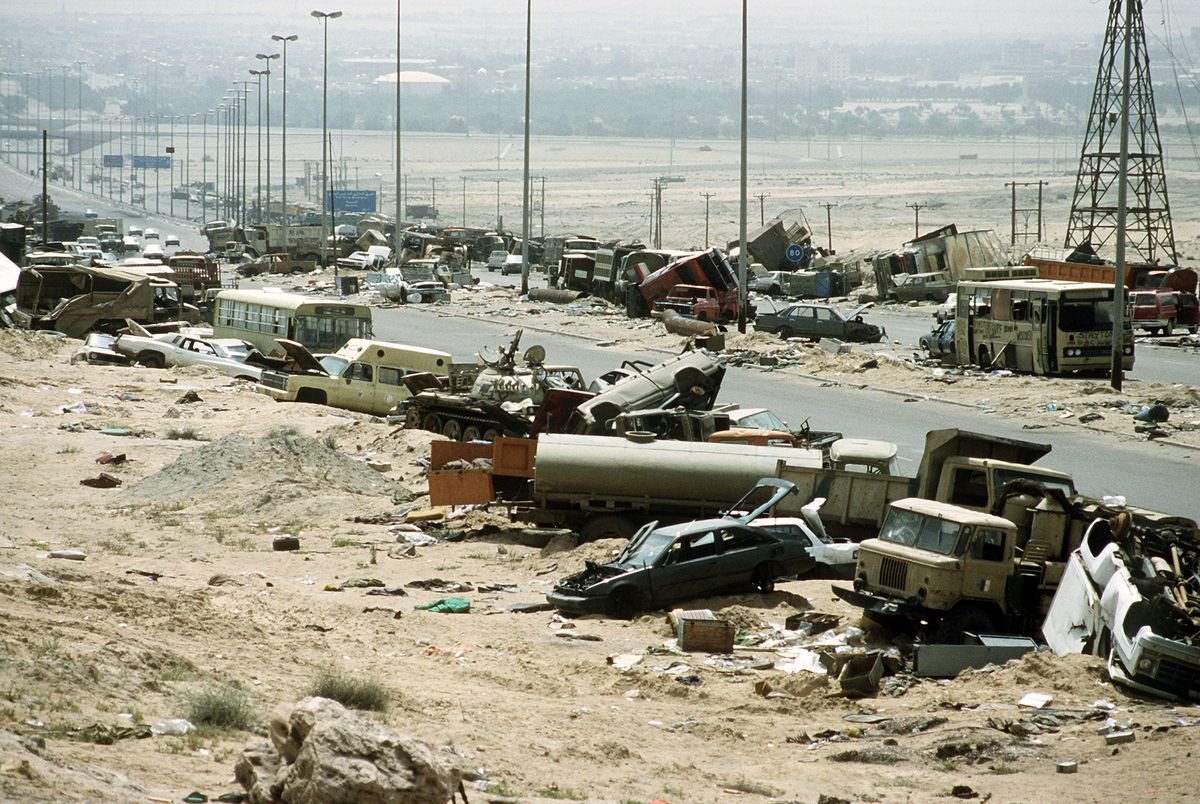
Before the year was two months old, another significant global conflict concluded: the Gulf War. After Iraq’s invasion of Kuwait in August 1990, a US-led coalition of 34 nations launched Operation Desert Storm on January 17, 1991. This air campaign was followed by a swift ground invasion, Operation Desert Sabre, on February 24, which quickly expelled Iraqi forces and restored the Kuwaiti monarchy.
The war officially ended on February 28, with President George H. W. Bush declaring victory on March 6. This conflict set a precedent for large-scale international coalitions responding to aggression, showcased the effectiveness of modern precision warfare, and unfortunately, left an environmental scar with over 700 Kuwaiti oil wells set ablaze by retreating Iraqi forces. Its aftermath contributed significantly to the Middle East’s geopolitical trajectory for decades to come.
Apartheid’s Demise and the Rise of New Democracies
Away from the battlefields, a different kind of freedom was unfolding in South Africa. President F. W. de Klerk announced the repeal of all apartheid laws in 1991, with significant legislation like the Population Registration Act and the Group Areas Act officially struck down by June. This pivotal step dismantled the legal framework of racial segregation, paving the way for a truly democratic South Africa, which saw its suspension from the International Olympic Committee lifted in July.
Elsewhere, the collapse of dictator Siad Barre’s 22-year rule in Somalia in January marked the beginning of a prolonged period of instability. Jean-Bertrand Aristide was sworn in as Haiti’s first elected president in February, symbolizing a fragile hope for democracy. In Eastern Europe, the removal of Albania’s dictator Enver Hoxha’s statue by protestors in February underscored the widespread yearning for freedom. However, the declarations of independence by Slovenia and Croatia from Yugoslavia ignited a series of brutal wars that would destabilize the Balkans for years. These diverse political shifts illustrate a world in flux, shedding old systems while grappling with the complexities of new beginnings.
The Digital Dawn: Laying the Web’s Foundations
While empires were falling and wars were ending, a quiet revolution was brewing in laboratories and garages, setting the stage for the interconnected world we inhabit today. The events that happened in 1991 in the tech sphere were truly foundational.
The World Wide Web Goes Public
Perhaps the single most impactful technological event of 1991 was the public availability of the World Wide Web on August 6. Developed at CERN labs by Tim Berners-Lee, the very first website explained the WWW project itself. This wasn’t just a new piece of software; it was the genesis of the information superhighway, transforming how we communicate, learn, and conduct business globally.
Before 1991, the internet was largely a domain for academics and military researchers. The Web’s public debut, with its simple browser interface, democratized access to information and laid the essential groundwork for everything from e-commerce to social media.
Open Source, Mobile Revolution, and Computing Progress
1991 also saw the release of the first version of the Linux kernel by Linus Torvalds. This open-source operating system would become a cornerstone of server infrastructure, Android devices, and countless other systems, embodying a collaborative approach to software development. Simultaneously, Guido van Rossum released the programming language Python on February 20, a language now ubiquitous in data science, web development, and artificial intelligence, admired for its readability and versatility.
The first GSM call was made in 1991, marking the true beginning of the mobile phone revolution. This digital standard paved the way for the sleek, powerful smartphones we carry today, enabling global connectivity on an unprecedented scale. Beyond these groundbreaking introductions, Microsoft released MS-DOS 5.0, a significant upgrade to its dominant operating system, and the Hubble Space Telescope sent back its first breathtaking images, opening new windows to the universe. Even everyday technology advanced, with HP introducing the HP Scanjet IIc, the first color scanner, at a then-hefty $1995.
These technological milestones weren’t just isolated inventions; they were interlocking pieces that, taken together, created the essential infrastructure for the digital age, demonstrating how truly pivotal the Discover facts about 1991 can be for understanding our technological trajectory.
Cultural Currents & Entertainment Icons
The cultural landscape of 1991 was vibrant, marked by game-changing music, groundbreaking cinema, and moments that captured global attention.
Music’s Game Changers
The music scene exploded with releases that would define a generation. Nirvana’s second album, “Nevermind,” dropped in September, featuring the iconic “Smells Like Teen Spirit.” It didn’t just sell over 30 million copies worldwide; it catapulted grunge into the mainstream and fundamentally altered the direction of rock music. Metallica, another metal giant, released their self-titled “Black Album” in August, debuting at number 1 on the Billboard 200 and selling over 16 million copies in the USA alone. It broadened their appeal and became one of the best-selling albums of all time.
The inaugural Lollapalooza festival also took place, offering a touring alternative music experience that blended genres and counter-culture, influencing countless festivals to come. In a poignant moment, Queen’s “Bohemian Rhapsody” was re-released, reaching number 1 in the UK charts as Freddie Mercury’s dying wish, solidifying its legendary status and reminding the world of his immense talent.
Blockbuster Cinema and Visual Effects
Hollywood delivered iconic films, with “Terminator 2: Judgment Day” reigning as the biggest movie of the year, earning over $509 million worldwide. Beyond its box office success, T2 was a pioneer in visual effects, pushing the boundaries of natural human motion for computer-generated characters with its liquid metal T-1000. Other notable releases included the critically acclaimed “The Silence of the Lambs,” which swept the Academy Awards, and Disney’s “Beauty and the Beast,” an animated masterpiece that proved animation could compete with live-action for serious storytelling. These films not only entertained but also advanced cinematic artistry and technology.
Social Shifts, Science, and Sport’s Defining Moments
Beyond politics and technology, 1991 was a year of profound social moments, scientific breakthroughs, and indelible sporting achievements, reflecting the complexities of human experience.
Justice, Awareness, and Discovery
In March, the severe beating of motorist Rodney King by Los Angeles police officers, captured on amateur video, ignited a national conversation about police brutality and racial injustice. The subsequent acquittals of the officers led to widespread riots, highlighting deep-seated societal issues that continue to resonate in contemporary social justice movements.
On a darker note, Jeffrey Dahmer was arrested in July after police discovered body parts, revealing a horrific serial killer who had claimed 17 lives. This case brought the chilling reality of violent crime into stark focus. Meanwhile, the tragic suicide of 12-year-old Jeremy Wade Delle in front of his English class inspired the powerful Pearl Jam song “Jeremy,” bringing issues of bullying and mental health into public consciousness.
On the discovery front, September saw the remarkable find of Ötzi the Iceman in the Ötztal Alps—a perfectly preserved natural human mummy dating back to approximately 3,300 BCE. Ötzi offered an unprecedented glimpse into prehistoric life, challenging archaeological understanding. In a lighter vein, a man’s purchase of a $4 painting frame at a flea market turned into a $2.4 million windfall when he discovered a first printing of the US Declaration of Independence inside.
Scientific Leaps and Environmental Wake-Up Calls
Science made significant strides. The first exoplanet, orbiting the star 51 Pegasi, was discovered, initiating the search for worlds beyond our solar system. The Human Genome Project, though still in its early stages, made substantial progress, and researchers identified the gene responsible for cystic fibrosis, leading to the first successful gene therapy trial. These advancements laid crucial groundwork for modern genetic research and personalized medicine.
Environmentally, 1991 delivered stark reminders of our planet’s fragility. The eruption of Mount Pinatubo in the Philippines was one of the 20th century’s most powerful, causing significant global climate effects, including a temporary temperature drop. In response to mounting concerns, the United Nations Framework Convention on Climate Change (UNFCCC) was established, setting the stage for international climate negotiations for decades to come. The discovery of the ozone hole over the Arctic further highlighted the urgent need for action against ozone-depleting substances, galvanizing global environmental policy.
Sporting Dynasties and Record Breakers
The world of sports delivered its share of drama and iconic moments. The Chicago Bulls, led by Michael Jordan, won their first NBA Championship, initiating a dynasty that would define basketball for the decade. Super Bowl XXV saw the New York Giants narrowly defeat the Buffalo Bills 20-19 in a memorable contest. Wayne Gretzky continued to rewrite hockey history, becoming the fastest and youngest player to score 700 goals.
In an incredible display of youthful talent, 12-year-old Chinese diver Fu Mingxia became the youngest world champion in any aquatic event, winning 10m platform gold. Baseball faced a reckoning as Pete Rose was officially banned from Hall of Fame eligibility for betting on baseball. Monica Seles broke Steffi Graf’s 186-week streak as the #1 ranked tennis player, signaling a shift in women’s tennis dominance. Legendary pole vaulter Sergei Bubka set a new world record of 6.14m.
Perhaps the most impactful sporting news came from basketball legend Magic Johnson, who announced he was HIV positive. This courageous revelation brought unprecedented attention to the disease, helping to destigmatize it and spur greater awareness and research efforts globally.
Economic Realignment: Global Shifts and Domestic Challenges
The year 1991 also marked significant economic shifts, both globally and domestically, that foreshadowed future trends.
Emerging Economies and Regional Blocs
India embarked on crucial economic reforms, moving away from a centrally planned economy towards a more market-oriented system. This decision unleashed decades of growth and transformed India into a global economic power. In Europe, the Maastricht Treaty was signed, a foundational step for the European Union that laid the groundwork for monetary union and the eventual introduction of the euro currency. These moves highlighted a trend towards greater economic integration and the rise of new economic actors.
Economic Tensions and Business Quirks
On the other side of the ledger, the U.S. experienced a recession, highlighting the cyclical nature of economies. Japan’s asset price bubble burst, initiating a prolonged period of economic stagnation known as the “Lost Decade,” a stark warning about speculative markets.
Corporately, Eastern Air Lines ceased operations in January, a casualty of a challenging airline industry. Kentucky Fried Chicken officially rebranded to KFC, a move towards brevity and perhaps to de-emphasize the “fried” aspect. In a lighter, yet surprisingly significant legal case, the British Government officially defined the difference between a cake (hardens over time) and a biscuit (softens over time) following a high-profile court battle regarding taxation—proving that even seemingly trivial events that happened in 1991 can have interesting legal footnotes.
Practical Playbook: Recognizing History’s Echoes
Understanding the events that happened in 1991 isn’t just about trivia; it’s about seeing the foundational cracks and innovations that underpin our current reality. Here’s how to apply that historical lens:
- Spotting Inflection Points: Look for moments when an established order (like the Cold War) ends abruptly, or a nascent technology (like the WWW) becomes publicly available. These are typically the highest-impact shifts.
- Tracking Ripple Effects: Consider how one major event can trigger a cascade. The dissolution of the USSR, for instance, led to new nation-states, regional conflicts, and a realignment of global alliances that continues today.
- The Unseen Foundations: Many seemingly small technical advancements in 1991 (Linux kernel, Python, GSM) were not headline-grabbing at the time but built the invisible infrastructure of the modern digital world. Their impact is cumulative and exponential.
- Social Progress as a Process: Events like the Rodney King incident or Magic Johnson’s announcement highlight that social progress is often catalyzed by crisis or courageous action, shaping public discourse and policy over years, not days.
- Environmental Awakening: The eruption of Pinatubo and the formation of UNFCCC demonstrate how major environmental events can galvanize international efforts, even if the solutions are long and complex.
Key Long-Term Impacts from 1991
| Category | 1991 Event | Long-Term Impact |
| :————— | :—————————————– | :—————————————————————————————– |
| Geopolitics | Dissolution of USSR | End of Cold War, rise of new nations, shifting global alliances, regional conflicts. |
| Technology | World Wide Web publicly available | Global information access, e-commerce, social media, remote work infrastructure. |
| Culture | Nirvana’s “Nevermind,” Lollapalooza | Reshaped music genres, rise of alternative culture, festival models. |
| Social | Rodney King incident, Magic Johnson’s HIV | Heightened awareness of police brutality, destigmatization of HIV/AIDS, social justice movements. |
| Science | First exoplanet, Human Genome Project progress | Foundation for astrobiology, personalized medicine, genetic research. |
| Environment | Mount Pinatubo, UNFCCC formed | Increased climate change awareness, international climate policy frameworks. |
Quick Answers: Your 1991 FAQs
Was 1991 truly a pivotal year, or just one among many?
1991 was demonstrably pivotal due to the simultaneous occurrence of several defining “end of an era” and “beginning of a new era” events. The Cold War ended, the internet went public, and major social and environmental turning points occurred, setting trajectories that persist today.
What single event had the biggest impact from 1991?
While subjective, the dissolution of the Soviet Union and the public availability of the World Wide Web are often cited as having the most profound and far-reaching impacts, fundamentally reshaping global politics and communication, respectively.
How did 1991 technology set up today’s world?
The release of the World Wide Web, the Linux kernel, Python, and the first GSM call created the core infrastructure for the modern digital age. These laid the groundwork for smartphones, advanced software, global connectivity, and the internet-driven economy we experience daily.
Did 1991 lay the groundwork for current environmental concerns?
Absolutely. The eruption of Mount Pinatubo vividly demonstrated natural climate impact, while the establishment of the UNFCCC and the discovery of the Arctic ozone hole were direct catalysts for international environmental policy and climate change discussions that continue to this day.
The events that happened in 1991 weren’t isolated incidents; they were interconnected threads weaving a new fabric for the 21st century. From the shifting sands of political power and the explosive growth of digital innovation to the nuanced evolutions in culture and social consciousness, 1991 offers a compelling blueprint for understanding our present and anticipating future challenges. It was a year where old walls came down, new windows opened, and the world irrevocably transformed.










