1991 stands as a monumental demarcation point in modern history, a year packed with transformative things that happened in 1991 that irrevocably reshaped our geopolitical landscape, technological future, and cultural fabric. From the dramatic collapse of empires to the quiet birth of the World Wide Web, the events of this single year set the stage for much of what defines the 21st century. It wasn’t just a collection of headlines; it was a fundamental reordering of global power, communication, and social consciousness.
At a Glance: Understanding 1991’s Enduring Impact
- Geopolitical Earthquake: Witness the complete dissolution of the Soviet Union and the end of the Cold War, alongside the resolution of the first Gulf War.
- Digital Genesis: Explore the public launch of the World Wide Web and the birth of the Linux operating system, laying groundwork for our interconnected world.
- Societal Milestones: Understand the repeal of core Apartheid laws in South Africa and significant shifts in human rights discussions globally.
- Cultural Resonances: Discover how iconic albums, groundbreaking films, and major sporting achievements captured the year’s unique spirit.
- Scientific Breakthroughs: Learn about monumental discoveries, from Ötzi the Iceman to the first exoplanet, expanding our understanding of humanity and the universe.
- Lessons in Change: Grasp how seemingly disparate events converged to create a truly pivotal year, offering insights into rapid societal and technological evolution.
The Unraveling of Empires: Geopolitical Shifts that Defined 1991
The most profound of the things that happened in 1991 were undoubtedly the seismic shifts in global power structures. This year marked the definitive end of the Cold War era, culminating in events that few would have predicted just a decade prior.
The Soviet Union’s Final Act
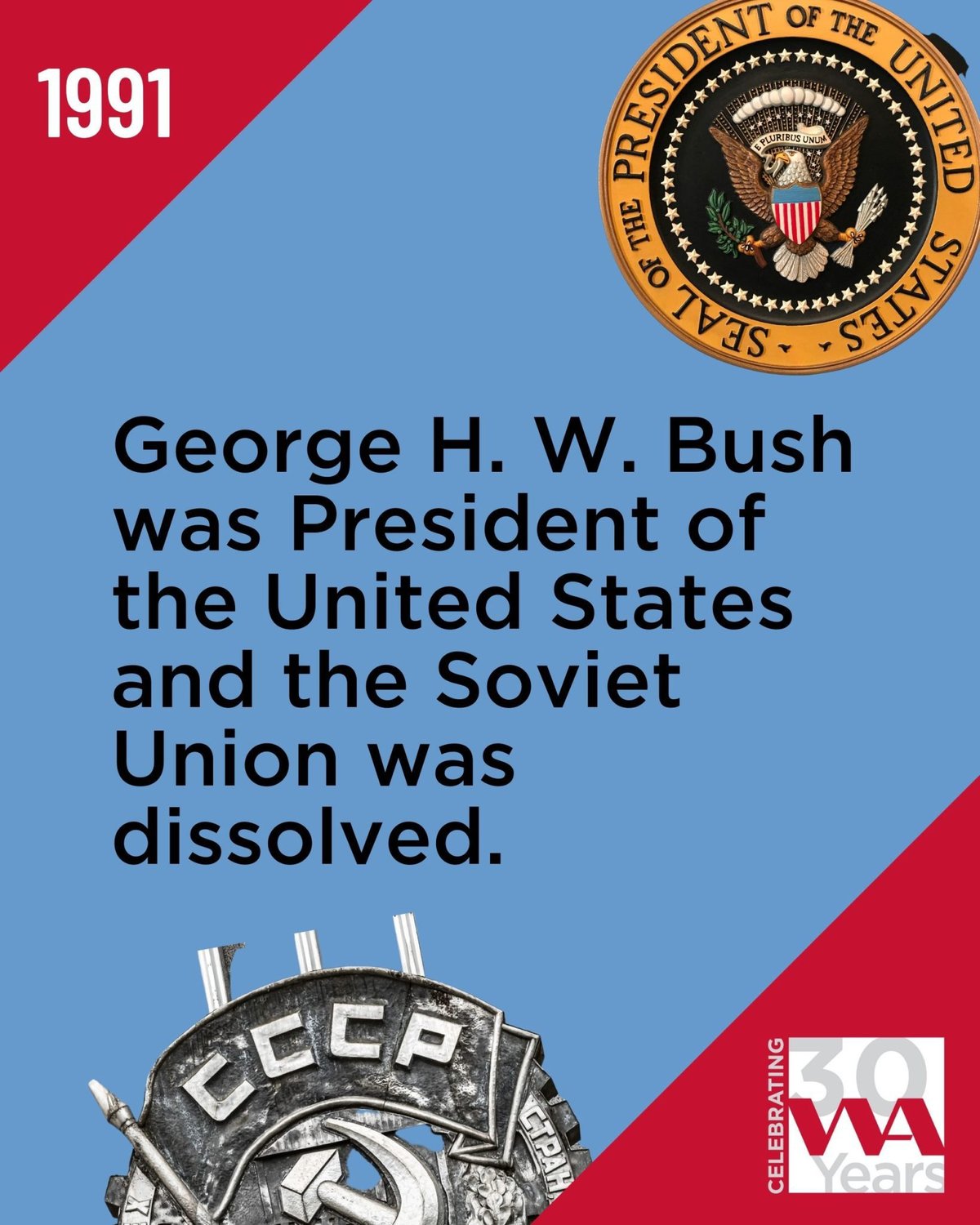
On December 25, 1991, the Soviet Union, a superpower that had dominated the global stage for nearly 70 years, officially dissolved. Mikhail Gorbachev, its last President, resigned, declaring his office extinct and transferring power to Boris Yeltsin, the newly elected President of the Russian Federation. The iconic red flag with the hammer and sickle was lowered over the Kremlin for the final time, replaced by the Russian tri-color. This dramatic conclusion led to the immediate independence of 15 republics, from the Baltic states of Lithuania, Latvia, and Estonia, which had already asserted their sovereignty, to Central Asian nations like Uzbekistan and Kazakhstan.
Earlier in the year, the struggle for independence was far from peaceful. In January, Soviet troops stormed buildings in Vilnius, Lithuania, resulting in 13 deaths and 140 injuries, a brutal but ultimately futile attempt to suppress the burgeoning nationalist movements. The ultimate collapse of the USSR wasn’t just a political event; it was a societal upheaval, releasing millions from a centralized system and forcing them to forge new national identities. The economic implications, including the implementation of a 5% sales tax on consumer goods earlier in January, foreshadowed the rocky transition to market economies many of these new nations would face.
The Gulf War Concludes: A New Era of International Conflict
Another significant geopolitical event concluding in 1991 was the Gulf War. Initiated in August 1990 by Iraq’s invasion of Kuwait, the conflict reached its climax with Operation Desert Storm, a US-led coalition bombing campaign that began on January 17. The coalition, comprising 34 nations, had given Iraq a UN-mandated deadline of January 15 to withdraw, which Iraq rejected. The US Congress, after intense debate on January 10, authorized President Bush to wage war on January 11 and 12, signaling a unified international response to aggression.
Iraqi forces retaliated by firing Scud missiles at Israel, and in a devastating environmental act, set fire to or damaged over 700 oil wells and facilities in Kuwait, causing the world’s largest oil spill by January 23. The war officially ended on February 28, lasting 6 months, 3 weeks, and 5 days, with the expulsion of Iraqi forces and the restoration of the Kuwaiti monarchy. This conflict, marked by advanced missile defense systems like the US Patriot missiles, demonstrated a new form of warfare and the potential for rapid, overwhelming international intervention. To truly grasp the intricate tapestry of this transformative year, including even more fascinating tidbits and broader context, you might want to Explore 1991’s pivotal facts.
The Gradual Dismantling of Apartheid
While global power structures were being redefined, South Africa took significant steps towards racial equality. In June 1991, the Population Registration Act (implemented 1950), which had classified inhabitants by race to enforce Apartheid, was finally repealed. This monumental decision was accompanied by the repeal of other discriminatory laws, including the Group Areas Act and the Native Land Act. The lifting of South Africa’s suspension from the International Olympic Committee in July marked its return to the global sporting stage after decades of boycott, symbolizing a hopeful path forward. These legislative changes were the result of decades of struggle and international pressure, showcasing how sustained efforts can lead to profound social transformation.
The Dawn of Digital: Technological Leaps and Scientific Discoveries
Beyond the geopolitical upheaval, 1991 quietly birthed innovations that would fundamentally alter human interaction and our understanding of the universe. These technological things that happened in 1991 often started small, but their ripple effects were immense.
The World Wide Web Goes Public
Perhaps the most significant technological development of 1991 was the public launch of the World Wide Web. On August 6, 1991, the first website, dedicated to the World Wide Web project itself, went online at CERN labs, running on a NeXT computer. Conceived by Tim Berners-Lee, this seemingly simple act of making information accessible via linked documents laid the foundational infrastructure for every online interaction we have today. It wasn’t an instant global phenomenon, but it was the silent genesis of a revolution.
Linux, GSM, and Scanning in Color
1991 also saw other critical tech milestones. Linus Torvalds released the first version of the Linux kernel, igniting the open-source software movement that continues to power countless systems worldwide. Microsoft released MS-DOS 5.0, a significant update for personal computer users. The first GSM call was made, initiating the mobile phone revolution that would soon connect billions across continents. Even hardware saw innovation: HP introduced the HP Scanjet IIc, the first color scanner, offering 400-dpi single-pass color scanning for a then-impressive $1995. And for a generation of gamers, the Super Nintendo consoles hit shelves, redefining home entertainment graphics and gameplay.
Peering into the Past and Future: Scientific Triumphs
In the realm of science, 1991 delivered remarkable discoveries. Ötzi the Iceman, a naturally mummified body and gear dating back to approximately 3,300 BCE, was found in the Ötztal Alps in September. This discovery provided unprecedented insights into ancient European life, making Ötzi the oldest known natural human mummy in Europe. Scientists also discovered the first exoplanet, orbiting the star 51 Pegasi, forever changing our perspective on the potential for life beyond Earth.
Significant strides were made in medical science, with the Human Genome Project gaining momentum and researchers identifying the gene responsible for cystic fibrosis. The first successful gene therapy trial was also conducted, offering hope for treating genetic diseases. Environmental awareness gained traction with the establishment of the United Nations Framework Convention on Climate Change (UNFCCC) and the first Earth Summit in Rio de Janeiro, setting the stage for global climate discussions. Even nature played a role, as the eruption of Mount Pinatubo caused a temporary global temperature drop, while the discovery of the ozone hole over the Arctic amplified environmental concerns.
Cultural Touchstones: Soundtracks, Blockbusters, and Sporting Dynasties
While nations reformed and technology evolved, culture continued its relentless march, offering entertainment, escape, and commentary on the rapidly changing world. Many of the things that happened in 1991 in music, film, and sports left an indelible mark.
The Sound of a New Decade
1991 was a powerhouse year for music, defining genres and launching legends. Metallica released their self-titled 5th album, famously known as “The Black Album,” in August. It debuted at number 1 on the Billboard 200 and would go on to sell over 16 million copies in the USA, solidifying their status as metal giants. Not to be outdone, Nirvana released “Nevermind” in September, featuring the iconic “Smells Like Teen Spirit.” Produced by Butch Vig, this album sold over 30 million copies worldwide, catapulting grunge into the mainstream and influencing a generation. In a poignant tribute, Queen’s “Bohemian Rhapsody” was re-released and reached number 1 in the UK, fulfilling Freddie Mercury’s dying wish following his passing later that year. This year also saw the debut of the first Lollapalooza festival, a touring alternative music extravaganza that became a cultural touchstone.
Cinematic Masterpieces and Animation Milestones
On the silver screen, “Terminator 2: Judgment Day” dominated the box office as the biggest movie of 1991, grossing over $509 million worldwide. It pioneered groundbreaking CGI, featuring natural human motion for computer-generated characters and partially CGI main characters, pushing the boundaries of visual effects. Disney also captivated audiences with the premiere of “Beauty and the Beast,” an animated classic that earned critical acclaim and became a benchmark for animated storytelling.
Sporting Triumphs and Human Stories
1991 was a year of emerging dynasties and powerful human stories in sports. The Chicago Bulls, led by Michael Jordan, won their first NBA Championship, marking the beginning of a legendary dynasty. Individual athletic feats were also abundant: Wayne Gretzky scored his 700th NHL goal on January 3, becoming the fastest and youngest to do so. In an astonishing display of youthful talent, 12-year-old Fu Mingxia won 10m platform gold at the World Swimming Championships on January 4, becoming the youngest world champion in any aquatic event. College basketball saw Kevin Bradshaw score an NCAA Div 1 record 72 points on January 5, and Dean Smith became the 6th coach to win 700 career college basketball games on January 9. Perhaps one of the most impactful sports stories was Magic Johnson’s announcement of his HIV diagnosis, which brought a new level of awareness and destigmatization to the disease.
Societal Ripples: Noteworthy Incidents and Quirky Facts
Beyond the grand narratives, 1991 was also marked by a range of unique incidents, from serious crime to curious legal definitions, that added to its multifaceted character.
Crime, Disasters, and Unsettling Truths
The year brought some chilling revelations. Jeffrey Dahmer was arrested on July 22, 1991, after police discovered human body parts in his apartment, bringing an end to a spree that claimed 17 lives between 1978 and 1991. The severe beating of Rodney King by Los Angeles police officers in March, captured on amateur video, sparked widespread outrage and later led to the Los Angeles riots following the officers’ acquittal, highlighting deep-seated issues of police brutality and racial injustice. In a tragic school incident, Jeremy Wade Delle shot himself in front of his English class on January 8, an event that inspired Pearl Jam’s poignant song “Jeremy.”
Disasters also struck: the Greek cruise ship Oceanos sank off Coffee Bay, South Africa, in August, though remarkably all 571 passengers were safely evacuated. A devastating cholera epidemic began in Peru on January 22, ultimately infecting 300,000 people over the next year.
The Curious and the Unexpected
1991 also had its share of unique and sometimes bizarre moments. The British Government famously defined a “cake” (hardens over time) vs. a “biscuit” (softens over time) due to a high-profile court case involving value-added tax. Kentucky Fried Chicken officially rebranded to KFC for brevity, a change that stuck. In a classic heist-gone-wrong, 20 paintings were stolen from the Van Gogh Museum but recovered within 35 minutes when the robbers’ getaway car suffered a flat tire. And in an incredible stroke of luck, a first printing of the US Declaration of Independence was found tucked behind a $4 painting frame and later sold for $2.4 million at auction. These smaller, sometimes stranger, things that happened in 1991 add texture to the year’s larger historical narratives.
Quick Answers: Common Questions About 1991
Q: Was 1991 the year the internet started?
No, the internet (as ARPANET) had existed for decades prior to 1991. However, 1991 was the year the World Wide Web—a user-friendly system of interconnected documents accessible via browsers—went public. This marked the beginning of the internet as we largely know it today, making information accessible to a broader audience beyond academic and military circles.
Q: What was the long-term impact of the USSR’s dissolution in 1991?
The dissolution of the USSR had profound long-term impacts, including the end of the Cold War and the emergence of numerous independent states, fundamentally redrawing the global map. It led to a unipolar world with the United States as the sole superpower, and it triggered complex economic and political transitions in former Soviet republics, many of which are still ongoing. It also sparked various regional conflicts, such as the Yugoslav Wars, as new national identities and borders were contested.
Q: How did the events of 1991 influence popular culture in the following years?
The cultural events of 1991, particularly in music, profoundly influenced the 1990s. The breakthrough of grunge with Nirvana’s “Nevermind” ushered in an era of alternative music dominance. Films like “Terminator 2” pushed cinematic technology, setting new standards for special effects. In sports, the Chicago Bulls’ first NBA Championship kicked off a dynasty that captivated audiences and globalized basketball, while Magic Johnson’s announcement brought HIV/AIDS into the forefront of public discussion in a way that resonated through media and advocacy for years.
1991: A Blueprint for Future Change
Looking back at the myriad things that happened in 1991, it’s clear this was not merely another year in history. It was a fulcrum, a pivotal point where old orders crumbled, new technologies emerged from obscurity, and the seeds of our present world were firmly planted. From the sudden end of a bipolar world to the quiet launch of a global information network, the events of 1991 offer a potent reminder of how quickly, and sometimes unexpectedly, the world can transform. Understanding this year isn’t just about recalling facts; it’s about grasping the forces that continue to shape our geopolitical, technological, and cultural landscapes today.










