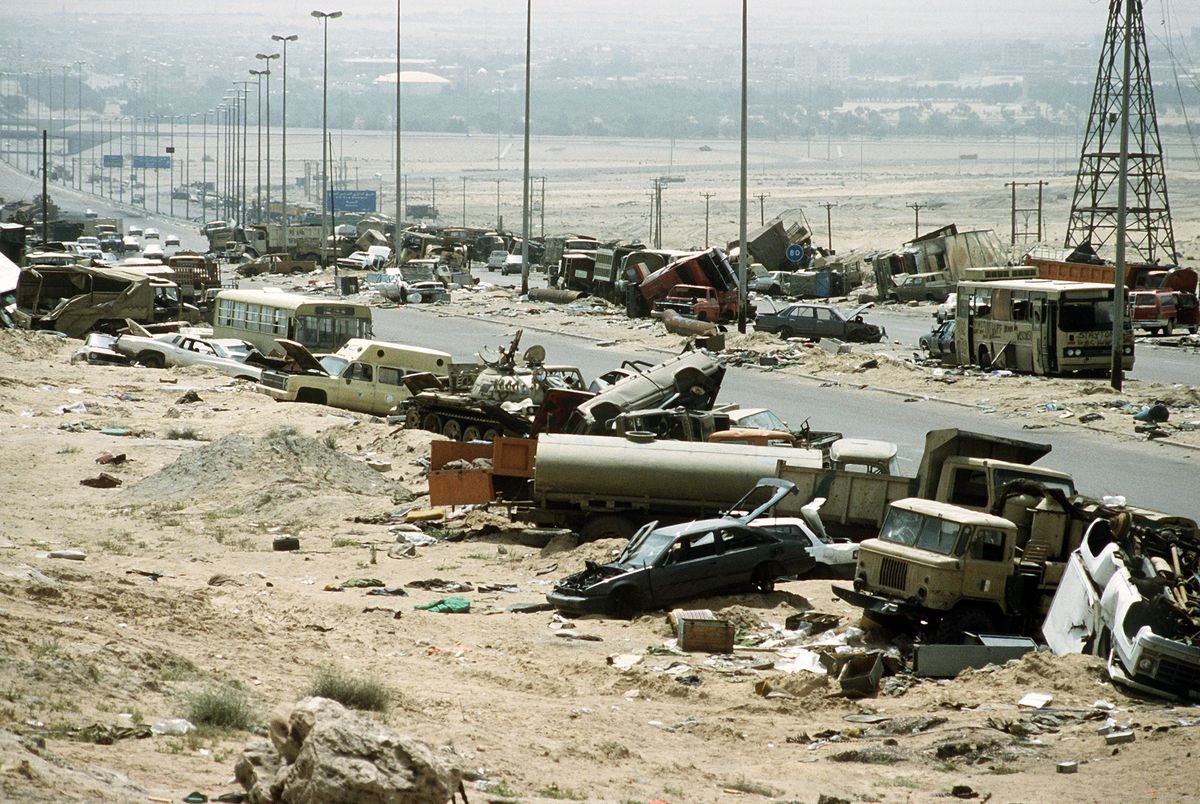
The year 1991 wasn’t just another notch on the calendar; it was a seismic event, a pivotal twelve months where the ground beneath the global landscape dramatically shifted, leaving an indelible mark. From the brutal realities of the Gulf War to the astonishing dissolution of a superpower, and the quiet birth of technologies that would redefine human connection, the major events in 1991 irrevocably altered our world. This was a year of endings and explosive new beginnings, forcing nations and individuals to grapple with unprecedented changes.
At a Glance: Understanding 1991’s Global Reworking
- The End of an Era, The Start of New Conflicts: Witness the formal dissolution of the Soviet Union and the immediate rise of new, complex geopolitical challenges like the Gulf War and the Yugoslav Wars.
- Technology’s Public Debut: See how the World Wide Web shed its academic confines, along with the foundational steps for modern mobile communication and open-source software.
- Cultural Reshaping: Explore the music, films, and sporting moments that captured the spirit of a transitional decade, reflecting both anxieties and aspirations.
- Environmental & Social Awakening: Understand the growing awareness around climate change, alongside critical social justice issues that gained global traction.
- Economic Realignments: Observe major economic reforms in India and the foundational steps towards a unified European currency.
Geopolitical Tremors: The Gulf War and Its Far-Reaching Impact
The new year of 1991 opened with tensions already at a breaking point, setting the stage for one of the decade’s defining military conflicts. Iraq’s rejection of a peace proposal on January 1 from Egyptian President Hosni Mubarak concerning Kuwait signaled its resolve, defying international pressure. The subsequent failure of high-stakes talks between U.S. Secretary of State James A. Baker III and Iraqi Foreign Minister Tariq Aziz in Geneva on January 7-9 cemented the path to war.
The United Nations’ January 12 and 15 deadlines for Iraq to withdraw from Kuwait expired without compliance, triggering a swift and decisive international response. On January 17, “Operation Desert Storm” commenced, marking the start of the ground offensive in the Gulf War. This wasn’t merely a regional conflict; it was a critical test of international cooperation in the post-Cold War era. The swift, coalition-led liberation of Kuwait demonstrated the potential for multilateral military action, though it also left lingering questions about regional stability and the future of Iraqi leadership.
Case Snippet: The Environmental Catastrophe
Beyond the immediate conflict, Iraq’s intentional release of millions of barrels of crude oil into the Persian Gulf in January created one of history’s largest oil spills. This act wasn’t just an environmental disaster; it was a stark example of how modern warfare could inflict widespread ecological damage, sparking a global conversation about the long-term consequences of conflict. Simultaneously, Iraqi forces destroyed Kuwaiti oil facilities, igniting a cataclysm of oil fires that burned for months, further emphasizing the war’s devastating environmental footprint.
The war also saw Iraq launch SCUD missiles targeting Israel and coalition targets from January 17-22, with U.S. Patriot missiles achieving several key interceptions on January 20. This introduced a new dimension to modern warfare: the threat of missile attacks on civilian populations and the reliance on advanced defense systems.
The Unraveling Empire: The Soviet Union’s Final Act
While the world’s attention was drawn to the sands of the Middle East, another monumental shift was unfolding in the Soviet Union – the quiet, then dramatic, collapse of a global superpower. The year began with ominous signs: on January 1, a 5% sales tax was implemented, hinting at deepening economic woes. More critically, the USSR’s grip on its republics was visibly weakening.
On January 13, Soviet troops stormed the Lithuanian Radio and Television Center in Vilnius, killing at least 13 and injuring over 100 unarmed civilians. This brutal crackdown was a desperate attempt to suppress Lithuania’s push for independence, a clear signal of the empire’s internal strife. Yet, these actions only fueled the flames of nationalist sentiment across the republics. The appointment of Valentin Pavlov as Premier of the Soviet Union on January 14 did little to stem the tide.
Throughout the year, the cracks widened. Ultimately, the Soviet Union dissolved, leading to the independence of 15 republics and the formal end of the Cold War. Boris Yeltsin, who had become the first President of the Russian Federation, played a crucial role in navigating this transition, pushing for a more democratic future. The collapse of the USSR wasn’t just a political event; it was the end of a bipolar world order that had shaped international relations for nearly half a century, ushering in an era of complex, multipolar dynamics.
New Horizons and Digital Dawn: Tech and Cultural Breakthroughs
Amidst the geopolitical turmoil, 1991 also quietly birthed technologies and cultural touchstones that would define the decades to come.
- The World Wide Web Goes Public: While not an overnight sensation, 1991 marked the moment the World Wide Web became publicly available, a concept developed by Tim Berners-Lee at CERN. This wasn’t merely a technological release; it was the genesis of a global information highway that would fundamentally transform communication, commerce, and culture.
- Linux Kernel’s Debut: Linus Torvalds released the first version of the Linux kernel, laying the foundation for open-source software that now powers countless servers, devices, and operating systems globally. This demonstrated the power of collaborative development.
- First GSM Call: The first GSM call was made, signaling the commercial rollout of a digital mobile phone standard that would become ubiquitous, paving the way for the smartphone era.
- Cultural Milestones: Nirvana’s release of “Nevermind” redefined grunge and alternative rock, shifting the music landscape. Films like “Terminator 2: Judgment Day” pushed the boundaries of special effects, while Disney’s “Beauty and the Beast” captivated audiences. The first Lollapalooza festival showcased a new kind of touring concert experience. And on the sports front, the Chicago Bulls, led by Michael Jordan, won their first NBA Championship, a moment that launched a dynasty and solidified Jordan’s global superstardom.
For a broader look at how these and other facets made 1991 so significant, you can find more intriguing details here: Discover 1991’s interesting facts.
Social and Environmental Ripples: Confronting Challenges and Making Progress
1991 was also a year where significant social issues and environmental concerns moved to the forefront of global consciousness.
- Dismantling Apartheid: South Africa formally repealed its last apartheid laws, marking a monumental step towards racial equality after decades of brutal segregation. While the journey to full democracy was still ahead, this legislative change was a beacon of hope.
- Environmental Awakening: The eruption of Mount Pinatubo in the Philippines was one of the 20th century’s most powerful volcanic eruptions, causing significant, albeit temporary, climate effects globally. This event, alongside the establishment of the United Nations Framework Convention on Climate Change (UNFCCC), underscored the growing scientific understanding and public concern about the planet’s fragility. Greenpeace also launched its “Save the Whales” campaign, intensifying efforts for marine conservation.
- Health and Awareness: Magic Johnson’s announcement of his HIV diagnosis brought unprecedented attention to the AIDS epidemic, challenging stigmas and raising global awareness about the disease.
- Crime and Justice: The arrest of Jeffrey Dahmer and the Rodney King beating, captured on video, sparked widespread outrage and critical discussions about police brutality and systemic racism, particularly in the United States. These events served as catalysts for ongoing debates about justice, accountability, and civil rights.
Economic Realignments: Laying New Foundations
Economically, 1991 was a mixed bag, but it laid crucial groundwork for future global structures.
- India’s Economic Reforms: Facing a severe balance of payments crisis, India launched significant economic reforms, moving away from a protectionist, socialist model towards liberalization. These reforms opened up the Indian economy to foreign investment and trade, unleashing decades of unprecedented growth.
- Maastricht Treaty: The European Union signed the Maastricht Treaty, a landmark agreement that laid the foundation for the euro currency and deeper political integration among European nations. This ambitious project aimed to create a more unified and powerful economic bloc.
- Recession and Bubbles: While some regions embarked on new growth paths, others faced economic headwinds. The U.S. experienced a recession, impacting employment and consumer confidence. Simultaneously, Japan’s asset price bubble burst, initiating a period of stagnation known as the “lost decade.” These contrasting economic fortunes highlighted the interconnected yet diverse nature of the global economy.
Applying the Lessons of a Pivotal Year: A Practical Playbook
Understanding 1991 isn’t just about historical facts; it’s about recognizing patterns and consequences that continue to shape our present.
- Anticipate the “New Normal”: When a major geopolitical or technological shift occurs, expect a period of instability and then the emergence of entirely new structures. The collapse of the USSR didn’t lead to simple peace; it birthed new conflicts (Yugoslav Wars) and new alliances.
- Action: In any significant market or political disruption today, identify the immediate winners and losers, but focus more on the long-term systemic changes that will redefine the playing field.
- Technology as a Catalyst for Unforeseen Change: The public release of the World Wide Web seemed incremental at the time, but its impact was revolutionary.
- Action: Pay attention to nascent technologies that are openly accessible and collaborative. These often have a disproportionate, exponential impact compared to proprietary, closed systems.
- The Interconnectedness of Global Challenges: The Gulf War’s oil spills, Mount Pinatubo’s climate effects, and the global awareness generated by Magic Johnson’s announcement all highlight how seemingly disparate events can have intertwined global implications.
- Action: When analyzing any major crisis, consider its multi-faceted impact – political, economic, environmental, and social – and look for cross-sector solutions.
- Resilience in the Face of Upheaval: From Lithuania’s fight for independence to South Africa’s dismantling of apartheid, 1991 showed the power of popular movements and persistent advocacy.
- Action: Recognize that even in the face of overwhelming power structures, sustained pressure and clear objectives can lead to transformative change.
Quick Answers: Common Questions on 1991’s Major Events
Q: Was 1991 truly the “end of history” as some predicted?
A: While the collapse of the Soviet Union led some to believe it was the triumph of liberal democracy, 1991 actually marked the beginning of a new, complex history. The rise of ethnic conflicts, new geopolitical alignments, and persistent global challenges quickly disproved the “end of history” thesis. It was an end to the Cold War era, but a launchpad for an unpredictable future.
Q: How did the internet become publicly available in 1991?
A: While the foundational technologies for the internet existed for years (ARPANET, TCP/IP), the World Wide Web, developed by Tim Berners-Lee at CERN, provided an easy-to-use, hyperlinked interface. In 1991, CERN released the basic code for the Web to the public, allowing anyone to set up a web server or browser. This open-source approach was critical to its rapid adoption, democratizing information access.
Q: What was the biggest single event of 1991?
A: This is subjective, but most historians would point to either the dissolution of the Soviet Union or the Gulf War. The Soviet collapse ended the Cold War and fundamentally reshaped the global political map, while the Gulf War redefined military intervention and international cooperation in a post-bipolar world. Both had immense, long-lasting consequences.
Q: Did the global community learn from the environmental disasters of the Gulf War?
A: Yes, in part. The massive oil spills and fires in Kuwait brought environmental warfare into stark focus. It spurred increased attention on international environmental law and the need for protections during armed conflict. The UNFCCC’s establishment the same year, while not directly tied to the Gulf War, reflects a broader, growing global commitment to addressing environmental challenges, including those exacerbated by human conflict.
The Echoes of a Transformative Year
The major events of 1991 resonate strongly even today. The geopolitical landscape shaped by the end of the Cold War, the digital revolution ignited by the World Wide Web, and the ongoing struggles for social justice and environmental health all have their roots in this single, extraordinary year. To understand the complexities of our present world, we must first appreciate the profound transformations that swept across the globe in 1991, shifting foundations and setting new courses that continue to unfold.










