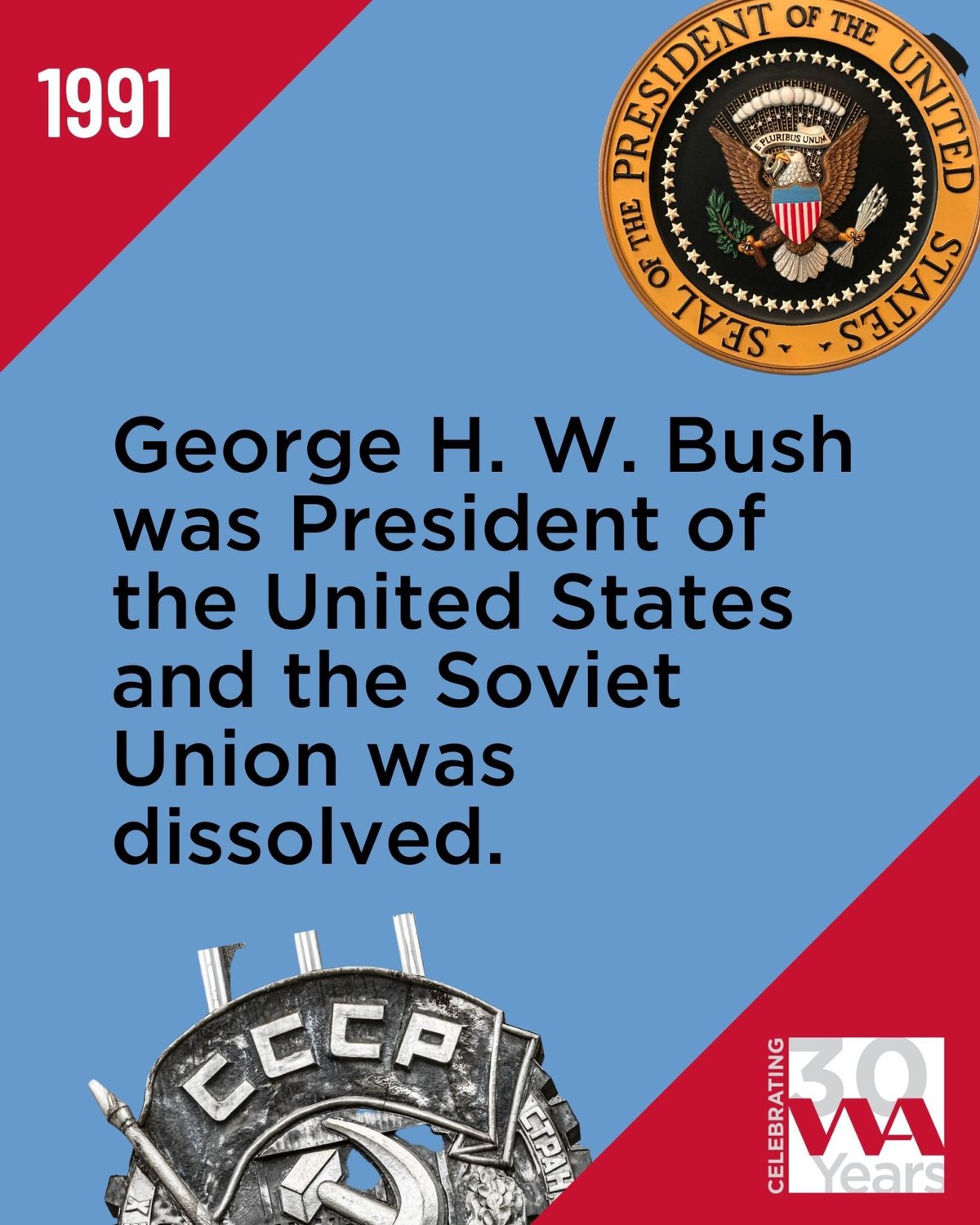
The year 1991 wasn’t just another notch on the calendar; it was a seismic shift, a pivotal moment that redrew geopolitical maps and ignited a technological revolution. If you’re pondering what happened in 1991, think of it as the year the old world order dramatically crumbled and the seeds of our hyper-connected modern age were firmly planted. It was a year that profoundly shaped the trajectory of the 21st century, from the quiet dissolution of empires to the public launch of a little something called the World Wide Web.
At a glance
- The Cold War’s Definitive End: Witness the dissolution of the Soviet Union, reshaping global power dynamics.
- Birth of the World Wide Web: Understand the critical decision to make the Web publicly available and royalty-free.
- Geopolitical Realignments: Explore the aftermath of the Gulf War, the rise of new nations, and the end of apartheid.
- Cultural & Technological Leaps: See how music, film, and innovation reflected a world in flux, from grunge’s rise to the Linux kernel’s debut.
- Lessons in Adaptability: Glean insights into how societies and technologies respond to unprecedented change.
The Iron Curtain Falls: A New World Order Emerges
For decades, the world had been carved into East and West, locked in a tense ideological standoff known as the Cold War. But in 1991, the seemingly unshakeable Soviet Union, once a monolithic superpower, fractured and dissolved with astonishing speed. This wasn’t merely a political event; it was the definitive end of an era, a global exhale after nearly half a century of nuclear brinkmanship.
The collapse unfolded rapidly, culminating in December with the formal dissolution of the USSR. Fifteen new independent republics emerged from its vast expanse, each grappling with its newfound sovereignty. Boris Yeltsin, a figure who defied the old guard, became the first President of the newly formed Russian Federation. The Strategic Arms Reduction Treaty (START) signed by the U.S. and Russia, began deep cuts to their nuclear arsenals, symbolizing a tangible de-escalation of the arms race that had defined the Cold War.
This monumental geopolitical shift reverberated worldwide. The Gulf War, which had concluded earlier in the year with the liberation of Kuwait following Operation Desert Storm, had already demonstrated a new dynamic in international relations, with a U.S.-led coalition acting decisively. The US Congress had empowered President George H. W. Bush to authorize the attack on Iraq in January, a swift move compared to Cold War stalemates. Even earlier, in January, Soviet troops had violently suppressed independence efforts in Lithuania, but these actions were ultimately futile against the tide of change.
Elsewhere, the ripple effects were profound. South Africa repealed its last apartheid laws, marking a turning point in its long struggle for racial equality. Conversely, the declarations of independence by Slovenia and Croatia from Yugoslavia ignited a series of brutal conflicts, demonstrating that the end of one conflict could sadly pave the way for others. For a wider lens on the year’s events, including cultural touchstones and other significant shifts, you can Read the full 1991 guide.
The Digital Revolution Begins: The Web Goes Public
While geopolitical tectonic plates were shifting, a different kind of revolution was quietly brewing in the digital realm. In 1991, British computer scientist Tim Berners-Lee made a decision that fundamentally altered human interaction: he renounced patent rights to the World Wide Web. This wasn’t a minor technical detail; it was a profound act of foresight. By making the Web’s foundational technologies—HTTP, HTML, and URLs—open and royalty-free, Berners-Lee ensured its widespread adoption and rapid, decentralized growth.
Imagine if every click, every link, every website required a licensing fee. The Web as we know it simply wouldn’t exist. This open-source philosophy, emphasizing collaboration over proprietary control, became a defining characteristic of the internet’s early development. It wasn’t just Berners-Lee championing openness; that same year, Linus Torvalds released the first version of the Linux kernel, another cornerstone of open-source software that would power countless systems and devices.
Other technological milestones of 1991 showcased the accelerating pace of innovation:
- Global Connectivity: The first GSM call was made, laying the groundwork for modern mobile communication standards.
- Software Staples: Microsoft released MS-DOS 5.0, a ubiquitous operating system of the era.
- Space Exploration: The Hubble Space Telescope, launched the previous year, began sending back its initial breathtaking images, opening new windows to the universe.
- Early Online Services: CompuServe, a pre-Web online service, charged a hefty $5.00 an hour, highlighting the stark contrast to the free-access model the Web would soon champion.
- Storage Breakthroughs: SanDisk produced the first flash-based SSD, a compact 20 MB drive priced at approximately $1000, signaling the future of digital storage.
These innovations weren’t just new gadgets; they were the building blocks of a connected future, a testament to the power of shared knowledge and unfettered access.
Beyond Geopolitics & GigaHertz: A Culture Shift
The profound transformations of 1991 weren’t confined to government halls or server rooms. Culture and society also underwent significant shifts, reflecting and reacting to the changing world. It was a year where old norms were challenged, and new voices found their stage.
Musically, the release of Nirvana’s “Nevermind” was a defining moment, propelling grunge from the underground into the mainstream and giving voice to a generation’s disillusionment. The album, initially met with a modest 3-star rating from Rolling Stone, quickly became a cultural phenomenon, its raw energy and anti-establishment ethos resonating globally. The first Lollapalooza festival also debuted, showcasing alternative music as a powerful force. This wasn’t just about music; it was about a broader shift in aesthetic and attitude, moving away from the polished pop of the 80s.
In film, blockbusters like “Terminator 2: Judgment Day” pushed the boundaries of special effects, while Disney’s “Beauty and the Beast” captivated audiences with its animation and storytelling. “The Silence of the Lambs” swept the “big five” Academy Awards, proving that complex, dark narratives could also achieve mainstream success.
Beyond entertainment, crucial social issues took center stage. Magic Johnson’s announcement of his HIV diagnosis sent shockwaves through the sports world, dramatically raising awareness about the virus and challenging public misconceptions. The beating of Rodney King by LAPD officers, captured on video, sparked outrage and ignited a national conversation about police brutality and racial injustice, foreshadowing future civil unrest. Even environmental awareness gained traction, with the first Earth Summit held in Rio de Janeiro, highlighting global concerns like climate change and deforestation.
These cultural and social currents demonstrated that 1991 was a year of awakening across multiple fronts—a time when both the personal and the global felt profoundly interconnected and ripe for re-evaluation.
Practical Playbook: Lessons from a Year of Transformation
The events of 1991 offer invaluable insights that remain relevant today, particularly for anyone navigating periods of rapid change, whether in business, technology, or personal life.
1. Embrace Open Systems for Exponential Growth
The most powerful lesson from the Web’s public launch is the profound impact of openness. Tim Berners-Lee’s decision to make the Web royalty-free allowed for decentralized innovation and unprecedented adoption.
- Actionable Takeaway: In product development or community building, consider how an open-source or open-access approach could accelerate growth and foster collaboration. Could you release an API, share a framework, or contribute to public knowledge to build a stronger ecosystem around your work? The success of Linux, also born in 1991, further underscores this principle.
2. Anticipate and Adapt to Geopolitical Flux
The sudden dissolution of the Soviet Union was a stark reminder that even seemingly immutable structures can crumble rapidly. Businesses with global supply chains or international operations learned to be nimble.
- Actionable Takeaway: Build resilience into your plans. Diversify supply chains, monitor international relations closely, and develop contingency plans for geopolitical disruptions. Don’t assume stability; prepare for dynamic shifts. The swift, coordinated response in the Gulf War also highlights the capacity for rapid action in a newly multipolar world.
3. Recognize the Power of Cultural Tipping Points
Nirvana’s “Nevermind” wasn’t just a hit album; it was a cultural phenomenon that signaled a shift in taste and values. Magic Johnson’s announcement changed the conversation around a critical health issue overnight.
- Actionable Takeaway: Pay attention to emerging trends and shifting public sentiment. Cultural shifts often precede or reflect deeper societal changes. Whether in marketing, product design, or policy, understanding these undercurrents can reveal new opportunities or impending challenges. The early adoption of the Relcom network during the Soviet coup to spread news globally showed how new tech could be a force multiplier during crisis.
4. The Long Game of Innovation
While the Web launched in 1991, it took years for its full potential to be realized. Many technologies introduced that year, like flash-based SSDs or GSM, were foundational, not immediately revolutionary to the average person.
- Actionable Takeaway: Don’t expect instant gratification from groundbreaking innovations. Invest in R&D and nurture nascent technologies, understanding that their true impact may take years, or even decades, to unfold. Patience and sustained commitment are often key to transforming potential into widespread utility.
5. Confronting Social Issues Head-On
The events surrounding Rodney King and Magic Johnson’s announcement forced uncomfortable but necessary conversations about race, justice, and public health.
- Actionable Takeaway: As leaders and citizens, don’t shy away from difficult social issues. Acknowledging problems, fostering open dialogue, and pursuing solutions, even if incremental, is essential for progress and building trust within communities. Dolly Parton’s “Buddy Program” in Sevierville, which significantly reduced high school dropout rates, serves as a testament to direct, community-level intervention.
Quick Answers: Unpacking the Pivots of 1991
Was 1991 truly the end of the Cold War?
Yes, unequivocally. The formal dissolution of the Soviet Union in December 1991 marked the definitive end of the Cold War. While tensions had been easing, and the Berlin Wall fell in 1989, 1991 saw the collapse of the USSR itself, eradicating the primary ideological and geopolitical adversary of the West and ending the bipolar world order.
What was the significance of the World Wide Web’s public launch in 1991?
The core significance was Tim Berners-Lee’s decision to make the Web’s underlying protocols (HTTP, HTML) royalty-free and publicly available. This crucial move prevented any single entity from owning or controlling the Web, enabling its rapid, decentralized adoption and fostering a culture of open innovation that allowed it to grow into the global phenomenon we know today.
How did the Gulf War fit into the end of the Cold War?
The Gulf War, which concluded early in 1991, served as a significant demonstration of a post-Cold War international order. The US-led coalition, with UN backing, acted without the typical Cold War constraints of potential Soviet interference. It showcased a new capacity for international cooperation (and intervention) that would have been far more complicated, if not impossible, just a few years earlier.
Beyond politics and tech, what else made 1991 a pivotal year?
Culturally and socially, 1991 was pivotal due to events like Nirvana’s “Nevermind” ushering in the grunge era, the first Lollapalooza festival signaling a shift in music, and Magic Johnson’s public HIV announcement dramatically raising AIDS awareness. These events reflected a broader questioning of established norms and a heightened social consciousness that paralleled the geopolitical and technological transformations.
An Enduring Legacy of Change
The year 1991 stands as a powerful testament to the fact that history isn’t a linear progression, but a series of dramatic shifts. From the quiet but seismic collapse of a superpower to the revolutionary decision to make the World Wide Web a gift to humanity, what happened in 1991 set the stage for much of the world we inhabit today. It underscored the fragility of empires, the transformative power of open innovation, and the enduring human capacity to adapt and evolve amidst profound change. The reverberations of that pivotal year continue to shape our present and influence our future.










