The year 1987 stands as a pivotal moment in recent history, a period where significant historical events 1987 converged to reshape global politics, economics, and even environmental consciousness. Far from being a quiet interlude, it was a year defined by both the looming specter of economic collapse and the stirring whispers of geopolitical transformation, setting the stage for the dramatic changes of the coming decade.
At a Glance: Understanding 1987’s Legacy
- Geopolitical Thaw: Witnessing early signs of the Cold War’s end, marked by groundbreaking arms treaties and Gorbachev’s reforms.
- Economic Tremors: The Dow Jones shattered records before plunging into “Black Monday,” exposing market vulnerabilities.
- Rising Global Consciousness: Landmark environmental agreements and increased awareness of social issues like AIDS.
- Regional Instability: Persistent conflicts and humanitarian crises intensified in various global flashpoints.
- Technological & Cultural Strides: Innovations in computing and media began to subtly shift daily life.
- Unforgettable Tragedies: A series of devastating accidents and violent acts underscored the fragility of human existence.
The Shifting Sands of Geopolitics: Cold War Thaw and Regional Tensions
As the world moved into 1987, the intricate dance of superpower relations continued, yet with a distinct shift. Mikhail Gorbachev’s Soviet Union was actively signaling a desire for internal reform and external de-escalation, while regional conflicts continued to simmer and, in some cases, boil over.
Gorbachev’s Glasnost and Perestroika Takes Root
In the Soviet Union, the seeds of change sown by Mikhail Gorbachev began to sprout more visibly. On January 27th, Gorbachev delivered a scathing critique of the Soviet Communist Party, lambasting its stagnation and systematic failures. He courageously called for secret ballots and public choice in local elections—a radical proposition in a system known for rigid control. This was a clear sign that his policies of Glasnost (openness) and Perestroika (restructuring) were more than mere rhetoric; they were intended to be transformative. Later, on May 1st, new laws were enacted, allowing for the creation of small, cooperative businesses, directly challenging decades of centralized economic planning. These moves, while seemingly domestic, reverberated globally, suggesting a potential easing of the Cold War grip.
Reagan’s Diplomatic Offensives and Challenges
Across the ideological divide, U.S. President Ronald Reagan continued his robust stance against the Soviet Union while also engaging in crucial diplomacy. On June 12th, standing before the Brandenburg Gate in West Berlin, Reagan delivered his iconic challenge to Gorbachev: “Tear down this wall!” This powerful symbolic gesture underscored the ideological struggle, even as behind-the-scenes negotiations progressed.
However, Reagan’s administration also faced significant internal challenges, primarily the unfolding Iran-Contra affair. The Tower Commission, investigating the scandal, delivered a harsh rebuke on February 26th, citing Reagan’s lack of control over his national security staff. On March 4th, Reagan himself publicly acknowledged mistakes regarding the affair on national television, followed by televised Congressional hearings that began on May 5th, dominating headlines for weeks. Despite these domestic troubles, a monumental diplomatic breakthrough occurred on December 8th when Reagan and Gorbachev signed the Intermediate-Range Nuclear Forces (INF) Treaty. This historic agreement eliminated an entire class of nuclear missiles and, critically, included on-site monitoring, signaling a tangible step towards de-escalation after decades of nuclear brinkmanship.
Hot Spots and Human Crises Across Continents
Beyond the superpower dynamic, numerous regions grappled with intense conflict and humanitarian crises. In Lebanon, the volatile environment led to the kidnapping of Church of England envoy Terry Waite on January 20th, followed by the abduction of three Americans and an Indian professor just five days later. These events highlighted the ongoing hostage crisis that plagued the country.
Sri Lanka saw a sharp escalation in its civil conflict. On April 21st, a car bomb, blamed on the Liberation Tigers of Tamil Eelam (LTTE), killed 106 people in Colombo. Just over two months later, on July 5th, the LTTE introduced suicide attacks against the Sri Lankan Army, marking the emergence of their feared “Black Tigers.” This conflict drew in international actors, with the Indian Peace Keeping Force (IPKF) launching Operation Pawan on October 11th, leading to tragic civilian deaths and intense fighting. A dark chapter unfolded on October 21st with the Jaffna hospital massacre, where the IPKF was accused of killing 70 Tamil patients, doctors, and nurses.
In the Persian Gulf, the Iran-Iraq War continued to spill over. On May 17th, an Iraqi Dassault Mirage F1 fighter jet mistakenly fired two missiles into the U.S. Navy warship USS Stark, killing 37 American sailors. A month later, on June 28th, Iraqi warplanes bombed the Iranian town of Sardasht, marking the first documented use of chemical weapons against a civilian population in military history—a grim precursor to later events.
The year also concluded with the spark of a major, enduring conflict in the Middle East. On December 8th, an Israeli army tank transporter killed four Palestinian refugees at the Erez Crossing, directly igniting the First Intifada, a widespread Palestinian uprising that officially began in the Gaza Strip and West Bank the very next day. This demonstrated the deep-seated tensions that would continue to define the region.
Economic Jitters and Market Meltdowns: Lessons from Black Monday
While political shifts dominated headlines, a profound economic story was also unfolding, one that would deliver a stark reminder of global interconnectedness and market fragility.
The Ascent of the Dow and the Bubble’s Warning Signs
The year began with an air of economic optimism. On January 8th, the Dow Jones Industrial Average closed above 2,000 for the first time, a psychological milestone that signaled robust market growth. This initial bullish sentiment, however, masked underlying vulnerabilities. Rapidly rising interest rates, an overvalued market, and the increasing use of computerized trading programs were creating a precarious environment. Many felt the market was due for a correction, but few predicted the severity of what was to come.
Black Monday: A Global Economic Earthquake
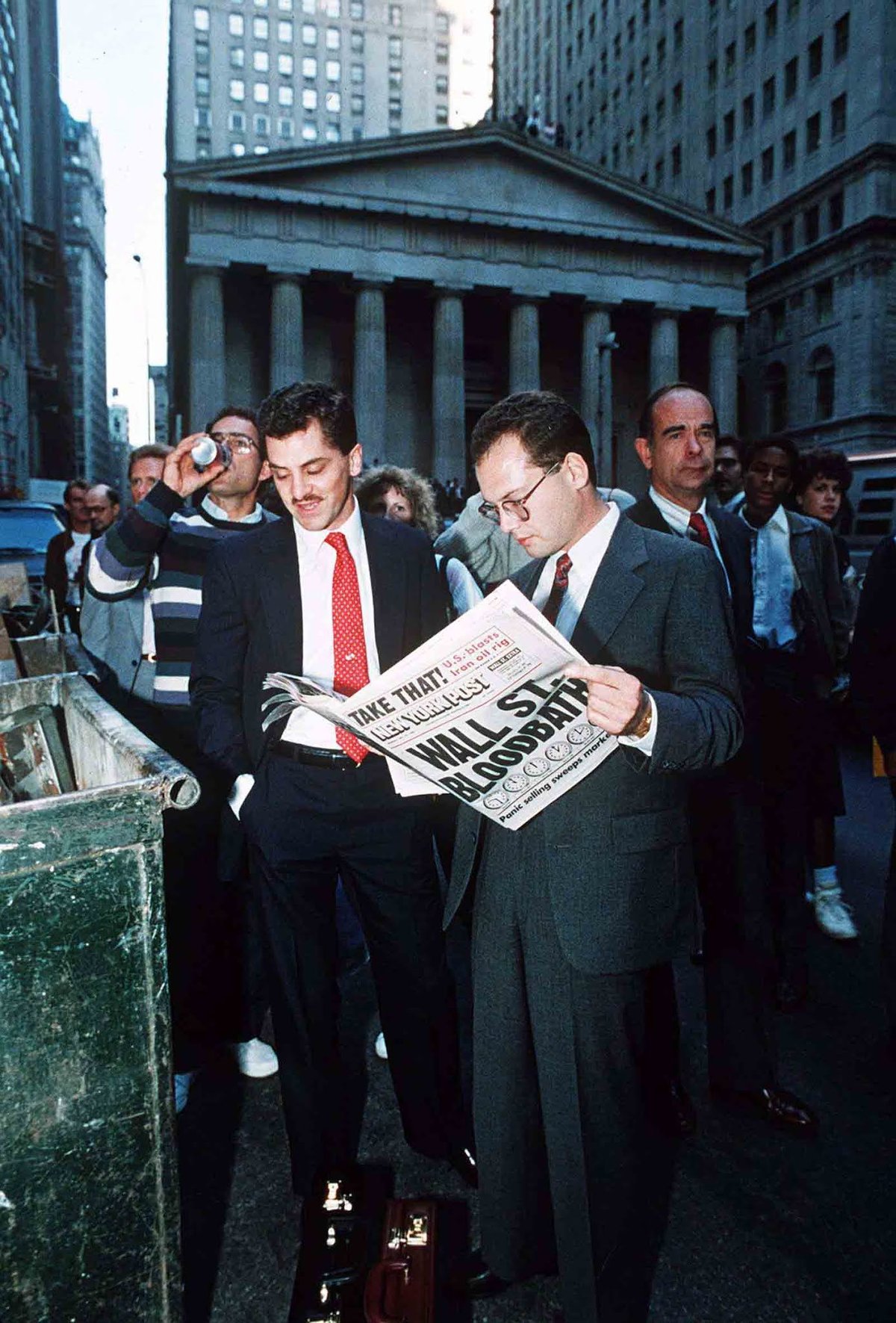
The economic earthquake hit on October 19th, a day now famously remembered as “Black Monday.” The Dow Jones Industrial Average plummeted by a staggering 22%—a loss of 508 points—in a single trading session. This was, and remains, the largest one-day percentage drop in stock market history. The sell-off wasn’t confined to New York; it swiftly spread to markets across the globe, from London to Tokyo, triggering panic and raising fears of another Great Depression. Unlike the crash of 1929, however, the swift and coordinated response by central banks and governments helped prevent a systemic collapse. For a broader perspective on how this event fit into the year’s larger narrative, you can Explore what happened in 1987.
Navigating the Aftermath: Early Policy Responses
In the immediate wake of Black Monday, central banks, led by the U.S. Federal Reserve, injected liquidity into the financial system, reassuring banks and investors. Regulators swiftly began to analyze the role of program trading and explore circuit breakers—mechanisms to temporarily halt trading during extreme market volatility—to prevent future freefalls. While the market recovered steadily in the following months, Black Monday served as a powerful cautionary tale about market behavior, risk management, and the need for robust regulatory frameworks in an increasingly digitized and interconnected financial world.
Social Progress, Environmental Alarms, and Cultural Milestones
Beyond the dramatic political and economic shifts, 1987 also saw notable advancements in social justice, a critical awakening to environmental threats, and the emergence of cultural phenomena that would define a generation.
Acknowledging New Social Frontiers
The Philippines, still reeling from the 1986 People Power Revolution, enacted a new Constitution on February 2nd, cementing democratic reforms. In Australia, Justice Mary Gaudron made history on February 6th, becoming the first woman appointed to the High Court. Across the globe in Great Britain, June 11th marked a significant step in parliamentary representation as Diane Abbott, Paul Boateng, and Bernie Grant were elected as the first black Parliamentarians.
The AIDS crisis, which had emerged as a devastating global health challenge, saw a ray of hope on March 20th when the Food and Drug Administration approved Zidovudine (AZT), the first anti-AIDS drug. This marked a crucial turning point in treatment and research. Embodying compassion, Pope John Paul II publicly embraced an AIDS-infected boy during his visit to San Francisco on September 17th, helping to destigmatize the disease.
The Dawning of Environmental Consciousness
The year also brought stark reminders of our planet’s fragility and the need for global cooperation. The Dusky Seaside Sparrow, a subspecies found in Florida, went extinct on June 17th, a poignant symbol of biodiversity loss. However, a significant triumph for global environmental action occurred on September 16th with the signing of the Montreal Protocol. This landmark international treaty aimed to protect the ozone layer by phasing out the production of numerous substances responsible for ozone depletion. It stands as one of the most successful international environmental agreements to date, demonstrating that global challenges can be met with collective will.
Cultural Shifts and Technological Leaps
Culturally, 1987 offered glimpses into the future. On April 19th, ‘The Simpsons’ premiered as a short cartoon on ‘The Tracey Ullman Show’, marking the unassuming debut of what would become one of television’s most iconic and enduring series. In the realm of technology, NEC released the PC Engine (later known as TurboGrafx-16) on October 30th, one of the first 16-bit video game consoles, signaling a new era of home entertainment. Computer enthusiasts also celebrated on December 18th, when Larry Wall released the first version of the Perl programming language, which would become a staple for web development and system administration. Even in the cosmos, February 23rd saw the observation of Supernova 1987a in the Large Magellanic Cloud, the closest observed supernova since 1604, fascinating astronomers worldwide.
Catastrophes and Conspiracies: A Year of Shocking Incidents
Amidst the grand narratives of geopolitics and economics, 1987 was also punctuated by a series of devastating accidents, acts of violence, and bizarre events that captivated the public’s attention and often led to profound societal reflection.
Public Tragedies and Their Repercussions
The year began with a tragic transportation disaster on January 4th, when the Maryland train collision between an Amtrak train and Conrail engines killed 16 people, prompting safety reviews. Just over two months later, on March 6th, the British ferry MS Herald of Free Enterprise capsized in a mere 90 seconds, claiming 193 lives and leading to significant changes in ferry safety regulations and operational procedures. Aviation also saw its share of disasters, including the LOT Polish Airlines Ilyushin IL-62M crash near Warsaw on May 9th, killing all 183 aboard, and Northwest Airlines Flight 255, a McDonnell Douglas MD-82, which crashed after takeoff in Detroit on August 16th, killing 154 of 155 on board and two on the ground. Perhaps the worst peacetime sea disaster in history occurred on December 20th, when the passenger ferry ‘Doña Paz’ sank after colliding with an oil tanker in the Philippines, with an estimated 4,000 fatalities. These incidents served as stark reminders of the human cost of negligence and the immense power of nature.
Individual Acts and Their Wider Impact
Beyond large-scale accidents, several individual acts left a lasting impression. On January 22nd, Pennsylvania politician R. Budd Dwyer shot and killed himself during a televised press conference, sparking widespread debate about the boundaries of journalism and media responsibility. A bizarre breach of Soviet air defenses occurred on May 28th when 19-year-old West German pilot Mathias Rust landed a private plane in Moscow’s Red Square, leading to a sweeping purge of Soviet military personnel.
The Hungerford massacre in the United Kingdom on August 19th, where Michael Ryan killed sixteen people with a semi-automatic rifle before committing suicide, ignited intense public debate and calls for stricter gun control laws. A frightening incident of radiation exposure took place in Brazil on September 13th when the Goiânia accident occurred—a radioactive object stolen from an abandoned hospital contaminated many people and caused deaths from radiation poisoning, highlighting the dangers of uncontrolled radioactive materials.
On the darker side of geopolitics, Korean Air Flight 858 exploded over the Thai–Burmese border on November 29th, killing 115 people in what was later determined to be an act of North Korean state-sponsored terrorism. The year also saw domestic tragedy with the Pacific Southwest Airlines Flight 1771 crash on December 7th, where a disgruntled former employee shot his ex-boss and the pilots before the plane crashed, killing all 43 on board. Such events showcased the depths of human despair and the devastating consequences of unchecked rage.
Practical Playbook: Deciphering 1987’s Echoes for Today
Studying the historical events 1987 isn’t just about memorizing dates; it’s about gleaning practical insights into global dynamics that remain relevant today.
Lessons in Crisis Management and Global Interdependence
The year 1987 offers a crucial playbook for crisis management, particularly in economics and environmental policy. Black Monday, for instance, demonstrated how swiftly a localized market event can cascade into a global crisis. The coordinated response by central banks highlighted the necessity of quick, decisive, and internationally collaborative action to prevent systemic collapse. Similarly, the Montreal Protocol showed that nations, despite political differences, can unite to address existential threats like ozone depletion, creating a model for future climate agreements.
- Takeaway: Proactive international dialogue and robust multilateral frameworks are indispensable for tackling global challenges, whether financial or environmental. Waiting for a crisis to fully manifest is often too late.
The Enduring Power of Communication and Transparency
From Gorbachev’s radical push for Glasnost to the televised Iran-Contra hearings, 1987 underscored the transformative—and sometimes disruptive—power of communication and transparency. Gorbachev’s willingness to publicly acknowledge Soviet failures marked a significant departure from past regimes, paving the way for eventual reform. Conversely, the Iran-Contra hearings revealed the perils of clandestine operations and a lack of executive oversight, emphasizing the public’s right to know.
- Takeaway: In leadership, transparency, while challenging, often builds trust and legitimacy. Secrecy, especially in government, breeds suspicion and can lead to severe reputational and political damage.
Recognizing Precursors to Major Shifts
The events of 1987 were not isolated incidents; many were precursors to even larger historical shifts. The economic volatility before Black Monday, Gorbachev’s reforms, and the emergence of regional conflicts like the First Intifada all hinted at the dramatic changes that would characterize the late 1980s and early 1990s. This year taught us to look beyond immediate headlines and identify deeper currents.
- Takeaway: Pay close attention to subtle shifts in policy, public sentiment, and market indicators. What might seem like minor adjustments today could be the early tremors of a monumental change tomorrow. Understanding historical context sharpens our ability to anticipate future trends.
Quick Answers: Unpacking Common Questions About 1987
Was 1987 purely a year of negative events?
Absolutely not. While marked by economic turmoil, tragic accidents, and persistent conflicts, 1987 also saw significant positive developments. The signing of the INF Treaty was a major step towards nuclear disarmament, the Montreal Protocol demonstrated global environmental cooperation, and advancements in AIDS research offered new hope. These positive events often get overshadowed by the more dramatic crises, but they were crucial in shaping a more hopeful future.
How did global communication impact events in 1987?
Global communication played a dual role. On one hand, the rapid spread of information, particularly regarding Black Monday, exacerbated market panic. On the other, events like Reagan’s “Tear Down This Wall” speech were immediately broadcast worldwide, shaping public opinion and diplomatic pressure. The rise of cable news and improved telecommunications meant that global events unfolded with a new immediacy, influencing public and political reactions in real-time.
Did any “good news” happen in 1987?
Yes, quite a lot. Beyond the INF Treaty and Montreal Protocol, we saw the approval of the first AIDS drug (Zidovudine), the appointment of the first female justice to Australia’s High Court, and the election of Britain’s first black Parliamentarians. These milestones represent significant progress in health, social justice, and political representation.
How did the events of 1987 lay the groundwork for the 1990s?
1987 was a clear transition year. Gorbachev’s reforms directly paved the way for the collapse of the Soviet Union a few years later. The INF Treaty set a precedent for future arms control. Black Monday spurred new market regulations and a deeper understanding of financial interconnectedness. The Montreal Protocol initiated a new era of international environmental governance. Even the debut of ‘The Simpsons’ foreshadowed a shift in popular culture. Essentially, 1987 contained many of the seeds that would blossom into the defining events and trends of the following decade.
Navigating Historical Currents for Future Insight
The historical events 1987 remind us that history rarely progresses in a straight line. It’s a complex interplay of political will, economic forces, social movements, and sheer unpredictable human action. By dissecting a year as dynamic as 1987, we don’t just understand the past; we gain a sharpened lens for interpreting the present and anticipating the future. The lessons in crisis management, the power of communication, and the subtle signs of profound change remain as pertinent today as they were over three decades ago, offering invaluable insights for anyone navigating an increasingly complex world.










