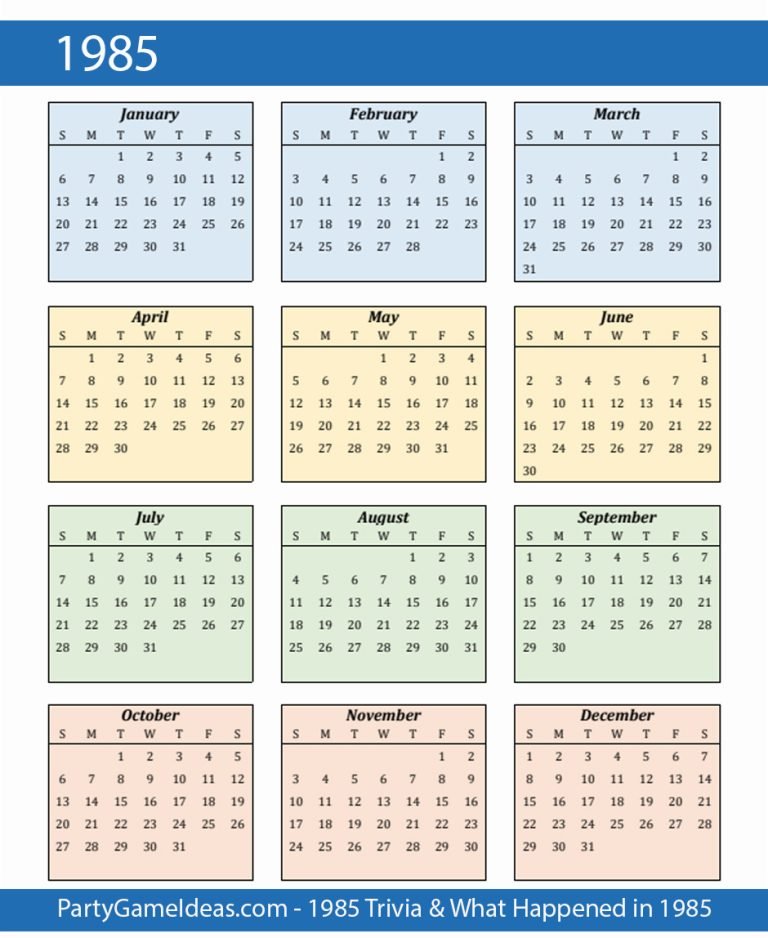
Nineteen eighty-five wasn’t just another year on the calendar; it was a crucible where the forces of technology, geopolitics, and culture converged, fundamentally altering the global landscape. If you’re wondering what historical events happened in 1985 that truly left an indelible mark, prepare to dive into a period brimming with breakthroughs and shifts that still resonate today. From the nascent internet taking its first structural steps to global humanitarian efforts uniting pop culture icons, this year laid crucial groundwork for the world we inhabit.
At a Glance: 1985’s Enduring Legacy
- Digital Foundations: The internet as we know it began to solidify with the creation of the Domain Name System (DNS).
- Global Connectivity: Mobile telecommunications took hold, and space exploration ventured further beyond Earth’s orbit.
- Humanitarian Milestones: Covert operations rescued thousands, while a groundbreaking charity single united musicians for a cause.
- Geopolitical Shifts: Nations grappled with apartheid, Cold War tensions, and new democratic aspirations.
- Societal Evolution: Media consumption, public safety, and cultural expressions underwent significant changes.
- Nature’s Impact: Extreme weather and tragic accidents served as stark reminders of vulnerability and resilience.
Forging the Digital Frontier: The Birth of Modern Connectivity
While the internet’s roots stretch back further, 1985 marked a pivotal year in its journey toward becoming a global public utility. On January 1, the Domain Name System (DNS) was created. This wasn’t just a technical tweak; it was the architectural blueprint that translated complex IP addresses into memorable, human-readable website names (like “google.com” instead of a string of numbers). Without DNS, navigating the internet would be a far more cumbersome, less intuitive experience, significantly hindering its eventual widespread adoption. This foundational step paved the way for the internet’s explosion in the decades that followed, shaping how we access information, communicate, and conduct business globally.
Simultaneously, the world of personal communication began its revolutionary shift. Also on January 1, the first British mobile phone call was made. This seemingly simple act, a call from London to Birmingham, symbolized the dawn of commercial mobile telecommunications in the UK. Though bulky and expensive at first, this moment foreshadowed a future where phones would become ubiquitous, untethering conversations and profoundly reshaping social interactions and business operations across the globe.
Beyond Earth’s atmosphere, 1985 also saw nations stretching their technological prowess. On January 7, Japan launched Sakigake, its first deep space probe, to study Halley’s Comet. This wasn’t just a scientific achievement; it positioned Japan as only the third nation, after the US and USSR, to launch an interplanetary spacecraft, signaling a broadening of space exploration capabilities and international scientific collaboration. The successful STS-51-C Space Shuttle mission (Discovery 3) later in January further demonstrated the ongoing advancements in orbital operations, though it also served as a prelude to the challenges the space program would face.
Navigating Global Humanitarian and Geopolitical Crossroads
The year opened with a focus on humanity, as International Youth Year commenced on January 1, aiming to draw attention to issues affecting young people worldwide. This humanitarian spirit was soon embodied in dramatic real-world action. Operation Moses, a covert mission to airlift approximately 8,000 Ethiopian Jews from refugee camps in Sudan to Israel, concluded on January 5. This complex, multi-national undertaking, involving intelligence agencies and militaries, highlighted the lengths to which nations would go for humanitarian and ethnic solidarity, even under immense international pressure when the operation was publicly confirmed.
Geopolitical tensions and the struggle for human rights continued to dominate headlines. On January 8, the African National Congress (ANC) marked its 73rd anniversary, intensifying calls for unity against apartheid and emphasizing the importance of international solidarity. This ongoing struggle reached a critical point when, on January 31, South African President P. W. Botha offered to free Nelson Mandela—but only if he renounced violence. Mandela famously refused, turning down an offer that would have ended his imprisonment but compromised the anti-apartheid movement’s principles. This refusal cemented his status as a global symbol of resistance.
Meanwhile, Latin America saw significant political shifts. On January 10, Daniel Ortega was inaugurated as the first elected President of Nicaragua since the Sandinista revolution. His inauguration, accompanied by an offer of amnesty to U.S.-backed rebels, underscored the complex Cold War dynamics playing out in the region, with Nicaragua seeking alliances with the Soviet Union and Cuba while attempting to normalize relations with the United States. Domestically, the Sanctuary Movement, a network of U.S. churches aiding Central American refugees, faced federal indictments on January 14, highlighting the ethical and legal dilemmas arising from humanitarian efforts crossing national borders.
The year also brought a significant reevaluation of international legal frameworks. On January 18, the U.S. renounced the jurisdiction of the World Court in a move that drew international criticism and signaled a shift in American foreign policy engagement with global judicial bodies. For a broader context on how these political and cultural currents converged to redefine the era, explore How 1985 Reshaped the World.
Societal Shifts and Cultural Milestones
Popular culture and social norms were also in flux. January 1 saw the debut of VH-1, a music television channel aimed at an older demographic than MTV. This expansion of music video programming further cemented the genre’s influence on pop culture and entertainment consumption. Later in the month, Rio de Janeiro erupted with the inaugural Rock in Rio music festival on January 11. Attracting nearly 1.4 million attendees and featuring rock legends, it set a new benchmark for large-scale international music festivals, demonstrating the power of music to bring massive crowds together.
Even long-standing traditions were re-evaluated. Playboy magazine announced on January 16 it would end stapling centerfolds, a small but symbolic move reflecting changing publishing practices and reader feedback. In the UK, a public outcry emerged on January 17 when British Telecom unveiled plans to replace the iconic red telephone boxes with modern kiosks, citing maintenance costs and accessibility issues. While practical, the public’s sentimental attachment led to thousands of the historic boxes receiving listed status, preserving a piece of cultural heritage. Further underscoring shifts in media and transparency, Britain’s House of Lords debate was televised for the first time on January 23, offering a rare glimpse into parliamentary proceedings.
Facing Nature’s Fury and Celebrating Sporting Triumphs
January 1985 brought severe environmental challenges to the United States. A severe Arctic cold wave swept across the country starting January 18, reaching record low temperatures. Chicago, for instance, recorded -27°F on January 20, with wind chills plummeting to -60°F. This extreme weather was responsible for at least 40 deaths and significantly impacted economic sectors. Florida’s citrus crop suffered an estimated $1.2 billion in losses due to the cold wave, highlighting the vulnerability of agriculture to climatic events. Meanwhile, on January 12, San Antonio, Texas, experienced its heaviest snowfall on record, paralyzing the city.
Beyond natural disasters, human error led to tragedy. On January 13, Africa’s worst railroad disaster occurred in Ethiopia when an express train derailed on a curved bridge over the Awash River gorge, killing at least 428 people. The accident, attributed to excessive speed and an overcrowded train, served as a grim reminder of infrastructure challenges and public safety concerns in developing nations.
Amidst these somber events, the world of sports provided thrilling moments. Super Bowl XIX was held on January 20, with the San Francisco 49ers dominating the Miami Dolphins 38-16, a game that cemented Joe Montana’s legacy as MVP. Individual athletes also achieved historic feats: legendary Edmonton Oilers center Wayne Gretzky scored his 400th career NHL goal on January 13 and his 50th goal in his 49th game of the season on January 26, showcasing his unparalleled dominance. Tennis great Martina Navratilova won her 100th tournament on January 14, joining an elite group of players. These athletic achievements captured public imagination and offered moments of collective joy and inspiration.
The Unseen Hand: Policy, Diplomacy, and Domestic Impacts
Beyond the headlines, policy decisions and diplomatic actions set important precedents. The year began with a notable step in public safety: New York implemented the US’s first mandatory seat belt law on January 1. This groundbreaking legislation, aimed at reducing traffic fatalities and injuries, marked the beginning of a nationwide trend that would fundamentally alter driving habits and save countless lives.
Globally, economic indicators also flashed warnings. The British pound sank to a record low of $US1.11 on January 14, reflecting underlying economic pressures and currency fluctuations on the international stage. In Brazil, a beacon of hope for democracy flickered when Tancredo Neves became the first elected President in 21 years on January 15, only to tragically die before taking office, plunging the nation into political uncertainty.
Even academic institutions weighed in on the political landscape. Oxford University’s decision on January 29 to refuse Prime Minister Margaret Thatcher an honorary degree was an unprecedented move, reflecting strong dissent within academia regarding her government’s policies, particularly those affecting education.
Understanding the Long Shadows: Why 1985 Still Matters
The events of January 1985, from the quiet creation of DNS to the international outcry over apartheid, demonstrate a world on the cusp of profound change. The technological leaps of mobile phones and interplanetary probes hinted at a future of unparalleled connectivity and discovery. Humanitarian crises sparked global responses, from covert airlifts to the unprecedented musical collaboration of “We Are the World” on January 28, where a supergroup of artists recorded a charity single to raise funds for Ethiopian famine relief—an iconic moment of celebrity activism.
These events weren’t isolated incidents; they were threads in a larger tapestry, shaping the geopolitical climate, influencing technological innovation, and redefining societal expectations. The challenges faced—from extreme weather to political deadlock—also offered crucial lessons in resilience, collective action, and the enduring human spirit.
Common Questions About 1985’s Defining Moments
Q: Was 1985 a significant year for technology?
A: Absolutely. The creation of the Domain Name System (DNS) was a monumental technical step for the internet, and the first commercial mobile phone calls signaled a new era in personal communication. Japan also launched its first deep space probe, marking a broadening of global space exploration capabilities.
Q: What major humanitarian efforts happened in 1985?
A: January saw the conclusion of Operation Moses, a covert airlift of 8,000 Ethiopian Jews to Israel. Later in the month, the recording of “We Are the World” brought together global music superstars to raise funds for Ethiopian famine relief, becoming a landmark event in celebrity philanthropy.
Q: How did 1985 reflect Cold War tensions?
A: The inauguration of Daniel Ortega as President of Nicaragua, emphasizing alliances with the Soviet Union and Cuba, clearly illustrated ongoing Cold War dynamics. The U.S. renouncing the jurisdiction of the World Court also suggested a more unilateral approach in international relations, a common feature of the Cold War era.
Q: Were there any major natural disasters in January 1985?
A: Yes, a severe Arctic cold wave impacted the United States, causing record low temperatures, numerous deaths, and an estimated $1.2 billion in damage to Florida’s citrus crop. San Antonio also experienced its heaviest snowfall on record.
Q: What was the significance of the “We Are the World” recording?
A: Recorded by the supergroup USA for Africa on January 28, it was a massive charitable undertaking bringing together an unprecedented roster of pop music’s biggest stars. It raised substantial funds for famine relief in Ethiopia and became an enduring symbol of humanitarian effort through popular culture.
1985’s Legacy: Your Takeaways for Historical Insight
Reflecting on what historical events happened in 1985 offers more than just a chronological recount; it provides critical insight into the complex interplay of forces that shape our world. The year demonstrated how:
- Small technical innovations can have global ripple effects: DNS, seemingly minor at the time, became the bedrock of the accessible internet.
- Humanitarian crises demand international solidarity: Operation Moses and “We Are the World” showcased the power of collective action, regardless of political differences.
- Political shifts are rarely isolated: From Nicaragua’s presidency to the ongoing struggle against apartheid, 1985 highlighted interconnected global politics.
- Societal values are always evolving: Changes in media, public safety laws, and even cultural institutions signaled changing norms and expectations.
Understanding 1985 isn’t just about looking back; it’s about recognizing the origins of many challenges and opportunities we face today. The seeds sown in that pivotal year continue to bear fruit, reminding us that every moment in history is a building block for the future.










