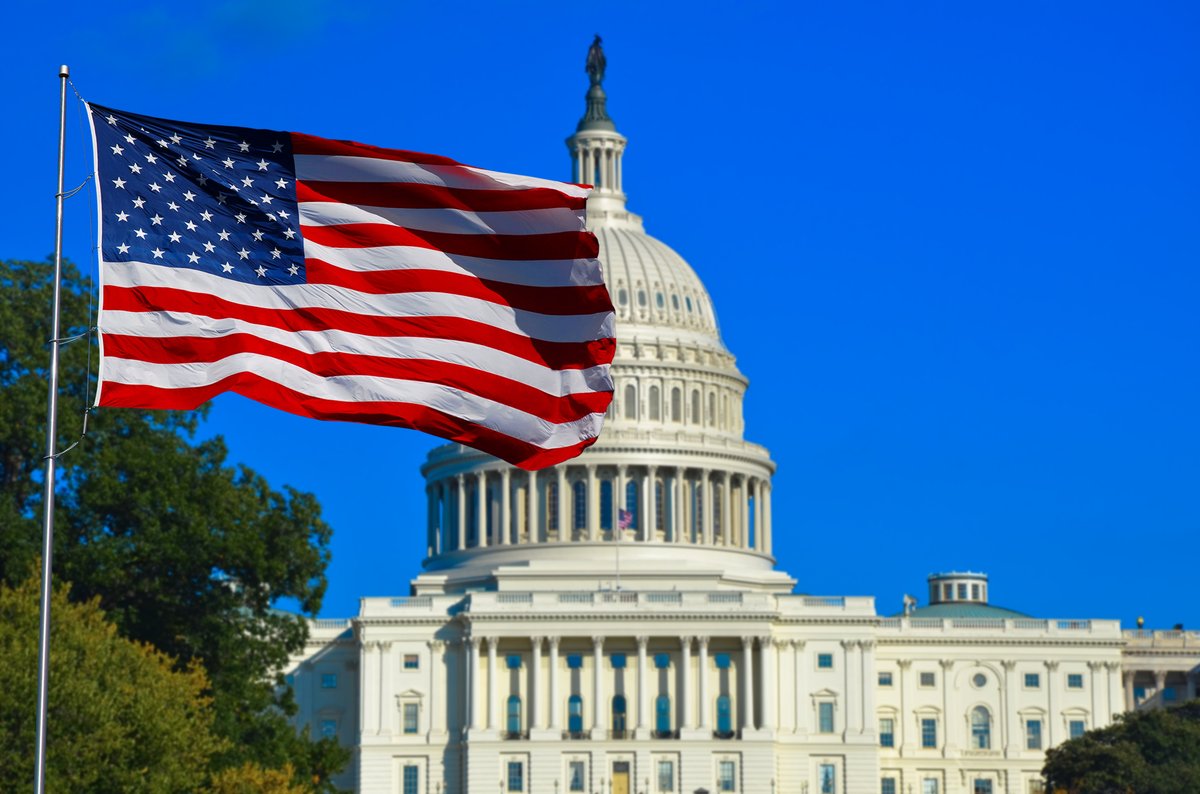
The story of the USA in 1959 is one of dramatic expansion, both on the map and into the cosmos. While the world grappled with revolutions and shifting alliances, Americans looked to new frontiers—welcoming two states that reshaped the nation’s geography and identity, while simultaneously launching the first tentative missions to escape Earth’s gravity. It was a year of profound contrasts: the birth of new cultural icons alongside the tragic death of others, and technological leaps that promised a brighter future while Cold War anxieties simmered just beneath the surface.
This was a year that set the stage for the turbulent decade to come. It was a moment when the post-war American dream was being defined not just by suburban homes and new cars, but by rocket launches, integrated circuits, and a brand-new, 50-star flag.
At a Glance: America’s Transformative Year
- A Bigger Nation: The US map was redrawn twice, with Alaska becoming the 49th state in January and Hawaii the 50th in August, expanding the country’s strategic reach and cultural diversity.
- The Space Race Intensifies: NASA made crucial strides, sending the Pioneer 4 probe past the Moon, announcing the first seven astronauts of Project Mercury, and successfully recovering the first primates from a space mission.
- Cultural Touchstones Emerge: 1959 gave us enduring icons like the Barbie doll and The Twilight Zone, while the tragic plane crash that killed Buddy Holly marked the symbolic end of rock and roll’s first era.
- Technological Seeds are Sown: The patent for the first integrated circuit was filed, a quiet event that would power the digital revolution. The first ballistic missile submarine, the USS George Washington, was launched, redefining nuclear deterrence.
- Cold War Confrontations: The famous “Kitchen Debate” between Vice President Nixon and Soviet Premier Khrushchev in Moscow put the ideological battle between capitalism and communism on vivid display for the world.
A Nation Redrawn: The 49th and 50th Stars
For the first time since 1912, the United States officially grew. The admission of Alaska and Hawaii was not just a procedural matter; it was a strategic and political maneuver that reflected the nation’s changing role in the world. These American milestones were part of a larger global narrative; in fact, you can see How 1959 changed the world in ways that still resonate today.
Alaska: The Cold War Frontier Becomes State #49
On January 3, 1959, President Dwight D. Eisenhower signed the proclamation admitting Alaska to the Union. This was the culmination of a long and often difficult campaign for statehood.
- Strategic Importance: Located just across the Bering Strait from the Soviet Union, Alaska’s value as a military outpost during the Cold War was immense. Its statehood solidified American control over a critical arctic region, providing locations for early-warning radar stations and air bases.
- The Political Calculus: The path to statehood was a classic example of political horse-trading. For years, Southern Democrats had blocked Alaska’s admission, fearing it would elect pro-civil rights senators. The breakthrough came when a deal was struck to admit politically conservative Hawaii alongside liberal-leaning Alaska, maintaining the partisan balance in the Senate.
For one year, from July 4, 1959, to July 3, 1960, the official flag of the United States featured 49 stars, a short-lived but historically significant design.
Hawaii: The Pacific Paradise Joins the Union
The process for Hawaii’s statehood moved swiftly in 1959. Congress passed the Hawaii Admission Act in March, and following a referendum in June where residents voted overwhelmingly in favor, President Eisenhower made it official on August 21.
- A Decisive Vote: The referendum result was staggering—a 94.3% “yes” vote—demonstrating the territory’s strong desire to become a fully integrated part of the nation.
- Cultural and Geopolitical Shift: Hawaii’s admission was a landmark moment. It was the first state with a majority non-white population, a significant step in the nation’s evolving understanding of its own diversity. Strategically, it anchored American presence in the central Pacific, reinforcing the importance of naval bases like Pearl Harbor.
Reaching for the Heavens: The Space Race Heats Up
While the map was changing on Earth, the ultimate frontier was opening up above. Stung by the Soviet Union’s early successes with Sputnik, the USA in 1959 poured resources and talent into its fledgling space agency, NASA. The year was marked by critical, foundational achievements.
Answering the Soviets with Pioneer and Primates
The year began with the USSR launching Luna 1, the first spacecraft to escape Earth’s gravity. America’s response was swift, though not as spectacular.
- Pioneer 4: Launched on March 3, Pioneer 4 became the first American spacecraft to achieve Earth escape velocity. While it missed its intended lunar flyby distance, passing within 37,000 miles of the Moon, it successfully entered a solar orbit, providing valuable data on radiation in deep space.
- Monkeys in Space: On May 28, a Jupiter rocket carried two monkeys—a rhesus named Miss Able and a squirrel monkey named Miss Baker—on a suborbital flight. Their successful recovery was a monumental achievement, proving that living beings could survive the extreme forces of launch and the weightlessness of space. This was a critical prerequisite for human spaceflight.
Putting a Human Face on the Final Frontier: The Mercury Seven
Perhaps the most significant space-related event of 1959 wasn’t a launch, but an announcement. On April 9, NASA introduced its first class of astronauts to the world: the Mercury Seven.
These seven military test pilots—Scott Carpenter, Gordon Cooper, John Glenn, Gus Grissom, Wally Schirra, Alan Shepard, and Deke Slayton—instantly became national heroes. They embodied the “Right Stuff” and transformed the abstract concept of space exploration into a tangible, human endeavor. Their selection marked the official start of America’s quest to put a man into orbit.
| Mercury Seven Astronauts | Branch of Service |
|---|---|
| M. Scott Carpenter | U.S. Navy |
| L. Gordon Cooper Jr. | U.S. Air Force |
| John H. Glenn Jr. | U.S. Marine Corps |
| Virgil I. “Gus” Grissom | U.S. Air Force |
| Walter M. Schirra Jr. | U.S. Navy |
| Alan B. Shepard Jr. | U.S. Navy |
| Donald K. “Deke” Slayton | U.S. Air Force |
Culture in Transition: Defining the American Experience
Beyond politics and science, 1959 was a year that shaped what Americans watched, bought, and listened to. It was a period of burgeoning consumer culture mixed with a palpable sense of anxiety about the future.
New Icons for a New Age
Three cultural debuts from 1959 have had an astonishingly long legacy:
- The Barbie Doll (March 9): Unveiled at the American International Toy Fair, Ruth Handler’s creation was more than a toy. Barbie represented an idealized, independent modern woman—a fashion model, a career woman, and a symbol of post-war consumer aspiration.
- The Guggenheim Museum (October 21): When Frank Lloyd Wright’s spiral-shaped museum opened in New York City, it was as much a work of art as the collection it housed. Its radical design challenged architectural norms and became an instant landmark, symbolizing the ascendancy of modernism.
- The Twilight Zone (October 2): Rod Serling’s anthology series was groundbreaking television. Using sci-fi and fantasy, it explored complex social issues—racism, conformity, nuclear paranoia, and McCarthyism—that were too controversial for traditional dramas.
The Day the Music Died
On February 3, a small plane crashed in an Iowa field, killing rock and roll pioneers Buddy Holly, Ritchie Valens, and J.P. “The Big Bopper” Richardson. The event, later immortalized by Don McLean as “The Day the Music Died,” was a profound shock. It felt like the end of rock and roll’s innocent, exuberant first wave, marking a transition toward the more produced and complex sounds of the 1960s.
Innovation and Industry: Building the Future
Behind the headlines were quieter but equally revolutionary developments in technology and industry that would define American life for decades.
The Chip That Changed Everything
On February 6, a little-known engineer at Texas Instruments named Jack Kilby filed a patent for a “miniaturized electronic circuit.” This was the world’s first integrated circuit.
While its impact wasn’t immediate, this invention was arguably the most important of the year. By placing all the components of an electronic circuit onto a single piece of semiconductor material (a “chip”), Kilby paved the way for modern electronics. Everything from calculators and personal computers to smartphones and spacecraft owes its existence to this fundamental breakthrough.
Cold War Hardware and Economic Headwinds
The arms race continued to drive innovation. On June 9, the USS George Washington was launched, the first submarine designed to carry and fire nuclear ballistic missiles. This created the third leg of America’s nuclear triad (along with bombers and land-based ICBMs), making its deterrent force far more survivable and secure.
On the home front, the economy faced a major test. The 1959 Steel Strike, which began on July 15, idled nearly half a million workers for 116 days. The massive industrial dispute crippled steel production and had a ripple effect across the auto and construction industries, eventually forcing President Eisenhower to intervene. The strike highlighted the immense power of organized labor in post-war America.
Quick Answers to Key Questions About 1959 in the USA
Q: Why were Alaska and Hawaii admitted in the same year?
A: It was primarily a political compromise. Alaska was expected to lean Democratic, while Hawaii was seen as a likely Republican state. Admitting them together was a way for both parties in Congress to agree, as it wouldn’t upset the delicate balance of power in the U.S. Senate.
Q: How far behind was the US in the Space Race in 1959?
A: In terms of “firsts,” the US was significantly behind. The Soviet Union achieved the first satellite (1957), first probe to escape Earth’s gravity (Luna 1), first impact on the Moon (Luna 2), and first photos of the Moon’s far side (Luna 3), all by October 1959. However, the US was rapidly building foundational capabilities, such as proving primates could survive spaceflight and establishing the Mercury program, which would pay off in the following decade.
Q: What was the “Kitchen Debate” and why did it matter?
A: The “Kitchen Debate” was an impromptu series of exchanges between Vice President Richard Nixon and Soviet Premier Nikita Khrushchev at the American National Exhibition in Moscow on July 24. Standing in a model American kitchen, they debated the merits of capitalism and communism. The exchange, broadcast on television, was a powerful piece of Cold War propaganda for the U.S., framing the conflict not just as military but as a competition between lifestyles, with American consumer abundance as a key strength.
Q: Was the 49-star flag ever officially used?
A: Yes, absolutely. The 49-star flag was the official flag of the United States for exactly one year, from July 4, 1959, to July 3, 1960. It was flown over federal buildings and used by the military during that period before being replaced by the 50-star flag we know today.
A Nation on the Brink of a New Decade
The USA in 1959 was a nation in motion. It was physically larger, its technological ambitions were boundless, and its culture was producing new, powerful forms of expression. The year’s events—from the statehood celebrations in Anchorage and Honolulu to the rocket tests at Cape Canaveral and the quiet patent filing in Texas—were not isolated incidents. They were the building blocks of the 1960s, a decade that would see America land on the Moon, confront deep social divisions, and fully embrace the consequences of the technological and cultural seeds planted in this pivotal year. The nation that entered 1960 was bigger, faster, and more complex than the one that had begun 1959.










