
Of all the unusual happenings in the world, the ones that stick with us are often those without a clear explanation—a mysterious explosion in Siberia, a town that danced itself to death. But while mystery is captivating, the true power lies in the bizarre events that, against all odds, irrevocably altered the course of human history. These aren’t just strange anecdotes; they are the unpredictable catalysts that shattered norms, sparked innovation, and rewrote the rules of society.
History isn’t a straight line. It’s a chaotic web of cause and effect, and sometimes the cause is a tidal wave of beer or a stubborn flock of emus. Understanding these moments reveals how fragile our systems are and how progress often emerges not from a grand plan, but from a truly spectacular failure.
At a Glance: What You’ll Learn
- The Hidden Mechanisms of Change: Discover how freak accidents and natural disasters can expose deep societal flaws and force rapid innovation.
- Three Categories of Bizarre Catalysts: Learn to identify the patterns behind history-altering events, from environmental cataclysms to mass psychological breaks.
- A Framework for Analysis: Get a simple, practical method for tracing the long-term impact of any strange historical event.
- Real-World Consequences: See how a molasses flood led to modern engineering standards and a volcanic eruption inspired a literary masterpiece.
While history is full of countless strange occurrences, from raining meat to putting a dead pope on trial, the most fascinating are those that left a permanent mark. To explore a wider catalog of these moments, you can Discover history’s strangest truths. Here, we’ll focus on dissecting how these unusual happenings rewired society.
When Nature Disrupts: Environmental Cataclysms with Lasting Impact
Massive, unexpected environmental events act as a hard reset button for civilizations. They don’t just cause destruction; they obliterate the status quo, forcing survivors to adapt or perish. These disasters reveal the fragility of our food supplies, social structures, and even our climate.
The Year Without a Summer (1816)
In 1815, Mount Tambora in the Dutch East Indies erupted in the largest volcanic explosion in recorded history. The blast was catastrophic locally, but its global impact was even more profound. The eruption ejected immense amounts of volcanic ash and sulfur dioxide into the stratosphere, forming a veil that partially blocked sunlight and dramatically cooled the planet.
The result was 1816’s “Year Without a Summer.” Frost and snow were reported in June and July across North America and Europe.
- The Impact: Widespread crop failures led to the worst famine of the 19th century. Food riots broke out in the UK and France, and desperate families migrated from the eastern United States westward in search of more fertile land. The relentless gloom and social upheaval also had a cultural impact; confined indoors by the miserable weather during a Swiss vacation, a group of friends challenged each other to write ghost stories. One of them, a young Mary Shelley, wrote Frankenstein.
The Mississippi River Flows Backward (1812)
In the winter of 1811-1812, a series of colossal earthquakes struck along the New Madrid Seismic Zone in the central United States. The quakes were so powerful they were felt over 1,000 miles away, ringing church bells in Boston. The most bizarre effect occurred along the Mississippi River, where the violent uplift of the land caused the river to temporarily flow backward.
- The Impact: While the region was sparsely populated, the event was a national shock. It demonstrated a vulnerability no one had anticipated. In response, Congress passed the first disaster relief act in American history, providing aid to the settlers whose lands had been destroyed. It set a crucial precedent for federal government intervention in natural disasters.
Human Error as a Catalyst: How Accidents Rewrote the Rules
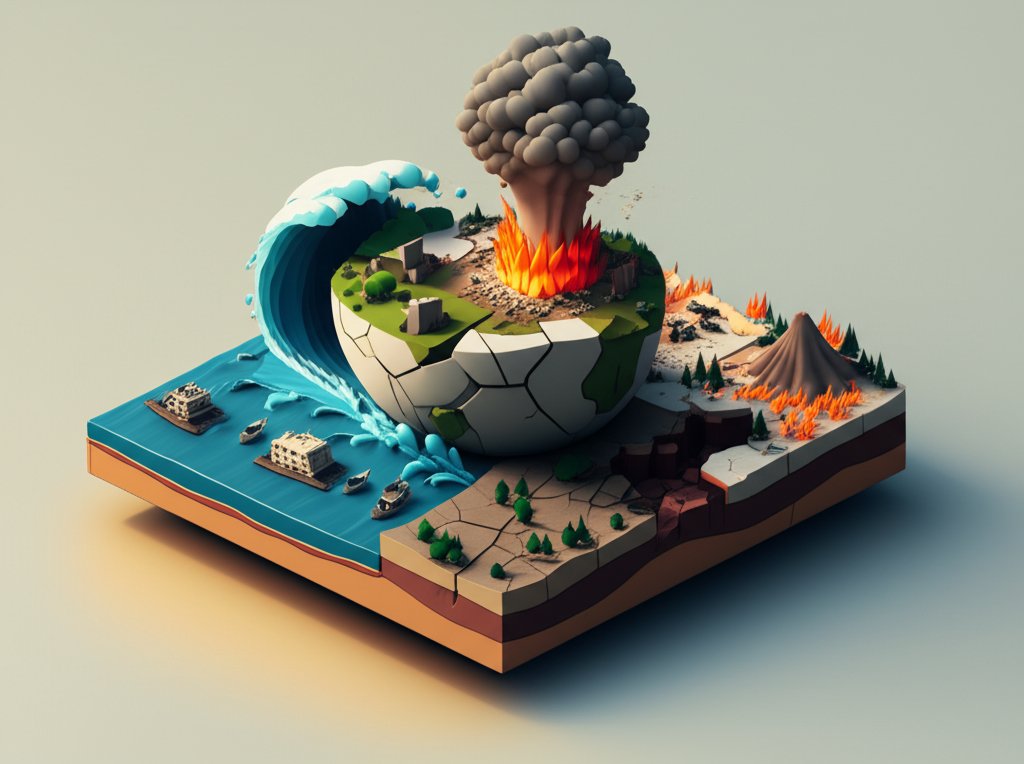
Sometimes, the most profound changes come not from an act of God, but from a spectacular human mistake. These events are often localized, messy, and even absurd, but they expose critical flaws in industrial processes, urban planning, and public safety, forcing society to create regulations we now take for granted.
The London Beer Flood of 1814
In the heart of London, the Meux and Company Brewery housed enormous wooden vats of fermenting beer. On October 17, 1814, a massive 22-foot-high vat containing over 135,000 imperial gallons of porter burst. The chain reaction broke other vats, releasing a tidal wave of approximately 323,000 gallons of beer into the impoverished neighborhood of St. Giles. The wave destroyed homes and killed eight people, most of them by drowning.
- The Reshaping: In the subsequent legal battle, the disaster was ruled an “Act of God,” absolving the brewery of financial responsibility. However, the event was a brutal wake-up call. It highlighted the dangers of large-scale industrial production in dense urban areas without proper oversight. The flood marked a turning point, gradually leading to the phasing out of huge wooden fermentation vats and contributing to a growing movement for industrial safety regulations and corporate accountability.
The Great Boston Molasses Flood of 1919
Just after midday on a surprisingly warm January day, a massive steel tank containing 2.3 million gallons of molasses ruptured in Boston’s North End. A 25-foot-high wave of thick, sticky syrup surged through the streets at an estimated 35 mph, powerful enough to tear buildings from their foundations and buckle the girders of an elevated railway. The disaster killed 21 people and injured 150 more.
- The Reshaping: The cleanup took weeks, but the legal battles lasted for years. The company that owned the tank tried to blame anarchists for blowing it up. However, a lengthy investigation proved the tank was poorly constructed and never properly tested. The court’s ruling against the company was a landmark case that helped establish the precedent for modern engineering and architectural safety standards, including requirements for professional oversight, signed plans, and safety calculations. Every time an architect or engineer stamps a blueprint today, they are following a legacy shaped by that tragic, sticky flood.
Bizarre Conflicts That Defied Logic

War is a primary engine of historical change, but not all wars are fought for grand ideological or territorial reasons. Some of the most unusual happenings in the world involve conflicts sparked by the most trivial of objects or against the most unlikely of foes, revealing deep-seated tensions and leading to unexpectedly significant outcomes.
The War of the Oaken Bucket (1325)
This conflict between the rival northern Italian city-states of Bologna and Modena was part of a larger power struggle but is famously remembered for its absurd catalyst. A group of Modena soldiers snuck into Bologna and stole the oak bucket from the city’s main well. Outraged, Bologna demanded its return. Modena refused, and Bologna declared war.
- The Impact: The ensuing Battle of Zappolino was shockingly brutal, with thousands of casualties. Although Modena won the battle and kept the bucket (it’s still on display today), the war drained both cities of resources and manpower. It stands as a stark reminder of how easily deep-seated political rivalries (in this case, between the Guelphs and Ghibellines) can be ignited by a seemingly meaningless symbol, escalating honor and pride into full-blown, devastating conflict.
The Great Emu War (1932)
Following World War I, the Australian government settled many veterans in Western Australia as farmers. Their timing was poor; the Great Depression hit, and their wheat crops were then besieged by an estimated 20,000 emus migrating inland. The frustrated farmers, many of them ex-soldiers, petitioned the government for help. The Minister of Defence agreed, dispatching troops armed with two Lewis machine guns.
- The Impact: The military operation was a complete failure. The emus proved to be brilliant guerrilla tacticians, scattering into small groups and running in unpredictable patterns, making them nearly impossible targets. After using thousands of rounds of ammunition to kill only a handful of birds, the military withdrew in humiliation. This “war” became a national embarrassment but served as a powerful, if comical, lesson in underestimating an ecological challenge. It highlighted the futility of applying a purely military solution to a complex agricultural and environmental problem.
How to Spot the Ripple Effect: A Framework for Analyzing Bizarre History
You can apply a simple framework to understand how these strange events create lasting change. It’s about looking beyond the initial shock and tracing the chain reaction.
| Step | Action | Example: The Great Molasses Flood (1919) |
|---|---|---|
| 1. Identify the Catalyst | What was the initial, unusual event? | A poorly constructed steel tank holding 2.3 million gallons of molasses burst in Boston. |
| 2. Trace the Immediate Aftermath | Who and what was directly affected? What was the immediate response? | 21 deaths, 150 injuries, buildings destroyed. The immediate response was a massive, difficult cleanup and rescue effort. |
| 3. Uncover the Systemic Flaw | What underlying weakness did the event expose? | The complete lack of industrial regulation, safety standards, and engineering oversight for large-scale private construction projects. |
| 4. Pinpoint the Lasting Change | What new law, technology, social norm, or political shift resulted? | Landmark court rulings established corporate culpability. This led directly to laws requiring that engineers and architects review and sign off on all major construction plans, a practice that is now standard worldwide. |
Quick Answers to Common Questions
Q: Are these events really that important, or are they just historical footnotes?
A: They are far more than footnotes. While they might seem like isolated oddities, they act as powerful stress tests for a society’s systems. The Black Death, for example, was a horrifying pandemic that killed nearly half of Europe’s population. This massive labor shortage empowered the surviving peasants to demand better wages and conditions, fatally weakening the feudal system and paving the way for the economic and social shifts of the Renaissance. The bizarre event—the plague—was the catalyst for a fundamental reordering of society.
Q: How can we distinguish a true historical event from a myth or a hoax?
A: This is where historical rigor comes in. The key is corroboration. For an event like the Dancing Plague of 1518, we have multiple independent contemporary sources: civic records, sermons, and notes from physicians, all describing the same phenomenon. In contrast, a conspiracy like the Phantom Time Hypothesis, which claims 300 years of the Middle Ages were fabricated, is rejected by historians because it has no corroborating evidence and contradicts mountains of archaeological, astronomical, and written records from across the globe.
Q: What’s the most common outcome of these unusual happenings?
A: The most frequent and tangible outcome is regulation. The London Beer Flood, the Great Molasses Flood, and even the tragedy of the Titanic all led directly to new laws and safety standards. Bizarre and tragic failures are exceptionally effective at capturing public attention and creating the political will needed to force industries to adopt safer practices. They prove that sometimes, progress isn’t planned; it’s a reaction to something going horribly, and often strangely, wrong.
The Unpredictable Engine of History
The past is not just a story of powerful leaders and decisive battles. It is also a story of accidents, manias, and miscalculations. These unusual happenings in the world are not mere curiosities; they are proof that history turns on the smallest and strangest of hinges.
By studying a volcanic eruption that inspired a gothic masterpiece or a flood of molasses that rewrote engineering law, we learn a crucial lesson: progress is often accidental. The systems we rely on are more fragile than we think, and the next major shift in our world might not begin in a parliament or on a battlefield, but with a bizarre event that no one saw coming.










