
Close your eyes and picture a Viking. You probably see a hulking, bearded giant in a horned helmet, draped in drab furs and caked in mud. This popular image, cemented by TV shows and movies, is powerful, but it’s also a fantasy. Answering the question of what did vikings really look like requires us to set aside the horned helmet and look at the fascinating evidence left behind by the Norse people themselves.
The reality, pieced together from archaeology, DNA analysis, and historical texts, paints a picture of a people far more diverse, colorful, and meticulously groomed than their brutish pop culture counterparts.
At a Glance: Viking Appearance Facts vs. Fiction
Before we dismantle the myths, here’s a quick overview of what to expect:
- Grooming: Vikings were surprisingly clean and well-groomed, not filthy barbarians. Combs are one of the most common archaeological finds.
- Helmets: The iconic horned helmet is a complete myth. Real Viking helmets were simple, practical iron caps.
- Stature: They were tall for their time but not the superhuman giants of legend. Their builds were strong and muscular.
- Diversity: “Viking” wasn’t a race. Genetic studies show a mix of Scandinavian, British, Irish, and other European ancestries.
- Clothing: Forget the drab leathers and furs. Vikings loved color, wearing brightly dyed clothes made of wool and linen.
- Facial Features: Skeletal remains suggest more gender-neutral facial structures than modern Scandinavians, with men having leaner faces and women having stronger jawlines.
Deconstructing the Mythical TV Viking
The on-screen Viking is built for drama, not historical accuracy. Let’s break down the most persistent—and inaccurate—visual tropes one by one.
The Horned Helmet: Pop Culture’s Biggest Lie
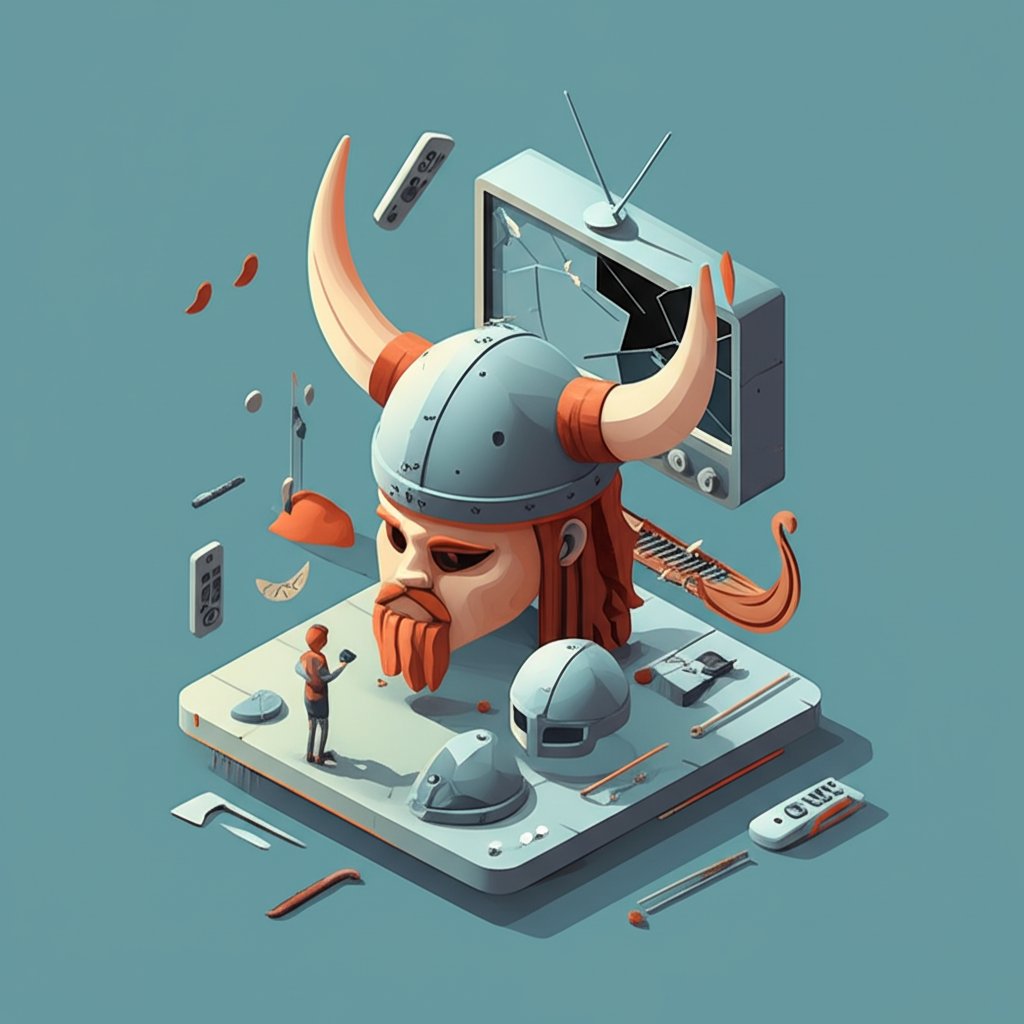
This is the most glaring inaccuracy. There is zero archaeological or historical evidence that Vikings ever wore horned helmets into battle. The few authentic Viking-Age helmets that have been discovered, like the one from Gjermundbu in Norway, are simple, dome-shaped iron caps with a nose and eye guard. They were functional, offering protection without cumbersome and impractical horns that an enemy could easily grab.
So, where did the myth come from? The horned helmet was an invention of 19th-century romanticism, popularized by costume designer Carl Emil Doepler for an 1876 production of Richard Wagner’s opera Der Ring des Nibelungen. The image was dramatic, memorable, and has stuck in the public consciousness ever since.
Hulking Giants vs. Historically Strong Stature
Shows like Vikings or The Last Kingdom often cast actors who are well over six feet tall to portray Norse warriors as veritable giants. While Vikings were indeed formidable, their size was more realistic.
Skeletal analysis shows the average Viking-Age man stood between 171-176 cm (about 5’7″ to 5’9″). While this is average by today’s standards, it made them taller than many of their European contemporaries, such as the Anglo-Saxons. Their skeletons also show significant muscle mass, a direct result of a physically demanding life of farming, sailing, and raiding, all powered by a protein-rich diet of fish and meat. They were strong and stocky, not giants.
Filthy Barbarians or Fastidious Groomers?
The image of the mud-splattered, unkempt Viking is another dramatic invention. The archaeological record tells a completely different story. Personal grooming tools like combs (often beautifully carved from bone or antler), tweezers, and even ear spoons are found in abundance at Viking sites.
Historical accounts support this. The 12th-century English chronicler John of Wallingford complained that the Danish Vikings were too popular with English women precisely because of their grooming habits. He noted they combed their hair daily, bathed weekly on a day called Laugardagur (“bathing day,” the origin of the modern Scandinavian words for Saturday), and changed their clothes frequently.
A More Accurate Portrait: Face, Hair, and Eyes
Moving past the myths, what did the average Norse person actually look like? Genetics and skeletal forensics give us a much clearer picture.
Reconstructing the Viking Face
Recent analysis of Viking skeletons reveals fascinating details about their facial structures. Compared to modern Scandinavians, their features were often more gender-neutral.
- Men: Tended to have more slender, “feminine” facial features than is common today.
- Women: Often possessed more prominent “masculine” features, including a stronger jawline and a more pronounced brow ridge.
Overall, they had softer jawlines and brow ridges than their modern descendants. These subtle but important details challenge the hyper-masculine, square-jawed stereotype we see on screen.
Hair and Beards: A Source of Pride
Hair was incredibly important in Norse culture. Long hair was common for both men and women, and a full beard was a sign of virility and honor for a man. Their dedication to grooming meant these weren’t messy, matted affairs. Sagas and poems are filled with references to well-kept hair.
Documented men’s hairstyles include:
- Shoulder-Length: Simple and practical.
- Topknots or Braids: To keep hair out of their eyes during work or battle.
- The “Norman Cut”: A unique style described as long in the front (bangs) but shaved in the back of the head.
Hair color was also more varied than the “exclusively blonde” stereotype suggests. Genetic studies and historical accounts show a regional diversity: - Blonde hair was most common in the area of modern-day Sweden.
- Red hair was more frequently found among Norse people from Norway.
- Brown hair was widespread across all of Scandinavia.
Furthermore, Vikings used a strong lye-based soap for cleaning that had a side effect of bleaching hair. This might have been an intentional cosmetic choice for some, lightening their hair and beards to a pale blond.
Eyes: Beyond the Stereotypical Blue
While genetic evidence confirms that light-colored eyes (blue, green, or hazel) were very common, much like in modern Scandinavia, it also suggests a higher proportion of brown eyes than is prevalent in the region today. This genetic diversity stems from the Vikings’ extensive travel, trade, and settlement. As they integrated with people from the British Isles, Southern Europe, and Eastern Europe, the gene pool diversified.
A surprising detail mentioned by an Arab diplomat, Ibrahim al-Turtushi, who visited the Viking trading town of Hedeby in the 10th century, is that both men and women wore a dark makeup, likely kohl, around their eyes. This was done “to increase their beauty,” suggesting a cosmetic practice far removed from the “natural savage” look of media.
The Reality of Viking Wardrobe and Gear

The final piece of the puzzle is what they wore and carried. Once again, reality was far more colorful and practical than the fantasy.
From Drab Furs to Colorful Threads
Forget the monotonous palette of brown and black leather that dominates TV shows. Archaeological finds of textile fragments, combined with knowledge of historical dyes, prove that Vikings loved color. Their clothes, made primarily from wool and linen, were dyed in vibrant shades of red, blue, yellow, and green using plant-based dyes.
A typical outfit consisted of:
- Men: A wool tunic worn over linen trousers, which could be either baggy or close-fitting. A belt, cloak, and simple leather shoes completed the look.
- Women: A long linen under-dress (a smock or chemise) with a distinctive woolen over-dress called a hangerok or “apron-dress.” This garment was held up by two straps fastened at the shoulders with a pair of large, ornate brooches.
Jewelry was a key part of their attire for both genders, serving as a visible display of wealth and status. Arm-rings, necklaces, and brooches made of bronze, silver, and gold were common. This focus on appearance and craftsmanship is central to understanding What Vikings truly looked like in their social context.
The Historical Viking vs. The Media Viking: A Quick Comparison
| Feature | Media Depiction | Historical Reality |
|---|---|---|
| Helmet | Horned or elaborately decorated | Simple iron cap (conical or rounded) |
| Grooming | Dirty, unkempt, matted hair | Clean, well-groomed; weekly baths |
| Clothing | Drab leather and fur | Colorful, dyed wool and linen |
| Stature | Giant, superhuman build | Tall for the era (5’7″-5’9″), but realistically muscular |
| Diversity | Homogenous, “pure” Scandinavian | Genetically diverse (Scandinavian, British, Irish, etc.) |
| Makeup | Non-existent | Kohl-like eye makeup used by both men and women |
Quick Answers to Common Questions
Let’s tackle a few more specific questions that often come up when discussing what Vikings really looked like.
Were all Vikings blonde?
No. This is a common stereotype. While blonde hair was prevalent, especially in areas like Sweden, red and brown hair were also very common. Genetic studies confirm a mix of hair colors, with red hair being particularly associated with Norwegian Vikings who settled in Ireland and Scotland.
Did Vikings have tattoos?
This is a strong possibility, but direct archaeological proof (like preserved skin) is lacking. Our main source is the 10th-century Arab traveler Ahmad ibn Fadlan, who described a group of Scandinavian traders known as the Rus’. He wrote that they were covered from “fingernails to neck” with dark green or blue patterns resembling trees and symbols. While he was describing the Rus’ on the Volga River, not Vikings in Scandinavia, the cultural connection makes it highly plausible that tattooing was practiced more widely.
Were Vikings just one ethnic group?
Not at all. “Viking” was originally a job description—it meant to go raiding or exploring. The people we call Vikings were Norsemen from modern-day Denmark, Norway, and Sweden. However, their raiding parties and settler groups were often multicultural. DNA from Viking graves in Britain shows individuals with local ancestry, and Norse graves in Scandinavia contain people with genetic roots in Southern and Eastern Europe.
What’s the story with their filed teeth?
This is one of the most intriguing and mysterious aspects of Viking appearance. Numerous male skulls found in Scandinavia, particularly on the island of Gotland, have deep, horizontal grooves intentionally filed into their front teeth. We don’t know for sure why they did this, but theories range from it being a status symbol for experienced warriors to the grooves being filled with colored pigment to create an intimidating look in battle.
Seeing Past the Stereotype
The difference between the media Viking and the historical Viking is stark. The pop culture version is a simple, brutish warrior—a caricature designed for entertainment. The real person from the Viking Age was far more complex: a well-groomed, colorfully dressed individual who could be a farmer, a trader, an explorer, or a raider.
By shedding the myths of horned helmets and grimy appearances, we get a clearer, more human picture. We see people who cared about their appearance, valued their heritage, and were connected to a wider, more diverse world than the fantasy epics ever let on. The next time you see a Viking on screen, you can appreciate the drama while knowing the reality was infinitely more interesting.










