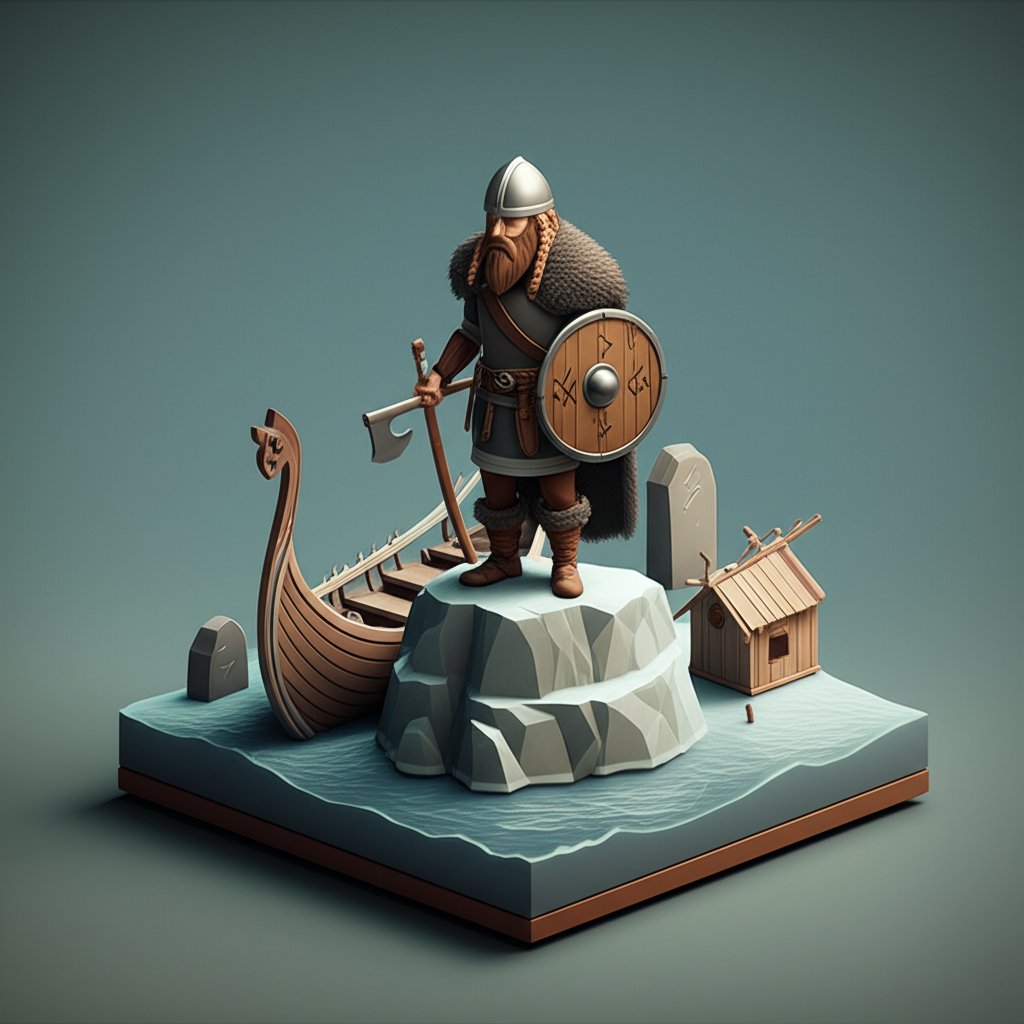
Forget the towering, horned-helmeted brutes of Hollywood for a moment. The reality of what did Vikings look like is far more complex, diverse, and frankly, more interesting than the caricature we’ve come to know. It’s a story pieced together not from fantasy epics, but from skeletons, scraps of clothing, DNA analysis, and the accounts of people who met them face-to-face.
The image of a Viking is often a one-dimensional warrior: huge, dirty, and uniformly blonde. But the archaeological and genetic evidence paints a picture of a people who were stylish, surprisingly hygienic, and more genetically diverse than you might think. They were farmers, traders, and artisans just as often as they were raiders.
This guide cuts through the myths to reveal the human face of the people from the Viking Age (roughly 793–1066 AD). We’ll dig into the science and history to show you what they really looked like, from their height and build to the colors they wore and the way they styled their hair.
The Viking Appearance: At a Glance
Pressed for time? Here are the essential facts that challenge the common stereotypes about the Viking look.
- Height: They were shorter than most of us are today. The average Viking man stood at about 5’6″ (172 cm), and the average woman was about 5’1″ (158 cm). They were, however, considered tall by the other European peoples they encountered.
- Build: Life was physically demanding, making both men and women more muscular and robust than the average modern person. They were strong, but not superhuman giants.
- Hair & Eyes: Not everyone was blonde. While fair hair was common, especially in the north, red hair was dominant in western Scandinavia (like Denmark), and DNA evidence shows many had brown or black hair. Light-colored eyes (blue, green, or hazel) were very common.
- Grooming: Far from being dirty, Vikings were meticulous about hygiene. Archaeological sites are full of combs, tweezers, and ear spoons. They bathed weekly, on a day that became known as “laugardagur” or “washing day”—the origin of the modern Scandinavian words for Saturday.
- Facial Features: Interestingly, skeletal remains suggest Viking men and women had more similar facial structures than we see today. Women had more prominent brow ridges, while men had slightly more “feminine” features than their modern counterparts.
- Diversity: The Viking world was a melting pot. Genetic studies on Viking skeletons reveal ancestry from Southern Europe, Asia, and the British Isles, proving they mixed with the people they met on their travels.
Beyond the Stereotype: The Viking Physique
When we picture a Viking, we often imagine a warrior who could stare down a bear. While they were certainly tough, the reality of their physical stature was shaped by the practicalities of diet, labor, and genetics.
How Tall Were Vikings, Really?
Based on the excavation of hundreds of Viking skeletons across Scandinavia, we have a clear picture of their average height. As mentioned, men were around 5’6″ and women were around 5’1″. This is about 8-10 cm shorter than modern Scandinavians.
So why do historical accounts, like that of the Arab diplomat Ibn Fadlan, describe them as being “tall as date palms”? It’s all about context. The average height of people in other parts of Europe at the time was shorter. So, to an observer from England or the Middle East, a group of Scandinavian men would have appeared impressively tall and imposing.
A Life of Labor Forged a Powerful Build
The Viking Age was not a time of leisure. Whether farming the rocky soil, rowing a longship across the North Sea, or smithing iron tools, daily life was a full-body workout. This constant physical exertion meant that both men and women were stronger and more muscular than the average person today.
Skeletal remains show robust bone structures and strong muscle attachment points. They were not bodybuilders, but they were powerful, hardy people forged by a life of hard work. This physical prowess, combined with a diet rich in protein from fish, meat, and dairy, contributed to their formidable reputation. Unfortunately, this hard life also meant a shorter lifespan; most Vikings didn’t live past 40 or 50. Exploring the life of a [realistic viking] reveals a world of constant, grueling effort.
A Face from the Past: Reconstructing Viking Features
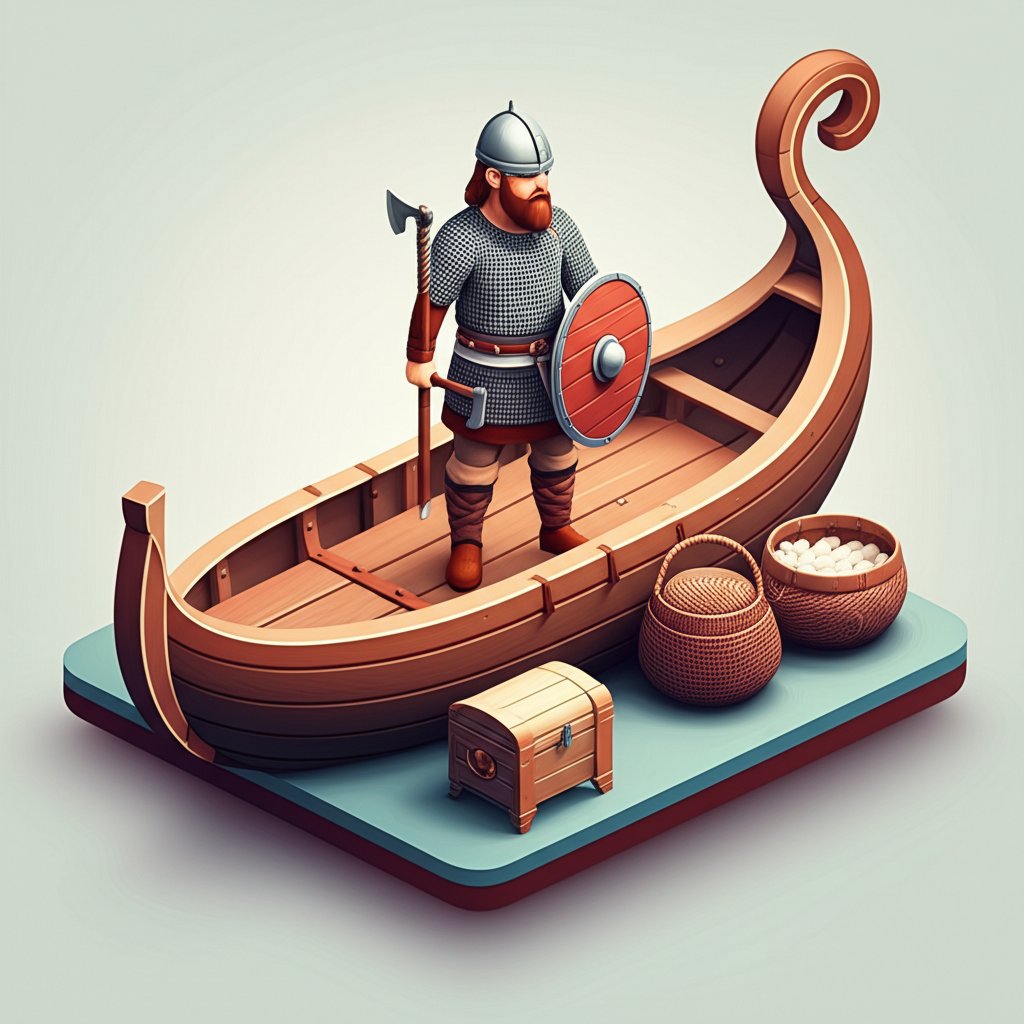
Thanks to modern archaeology and genetic science, we can move beyond speculation and reconstruct the faces of the Viking Age with surprising accuracy. What we’ve found is a diverse population that defies any single description.
Not All Blondes and Blue Eyes
The quintessential Viking is blonde-haired and blue-eyed, and while this was a common combination, it was far from universal. A landmark 2020 DNA study of 442 Viking skeletons confirmed a surprising level of genetic diversity.
- Blonde Hair was most common in northern Scandinavia, around the area of modern-day Stockholm, Sweden.
- Red Hair was much more prevalent in western Scandinavia, particularly Denmark.
- Brown and Black Hair were also common, a result of Vikings mixing with people from the British Isles, Southern Europe, and even Asia.
This genetic mixing means that a Viking crew pulling up on the shores of England could have included blondes, redheads, and brunettes all standing side-by-side. Their eyes were predominantly light-colored—shades of blue, green, and hazel were the norm.
Blurring the Lines: Male and Female Faces
One of the most intriguing discoveries from skeletal analysis is that the facial features of Viking men and women were less distinct than they are today.
Researchers found that women often had more pronounced brow ridges and stronger jawlines than modern women—features we might consider more “masculine.” Conversely, men’s faces were slightly softer and more “feminine” than today’s males, with less prominent jaws and brows. This isn’t to say you couldn’t tell men and women apart, but the sharp facial distinctions we’re used to were less pronounced.
When the Arab diplomat Ibn Fadlan encountered the Rus’ Vikings on the Volga River, he was struck by their appearance, calling them “perfect physical specimens… blond and ruddy.” His account gives us a rare, contemporary glimpse into how they were seen by outsiders.
Meticulously Groomed: Hair, Beards, and Hygiene
One of the biggest myths to bust is that of the dirty, disheveled Viking. All evidence points to the exact opposite. Vikings were deeply concerned with their appearance and hygiene, a fact that both archaeological finds and written sources confirm. This is a key part of understanding [What did Vikings really look like].
The Pride of a Good Hairstyle
Hair was a huge part of Viking identity. Nicknames were often based on it, as seen with famous figures like Harald Fairhair or Sweyn Forkbeard. Sagas and poems are filled with references to well-kept hair.
For men, styles varied:
- Shoulder-length hair was common and practical.
- Braids and ponytails kept hair out of their eyes during work or battle.
- The “Norman cut” or reverse mullet was also popular: shaved in the back with long hair and bangs in the front.
Women typically wore their hair long, often in intricate braids or knots. Some historical reconstructions show them weaving in colorful ribbons or even tiny beads. The famous Oseberg ship burial contained a wealthy woman whose remains suggest a life where presentation and style were clearly important.
The Sacred Beard
For a Viking man, a beard was a symbol of virility and honor. They were often carefully trimmed, oiled, and sometimes even braided. An unkempt beard might be a sign of mourning or social disgrace. The sheer number of combs found in Viking graves—often the most common grave good for both sexes—speaks volumes about how much they cared for their hair and beards.
The Saturday Bath
The Old Norse word for Saturday is laugardagur, which literally translates to “washing day.” This tradition of a weekly bath was so ingrained that English churchman John of Wallingford complained around 1220 that the Danish Vikings in England were too popular with local women because they “combed their hair every day, bathed every Saturday and changed their clothes frequently.”
Archaeologists regularly find personal grooming kits containing:
- Combs: Usually made of bone or antler.
- Tweezers: For plucking stray hairs.
- Ear Spoons: For cleaning wax from their ears.
Far from being filthy savages, Vikings were likely among the cleaner and better-smelling people in medieval Europe.
More Than Just Raiders: Adornment and Expression
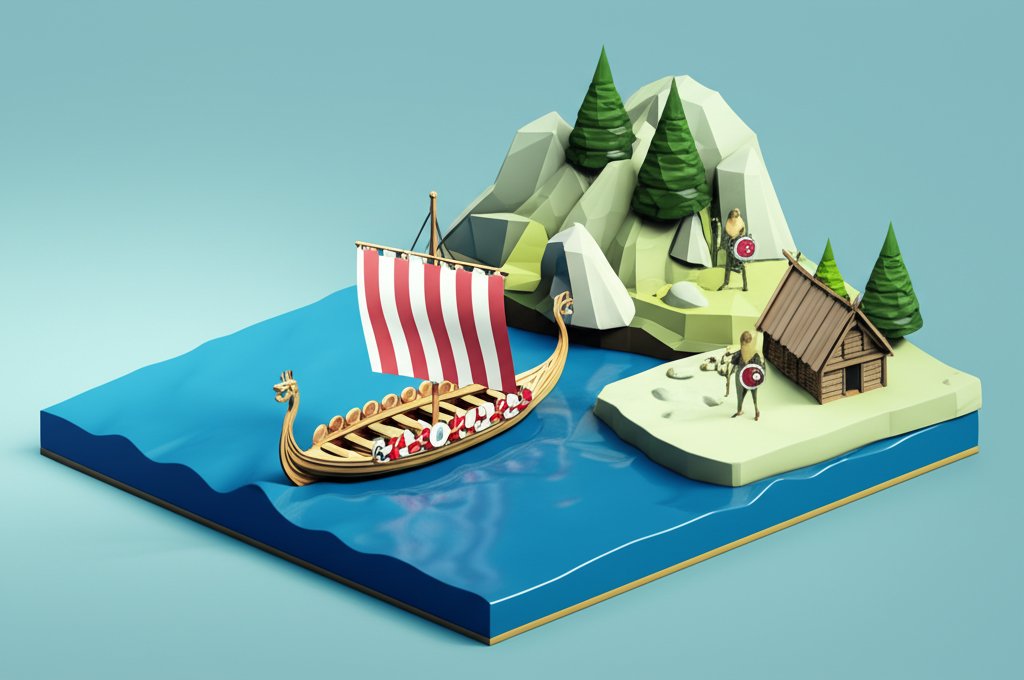
A Viking’s appearance wasn’t just about their physical features; it was a canvas for expressing status, wealth, belief, and identity. From brightly colored clothes to gleaming jewelry and even intentional body modification, they put significant effort into how they presented themselves to the world.
A World of Color
Forget the drab browns and grays you see in many TV shows. The Viking Age was a vibrant, colorful world. Using dyes made from plants like woad (blue), madder (red), and weld (yellow), Vikings colored their wool and linen textiles in a range of bright hues.
Clothing was functional but also a sign of wealth. Richer individuals could afford more brightly colored fabrics and decorative trims. A typical outfit consisted of:
- For Men: A knee-length tunic, worn over trousers (which could be baggy or fitted), and held at the waist with a leather belt. A heavy wool cloak, fastened at the shoulder with a brooch, provided warmth.
- For Women: A long linen underdress, covered by a tube-like woolen apron-dress called a smokkr. This was held up by two straps and fastened at the chest with a pair of large, often ornate, brooches.
Jewelry: Wealth, Status, and Faith
Jewelry was worn by everyone and served multiple purposes. It was a public display of your success, a form of portable wealth, and a way to express religious devotion.
- Arm and Neck Rings: Often made of silver or gold, these were the Viking equivalent of a bank account. A person could hack off a piece to pay for goods or services.
- Brooches: Essential for fastening clothing, these were often intricately decorated pieces of art.
- Pendants: The most iconic is the Mjolnir, or Thor’s hammer, worn as a symbol of protection and faith in the old gods.
Exploring the artifacts left behind helps us [Discover Accurate Vikings] who were far from the simple brutes of legend.
Makeup, Tattoos, and Dental Work
The Vikings’ commitment to their appearance may have extended to body modification.
- Makeup: An Arab merchant visiting the Viking trading hub of Hedeby around 1000 AD noted that both men and women used a type of kohl to darken their eyes, believing it made them more attractive.
- Tattoos: The only written account comes from Ibn Fadlan, who described the Rus’ Vikings as being covered from “fingertip to neck” in dark green, tree-like patterns. However, with no other archaeological or textual evidence, we can’t be sure if this was a widespread Viking practice or unique to that specific group.
- Dental Modification: This is one of the most fascinating discoveries. Archaeologists have found numerous male skulls with horizontal grooves intentionally and skillfully filed into their front teeth. No one knows for sure why they did this, but theories range from it being a warrior status symbol to a way to intimidate enemies. It’s possible the grooves were filled with colored pigment to make them even more dramatic.
Frequently Asked Questions About the Viking Look
Let’s tackle some of the most common questions and misconceptions head-on.
Did Vikings wear horned helmets?
No. This is the most pervasive myth of all, popularized by 19th-century paintings and operas. Not a single helmet with horns has ever been found from the Viking Age. Real Viking helmets were practical pieces of military gear—typically a simple bowl shape with a nasal guard to protect the face. The iconic Sutton Hoo helmet, though Anglo-Saxon and slightly pre-Viking, gives a good idea of the high-status helmet style of the era.
Were all Vikings big, burly men?
Not at all. The term “Viking” describes an activity—raiding or trading overseas—not an entire people. The population of Scandinavia during this period was made up of farmers, merchants, crafters, and explorers. While warriors needed to be strong, most people were of average build for their time.
Were Vikings dirty?
Absolutely not. As covered earlier, they were remarkably clean for their time, with a strong culture of personal grooming that even their contemporaries in other parts of Europe noted. The idea of the “dirty Viking” is a much later invention.
Seeing the Real Viking
Stripping away centuries of myth and stereotype reveals a people who were diverse, stylish, and deeply human. They were not monolithic brutes but a complex society of individuals who cared about their families, their honor, and their appearance. From the colors they chose for their clothes to the way they braided their beards, their look was a conscious expression of who they were.
The true story of the Viking appearance is a testament to their adaptability and their connections with the wider world. They were a people shaped by a harsh environment but who still found time for art, beauty, and a good wash on a Saturday. Understanding [How Vikings truly looked] allows us to see them not as monsters from a dark age, but as the fascinating and influential people they really were.










