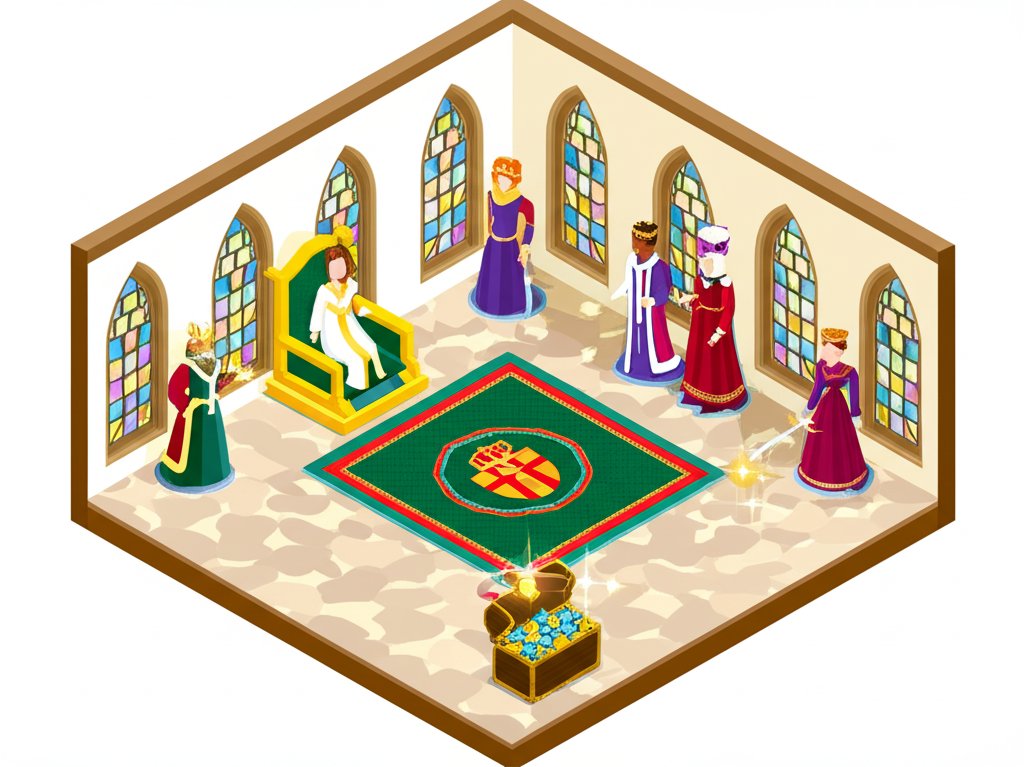
The term “medieval history” often conjures images of towering stone castles, knights in shining armor, and vast, shadowy forests. While those elements are part of the story, they’re just threads in a much larger and more complex tapestry. Spanning nearly a thousand years from the fall of the Western Roman Empire around 476 AD to the dawn of the Renaissance in the 15th century, the Middle Ages was a period of profound transformation that shaped modern Europe.
This era was not a static “dark age” but a dynamic millennium of conflict, innovation, and faith. Historians typically divide it into three distinct phases: the Early, High, and Late Middle Ages. Each period saw the rise and fall of empires, the birth of nations, and societal shifts that laid the groundwork for the world we know today. Let’s unravel the story of this fascinating time.
The Dawn of a New Era: From Roman Ruins to New Kingdoms
As the Western Roman Empire crumbled, a new European order began to emerge from its ashes. In the East, the Byzantine Empire carried on the Roman legacy for another thousand years, acting as a crucial bridge between the ancient and early modern worlds. But in the West, migrating Germanic tribes established new kingdoms in former Roman territories.
In Britain, the departure of the Romans created a power vacuum filled by Anglo-Saxon tribes who crossed the North Sea. Over centuries, they forged a new English identity, established regional governments known as ‘shires,’ and converted from paganism to Christianity. Life was organized very differently from the Roman era, with a rigid hierarchy governing relationships between lords and vassals. To understand this world, it’s crucial to know who held the power and who worked the land; you can Explore Medieval Europes Social Classes to see how society was structured.
The Viking Age: Raiders, Traders, and Kings of the North
Just as these new kingdoms were finding their footing, a new force erupted from Scandinavia. From roughly the late 8th to the 11th century, the Vikings became the most feared raiders and most ambitious explorers in Europe. They sailed their iconic longships to raid monasteries in England, lay siege to Paris, and even cross the Atlantic to North America.
But they were more than just pirates. The Vikings were also skilled traders and settlers who established permanent communities, most notably the “Danelaw” in England. They were far from the horned-helmeted barbarians of myth. So, what did vikings look like in reality? Their influence was so profound that Danish kings ruled large parts of England between 1016 and 1040. This expansion wasn’t random; it was driven by ambitious and powerful leaders. To understand their impact, it helps to Discover Viking Kings and Jarls who masterminded these voyages.
Power, Faith, and Conflict: Shaping Medieval Europe

The High and Late Middle Ages were characterized by consolidating power, epic conflicts, and the overwhelming influence of the Christian Church. This period saw the construction of magnificent cathedrals, the founding of the first universities, and continent-spanning military campaigns.
The Norman Conquest and the Forging of England
The Viking era in England came to a dramatic close in 1066. After the English king defeated a Norwegian invasion at the Battle of Stamford Bridge, his exhausted army was defeated just weeks later at the Battle of Hastings by William, Duke of Normandy. This Norman Conquest forever changed England.
William the Conqueror replaced the Anglo-Saxon aristocracy with his Norman lords, introduced a robust feudal system, and embarked on a massive castle-building campaign to secure his rule. To understand and tax his new kingdom, he commissioned the Domesday Book in 1086—an astonishingly detailed survey of all the land and wealth in England.
Kings, Barons, and the Rule of Law
The powerful Plantagenet dynasty ruled England from 1154 to 1485, a period defined by struggles between the crown and the nobility. In 1215, King John was forced by his barons to sign the Magna Carta, a landmark document that limited the king’s power and established the principle that everyone, even the monarch, was subject to the law.
This era was also marked by lengthy wars, most famously the Hundred Years’ War (1337–1453) against France, which saw legendary English victories like the Battle of Agincourt. The period ended with a bloody internal conflict, the Wars of the Roses (c. 1455-1485), a civil war between the houses of Lancaster and York for the English throne.
Crusades, Plagues, and Papal Power
Across Europe, other major events were reshaping society. The Crusades, beginning in the late 11th century, were a series of religious wars initiated by the Church to reclaim the Holy Land from Muslim rule. These campaigns had enormous religious, political, and economic consequences for centuries.
Perhaps no single event had a more devastating impact than the Black Death. This bubonic plague pandemic swept across Europe from 1347 to 1351, killing an estimated 30-60% of the population. The immense loss of life triggered massive social and economic upheaval, shaking the very foundations of the feudal system. The Church also faced its own crises, including the Western Schism, where rival popes vied for authority.
The End of an Age and the Seeds of the Future
The medieval period didn’t simply end; it transformed. Key events like the fall of Constantinople to the Ottoman Turks in 1453 and the end of the Wars of the Roses in England in 1485 are often seen as signposts marking the close of the era.
These events paved the way for the Renaissance, the Protestant Reformation, and the Age of Discovery. The political structures, legal principles, and national identities forged in the fires of the Middle Ages provided the essential foundation for the modern world. The echoes of this thousand-year epoch—from our laws and languages to our art and architecture—are still with us today.










