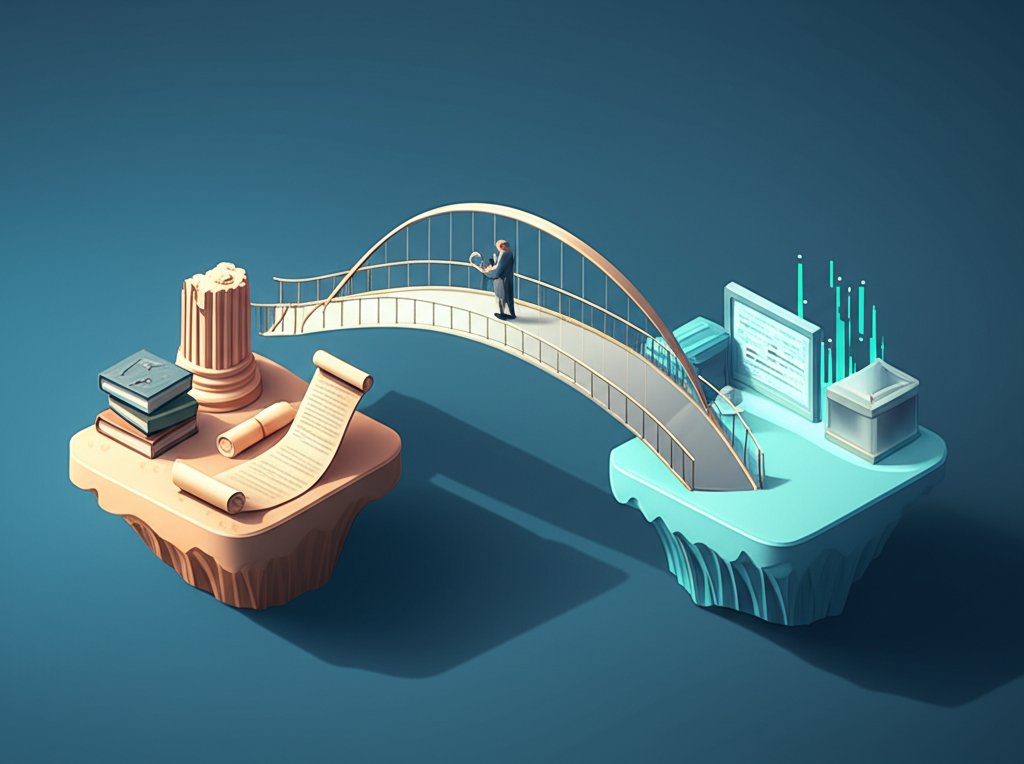
Imagine watching the final five minutes of a blockbuster movie. You see the heroes celebrating, the city in ruins, and a strange new character appearing on screen. You’d have a million questions. Who are these people? Why is the city destroyed? What does it all mean? To make sense of that ending, you’d have to watch the whole film from the beginning. This is precisely why do historians study the past: they’re watching the full movie of humanity to understand the scene we’re living in right now.
The past isn’t a dead, dusty collection of facts. It’s a living, breathing force that shapes our present reality, from the languages we speak to the conflicts on our nightly news. As Pulitzer Prize-winning historian David McCullough famously put it, “History is who we are and why we are the way we are.” It’s the ultimate origin story, and understanding it is one of the most powerful tools we have for navigating the future.
At a Glance: The Real Reasons to Study History
Don’t have time to dig through centuries of evidence? Here’s the core of why studying the past is essential for the present and future.
- Understand Today’s World: History provides the crucial context for current events, political conflicts, and social structures. It answers the “why” behind the “what.”
- Develop Powerful Skills: The study of history is a masterclass in critical thinking, teaching you how to analyze evidence, build a compelling argument, and communicate complex ideas—skills valuable in any field.
- Build Empathy and Cultural Awareness: By stepping into the shoes of people from different times and places, you develop a deeper understanding of diverse human experiences and perspectives.
- Become a Better Citizen: Understanding the foundations of your government, the struggles for rights and justice, and past societal failures and triumphs is fundamental to being an informed and active participant in a democracy.
- Find Your Place in the Story: History connects you to your own heritage and the broader human experience, offering lessons, inspiration, and a sense of identity.
History Isn’t About the Past—It’s About the Present
Let’s get one major misconception out of the way. Historians aren’t just archivists of “what happened.” They are detectives and interpreters. Their primary goal isn’t to create a timeline of kings and battles; it’s to analyze how past events, decisions, and movements created the world we inhabit today.
Think about the borders of countries in Europe or the Middle East. They aren’t random lines; they are the result of treaties, wars, and political shifts that happened decades or even centuries ago. Understanding the collapse of the Ottoman Empire after World War I, for example, is essential to grasping many of the conflicts that persist in the Middle East today.
Without that historical context, you’re only seeing the final, confusing frame of the movie.
Connecting the Dots from Then to Now
History provides a map of cause and effect. It shows us how seemingly small changes—a new invention, a social movement, a single political decision—can ripple through time with massive consequences.
- Political Systems: Why is the U.S. a republic and not a monarchy? The answer lies in a specific set of 18th-century ideas about liberty and grievances against a king.
- Economic Realities: Why do certain communities face economic disadvantages? The story often stretches back through decades of discriminatory housing policies, labor practices, and unequal access to education.
- Cultural Norms: The way we think about family, work, and individual rights has evolved dramatically. History tracks that evolution, revealing how our modern values were forged.
By examining these connections, we can see the present not as a fixed, inevitable state, but as one outcome among many possibilities. This is the core of What Historians Study; they trace the threads of change and continuity to explain our current reality.
The Ultimate Toolkit for Critical Thinking
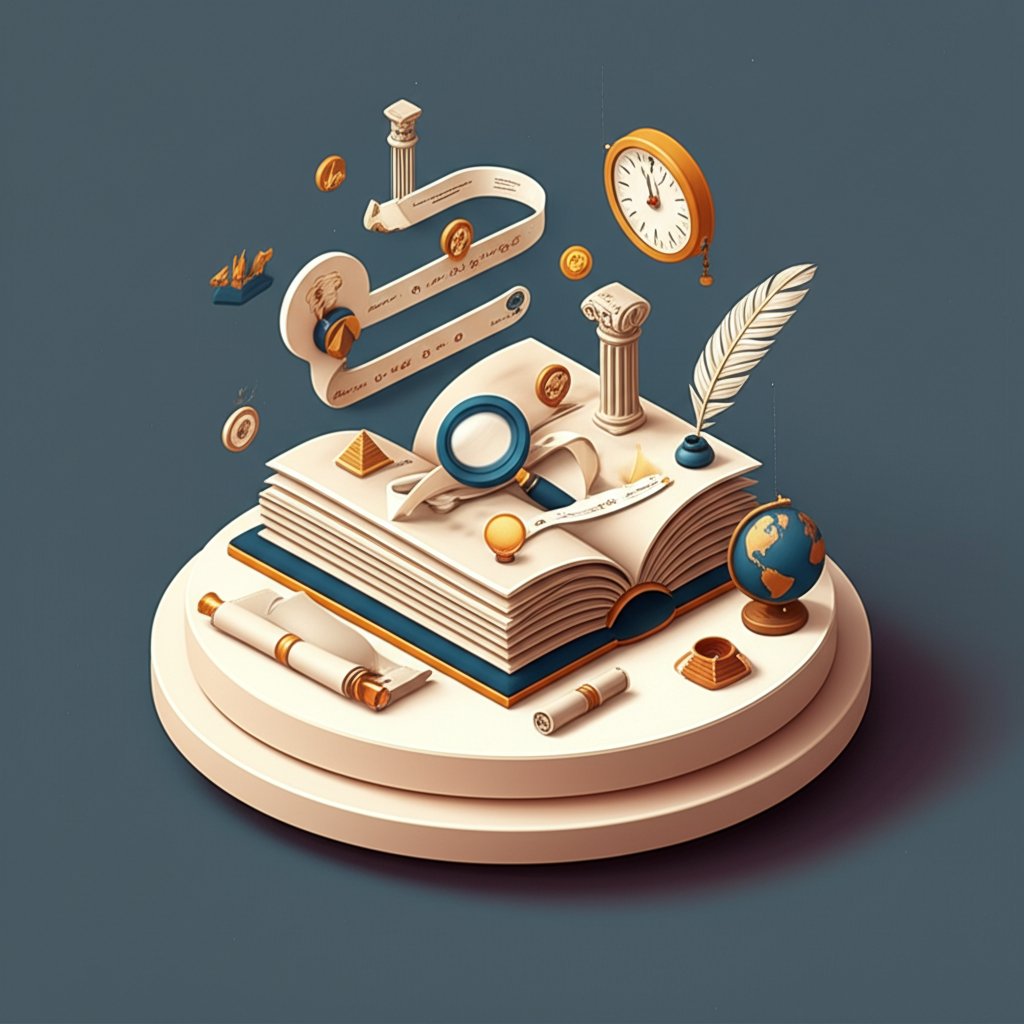
While history provides a crucial lens on the world, its study also builds a set of powerful, practical skills that are in high demand in every industry. A history major doesn’t just prepare you to be a historian; it prepares you to be a sharp thinker, a clear communicator, and a sophisticated problem-solver.
Think of a historian like a cold-case detective. They are presented with an incomplete and often contradictory set of clues: a letter, a government document, a photograph, an archaeological artifact. Their job is to:
- Evaluate the Evidence: Is this source reliable? Who created it, and for what purpose? What biases might be at play?
- Consider Multiple Perspectives: How would different people involved in this event have experienced it? There is never just one side to the story.
- Construct an Argument: Based on the available evidence, what is the most logical explanation for what happened and why it mattered?
- Communicate the Conclusion: Present the argument clearly and persuasively, acknowledging any gaps in the evidence.
This process is a workout for the analytical mind. It trains you to move beyond surface-level information, question assumptions, and build evidence-based conclusions.
From the Classroom to the Boardroom
These aren’t just academic exercises. These are the skills that employers consistently rank as most valuable. A 2023-2024 survey at the University of Illinois found that 98% of history graduates secured a “first destination”—a job, graduate school placement, or volunteer position—soon after graduation.
Why? Because they are trained to:
- Analyze Complex Information: Whether it’s a market research report, a legal brief, or a technical document, history grads know how to sift through qualitative and quantitative data to find the key takeaways.
- Write and Speak Effectively: Crafting a historical essay or presenting research hones your ability to communicate complex ideas with clarity and impact.
- Solve Ambiguous Problems: History is rarely neat. It’s full of ambiguity and uncertainty. Students learn to make reasoned judgments even when they don’t have all the facts—a crucial skill for leadership in any field, from tech and business to law and public service.
Building a Bridge to Other People and Cultures

History is the ultimate empathy-building machine. It invites you—in fact, it demands that you—step outside your own experience and see the world through the eyes of others. When you read the diary of a 19th-century factory worker, a letter from a soldier on the front lines, or the legal code of an ancient civilization, you are forced to confront a reality fundamentally different from your own.
This imaginative leap does a few remarkable things:
- It Shatters Present-Day Arrogance: It’s easy to assume that our way of thinking and living is the most advanced or “correct.” History shows us that every society operates on its own set of beliefs and values, which seemed just as normal to them as ours do to us.
- It Fosters Global Understanding: To understand another culture today, you must understand its history. Studying the past helps explain cultural traditions, national pride, and historical grievances that shape international relations. It’s a prerequisite for effective diplomacy, global business, and simple cross-cultural respect.
- It Reveals Our Common Humanity: Across the vast differences of time and place, history reveals the universal human experiences: love, loss, ambition, fear, and the search for meaning. We find that people in the past weren’t strange, two-dimensional figures; they were complex humans just like us, navigating their own challenges.
To truly understand our interconnected world, we have to [Explore the study of history] and its diverse narratives. It moves us from a single-player perspective to a multiplayer one, where we can appreciate the depth and variety of the human story.
How the Past Powers an Informed Citizenry
A healthy democracy depends on citizens who can think critically about the present and make informed decisions about the future. History is the bedrock of that kind of citizenship. It provides the knowledge and perspective needed to engage meaningfully in civic life.
Without a historical framework, we can’t fully understand the debates that define our time.
- Debates over rights and freedoms are rooted in centuries of struggle and legal precedent. Understanding the history of the Civil Rights Movement, women’s suffrage, or the framing of the Constitution gives depth and meaning to today’s conversations about justice and equality.
- Discussions about the role of government are informed by past successes and failures, from the New Deal to the deregulation movements of the late 20th century.
- Understanding national identity requires grappling with the best and worst parts of a nation’s past. History provides a shared foundation—a collective memory—that helps define a community and its values.
Studying history equips you to be a guardian of democracy. You learn to spot flawed arguments, recognize when historical events are being misused for political gain, and appreciate the fragility of democratic institutions. It transforms you from a passive observer into an active, engaged participant in the ongoing project of building a more just society.
Answering History’s Most Common Questions
Even for those who see its value, the study of history can seem daunting. Let’s tackle a few common questions and clear up some misconceptions.
Is history just a list of facts to memorize?
Absolutely not. This is perhaps the biggest misunderstanding about the field. While knowing key dates and events is helpful, it’s just the starting point. The real work of history is interpretation. It’s about asking “why” and “how,” not just “what” and “when.” A historian is less interested in the fact that the Roman Empire fell than in analyzing the complex combination of factors—economic, social, military—that led to its decline.
If history doesn’t repeat itself, what’s the point?
Mark Twain is often quoted as saying, “History doesn’t repeat itself, but it often rhymes.” Historians don’t look for exact repetitions. Instead, they study the past to identify patterns, understand human behavior in certain conditions, and see the range of possible outcomes. Studying past pandemics, for instance, won’t give us a perfect blueprint for the next one, but it can offer invaluable lessons about public health responses, social disruption, and economic impact.
Can we ever truly know what happened in the past?
This is a profound question that historians grapple with every day. The past is gone, and we can only access it through the fragmented, often biased, evidence that survives. Because of this, history is not a fixed story set in stone. It is an ongoing conversation, with new evidence and new perspectives constantly challenging and refining our understanding. A good historian acknowledges this uncertainty and is transparent about the limits of their evidence, presenting an interpretation rather than an absolute truth.
Start Thinking Like a Historian
You don’t need a Ph.D. to benefit from historical thinking. You can start applying its lessons today to become a more informed, critical, and empathetic person. The real [why history matters] is that it provides a way of seeing the world that empowers you every single day.
Here are a few ways to start:
- Question Your Sources: When you read a news article or see a post on social media, ask yourself: Who created this? What is their perspective? What evidence are they using, and what might they be leaving out?
- Seek Context: Before forming an opinion on a current event, do a little digging. What is the history of this conflict? What events led up to this moment? A quick search can add layers of understanding.
- Embrace Complexity: Resist the urge for simple, easy answers. The most important stories are almost always complex, with multiple causes and conflicting viewpoints. Be comfortable with nuance and ambiguity.
By studying the past, we learn that our present moment is not an endpoint. It is one page in a much longer story—a story we are all now a part of. The historian’s greatest gift is the perspective to understand that page and the wisdom to help write the next one.










