
The nightly news reports on a supply chain disruption, and suddenly a 19th-century trade agreement or a mid-20th-century labor dispute is a critical piece of the puzzle. This is the reality of our interconnected world, where the echoes of history are not faint whispers but direct drivers of our present circumstances. A rigorous study of the past isn’t about memorizing dates and names; it’s a diagnostic tool for understanding the complex systems that govern our lives, from global economics to local politics. It provides a blueprint of what came before, revealing the foundations—some stable, some cracked—upon which our current world is built.
At a Glance: What You’ll Gain
- The Professional’s Toolkit: Learn how historians and archaeologists piece together evidence from documents and artifacts.
- Evidence vs. Interpretation: Discover the crucial difference between a primary source and a historical argument.
- Connecting Then and Now: Understand how past events directly shape today’s policies, technologies, and cultural norms.
- A Practical Framework: Get a step-by-step method for analyzing historical information yourself.
- The Power of Context: See why understanding the “why” and “how” behind an event is more important than just knowing the “what.”
The Two Toolkits: The Historian’s Archive and the Archaeologist’s Dig Site
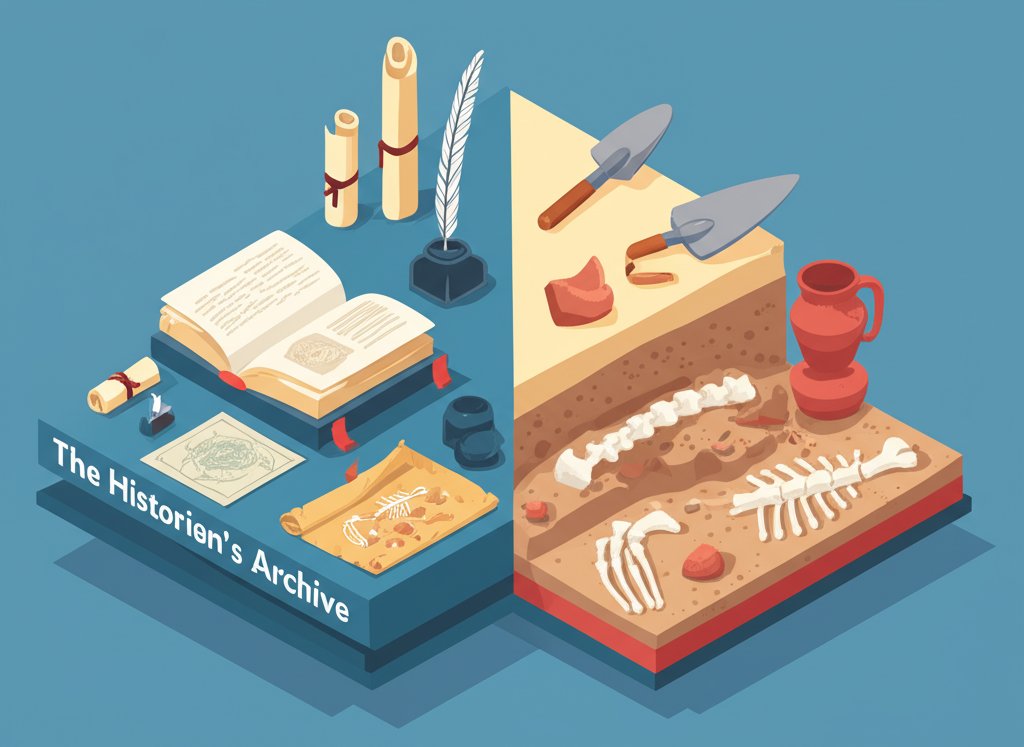
While often grouped together, historians and archaeologists approach the study of the past with distinct, complementary toolkits. One works primarily with the recorded word, the other with the physical world. Understanding their methods reveals how a robust picture of the past is constructed.
The Historian’s Craft: From Dusty Documents to Coherent Narratives
A historian acts as a detective of recorded time. Their investigation begins by gathering data from a vast array of sources: government archives, personal diaries, official correspondence, property deeds, books, and even propaganda posters. Their core skill isn’t just finding this information but contextualizing it.
Imagine trying to understand the evolution of a local zoning law. A historian wouldn’t just read the final ordinance. They would dig into town hall archives for meeting minutes, read letters to the editor in old newspapers, and examine property records to see who benefited. Each document is a fragment. The historian’s job is to weigh these sources against each other, identify biases, and construct a compelling interpretation of how and why that law came to be.
This work culminates in books, articles, or museum exhibits, which are then scrutinized by other experts in a process called “peer review.” This system of checks and balances ensures that historical arguments are grounded in solid evidence and rigorous analysis.
The Archaeologist’s Perspective: When the Earth Is the Primary Source
What about societies that left no written records? Or the everyday lives of common people who were rarely mentioned in official documents? This is where archaeology provides a vital window. Archaeologists are interested in how people in the past lived, worked, traded, and what they believed. Their evidence consists of artifacts (tools, pottery, coins) and features (the remains of houses, roads, or canals).
The process is meticulous. After an artifact is carefully excavated, it is cleaned, sorted, cataloged, and stored for analysis. A simple piece of pottery can reveal information about diet, trade routes (based on the clay’s origin), and artistic traditions. Archaeologists sometimes use historical documents as background information to help locate or interpret a site, creating a powerful partnership. This collaboration is the only way we can learn about prehistory—the vast span of human existence before writing—relying on physical evidence like bones, fossils, and ancient tools to tell the story.
Why Context Is Everything in the Study of the Past
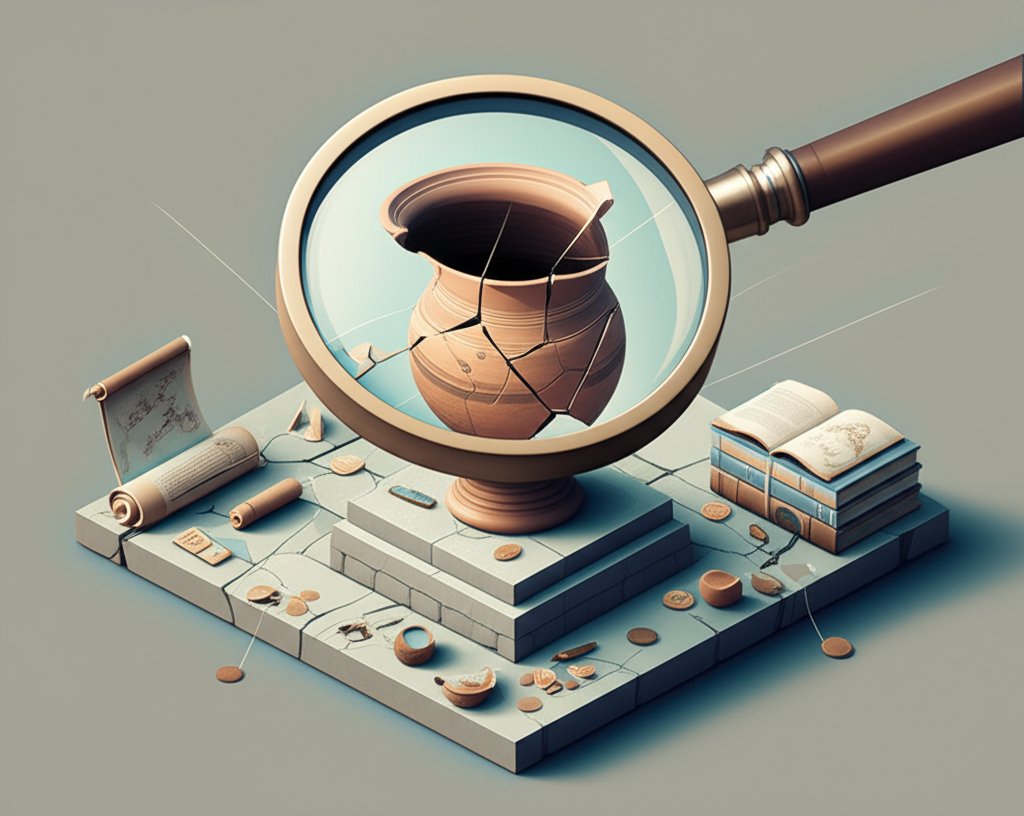
A single fact without context is trivia. A fact placed within its proper context becomes evidence. The most critical skill in any study of the past is the ability to reconstruct the world surrounding an event, person, or object.
Consider a political poster from the 1940s discovered in an attic. On its own, it’s a piece of graphic design. But when a historian applies context, it transforms:
- Who made it? Was it a government agency, a political party, or a grassroots movement?
- Who was the audience? Was it aimed at factory workers, soldiers, or homemakers?
- What was the goal? Was it to sell war bonds, discredit an opponent, or boost morale?
Answering these questions reveals the anxieties, values, and power dynamics of that moment in time. This deep dive into context is central to the work of professionals, which is a key reason Why historians study the past in the first place—to build a complete and nuanced picture, not just a list of events.
From Ancient Problems to Modern Solutions
The study of the past is not a passive activity; it’s an applied science with direct relevance to today’s challenges. By understanding the origins of a problem, we are better equipped to devise a durable solution.
Shaping Identity and Understanding Culture
Why do some nations have deep-seated rivalries? Why do certain cultural traditions persist? The answers almost always lie in history. Understanding historical migrations, colonial legacies, and centuries-old alliances explains modern geopolitical tensions and clarifies our own sense of identity. History provides a map of how societies were formed, helping us navigate the complex cultural landscapes of the present.
Informing Scientific and Medical Progress
Historical data is a powerful tool for modern science. Epidemiologists study the spread of past pandemics, like the 1918 flu or the Black Death, to model modern outbreaks and inform public health policy.
A classic example is Dr. John Snow’s work during the 1854 cholera outbreak in London. By meticulously mapping the cases, he traced the source to a single contaminated water pump. His historical-geographical analysis was a landmark moment in public health, proving the disease was waterborne long before the germ theory of disease was widely accepted. His method of historical data collection and analysis continues to influence how scientists track and fight diseases today.
Decoding Economic and Political Patterns
History is filled with patterns. Economists study past financial crises, like the Dutch Tulip Mania of the 1630s or the South Sea Bubble of 1720, to identify the warning signs of speculative bubbles in today’s markets.
Similarly, political scientists and lawmakers study the rise and fall of past governments to understand the strengths and weaknesses of different political systems. The framers of the U.S. Constitution, for example, were deeply engaged in the study of the past, drawing lessons from the Roman Republic, Greek democracies, and European monarchies to design a new form of government.
A Practical Guide to Thinking Like a Historian
You don’t need a PhD to apply historical thinking. By using a simple, structured approach, you can analyze information more critically and make more informed judgments about the world around you.
Here is a five-step framework you can use when encountering a historical claim, an old document, or a news story rooted in past events.
| Step | Action | Key Question to Ask |
|---|---|---|
| 1. Identify the Source | Determine if it’s a primary source (created at the time of the event, like a diary or photo) or a secondary source (an interpretation made later, like a textbook or documentary). | “Is this a raw piece of evidence, or someone’s analysis of the evidence?” |
| 2. Establish Context | Research who created the source, when, where, and for what purpose. | “What was happening in the world when this was made, and what was the creator’s goal?” |
| 3. Corroborate | Look for other sources from the same period that support or contradict the information. Never rely on a single source. | “Do other independent sources tell a similar story, or a completely different one?” |
| 4. Analyze for Bias | Every source has a perspective. Identify the creator’s point of view and consider what information they might be emphasizing or leaving out. | “What does the creator want me to believe, and what are they not telling me?” |
| 5. Synthesize | Form a provisional conclusion based on your analysis of multiple sources. Be comfortable with uncertainty and acknowledge what you still don’t know. | “Based on all the evidence, what is the most likely interpretation of this event?” |
Quick Answers to Common Questions
Is history just a set of facts that we already know?
Not at all. History is a dynamic and ongoing interpretation of evidence. New evidence—like a newly unearthed archaeological site or a declassified government archive—can fundamentally change our understanding of an event. Furthermore, as societal values change, historians ask new questions of old evidence, bringing previously overlooked perspectives, such as those of women or minorities, to the forefront.
How can we trust historical accounts if they are all biased?
This is a feature, not a bug. Acknowledging bias is the first and most important step of historical analysis. No single source is ever the complete truth. Professional historians act like detectives interviewing multiple witnesses to a crime; each witness has their own perspective and biases, but by comparing and contrasting their accounts, a more reliable picture of the event emerges. The goal is not to find one “unbiased” source but to understand the event from multiple viewpoints.
What’s the real difference between history and archaeology?
They are deeply intertwined disciplines focused on the human past. The primary distinction is their main source of evidence. History typically focuses on interpreting the written record—texts, documents, and inscriptions. Archaeology, on the other hand, focuses on interpreting physical and material culture—artifacts, structures, and human remains. Archaeology is our only method for the study of the past in prehistoric periods, before the invention of writing.
How does studying something that happened 500 years ago actually help me today?
It explains the deep structures of your world. The legal principles that govern your property rights, the religious traditions that shape holidays, and the national borders that define your citizenship all have roots that go back centuries. Understanding how these institutions and ideas were formed reveals why they function the way they do now—including their inherent strengths and their persistent, systemic flaws.
Your First Step Into the Past
The study of the past is ultimately not about memorization but about developing a powerful skill set for critical thinking and contextual analysis. It teaches you to question your sources, to recognize hidden patterns, and to understand that every event has a complex backstory. It empowers you to move beyond surface-level headlines and see the deeper forces at play.
The next time you read a news article about an international conflict or a domestic policy debate, take five minutes to do a quick search on the history behind it. Don’t look for a simple, single cause. Instead, look for the layers of treaties, migrations, inventions, and revolutions that shaped the present-day situation. That small act of seeking context is the very heart of historical inquiry—and your first step toward using the past to decode the present.










