
Think of the past as a vast, unexplored landscape. One person might map its mountain ranges—the great wars, the rise and fall of empires. Another might study its rivers—the flow of trade, ideas, and people. A third might dig into the soil, analyzing the daily lives of those who lived there. None of them are wrong; they’re just using different tools to explore the same terrain. This is the essence of history. There isn’t just one story of the past, but many, and understanding the different types of history is like having a complete set of maps.
Each approach offers a unique lens, revealing different truths about who we were and how we got here. By looking through these various lenses, from the decisions of presidents to the diaries of farmers, we get a richer, more three-dimensional understanding of the human story.
A Quick Look at Historical Perspectives
- History isn’t monolithic. It’s a collection of specialized fields, each asking different questions about the past.
- Focus determines the field. The main types of history include political, social, economic, cultural, and military, among many others.
- Time is a key organizer. Historians divide the past into broad periods—Ancient, Medieval, and Modern—to manage its immense scale.
- Sources are the foundation. Historians work with primary sources (firsthand accounts) and secondary sources (interpretations of those accounts).
- The story of history matters. The field of historiography examines how and why historical narratives change over time.
The Historian’s Toolkit: More Than Just Dates and Names
Before we dive into the specific disciplines, it’s helpful to understand how historians work. At its core, history is an interpretive discipline. A historian is part detective, part storyteller, piecing together a narrative from the fragmented clues the past has left behind.
Their most fundamental tools are historical sources. You can broadly explore history’s two types of sources:
- Primary Sources: These are the raw materials of history. They are original records or objects created by participants or observers at the time of an event. Think of a soldier’s letter from the front lines, a deed to a house from 1890, an ancient Roman coin, or a protest pamphlet. They offer a direct, unfiltered glimpse into a moment in time.
- Secondary Sources: These are works that analyze, interpret, or comment on the past by using primary sources. A book about the American Civil War written by a modern scholar is a secondary source. It uses letters, diaries, and government documents (primary sources) to build an argument.
The type of question a historian asks determines which sources they seek out and, ultimately, what kind of history they write. A question like, “What were President Lincoln’s key military decisions?” will lead to a very different study than, “How did the Civil War affect the daily lives of women in Georgia?” Both are valid historical inquiries, but they belong to different fields.
Lenses on the Past: Exploring History by Its Focus
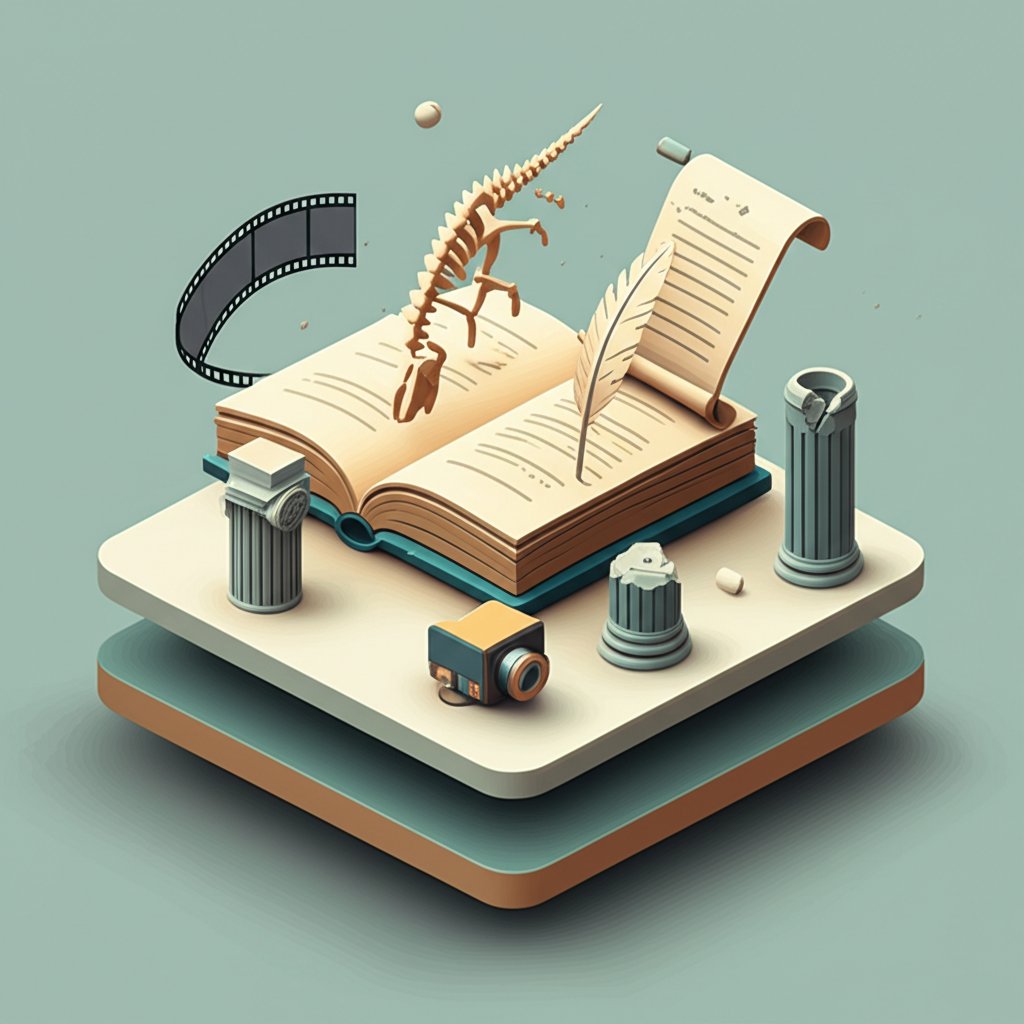
The real diversity in historical study comes from its many sub-disciplines. Each one acts as a specific lens, bringing a different part of the human experience into sharp focus. While the lines between them often blur, here are some of the most prominent fields.
Political History: The Story of Power and Governance
This is what many people think of as “traditional” history. Political history focuses on the top-down story of power. It examines governments, states, leaders, laws, elections, and foreign policy. It’s the history of kings, presidents, revolutions, and reforms.
- What it asks: How are societies organized and governed? Who holds power, and how do they use it? What causes political change, like the American Revolution or the fall of the Soviet Union?
- Example: A study of the constitutional debates that shaped the early United States, focusing on the ideologies of figures like Hamilton and Jefferson.
Social History: Life from the Ground Up
If political history is the view from the palace, social history is the view from the village square. Emerging in the mid-20th century, this field shifted the focus away from elites and onto the lives of ordinary people. It explores the history of families, communities, social classes, gender roles, and daily routines.
- What it asks: What was it like to be a factory worker during the Industrial Revolution? How have concepts of childhood changed over time? How did the caste system shape society in medieval India?
- Example: A deep dive into the 19th-century labor movement, analyzing the songs, pamphlets, and personal letters of workers to understand their motivations and struggles.
Economic History: Following the Money
Economic history analyzes the material life of societies. It tracks how people have produced, distributed, and consumed goods and services throughout time. This field examines everything from ancient trade routes and feudal manors to the rise of global capitalism and the impact of the Great Depression.
- What it asks: How did the invention of the cotton gin transform the global economy? What were the economic causes of World War I? How did post-independence policies shape India’s economic liberalization in 1991?
- Example: An analysis of how the Silk Road was not just a trade route but a conduit for economic systems, technologies, and financial practices between Asia and Europe.
Cultural & Intellectual History: The Evolution of Ideas and Beliefs
This fascinating area explores the world inside people’s heads. Cultural history looks at the shared customs, arts, traditions, and values that define a group. Intellectual history traces the development and influence of major ideas—philosophical, religious, and scientific.
- What it asks: How did the Renaissance humanism movement change European art and literature? How did the Enlightenment’s ideas about liberty and reason fuel revolutions? Why did certain beliefs take hold in a society at a specific time?
- Example: Studying the art and architecture of Renaissance Florence to understand how a renewed interest in classical antiquity reflected a changing worldview. There are many ways to explore history disciplines, and this is one of the most revealing.
Military History: Conflict and Its Consequences
While it may seem to be just about battles and generals, modern military history goes much deeper. It analyzes the causes of war, military strategy and tactics, the role of technology, and—crucially—the impact of conflict on soldiers and societies.
- What it asks: How did the use of the longbow affect the outcome of the Hundred Years’ War? What was the social and psychological impact of trench warfare in World War I? How did the Kargil War in 1999 influence India-Pakistan relations?
- Example: A study that moves beyond the battlefield of World War II to examine how wartime production pulled the United States out of the Great Depression and transformed its industrial landscape.
Beyond the Big Five: Other Fascinating Fields
The world of history is constantly expanding. Scholars are always finding new angles from which to view the past. Discovering history’s many forms reveals just how interconnected our world is. Some other key fields include:
- Environmental History: Examines the dynamic relationship between humans and the natural world, from how climate change contributed to the fall of the Mayan civilization to the environmental impact of industrialization.
- History of Science and Medicine: Traces the evolution of scientific thought and medical practice, revealing how our understanding of the universe and the human body has changed.
- Women’s History: Focuses on recovering the experiences and contributions of women, who were often left out of traditional historical narratives.
- Diplomatic History: Concentrates on the relationships between nations, including treaties, alliances, and the art of diplomacy.
Slicing Up Time: How Historians Organize the Past
Besides looking at the past through different thematic lenses, historians also divide it into manageable chunks of time. This practice, called periodization, is an artificial but necessary tool for making sense of millennia of human activity. While the exact dates are often debated and vary by region, the standard Western framework is a useful starting point.
Ancient History (c. 3000 BCE – 500 CE)
This vast period begins with the invention of writing in Mesopotamia and ends around the collapse of the Western Roman Empire. It’s the age of the first cities, the great classical empires of Greece and Rome, and the founding of major world religions like Buddhism and Christianity. Because written records can be scarce, archaeologists play a vital role, uncovering artifacts that tell us about how ancient peoples lived.
The Medieval Period (c. 500 – 1500 CE)
Often called the Middle Ages, this thousand-year span connects the ancient and modern worlds. In Europe, it was characterized by feudalism and the power of the Catholic Church. But it was a vibrant period globally, marked by the rise of Islam and the great Islamic caliphates, the Viking Age in Scandinavia, and the flourishing of empires like the Mughals in India.
The Modern Period (c. 1500 – Present)
The dawn of the modern era was heralded by world-changing events: the invention of the printing press (c. 1440), the European “discovery” of the Americas (1492), and the Protestant Reformation. This period is often split in two:
- Early Modern Period (c. 1500–1800): An age of exploration, scientific revolution, and the rise of powerful centralized states and early capitalism.
- Late Modern Period (c. 1800–Present): Defined by massive industrialization, political revolutions (American, French, Russian), world wars, and the dawn of the digital age. This era contains many of the key moments in history that directly shape our lives today.
A Look in the Mirror: The Study of History Itself
Perhaps the most advanced field is one that doesn’t look at the past, but at how we look at the past. This is historiography—the history of history writing.
Historiography asks critical questions: Why did a historian in the 19th century describe the Roman Empire as a glorious civilizing force, while a historian today might focus on its brutality and reliance on slave labor? The facts haven’t changed, but our perspective has.
Historiography teaches us that history is never truly “finished.” Each generation re-examines the past, asking new questions and emphasizing different stories based on its own values and concerns. It reminds us that every historical account is a product of its time, written by a human being with a particular point of view.
How to Think Like a Historian
You don’t need a PhD to engage with the past in a more thoughtful and critical way. By understanding the different types of history, you can become a more discerning consumer of historical information.
Here’s how to start:
- Always Ask, “What Kind of History Is This?” When you pick up a book or watch a documentary, try to identify its primary focus. Is it telling a political story, a social one, or an economic one? Knowing the lens helps you understand what might be included—and what might be left out.
- Consider the Author and the Source. Who wrote this? When did they write it? What sources are they using? A history of the American founding written in 1880 will have a very different tone and focus than one written in 2020.
- Seek Out Multiple Perspectives. The richest understanding of an event comes from viewing it through multiple lenses. If you read a military history of the Vietnam War, supplement it with a social history about the anti-war movement at home or a diplomatic history of the international negotiations.
History is not a static list of facts to be memorized. It’s an ongoing conversation between the present and the past. By exploring its many different forms, you aren’t just learning about what happened—you’re learning to see the world, then and now, in all its fascinating complexity.










