
Trying to understand a major world event by only looking at the leaders and laws is like watching a football game by only tracking the quarterback. You see the big plays, but you miss the blocking, the defense, and the strategy that made it all happen. To truly grasp the past, we have to assemble the different parts of history—political, social, economic, and cultural—into a single, coherent picture. Each part is a lens, and only by looking through all of them can we see the full depth and complexity of our shared story.
This approach moves you from simply knowing what happened to understanding why it mattered. It’s the difference between memorizing a date and comprehending the forces that shaped a generation.
At a glance: What you’ll learn
- The Four Key Lenses: How to analyze any historical event using political, social, economic, and cultural perspectives.
- Connecting the Dots: See how these distinct parts of history are deeply intertwined and influence one another.
- A Practical Framework: A step-by-step method to apply this multi-lens approach to your own research or learning.
- Avoiding Common Pitfalls: Learn to spot and sidestep biased interpretations, like viewing the past through a purely modern lens.
- From Timeline to Story: Move beyond chronological facts to uncover the human narratives that drive history forward.
The Historian’s Toolkit: Four Lenses for Viewing the Past
History isn’t a single, monolithic story. It’s a vast mosaic composed of countless individual pieces. Professional historians categorize these pieces to make sense of them, creating specialized fields of study. For anyone looking to gain a deeper understanding, four of these fields are essential starting points.
While there are many specific sub-disciplines, you can get a powerful overview of nearly any topic by asking four fundamental questions, each corresponding to a major part of historical study. For a more comprehensive breakdown of every specialty, you can Explore types of history in our main guide. Here, we’ll focus on how the core four work together.
1. The Political Lens: Who Held the Power?
Political history is often what we think of first. It’s the history of governments, leaders, laws, wars, and diplomacy. This lens focuses on the structures of power and the people who wield it.
- What it covers: Revolutions, elections, legislation, treaties, and the rise and fall of empires.
- Key questions: Who made the rules? How was power distributed? What were the ideological conflicts?
- Mini-Example: The American Revolution (1775-1783): Viewed politically, this was a conflict over governance and self-determination. It established democratic principles and created a new nation-state, the United States. Key figures like George Washington and Thomas Jefferson are central to this narrative.
But stopping here gives you an incomplete story. Why did people feel so strongly about these political ideas?
2. The Social Lens: How Did People Live?
Social history shifts the focus from kings and presidents to the everyday lives of ordinary people. It examines the evolution of society, including family structures, gender roles, class dynamics, and community life.
- What it covers: Urbanization, migration patterns, labor movements, and changes in daily routines and social norms.
- Key questions: What was life like for a farmer, a factory worker, or a woman during this time? How did society organize itself?
- Mini-Example: The American Revolution: Through a social lens, we see the experiences of common soldiers freezing at Valley Forge, the role of women managing farms and businesses, and the complex position of African Americans—both enslaved and free—in a war for “liberty.” It reveals the immense human cost and social upheaval behind the political ideals.
3. The Economic Lens: Who Controlled the Resources?
Economic history follows the money. It analyzes how societies produce, distribute, and consume goods and services. This lens is critical for understanding the material motivations behind historical events.
- What it covers: Economic systems (like capitalism or feudalism), trade routes, technological innovations, and financial crises.
- Key questions: Who owned the land and capital? What were the primary drivers of the economy? How did economic factors create conflict or stability?
- Mini-Example: The American Revolution: Economically, the conflict was fueled by disputes over taxation, trade monopolies (like the Tea Act), and the British Empire’s desire to control colonial resources. The slogan “no taxation without representation” is, at its core, an economic grievance tied to a political principle.
4. The Cultural Lens: What Did People Believe?
Cultural history explores the world of ideas, beliefs, and artistic expression. It investigates a society’s values, traditions, religion, art, and literature to understand its collective mindset.
- What it covers: Artistic movements (like the Renaissance), religious transformations, the spread of ideas (like the Enlightenment), and popular culture.
- Key questions: What art and literature did this society produce? What were its core values and beliefs? How did people make sense of their world?
- Mini-Example: The American Revolution: The cultural context includes the powerful influence of Enlightenment thinkers like John Locke, whose ideas about natural rights were embedded in the Declaration of Independence. Pamphlets like Thomas Paine’s Common Sense went viral, shaping public opinion and creating a shared cultural identity around the cause of independence.
Putting the Pieces Together: A Case Study of the Industrial Revolution

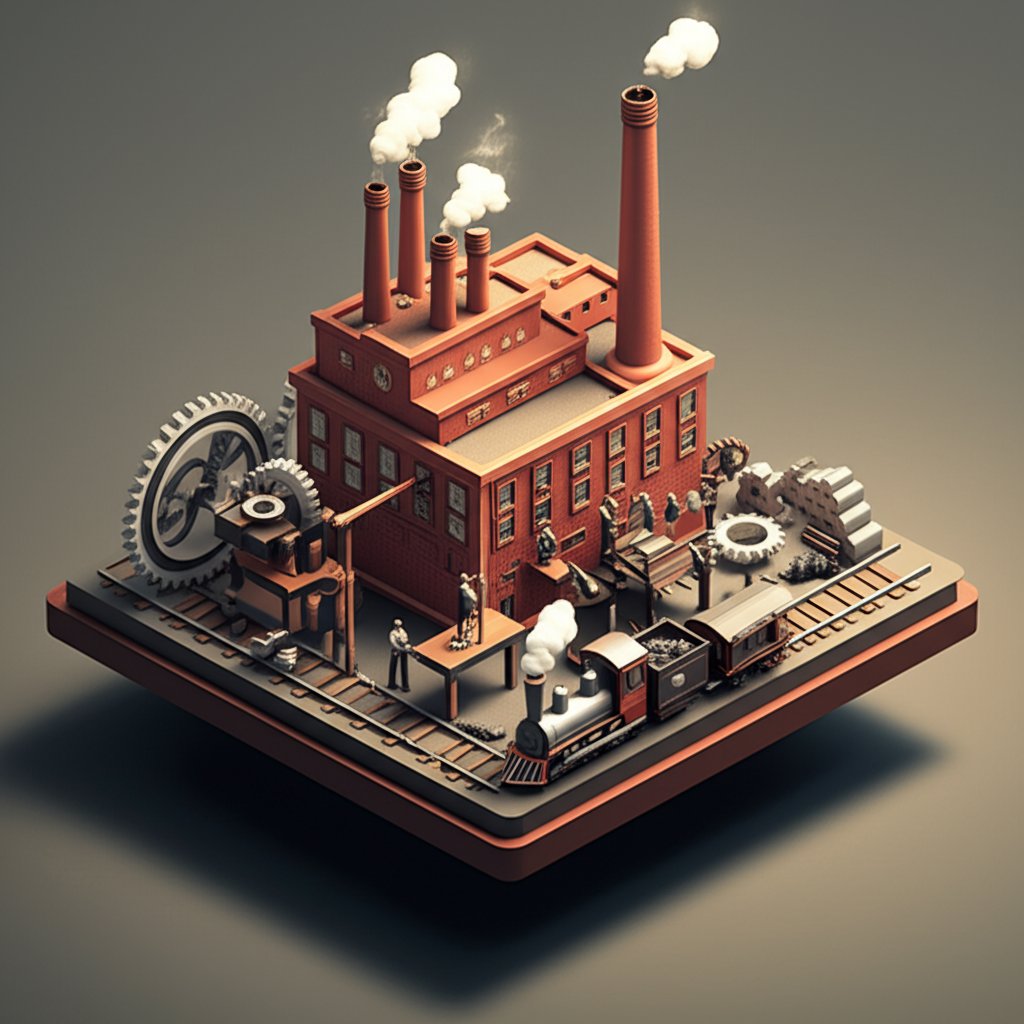
Seeing these lenses in isolation is helpful, but their true power is revealed when you layer them to analyze a single, transformative event. Let’s take the Industrial Revolution (roughly 1760–1840).
| Historical Lens | How It Explains the Industrial Revolution |
|---|---|
| Political | Governments passed laws that supported industrialization, such as property rights and patent protections. Later, political movements arose to address its negative consequences, leading to new regulations on labor and safety. Britain’s naval power protected its global trade routes, fueling its industrial might. |
| Social | A massive migration from rural areas to cities occurred, creating a new urban working class. This led to overcrowded, unsanitary living conditions but also new forms of community. The traditional family structure was upended as work moved from the home to the factory. |
| Economic | This was a fundamental shift from an agrarian, land-based economy to one centered on manufacturing and machinery. Capitalism, with its emphasis on private ownership and profit, became the dominant system. The invention of the steam engine and other technologies created unprecedented wealth and productivity. |
| Cultural | A new “work ethic” emerged, valuing discipline and punctuality. The era also saw a reaction against industrialization in the form of the Romantic movement in art and literature, which celebrated nature and emotion over machinery and logic. |
| By combining these parts of history, the Industrial Revolution is no longer just a story about new inventions. It becomes a complex narrative of political ambition, massive social disruption, economic transformation, and a deep cultural struggle to define what it meant to be human in a new world. |
Your Personal History Lab: A Framework for Analyzing Any Event
You don’t need to be a professional historian to use this multi-lens approach. When you encounter a historical event—whether in a book, a documentary, or a news article about a current conflict—you can deepen your understanding by asking a series of targeted questions.
Step 1: Start with the Political/Military Facts
This is often the easiest entry point.
- What major event occurred (a war, a treaty, an election)?
- Who were the key leaders and institutions involved?
- What were the stated goals or justifications for their actions?
Step 2: Uncover the Social Fabric
Look beyond the headlines to the people on the ground. - Who was most affected by this event? Consider different classes, genders, and ethnic groups.
- How did it change their daily lives, family structures, or communities?
- Did it lead to any social movements or protests?
Step 3: Follow the Economic Trail
Analyze the material resources and incentives. - What economic pressures led to this event (e.g., resource scarcity, trade disputes, poverty)?
- Who stood to gain or lose financially?
- What were the long-term economic consequences?
Step 4: Explore the Cultural Mindset
Investigate the underlying ideas and beliefs. - What were the dominant values or ideologies of the time?
- How did art, literature, or religion reflect or challenge the event?
- Was there a “battle of ideas” happening alongside the physical conflict?
By walking through these four steps, you assemble a more complete and nuanced picture. You start to see that history isn’t a simple chain of cause and effect but a web of interconnected factors.
Quick Answers to Common Questions
As you begin to piece together the different parts of history, a few common questions and misconceptions often arise.
Is political history more important than other types?
Not at all. For a long time, history focused almost exclusively on “great men” and politics, but this view is now considered outdated. Social, economic, and cultural forces are just as critical. As historian Howard Zinn argued, a history that ignores the lives of common people is fundamentally incomplete. Political decisions don’t happen in a vacuum; they are shaped by social pressures, economic needs, and cultural beliefs.
What’s the difference between social and cultural history?
They are closely related and often overlap, but there’s a useful distinction. Social history tends to focus on the structures and experiences of society: class, family, communities, and lived realities. Cultural history focuses more on the ideas and expressions of a society: its art, beliefs, rituals, and symbols. Think of it this way: social history might study the living conditions in a 19th-century factory town, while cultural history might study the songs and stories those factory workers told.
How do I avoid “presentism”?
Presentism is the common mistake of interpreting past events using modern-day values and perspectives. For example, judging a 17th-century figure for holding views on race or gender that are unacceptable today, without understanding the context of their own time. To avoid it, practice historicism—the effort to understand an event within its full historical context. Ask “Why did this make sense to people then?” rather than “Why didn’t they think like we do now?”
Where do sources fit into this?
Understanding sources is key. Historians use two main types:
- Primary Sources: Raw materials from the time period, like letters, diaries, laws, photographs, and artifacts. These are direct windows into the past.
- Secondary Sources: Analysis or commentary created after the fact, like textbooks, academic articles, and documentaries. These interpret primary sources.
A strong historical understanding relies on critically evaluating both. When analyzing the different parts of history, you might use a political treaty (primary) alongside a historian’s book about that treaty (secondary).
From Fragments to a Fuller Picture
The past is not a single, settled story. It is an ongoing investigation, and the most insightful conclusions come from assembling evidence from every available angle. By consciously examining the political, social, economic, and cultural parts of history, you move from a passive consumer of facts to an active, critical thinker.
The next time you read about a historical moment, resist the simple narrative. Ask what was happening in the halls of power, on the city streets, in the marketplaces, and in the minds of the people. By doing so, you won’t just learn about the past—you’ll gain a far more sophisticated understanding of the forces that continue to shape our world today.










